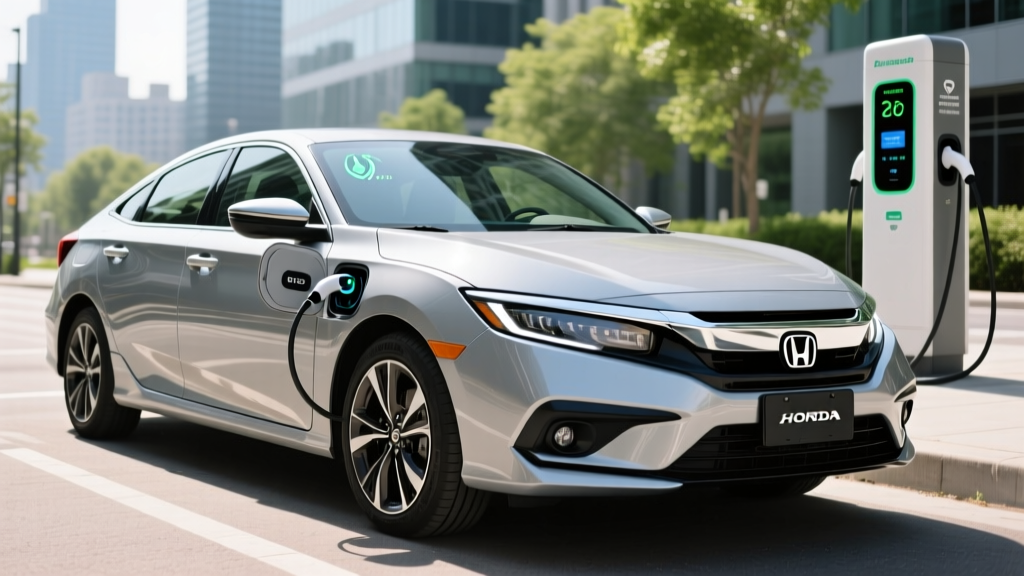
The 2023 Honda Civic Hybrid arrived as a fuel-sipping compact with a surprising amount of pep — a combination that made it one of the most talked-about hybrid sedans of its model year. Now that these cars have accumulated tens of thousands of miles on owner odometers, we can look past the brochure and evaluate what the 2023 Honda Civic Hybrid actually delivers in daily driving: real-world fuel economy, long-term battery reliability, and whether it still makes financial sense compared to a plug-in hybrid or a full battery-electric vehicle in 2026.
This guide covers the Sport and Sport Touring trims, the two-way e:HEV powertrain, EPA versus observed MPG, Honda's hybrid battery warranty, and the ownership math that determines whether this HEV is the right call for your garage.
2023 Honda Civic Hybrid: Powertrain and Key Specs at a Glance
The 2023 Civic Hybrid uses Honda's two-motor hybrid system, which pairs a 2.0-liter Atkinson-cycle four-cylinder engine with two electric motors and a small lithium-ion battery pack. Unlike a plug-in hybrid, this system never needs to be plugged in — it recovers energy through regenerative braking and the engine to keep the battery charged.
| Spec | Value |
|---|---|
| Powertrain | 2.0L Atkinson 4-cyl + 2-motor hybrid system |
| Combined Horsepower | 200 hp |
| Combined Torque | 232 lb-ft (electric motor peak) |
| Transmission | e-CVT (direct-drive with lock-up clutch) |
| Drivetrain | Front-wheel drive |
| Hybrid Battery | Lithium-ion, ~1.1 kWh (non-plug-in HEV) |
| 0–60 mph | ~7.2 seconds (Car and Driver tested) |
| EPA Fuel Economy | 50 city / 47 highway / 49 combined MPG |
| Fuel Tank | 10.6 gallons |
| Total Range | ~519 miles (EPA est.) |
| Base MSRP (Sport) | $28,600 |
| Base MSRP (Sport Touring) | $30,600 |
The 200-horsepower output puts this Civic Hybrid well ahead of the non-hybrid Civic's 158 hp (2.0L) and 180 hp (1.5T) engines. That electric-motor torque — 232 lb-ft available almost instantly — gives the car a responsiveness around town that belies its efficiency focus.
Real-World MPG: Does the Civic Hybrid Hit 50 MPG?
The EPA rates the 2023 Civic Hybrid at 50 city / 47 highway / 49 combined MPG according to fueleconomy.gov. But as with any hybrid, the sticker number is only part of the story.
| Driving Scenario | EPA Estimate | Real-World Expectation |
|---|---|---|
| City / stop-and-go | 50 MPG | 48–54 MPG (hybrids often exceed EPA in town) |
| Highway (70–75 mph) | 47 MPG | 42–46 MPG (aero drag, less regen benefit) |
| Combined mixed driving | 49 MPG | 45–50 MPG |
| Cold weather (below 35°F) | — | 38–44 MPG (engine runs more for cabin heat) |
Hybrids like the Civic thrive in city driving because regenerative braking recaptures energy at every stop, and the electric motor handles low-speed propulsion where gasoline engines are least efficient. On the highway, the advantage narrows — the engine runs more consistently, and aerodynamic drag dominates. In cold weather, expect a noticeable dip as the gasoline engine fires up more frequently to provide cabin heat and maintain battery temperature.
Owner-reported data on Fuelly and similar tracking platforms consistently show combined averages in the mid-to-high 40s, with some drivers regularly exceeding 50 MPG on suburban commutes with light throttle inputs. The Civic Hybrid's real-world efficiency is genuinely excellent for a 200-hp compact sedan.
HEV vs. PHEV vs. EV: Which Powertrain Fits Your Life?
The 2023 Civic Hybrid is a conventional hybrid (HEV). It has no plug, no electric-only driving range to speak of, and no eligibility for the federal EV tax credit. Understanding where it sits in the electrification spectrum is critical before you buy.
HEV vs. PHEV vs. BEV — What's the Difference?
| Feature | HEV (Civic Hybrid) | PHEV (e.g., Toyota Prius Prime) | BEV (e.g., Chevy Bolt EV) |
|---|---|---|---|
| Plug-in charging? | No | Yes | Yes |
| Electric-only range | ~1 mile (low speed) | 25–44 miles | 200–350+ miles |
| Gasoline engine? | Yes (primary) | Yes (backup) | No |
| Home charger needed? | No | Recommended | Essential |
| Federal tax credit (§30D) | Not eligible | Up to $7,500 (if eligible) | Up to $7,500 (if eligible) |
| Best for | No home charging access | Short commutes + road trips | Home charging + mostly electric |
Choose the Civic Hybrid (HEV) if: You don't have access to home or workplace charging, you want maximum simplicity with no plug-in routine, and you want a proven, low-maintenance powertrain that sips fuel without any behavior change from a traditional gas car.
Choose a PHEV if: You can charge at home or work, your daily commute is under 30–40 miles (covering most trips on electricity), but you still want a gas engine for road trips without range planning.
Choose a BEV if: You have reliable home Level 2 charging, you want zero tailpipe emissions, minimal maintenance, and the lowest per-mile fuel cost — and you're comfortable planning around DC fast charging on long trips.
Battery Warranty, Lifespan, and Replacement Cost
Hybrid battery longevity is consistently the top concern for HEV buyers, especially those considering a used 2023 Civic Hybrid. Here's what Honda provides and what the data shows.
Honda Hybrid Battery Warranty
- Standard coverage: 8 years / 100,000 miles (whichever comes first)
- CARB-state coverage: 10 years / 150,000 miles in states that follow California Air Resources Board emissions rules (CA, CO, CT, DE, ME, MD, MA, NJ, NY, OR, RI, VT, WA, and others adopting CARB standards)
- Coverage trigger: Battery capacity drops below a defined threshold or a cell/module failure occurs
Honda's lithium-ion hybrid battery pack in the Civic Hybrid is small (~1.1 kWh usable) and is designed for shallow cycling — it rarely depletes fully or charges to absolute maximum. This shallow depth-of-discharge strategy is one of the reasons modern hybrid batteries routinely last well beyond their warranty periods. Toyota and Honda hybrid packs from the 2010s are commonly reported reaching 150,000–200,000+ miles without replacement.
If a replacement is needed out of warranty, expect a dealer-installed hybrid battery for the Civic Hybrid to cost between $2,000 and $3,500 depending on labor rates and whether a new or remanufactured pack is used. Independent hybrid specialists often offer remanufactured units for less. Given the battery's track record, this is a low-probability expense for most owners.
Tax Credits and Incentives: What the Civic Hybrid Qualifies For
Because the 2023 Honda Civic Hybrid is a conventional HEV — not a plug-in — it does not qualify for the federal §30D Clean Vehicle Credit (which provides up to $7,500 for eligible new EVs and PHEVs). It also does not qualify for the up-to-$4,000 used EV credit under §25E.
However, there are a few considerations:
- State-level incentives: A small number of states offer rebates or tax credits for high-efficiency hybrids, though these are increasingly rare as incentive programs shift toward plug-in vehicles. Check your state's energy office or DMV for current programs.
- Insurance discounts: Some insurers offer modest discounts for hybrid vehicles due to their typically lower mileage profiles and safety equipment. Ask your provider.
- HOV lane access: Most states have phased out HOV lane stickers for conventional hybrids, reserving them for PHEVs and BEVs. Verify your state's current rules.
If tax credit eligibility is a priority in your purchase decision, you'll need to look at plug-in vehicles. The IRS §30D page outlines current eligibility requirements including MSRP caps, buyer income limits, and battery component/critical mineral sourcing rules.
Driving Impressions and Daily Usability
The 2023 Civic Hybrid's two-motor system operates differently than a traditional Toyota-style planetary-gear hybrid. Honda's system uses the electric motor as the primary drive force at low and moderate speeds, with the gasoline engine acting mostly as a generator. At highway speeds, a lock-up clutch connects the engine directly to the wheels for efficiency. The result is a driving feel that's closer to an EV around town — smooth, immediate torque with no gear-shift shudder.
The Sport Touring trim adds features that elevate daily usability: a 10.2-inch digital instrument cluster, 9-inch touchscreen with wireless Apple CarPlay and Android Auto, Bose premium audio, wireless phone charging, and Honda's full Honda Sensing suite of driver-assistance features (adaptive cruise control, lane-keeping assist, automatic emergency braking, traffic sign recognition).
Practically speaking, the Civic Hybrid sacrifices nothing in cargo space compared to the gas Civic sedan — the hybrid battery is packaged under the rear seats, preserving the full 14.8 cubic feet of trunk volume. The 10.6-gallon fuel tank is smaller than the gas Civic's 12.4-gallon tank, but the hybrid's efficiency more than compensates, delivering over 500 miles of total range.
Ownership Costs: Civic Hybrid vs. Gas Civic vs. Compact EV
| Category | Civic Hybrid (49 MPG) | Civic Gas 1.5T (33 MPG) | Compact BEV (e.g., Bolt EV) |
|---|---|---|---|
| Fuel / Energy (5 yr) | ~$5,350 | ~$7,950 | ~$3,200 (home charging) |
| Maintenance (5 yr) | ~$2,200 | ~$2,800 | ~$1,400 |
| Insurance (avg 5 yr) | ~$7,500 | ~$7,000 | ~$8,200 |
| Federal Tax Credit | $0 | $0 | Up to $7,500* |
| Estimated Depreciation | ~$10,500 | ~$11,000 | ~$12,000 |
| Total (approx.) | ~$25,550 | ~$28,750 | ~$17,300–$24,800 |
*Federal tax credit subject to §30D eligibility rules including MSRP caps, income limits, and battery sourcing requirements. Verify current rules at irs.gov.
The Civic Hybrid saves roughly $2,600 in fuel over the gas Civic across five years of typical driving. Compared to a compact BEV charged primarily at home, the hybrid's fuel costs are higher, but the BEV's advantage can be partially offset by higher insurance premiums and the upfront price difference (depending on tax credit eligibility). For buyers without home charging access, the Civic Hybrid's cost profile is difficult to beat.
Pros and Cons
Pros
- 50 MPG city is among the best in any compact sedan
- 200 hp / 232 lb-ft — genuinely quick for the class
- No plug-in required — zero behavior change from a gas car
- Full trunk space preserved (14.8 cu ft)
- 500+ mile total range eliminates fuel stops on most trips
- Excellent Honda Sensing safety suite standard
- Strong reliability reputation for Honda hybrid systems
Cons
- No federal tax credit eligibility (HEV, not PHEV/BEV)
- Highway MPG drops noticeably (42–46 real-world)
- Cold-weather fuel economy can dip into high 30s
- Only available in Sport and Sport Touring trims (no base LX hybrid)
- e-CVT drone under hard acceleration (common to hybrids)
- Smaller fuel tank (10.6 gal) means slightly more frequent fill-ups vs. gas Civic
Frequently Asked Questions
How many MPG does the 2023 Honda Civic Hybrid get?
The EPA rates it at 50 city / 47 highway / 49 combined MPG. In real-world driving, expect 48–54 MPG in city conditions, 42–46 MPG on the highway, and 38–44 MPG in sustained cold weather below 35°F.
Does the Civic Hybrid need to be plugged in?
No. The 2023 Civic Hybrid is a conventional hybrid (HEV). It charges its small battery through regenerative braking and the gasoline engine. You simply fill it with gas like any other car.
How far can the Civic Hybrid drive on electric power alone?
Effectively about one mile at very low speeds (under 25 mph) in EV mode. This is not a plug-in hybrid — there is no meaningful electric-only range. The electric motor assists the engine and handles low-speed driving, but the gas engine is always available and frequently active.
Is the 2023 Civic Hybrid reliable, and what does a battery replacement cost?
Honda's hybrid system has a strong reliability track record. The hybrid battery is warranted for 8 years/100,000 miles (10 years/150,000 miles in CARB states). Out-of-warranty replacement costs range from $2,000 to $3,500, but most Honda hybrid batteries last well beyond 150,000 miles based on historical data from the Insight, Accord Hybrid, and CR-V Hybrid.
Does the 2023 Civic Hybrid qualify for a federal tax credit?
No. The federal §30D Clean Vehicle Credit applies only to plug-in electric vehicles (BEVs and PHEVs) that meet battery sourcing, MSRP, and buyer income requirements. Conventional hybrids like the Civic Hybrid are not eligible. Check irs.gov for current rules on eligible vehicles.
Should I buy the Civic Hybrid or wait for a PHEV Civic?
Honda has not announced a Civic plug-in hybrid for the U.S. market as of 2026. If you need plug-in capability with Honda reliability, the closest alternative in the lineup is the discontinued Clarity PHEV (used market only) or stepping up to a different brand's compact PHEV. If you lack home charging, the Civic Hybrid remains one of the best no-plug efficiency options available.
Is the Civic Hybrid faster than the regular Civic?
Yes. The hybrid's 200 hp and 232 lb-ft of electric motor torque outperform both the 2.0L gas Civic (158 hp) and the 1.5T turbo (180 hp). The 0–60 mph time of approximately 7.2 seconds is brisk for the compact sedan class, and the instant electric torque makes it feel even quicker in everyday driving.