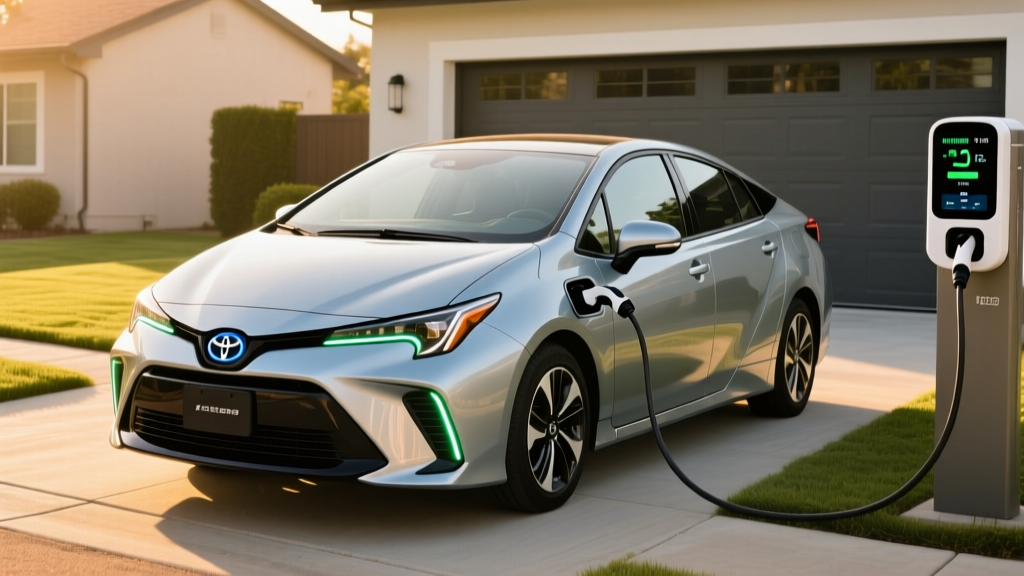
The Toyota Prius Prime has quietly become one of the most practical plug-in hybrids on the market. With a complete redesign for the 2023 model year that carried forward through 2026, the Prius Prime shed its bland predecessor image for sharper styling, a 2.0-liter powertrain, and genuinely useful electric-only range. If you're researching the Prius Prime plug-in hybrid as a bridge between a conventional hybrid and a full battery-electric vehicle, this guide covers every number you need to make the call.
Quick Verdict: Who the Prius Prime Is For
The 2026 Prius Prime targets drivers with a reliable home charging setup (even a standard 120V outlet works) who want to commute on electricity most days but need the flexibility of a gas engine for road trips. It's not a performance EV substitute, but it eliminates range anxiety entirely while delivering electric-vehicle-like running costs for daily driving under 40 miles.
Choose the Prius Prime if: You can charge at home, your commute is under 44 miles round-trip, and you want to minimize gas use without committing to a full BEV.
Choose the standard Prius (HEV) if: You have no home charging access and want maximum simplicity with no plug-in routine.
Choose a full EV (e.g., Tesla Model 3, Hyundai Ioniq 6) if: You want zero tailpipe emissions, access to HOV lanes, DC fast charging for road trips, and qualify for the full $7,500 federal credit.
HEV vs PHEV: What's the Actual Difference?
Toyota sells two distinct Prius models, and confusing them is a common buyer mistake. Here's how they differ mechanically and practically:
| Attribute | Prius (HEV) | Prius Prime (PHEV) |
|---|---|---|
| Plugs in? | No — self-charging via regenerative braking | Yes — plug in to charge the 13.6 kWh battery |
| Battery size | ~1.0 kWh (small buffer) | 13.6 kWh usable |
| Electric-only range | ~1 mile at low speed | Up to 44 miles (EPA) |
| Combined MPG (hybrid mode) | 57 MPG | 50 MPG |
| Combined MPGe (electric mode) | N/A | 127 MPGe |
| Horsepower | 194 hp (FWD) / 196 hp (AWD) | 220 hp combined |
| Base MSRP (2026) | ~$28,350 | ~$33,675 |
| Federal tax credit | Not eligible | Up to $3,750 (§30D) |
The conventional HEV never needs to be plugged in — its small battery charges exclusively through regenerative braking and the gasoline engine. The PHEV (Prius Prime) has a much larger battery that you charge via a plug to unlock its 44-mile electric-only range. Once that battery depletes, the Prime seamlessly transitions into hybrid mode and operates like a standard Prius.
Fuel Economy: EPA Numbers and Real-World MPG
| Driving Mode | City | Highway | Combined |
|---|---|---|---|
| Charge-Depleting (Electric Mode) | 127 MPGe combined | ||
| Charge-Sustaining (Hybrid Mode) — SE | 53 MPG | 48 MPG | 50 MPG |
| Charge-Sustaining (Hybrid Mode) — XSE/XSE Premium | 50 MPG | 47 MPG | 48 MPG |
According to fueleconomy.gov, the 2026 Prius Prime SE achieves 50 MPG combined in hybrid mode after the electric range is depleted. The XSE and XSE Premium trims, which ride on 19-inch wheels, drop slightly to 48 MPG combined.
Real-World MPG: What Owners Actually See
The Prius Prime's real-world fuel economy depends heavily on your driving pattern:
- City driving with regular charging: Many owners report using almost zero gasoline for weeks, covering daily commutes entirely on the 44-mile electric buffer. In this scenario, MPGe routinely matches or exceeds the EPA's 127 MPGe rating.
- Highway road trips (battery depleted): Expect 44–48 MPG at 70 mph. The smaller battery buffer means the engine works harder at sustained highway speeds compared to the standard HEV.
- Cold weather (below 32°F): Electric-only range drops to roughly 32–36 miles as the battery's usable capacity shrinks and cabin heating draws energy. Hybrid-mode MPG may fall to 42–45 MPG until the powertrain warms up.
- Mixed driving without plugging in: If you never plug in, the Prime functions as a slightly heavier Prius and returns approximately 48–50 MPG — still excellent, but the efficiency premium over the HEV disappears.
Electric-Only Range and Total Range
EPA Electric-Only Range: 44 miles (SE trim) / 40 miles (XSE/XSE Premium)
Real-World Expectation: 36–44 miles depending on temperature, speed, and terrain. Highway driving at 70 mph reduces this to approximately 32–35 miles. Cold weather further cuts range by 15–25%.
Total Combined Range (electric + 10.6-gal tank): Approximately 460–500 miles
The Prius Prime's 44-mile EPA electric range is one of the longest among compact PHEVs, enough to cover most American commutes (the U.S. average is roughly 37 miles round-trip). On a full tank and full charge, you can drive over 460 miles without stopping — competitive with many mid-size sedans and far more than most affordable EVs.
Powertrain Specs: Engine, Motors, and Performance
| Specification | 2026 Prius Prime |
|---|---|
| Engine | 2.0L 4-cylinder Atkinson-cycle |
| Engine output | 150 hp / 139 lb-ft torque |
| Electric motor output | 161 hp front motor |
| Net combined system horsepower | 220 hp |
| Drivetrain | Front-wheel drive (eCVT) |
| 0–60 mph | 6.6 seconds |
| Battery capacity | 13.6 kWh (lithium-ion, usable) |
| Towing capacity | Not rated for towing |
The 220 hp combined output is a significant upgrade from the previous-generation Prime's 121 hp. The 6.6-second 0–60 time makes it genuinely quick for a Prius — quicker, in fact, than many compact crossovers. The eCVT delivers smooth, linear acceleration without the rubber-band feel of older CVTs. There is no all-wheel-drive option on the Prime; AWD-e is exclusive to the standard Prius HEV.
Charging: Speeds, Times, and Connector Details
| Charging Level | Power (kW) | Connector | 0–100% Time | Availability |
|---|---|---|---|---|
| Level 1 (120V household) | ~1.0 kW | Standard J1772 | ~11 hours | Any standard outlet |
| Level 2 (240V home/public) | ~3.3 kW (onboard limit) | J1772 | ~4 hours | Home wallbox or public Level 2 |
| DC Fast Charge | Not supported | N/A | N/A | N/A |
The Prius Prime's onboard charger is rated at 3.3 kW, which is the bottleneck for Level 2 charging. Even if you connect to a 7.2 kW or 11.5 kW Level 2 station, the car will only accept 3.3 kW. This means a full charge from empty takes roughly 4 hours on Level 2.
Critical note: The Prius Prime cannot DC fast charge. There is no CCS or CHAdeMO port. This is standard for compact PHEVs — their batteries are small enough that Level 2 overnight charging is sufficient. If you need fast-charging capability for road trips, a full BEV is the better choice.
Level 1 charging from a standard 120V outlet takes about 11 hours for a full charge. For most owners who plug in overnight, this is adequate to replenish the 44-mile electric range by morning. This is one of the Prius Prime's key advantages: you don't need to install a 240V home charger to benefit from its electric range, though Level 2 is faster and more convenient.
Pricing, Trims, and Tax Credit Eligibility
| Trim | MSRP (2026) | Key Features |
|---|---|---|
| SE | ~$33,675 | 17-inch wheels, 8-inch touchscreen, wireless CarPlay/Android Auto, TSS 3.0 |
| XSE | ~$36,675 | 19-inch wheels, heated front seats, 12.3-inch screen, power liftgate |
| XSE Premium | ~$39,675 | Fixed glass roof, JBL audio, panoramic camera, digital rearview mirror |
Federal Tax Credit (§30D): Up to $3,750
The 2026 Prius Prime qualifies for a partial federal tax credit of up to $3,750 under IRS §30D rules. It does not qualify for the full $7,500 because it does not meet all critical-minerals and battery-component sourcing thresholds. This credit is subject to:
- Buyer income caps: Modified AGI ≤ $150,000 (single) / $300,000 (joint) / $225,000 (head of household)
- MSRP cap: Vehicle MSRP must be ≤ $55,000 (sedans) — all Prius Prime trims qualify
- Point-of-sale transfer: You can transfer the credit to the dealer for an upfront price reduction at purchase
- Battery sourcing requirements: The Prime meets partial sourcing requirements, hence the $3,750 (not $7,500) credit
Always verify current-year eligibility at irs.gov before purchasing, as sourcing rules tighten annually. Consult a tax professional to confirm your personal eligibility.
Effective Price After Credit
With the $3,750 credit applied, the Prius Prime SE effectively starts around $29,925 — placing it in direct competition with many compact crossovers and making the PHEV premium over the standard Prius HEV (~$5,325 before credit) shrink to roughly $1,575. That's a compelling value proposition for 44 miles of electric commuting.
Reliability, Battery Warranty, and Long-Term Costs
Hybrid Battery Warranty: 10 years / 150,000 miles (whichever comes first) in all 50 states for 2020+ model-year vehicles.
Powertrain Warranty: 5 years / 60,000 miles
Basic Warranty: 3 years / 36,000 miles
Hybrid Battery Replacement Cost (out of warranty): Approximately $2,500–$3,500 for the traction battery pack, plus labor.
Toyota's hybrid system reliability is among the best-documented in the automotive industry. The Prius lineage spans over 25 years, and the hybrid synergy drive components (planetary gearset, motor-generators, power electronics) have proven exceptionally durable. The lithium-ion traction battery in the Prime is larger than the HEV's but benefits from the same conservative thermal management and state-of-charge buffering that Toyota uses to maximize longevity.
Realistic Battery Lifespan Expectations
Based on data from previous-generation Primes and Toyota's own degradation testing, the Prime's 13.6 kWh battery should retain 70–80% of its original capacity after 10 years of typical use. This means your 44-mile electric range might gradually decrease to 32–36 miles over a decade — still useful, but noticeable. The warranty covers capacity loss below a defined threshold (typically 60–70% retention) during the coverage period.
Unlike full EVs, a degraded PHEV battery doesn't strand you. The gasoline engine seamlessly compensates, and the car continues to function as an efficient hybrid. This is a key peace-of-mind advantage for buyers worried about battery replacement costs.
Prius Prime vs Full EV vs Gas Car: The Decision Framework
Prius Prime Advantages
- 44-mile electric range covers most commutes gas-free
- No range anxiety — 460+ total miles on a full tank and charge
- Charges on a standard 120V outlet (no expensive install required)
- 50 MPG hybrid mode after battery depletes
- Up to $3,750 federal tax credit reduces effective price
- Toyota reliability track record and 10-year battery warranty
- 220 hp makes it the quickest Prius ever
Prius Prime Limitations
- No DC fast charging — road trips rely on gasoline
- 3.3 kW onboard charger limits Level 2 speed
- Electric range drops significantly in cold weather
- Partial tax credit ($3,750 vs $7,500 for qualifying EVs)
- No all-wheel-drive option
- Cargo space reduced vs standard Prius (battery placement): 20.3 cu ft
- Higher insurance premiums than the HEV in some markets
Cost of Ownership: 5-Year Comparison
| Category | Prius Prime (PHEV) | Prius (HEV) | Compact Gas Sedan (30 MPG) |
|---|---|---|---|
| Purchase price (after credit) | ~$29,925 | ~$28,350 | ~$25,000 |
| Fuel/electricity (60,000 mi) | ~$2,200 | ~$4,700 | ~$7,000 |
| Maintenance (5 yr) | ~$2,000 | ~$2,200 | ~$3,500 |
| Estimated insurance (5 yr) | ~$7,500 | ~$6,800 | ~$6,500 |
| Estimated 5-yr total | ~$41,625 | ~$42,050 | ~$42,000 |
Assumes 12,000 miles/year, $3.50/gallon gas, $0.14/kWh electricity, and that the Prime owner charges nightly and drives 80% of miles on electricity. Actual costs vary by region and driving habits. Source: fueleconomy.gov and industry averages.
Frequently Asked Questions
How many MPG does the Prius Prime get?
In hybrid mode (after the battery depletes), the 2026 Prius Prime SE achieves an EPA-estimated 50 MPG combined (53 city / 48 highway). The XSE and XSE Premium trims achieve 48 MPG combined. In electric mode, it achieves 127 MPGe. Real-world city driving with regular charging often exceeds these numbers because the electric motor handles low-speed travel where engines are least efficient.
How far can the Prius Prime go on electric only?
The EPA rates the Prius Prime SE at 44 miles of electric-only range, and the XSE/XSE Premium at 40 miles (due to larger 19-inch wheels and additional weight). In real-world conditions, expect 36–44 miles in mild weather and 32–36 miles in freezing temperatures. Highway speeds above 65 mph will reduce range to approximately 32–35 miles regardless of temperature.
Do I need to install a special charger at home?
No. The Prius Prime charges fully overnight on a standard 120V household outlet (Level 1) in about 11 hours. A 240V Level 2 home charger reduces this to approximately 4 hours, which is more convenient but not required. The onboard charger is limited to 3.3 kW, so investing in a high-power Level 2 station (7.2 kW+) won't charge the Prime any faster.
Is the Prius Prime reliable, and what does battery replacement cost?
Toyota's hybrid powertrain is among the most reliable in the industry, backed by decades of Prius fleet data. The 13.6 kWh traction battery is covered by a 10-year / 150,000-mile warranty in all states. Out-of-warranty replacement costs approximately $2,500–$3,500 including labor. In practice, many Prius batteries last well beyond 150,000 miles with gradual capacity loss rather than sudden failure.
Does the Prius Prime qualify for a federal tax credit?
Yes. The 2026 Prius Prime qualifies for up to $3,750 under the IRS §30D Clean Vehicle Credit. It does not qualify for the full $7,500 because its battery components and critical minerals do not fully meet the latest sourcing thresholds. Eligibility depends on your income (≤ $150K single / $300K joint), and the credit can be transferred to the dealer at point of sale for an immediate price reduction. Verify current rules at irs.gov before purchasing.
Hybrid vs PHEV vs EV — which should I choose?
Choose the conventional Prius (HEV) if you have no access to home or workplace charging and want zero behavior change — it delivers 57 MPG combined with no plug-in routine.
Choose the Prius Prime (PHEV) if you can charge at home and want to run most daily miles on electricity while keeping a gas engine for road trips. The $3,750 tax credit makes the upgrade cost over the HEV minimal.
Choose a full EV if you want the lowest per-mile energy cost, zero tailpipe emissions, access to DC fast charging for road trips, and eligibility for the full $7,500 federal credit. You'll need reliable home charging and acceptance of range planning on long trips.
Can the Prius Prime use DC fast chargers on road trips?
No. The Prius Prime does not have a DC fast charging port (no CCS or CHAdeMO connector). On road trips, you simply drive it as a hybrid and refuel at any gas station. For PHEV owners, road trips are where the gasoline engine earns its keep — you get 48–50 MPG without any charging infrastructure dependency.