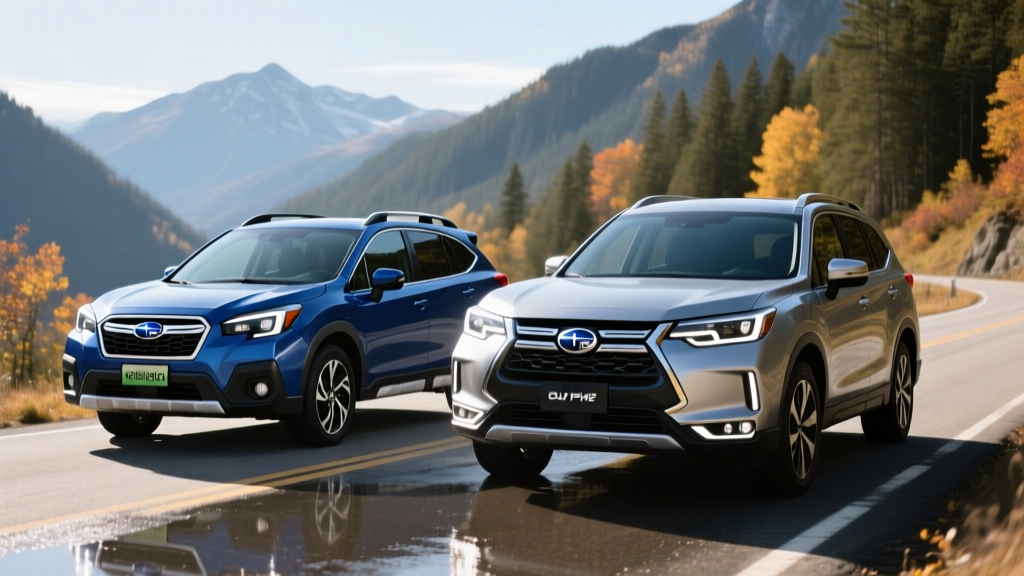
Subaru occupies a unique and somewhat frustrating position in the electrified vehicle market. While competitors like Toyota, Hyundai, and Kia have rolled out dedicated plug-in hybrid electric vehicle (PHEV) platforms across multiple models, Subaru's PHEV offerings remain limited. For buyers specifically searching for a PHEV Subaru in 2026, the landscape requires careful navigation — understanding what's actually available, what's been discontinued, and where Subaru's electrification strategy is heading.
This guide breaks down the current Subaru PHEV situation, the closest alternatives within the Subaru lineup, and whether waiting for upcoming models makes sense for your purchase timeline.
The Current State of PHEV Subaru: What's Actually Available
As of the 2026 model year, Subaru does not offer a new plug-in hybrid vehicle in the United States market. The Crosstrek Hybrid (PHEV), which was Subaru's most recent plug-in offering, was discontinued after the 2023 model year. That model used a Toyota-sourced hybrid powertrain (a 2.0-liter flat-four paired with electric motors and an 8.8 kWh usable battery) and delivered approximately 17 miles of electric-only range with a combined 35 MPG when operating as a hybrid.
Subaru's current electrification strategy pivots toward battery electric vehicles (BEVs) rather than expanding PHEV options. The Solterra, co-developed with Toyota, remains Subaru's primary electrified offering — a fully electric compact SUV. For 2026, Subaru has announced plans to introduce additional electrified models, but confirmed PHEV variants for mainstream models like the Outback or Forester have not materialized with firm production dates.
HEV vs PHEV vs BEV: Where Subaru Stands in 2026
| Category | Subaru Offering | Plug Required? | Electric-Only Range |
|---|---|---|---|
| Conventional Hybrid (HEV) | None (mild-hybrid e-Boxer in select markets, not US) | No | N/A |
| Plug-in Hybrid (PHEV) | None currently in production | Yes | N/A |
| Battery Electric (BEV) | Solterra | Yes | ~222 mi (EPA) |
Why Subaru Stepped Away from PHEVs
Understanding the gap in Subaru's PHEV lineup requires looking at the business and engineering decisions behind it. The discontinued Crosstrek Hybrid PHEV faced several headwinds:
- Limited electric range: At 17 miles, it fell well below competitors like the Toyota RAV4 Prime (42 miles) and Hyundai Tucson PHEV (33 miles), reducing the practical benefit of plug-in operation for most commutes.
- High pricing: The Crosstrek Hybrid carried a significant premium over the gas-only Crosstrek — often $8,000–$10,000 more — with only a partial federal tax credit offsetting the cost.
- Toyota dependency: The PHEV powertrain was sourced from Toyota's hybrid architecture, meaning Subaru had limited control over powertrain evolution and cost reduction.
- Regulatory strategy shift: Subaru's compliance approach shifted toward BEVs (the Solterra) to meet tightening emissions standards, rather than investing in a proprietary PHEV platform.
The result is a brand that, for US buyers in 2026, offers a choice between conventional gasoline models (with no hybrid variant in most trims) or a full battery electric vehicle — with nothing in between.
The Crosstrek Hybrid PHEV: A Look Back at Specs
For buyers considering a used PHEV Subaru, the 2021–2023 Crosstrek Hybrid remains the most recent option. Here's what that vehicle delivered, with real-world context from ownership data and EPA figures.
| Specification | Value |
|---|---|
| Powertrain | 2.0L flat-4 + 2 electric motors (Toyota hybrid system) |
| Combined Horsepower | 148 hp |
| Battery Capacity (usable) | 8.8 kWh (lithium-ion, NMC) |
| Electric-Only Range (EPA) | 17 miles |
| Total Range (electric + gas) | ~440 miles |
| Fuel Economy (hybrid mode, combined) | 35 MPG |
| Fuel Economy (city / highway) | City: 35 MPG / Hwy: 35 MPG (hybrid mode) |
| MPGe (electric + gas combined) | 90 MPGe |
| Level 2 Charge Time (0–100%) | ~2.5 hours at 3.3 kW |
| DC Fast Charging | Not supported |
| 0–60 mph | ~8.6 seconds |
| Drivetrain | Symmetrical AWD (standard) |
| Original MSRP (2023) | $36,845 (before incentives) |
| Battery Warranty | 8 years / 100,000 miles |
Battery Warranty & Replacement Cost
Subaru covered the Crosstrek Hybrid's traction battery for 8 years or 100,000 miles (whichever comes first), consistent with the federal mandate for PHEV/EV battery warranties in CARB-adopting states, and 8 years/100,000 miles federally. If a battery falls below approximately 60–70% of original capacity during the warranty period, Subaru replaces or refurbishes it at no cost.
Out-of-warranty replacement cost: Based on dealer estimates and parts pricing, a full traction battery replacement for the Crosstrek Hybrid ranges from $4,500 to $7,000 including labor. This is comparable to other compact PHEV battery replacement costs. The 12V auxiliary battery (separate from the traction battery) costs $200–$350 to replace.
Real-World MPG and Range: What Owners Report
EPA figures provide a standardized baseline, but real-world results for the Crosstrek Hybrid PHEV varied meaningfully based on driving conditions:
- Electric-only range in practice: Most owners reported 14–18 miles on a full charge in mild weather. In cold weather (below 30°F), that dropped to 11–14 miles due to cabin heating demands and reduced battery efficiency. Highway-speed driving further reduced electric range to approximately 12–15 miles.
- Hybrid-mode MPG: In mixed suburban driving, many owners exceeded the 35 MPG EPA estimate, achieving 37–40 MPG — a common trait of Toyota-derived hybrid systems that excel in stop-and-go conditions. Highway-only driving at 70+ mph typically returned 30–33 MPG.
- Seasonal variation: Winter fuel economy dropped to approximately 28–31 MPG in hybrid mode due to cold-start enrichment, increased rolling resistance, and cabin heating load.
| Condition | EPA Estimate | Real-World Average |
|---|---|---|
| Combined (hybrid mode) | 35 MPG | 34–38 MPG |
| City (hybrid mode) | 35 MPG | 36–42 MPG |
| Highway (hybrid mode, 70 mph) | 35 MPG | 30–33 MPG |
| Electric-only range | 17 mi | 14–18 mi (mild), 11–14 mi (cold) |
| Winter combined (hybrid mode) | N/A | 28–31 MPG |
Subaru Solterra: The BEV Alternative
For buyers who want an electrified Subaru and are open to a full battery electric vehicle rather than a PHEV, the 2026 Subaru Solterra is the current option. Key specs:
- EPA range: Up to 222 miles (Limited/Touring trims with 18" wheels); ~228 miles with 20" wheels on certain trims
- Battery: 72.8 kWh (usable), lithium-ion NMC chemistry
- DC fast charging: Up to ~100 kW peak (improved from earlier model years via software updates), 10–80% in approximately 35–40 minutes
- Level 2 charging: 6.6 kW onboard charger, 0–100% in ~11 hours
- Powertrain: Dual-motor AWD, 215 hp, 249 lb-ft torque
- 0–60 mph: ~6.5 seconds
- Starting MSRP: Approximately $38,495 (2026 base, before destination)
- Federal tax credit: Eligibility depends on current-year IRS §30D rules, including battery sourcing, MSRP caps ($80,000 for SUVs), and buyer income limits ($150K single / $300K joint). Check current eligibility as sourcing rules evolve.
The Solterra addresses the electrified-Subaru need but requires full commitment to EV ownership — home charging access, range planning for longer trips, and acceptance of the Solterra's relatively modest DC fast-charging speed compared to competitors like the Hyundai Ioniq 5 or Kia EV6.
Upcoming Subaru Electrified Models: What's Announced
Subaru has outlined a multi-model electrification roadmap, though specifics on PHEV variants remain sparse:
- Next-generation Solterra (announced): Expected to arrive for the 2027 or 2028 model year with improved range (targeted 280+ miles), faster DC charging (potentially 150+ kW), and an updated interior. This remains a BEV, not a PHEV.
- New EV platform: Subaru has confirmed a dedicated EV architecture separate from the Toyota-shared e-TNGA platform, targeting mid-decade production. Again, BEV-focused.
- e-Boxer mild hybrid: Available in Japan and Europe on models like the Forester and Crosstrek, this is a mild hybrid system (not a full HEV or PHEV) that provides marginal fuel economy improvement (~1–2 MPG) and cannot drive on electric power alone. It is not available in the US market as of 2026.
Bottom line: Subaru has not announced a PHEV for the US market beyond the discontinued Crosstrek Hybrid. Their investment is flowing toward BEVs. If a PHEV Subaru is a firm requirement, the used market (2021–2023 Crosstrek Hybrid) is the only path.
Tax Credits: PHEV Subaru Eligibility Explained
Federal Tax Credit for PHEVs (IRS §30D)
Under current IRS §30D rules, a new PHEV must meet several requirements to qualify for the federal clean vehicle credit (up to $7,500):
- Battery capacity: At least 7 kWh (the Crosstrek Hybrid's 8.8 kWh qualified)
- MSRP cap: $80,000 for SUVs, $55,000 for sedans
- Buyer income cap: $150,000 (single), $225,000 (head of household), $300,000 (joint)
- Battery sourcing & critical minerals: Increasingly strict requirements on where battery components and critical minerals are sourced — this eliminated many vehicles from eligibility in 2024–2025 and continues to tighten
- North American assembly: Final assembly must occur in North America
For the discontinued Crosstrek Hybrid: When new, it qualified for a partial credit (approximately $4,000–$4,500 depending on model year sourcing compliance). It was assembled in Japan, which ultimately disqualified it from full credit eligibility under the North American assembly requirement enacted by the Inflation Reduction Act.
Used PHEV credit (§25E): A used Crosstrek Hybrid PHEV purchased from a dealer for $25,000 or less may qualify for a credit of 30% of the sale price, up to $4,000, subject to buyer income caps ($75K single / $150K joint). This is the most likely credit pathway for PHEV Subaru buyers today.
PHEV Subaru vs. Competitors: The Alternatives
If you want a PHEV compact SUV with AWD — the closest equivalent to what a PHEV Subaru would offer — these are the leading alternatives in 2026:
| Model | EV Range | Combined MPG | AWD? | Starting MSRP |
|---|---|---|---|---|
| Toyota RAV4 Prime | 42 mi | 38 MPG | Yes | ~$44,500 |
| Hyundai Tucson PHEV | 33 mi | 35 MPG | Yes | ~$38,500 |
| Kia Sportage PHEV | 34 mi | 35 MPG | Yes | ~$39,500 |
| Mitsubishi Outlander PHEV | 38 mi | 26 MPG | Yes (S-AWC) | ~$41,000 |
| Ford Escape PHEV | 37 mi | 40 MPG | No (FWD only) | ~$39,500 |
The Toyota RAV4 Prime leads on electric range and power (302 hp combined) but carries a significant price premium and has faced chronic availability issues. The Hyundai Tucson PHEV and Kia Sportage PHEV offer strong value with competitive range and AWD standard. The Mitsubishi Outlander PHEV includes DC fast charging (CHAdeMO) — rare for PHEVs — and Subaru-adjacent AWD credibility with its Super All-Wheel Control system.
Pros: Used Crosstrek Hybrid PHEV
- Standard Symmetrical AWD — best-in-class for snow/rain traction
- Proven Toyota hybrid powertrain reliability
- Good ground clearance (8.7 inches) for a compact PHEV
- Subaru's EyeSight driver-assistance suite included
- Strong resale value in Subaru-loyal markets (Pacific NW, New England, Colorado)
Cons: Used Crosstrek Hybrid PHEV
- Only 17 miles electric range — below most competitors
- No DC fast charging capability
- Modest 148 hp — underpowered vs. RAV4 Prime (302 hp)
- Discontinued — no new units available, limited used inventory
- Premium pricing on used market due to Subaru demand
- Japan-assembled — did not qualify for full federal credit when new
Who Should Buy a PHEV Subaru — and Who Shouldn't
Decision Framework
Consider a used Crosstrek Hybrid PHEV if:
- You have a short commute (under 15 miles each way) and home charging access
- AWD is non-negotiable for your climate or terrain
- You're a Subaru loyalist who values brand-specific features (EyeSight, X-Mode, symmetrical AWD)
- You can find one within your budget on the used market and are comfortable with a 2021–2023 model
Look at competitors instead if:
- You need more than 17 miles of electric range for your commute
- You want a new vehicle with full warranty coverage
- DC fast charging matters for your road-trip habits
- You want more power (RAV4 Prime's 302 hp is in a different league)
- You need third-row seating (Outlander PHEV offers it)
Consider the Solterra (BEV) if:
- You have reliable home Level 2 charging
- Your daily driving is under 180 miles and you can plan for road-trip charging stops
- You want a new Subaru with full warranty and the latest tech
- You're ready to move past gasoline entirely
Frequently Asked Questions
Does Subaru make a PHEV in 2026?
No. Subaru discontinued its only PHEV, the Crosstrek Hybrid, after the 2023 model year. As of 2026, Subaru offers no new plug-in hybrid vehicle in the US market. Their electrification strategy focuses on the Solterra BEV and upcoming electric models.
How many MPG does the Subaru Crosstrek Hybrid PHEV get?
The EPA rated the 2023 Crosstrek Hybrid at 35 MPG combined in hybrid mode (after the battery is depleted). Real-world results ranged from 30–33 MPG on the highway to 36–42 MPG in city driving. In electric mode, it achieved 90 MPGe combined. Winter driving reduced hybrid-mode MPG to approximately 28–31.
How far can the Crosstrek Hybrid go on electric only?
The EPA rated it at 17 miles of electric-only range. Real-world results typically fell between 14–18 miles in mild weather and 11–14 miles in cold weather (below 30°F). Highway-speed driving further reduced this to approximately 12–15 miles.
Is the Subaru Crosstrek Hybrid reliable? What about battery replacement cost?
The Crosstrek Hybrid uses Toyota's proven hybrid synergy drive system, which has an excellent long-term reliability track record across millions of vehicles (Prius, RAV4 Hybrid, etc.). The traction battery is warrantied for 8 years / 100,000 miles. Out-of-warranty replacement costs approximately $4,500–$7,000 including labor. Subaru's conventional vehicle reliability is generally rated above average by Consumer Reports and J.D. Power.
Does a used PHEV Subaru qualify for any tax credit?
A used Crosstrek Hybrid purchased from a dealer for $25,000 or less may qualify for the IRS §25E used clean vehicle credit: 30% of the sale price, up to $4,000. Buyer income must be under $75,000 (single) or $150,000 (joint). The vehicle must be purchased from a licensed dealer, not a private party. Verify current eligibility on irs.gov before purchasing.
Hybrid vs PHEV vs EV — which Subaru should I choose?
Subaru currently offers no conventional hybrid (HEV) or PHEV in the US — only the Solterra BEV. If you want a PHEV with AWD from another brand, the Toyota RAV4 Prime, Hyundai Tucson PHEV, or Mitsubishi Outlander PHEV are strong alternatives. If you want a new Subaru and have home charging, the Solterra BEV is your electrified option. If PHEV is essential and you want Subaru specifically, the used 2021–2023 Crosstrek Hybrid is the only path.
Will Subaru release a new PHEV in the future?
Subaru has not announced any new PHEV for the US market. Their published roadmap focuses on BEVs, including a next-generation electric platform and expanded Solterra lineup. While it's possible Subaru could introduce a PHEV variant of a future model (particularly if regulatory requirements shift), there is no confirmed PHEV in their announced product plan through 2028.
Final Assessment: The PHEV Subaru Reality
For buyers specifically seeking a PHEV Subaru, the honest answer in 2026 is that the option set is limited to the used market. The Crosstrek Hybrid PHEV is a competent vehicle — reliable AWD, proven Toyota hybrid underpinnings, and adequate efficiency for short commutes — but its 17-mile electric range and discontinued status make it a niche choice rather than a competitive mainstream option.
The pragmatic path for most PHEV-seeking Subaru shoppers is to either broaden the search to competitors (RAV4 Prime, Tucson PHEV, Outlander PHEV) or commit to the Solterra BEV if home charging and daily range needs align. Subaru's strengths — AWD, safety, durability — are present in the Solterra, but the plug-in hybrid middle ground that many buyers want simply doesn't exist in Subaru's current US lineup.