Nissan's hybrid strategy in 2026 looks very different from what it was even two years ago. After discontinuing the Altima Hybrid and pulling back from plug-in hybrids in the U.S. market, Nissan has consolidated its electrified offerings around a single, high-volume model: the Rogue Hybrid. If you're researching Nissan hybrid cars, you're essentially researching one vehicle — but it's a compelling one that deserves a thorough, numbers-driven look.
This guide breaks down exactly what Nissan offers in the hybrid space for the 2026 model year, including real-world MPG expectations, battery longevity, warranty coverage, pricing, and whether a conventional hybrid (HEV) or a full EV like the Nissan Ariya makes more sense for your situation.
What Nissan Hybrid Cars Are Available in 2026?
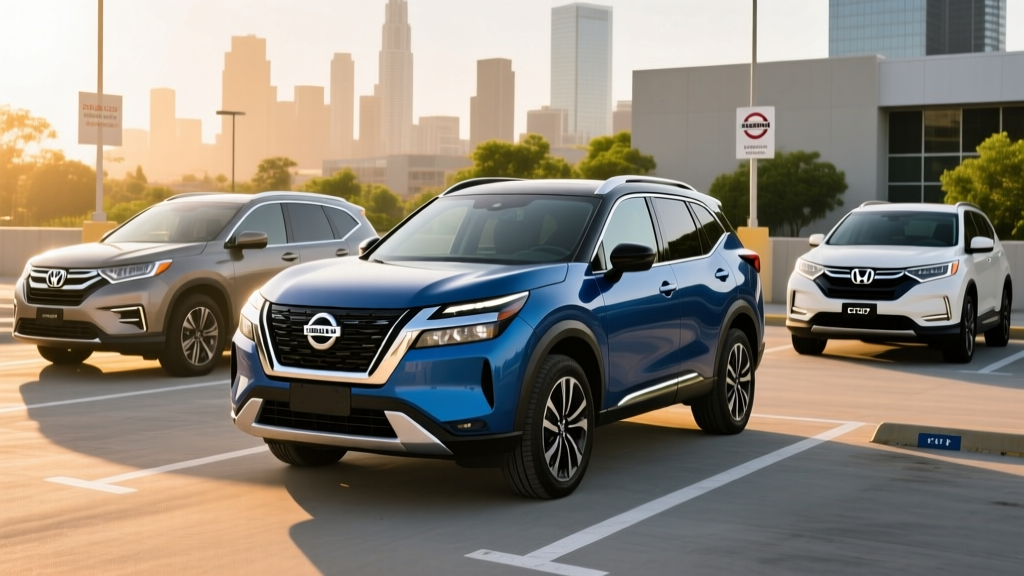
For the U.S. market, Nissan currently sells one hybrid model: the 2026 Nissan Rogue Hybrid. Nissan previously offered hybrid variants of the Altima and Pathfinder, but those have been discontinued. The Rogue Hybrid is a compact crossover — the same segment where the Toyota RAV4 Hybrid and Honda CR-V Hybrid compete aggressively.
Nissan does not currently sell a plug-in hybrid (PHEV) in the United States. Globally, Nissan offers the X-Trail e-POWER (a series hybrid that drives like an EV but uses a gasoline generator), but the e-POWER system has not been brought to the U.S. Rogue lineup as of early 2026. This means every Nissan hybrid car available stateside is a conventional hybrid (HEV) — no plug, no electric-only range, just better fuel economy from regenerative braking and electric motor assist.
HEV vs. PHEV: What's the Difference?
Conventional Hybrid (HEV): Uses a small battery (typically 1-2 kWh) charged by regenerative braking and the engine. You never plug it in. The electric motor assists the gas engine, improving MPG — especially in city driving. The Nissan Rogue Hybrid is an HEV.
Plug-in Hybrid (PHEV): Uses a larger battery (typically 12-25 kWh) that you charge from a wall outlet or public charger. Offers 20-50 miles of electric-only driving before the gas engine kicks in. Examples include the Toyota RAV4 Prime and Hyundai Tucson PHEV. Nissan does not currently sell a PHEV in the U.S.
2026 Nissan Rogue Hybrid: MPG, Powertrain, and Specs
The 2026 Nissan Rogue Hybrid pairs a 1.5-liter VC-Turbo three-cylinder engine with an electric motor integrated into Nissan's Xtronic CVT transmission. This is a mild-hybrid-assisted system rather than the full hybrid synergy drives you'll find in Toyota or Honda competitors — which is an important distinction for MPG expectations.
| Spec | Value |
|---|---|
| Powertrain | 1.5L VC-Turbo 3-cyl + electric motor assist (CVT) |
| Combined Horsepower | 201 hp |
| Combined Torque | 225 lb-ft |
| EPA MPG (City / Hwy / Combined) | 35 / 33 / 34 MPG |
| Fuel Tank | 14.5 gallons |
| Total Range (est.) | ~490 miles |
| Drivetrain | FWD standard; AWD available |
| 0-60 mph (est.) | ~7.8 seconds |
| Cargo Volume | 31.6 cu ft (rear seats up) |
| Hybrid Battery | ~1.0 kWh lithium-ion (mild-hybrid assist) |
| Base MSRP | ~$33,500 (S trim, FWD) |
Sources: EPA Fuel Economy, Nissan USA
How Many MPG Does the Nissan Rogue Hybrid Actually Get?
The EPA rates the 2026 Rogue Hybrid at 35 city / 33 highway / 34 combined MPG for FWD models. AWD models drop slightly to approximately 33/31/32 MPG.
| Drivetrain | City | Highway | Combined |
|---|---|---|---|
| FWD | 35 | 33 | 34 |
| AWD | 33 | 31 | 32 |
Real-World MPG: What to Expect
Here's where Nissan's mild-hybrid approach shows its limitations compared to full hybrids. The Rogue Hybrid's 34 MPG combined is respectable, but it trails the Toyota RAV4 Hybrid (39-41 MPG combined) and the Honda CR-V Hybrid (40-43 MPG combined) by a significant margin. In real-world mixed driving, owners typically report 30-35 MPG, with city-heavy commutes sometimes reaching the EPA sticker number and highway-dominant driving falling slightly below.
The mild-hybrid system provides most of its benefit during stop-and-go city driving, where regenerative braking and electric motor assist reduce the engine's workload. On long highway stretches, the system provides minimal benefit — the 1.5L turbo engine is doing nearly all the work.
Does the Nissan Rogue Hybrid Qualify for a Tax Credit?
This is where many hybrid shoppers face disappointment. The Nissan Rogue Hybrid does NOT qualify for the federal §30D Clean Vehicle Credit (up to $7,500). Under current IRS rules, only battery electric vehicles (BEVs) and plug-in hybrids (PHEVs) with sufficient battery capacity (at least 7 kWh) are eligible. Conventional hybrids (HEVs) like the Rogue Hybrid do not meet this threshold.
Federal Tax Credit Eligibility — 2026 Rules
- ❌ Nissan Rogue Hybrid (HEV): NOT eligible — battery too small, not a plug-in
- ✅ Plug-in Hybrids (PHEVs): May qualify if battery ≥ 7 kWh, MSRP ≤ $80,000 (SUVs/vans) or $55,000 (sedans), buyer income within limits, and battery sourcing requirements met
- ✅ Battery Electric Vehicles (BEVs): May qualify up to $7,500 if MSRP, income, and critical mineral/battery component rules are satisfied
- ✅ Used EVs/PHEVs: Up to $4,000 credit under §25E for qualifying pre-owned electrified vehicles
Always verify current-year eligibility on IRS.gov and consult a tax professional. Rules change frequently.
Some states offer their own incentives for hybrids, but these are far less common than EV incentives and vary significantly by jurisdiction. Check your state's energy office or DMV website for current programs.
Battery Warranty, Reliability, and Replacement Cost
Hybrid battery longevity is consistently the top concern among first-time hybrid buyers. Here's what you need to know about the Rogue Hybrid's battery system.
Nissan Rogue Hybrid — Battery & Powertrain Warranty
- Hybrid Battery Warranty: 8 years / 100,000 miles (whichever comes first)
- Powertrain Warranty: 5 years / 60,000 miles
- Battery Chemistry: Lithium-ion
- Battery Capacity: ~1.0 kWh (mild-hybrid assist — much smaller than a full hybrid or PHEV battery)
The 8-year/100,000-mile hybrid battery warranty is standard across the industry. California-emissions states may require extended coverage (10 years / 150,000 miles) on certain hybrid components.
Is the Rogue Hybrid Reliable?
The Rogue Hybrid's 1.5L VC-Turbo engine is the same variable-compression engine used in the standard Rogue, which has been in production since 2022. The mild-hybrid system adds relatively little complexity — it's an integrated motor-generator, not a full parallel hybrid system like Toyota's. This simplicity is a reliability advantage: there are fewer high-voltage components to fail, and the battery is small enough that replacement is significantly cheaper than a full hybrid or EV battery.
That said, Nissan's CVT transmissions have historically been a weak point for the brand. The Xtronic CVT in the Rogue Hybrid is a newer generation and has shown improved durability, but it's worth monitoring. NHTSA complaint data for the current-generation Rogue has been relatively low.
Hybrid Battery Replacement Cost
Because the Rogue Hybrid uses a small (~1 kWh) mild-hybrid battery rather than the 1.5-2.0 kWh batteries in full hybrids or the 12-25 kWh packs in PHEVs, replacement costs are significantly lower. Expect $1,500-$3,000 for a replacement mild-hybrid battery, compared to $3,000-$5,000+ for a full hybrid battery and $8,000-$15,000+ for a PHEV or EV battery. In practice, most mild-hybrid batteries last well beyond the warranty period — failures before 150,000 miles are uncommon.
Pricing and Trim Levels: What Does the Rogue Hybrid Cost?
The 2026 Nissan Rogue Hybrid is available in multiple trims. Pricing below reflects MSRP before any dealer adjustments or state/local incentives:
| Trim | Drivetrain | MSRP (est.) |
|---|---|---|
| S | FWD | ~$33,500 |
| S | AWD | ~$35,000 |
| SV | AWD | ~$37,500 |
| SL | AWD | ~$40,500 |
| Platinum | AWD | ~$43,000 |
For comparison, the 2026 Toyota RAV4 Hybrid starts around $33,000 and the Honda CR-V Hybrid around $35,000 — so the Rogue Hybrid is priced competitively at the base level but can climb quickly with AWD and higher trims.
How Does the Rogue Hybrid Compare to Full Hybrids?
The Rogue Hybrid's mild-hybrid system is the elephant in the room. Here's how it stacks up against the segment's full-hybrid benchmarks:
| Spec | Nissan Rogue Hybrid | Toyota RAV4 Hybrid | Honda CR-V Hybrid |
|---|---|---|---|
| Hybrid Type | Mild Hybrid | Full Hybrid | Full Hybrid |
| Combined MPG (EPA) | 34 | 39-41 | 40-43 |
| Combined HP | 201 | 219 | 204 |
| Starting MSRP | ~$33,500 | ~$33,000 | ~$35,000 |
| AWD Availability | Yes | Standard | Yes |
| Tax Credit Eligible | No | No | No |
| Annual Fuel Cost (est.)* | ~$1,850 | ~$1,550 | ~$1,500 |
*Based on 15,000 miles/year at $3.50/gallon. Your costs will vary with local fuel prices and driving patterns.
The MPG gap is meaningful. Over 5 years and 75,000 miles, the RAV4 Hybrid's ~6 MPG advantage saves roughly $1,500-$2,000 in fuel compared to the Rogue Hybrid. That's enough to offset a significant portion of the purchase price difference on higher trims.
Pros
- Competitive starting MSRP
- Strong turbo torque (225 lb-ft) for confident merging
- Spacious cargo area (31.6 cu ft)
- Small hybrid battery = lower replacement cost
- Available AWD across all trims
- Nissan Safety Shield 360 standard
Cons
- Mild hybrid — lower MPG than full-hybrid rivals
- No PHEV or EV-only driving option
- No federal tax credit eligibility
- CVT transmission can feel sluggish under hard acceleration
- Fuel savings vs. gas Rogue are modest (~3-4 MPG improvement)
- AWD fuel economy drops noticeably
Hybrid vs. PHEV vs. EV: Which Nissan (or Alternative) Fits You?
Since Nissan's hybrid lineup is limited, here's a decision framework for buyers cross-shopping Nissan hybrid cars against PHEVs and full EVs — including Nissan's own Ariya electric crossover.
Choose the Nissan Rogue Hybrid (HEV) If:
- You can't charge at home (apartment, street parking, no garage)
- You want better MPG than a gas car without changing any habits
- You drive 12,000-15,000 miles/year in mixed city/highway conditions
- You want the lowest upfront cost and simplest ownership
- You take frequent long road trips and don't want to plan around chargers
Choose a PHEV (e.g., Toyota RAV4 Prime, Hyundai Tucson PHEV) If:
- You can charge at home (Level 1 or Level 2) and have a short commute (20-40 miles)
- You want electric-only daily driving but gas flexibility for road trips
- You want to qualify for the federal §30D tax credit (up to $7,500)
- You're willing to pay $5,000-$10,000 more upfront for long-term fuel savings
Choose a Full EV (e.g., Nissan Ariya, Tesla Model Y) If:
- You can install a Level 2 home charger
- Your daily driving is under 250 miles and you can plan road-trip charging
- You want the lowest per-mile fuel cost (~$0.04-$0.06/mile on home electricity vs. ~$0.12-$0.15/mile on gas)
- You want the full $7,500 federal tax credit (if eligible) and zero tailpipe emissions
The Bottom Line on Nissan Hybrid Cars in 2026
The 2026 Nissan Rogue Hybrid is a competent compact crossover with a fuel-economy edge over its gas-only sibling, but it's not a class-leading hybrid. Its mild-hybrid system delivers a modest 3-4 MPG improvement over the standard Rogue rather than the 10-15 MPG advantage you see with Toyota and Honda's full-hybrid systems. If you're specifically loyal to the Nissan brand and want a more fuel-efficient Rogue, it's a reasonable choice. If your priority is maximum fuel savings, the RAV4 Hybrid and CR-V Hybrid are objectively more efficient for similar money.
For buyers open to plugging in, a PHEV from a competitor or Nissan's own Ariya EV will deliver far greater per-mile savings and potential tax-credit benefits — but only if your home charging situation supports it.
Frequently Asked Questions
How many MPG does the Nissan Rogue Hybrid get?
The EPA rates the 2026 Rogue Hybrid at 35 city / 33 highway / 34 combined MPG (FWD). AWD models rate at 33/31/32 MPG. Real-world results typically fall between 30-35 MPG depending on driving conditions.
Does Nissan make a plug-in hybrid?
Not in the United States as of 2026. Nissan offers the X-Trail e-POWER (a series hybrid) in some global markets, but no PHEV with electric-only range is sold in the U.S. Nissan lineup. If you need a PHEV, look at the Toyota RAV4 Prime, Hyundai Tucson PHEV, or Ford Escape PHEV.
How far can the Rogue Hybrid go on electric only?
It can't. The Rogue Hybrid is a conventional (mild) hybrid with no electric-only driving mode. The electric motor assists the gas engine but cannot propel the vehicle independently. For electric-only driving, you need a PHEV or a full EV.
Is the Nissan Rogue Hybrid reliable?
The mild-hybrid system adds minimal complexity compared to a full hybrid, which is a reliability positive. The 1.5L VC-Turbo engine has been in production since 2022 with no widespread issues. Nissan's hybrid battery warranty covers 8 years / 100,000 miles. Check IIHS for the latest safety ratings.
What does it cost to replace the Rogue Hybrid battery?
The mild-hybrid battery (~1 kWh) is far smaller than a full hybrid or EV battery. Expect replacement costs of $1,500-$3,000 if needed outside warranty. Most mild-hybrid batteries last well beyond 150,000 miles. The battery is covered for 8 years / 100,000 miles under Nissan's warranty.
Does the Nissan Rogue Hybrid qualify for any tax credit?
No. The federal §30D Clean Vehicle Credit requires a plug-in vehicle with at least 7 kWh of battery capacity. The Rogue Hybrid's ~1 kWh mild-hybrid battery does not qualify. No conventional hybrid (HEV) qualifies for the federal EV tax credit. Check IRS.gov for current rules.
Should I buy the Rogue Hybrid or the gas-only Rogue?
If you drive mostly in the city and keep cars for 5+ years, the hybrid's 3-4 MPG advantage saves roughly $300-$500/year in fuel, which may offset the hybrid's ~$1,500-$2,000 price premium over the gas model within 3-5 years. If you drive mostly highway or plan to trade in within 3 years, the gas Rogue may make more financial sense.