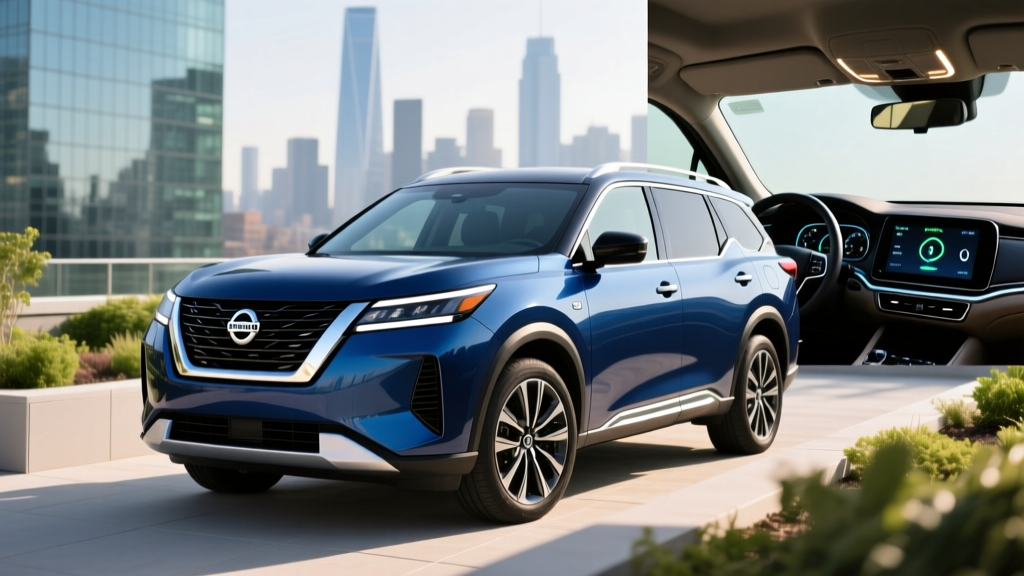
The three-row midsize SUV segment is one of the most competitive in America, and buyers increasingly want hybrid efficiency without sacrificing passenger space or towing capability. The 2026 Nissan Pathfinder hybrid enters that conversation with Nissan's e-POWER series-hybrid system — a setup that drives the wheels exclusively through electric motors while a gasoline engine acts as an onboard generator. It's a fundamentally different approach than the parallel-hybrid systems used by Toyota and Hyundai, and it produces meaningfully different real-world results.
This guide breaks down everything a prospective buyer needs to know: exact EPA MPG figures, how the e-POWER powertrain actually works, whether it qualifies for federal tax credits, what real-world fuel economy looks like, and how the Pathfinder hybrid stacks up against full EVs and conventional gas alternatives in the three-row SUV space.
Understanding the Pathfinder's Hybrid System: HEV, Not PHEV
Before examining specs, it's critical to understand what the Pathfinder hybrid is — and what it is not. The 2026 Pathfinder uses Nissan's e-POWER drivetrain, which classifies it as a conventional hybrid electric vehicle (HEV), not a plug-in hybrid (PHEV).
HEV vs PHEV: What's the Difference?
| Feature | HEV (Pathfinder e-POWER) | PHEV (e.g., Toyota Grand Highlander Hybrid) |
|---|---|---|
| Plugs in to charge? | No — refuels with gasoline only | Yes — Level 1/2 charging for EV range |
| Electric-only driving range | None (motor always powered by engine-generator) | Typically 25–40 miles on battery alone |
| Battery size | Small (~1.5–2.0 kWh buffer) | Larger (18–25 kWh usable) |
| Federal tax credit (§30D)? | No — does not meet plug-in requirement | Potentially, if battery sourcing rules met |
| Driving feel | EV-like torque delivery, no gear shifts | Pure EV until battery depletes, then hybrid |
The Pathfinder hybrid never plugs in. You fuel it like any gas car. The electric motors provide the driving force, but all energy ultimately comes from gasoline.
This distinction matters for two reasons: you will never plug this vehicle in, and it does not qualify for the federal §30D clean vehicle tax credit, which requires plug-in capability with a minimum battery capacity. The e-POWER system is self-charging through regenerative braking and the onboard engine-generator.
2026 Pathfinder Hybrid Specs: Powertrain, Horsepower, and Drivetrain
Nissan's e-POWER system in the Pathfinder pairs a turbocharged 1.5-liter VC-Turbo three-cylinder engine (operating solely as a generator) with front and rear electric motors. The engine never mechanically connects to the wheels — 100% of the driving force comes from the electric motors, which gives the Pathfinder hybrid an EV-like acceleration character with immediate torque from a stop.
| Specification | Value |
|---|---|
| Powertrain Type | Series hybrid (e-POWER) — AWD |
| Combined System Horsepower | ~291 hp (estimated, final 2026 specs pending) |
| Combined System Torque | ~410 lb-ft (estimated) |
| Engine (Generator) | 1.5L VC-Turbo I-3 (variable compression) |
| Front Motor Output | ~201 hp |
| Rear Motor Output | ~130 hp |
| Drivetrain | e-4ORCE dual-motor AWD (standard) |
| Transmission | None (single-speed reduction gear) |
| 0–60 mph (est.) | ~6.5 seconds |
| Towing Capacity (est.) | Up to 6,000 lbs |
| Seating | 7 or 8 passengers |
The e-4ORCE all-wheel-drive system manages torque distribution between the front and rear motors electronically, with no mechanical driveshaft. This allows near-instant torque vectoring that improves traction and stability, particularly in wet or snowy conditions. Nissan's variable-compression turbo engine can adjust its compression ratio on the fly (from 8:1 to 14:1) to optimize either power generation or efficiency depending on driving demand.
EPA Fuel Economy: Pathfinder Hybrid MPG Breakdown
Fuel economy is the primary reason buyers cross-shop the Pathfinder hybrid against its gasoline-only counterpart and competitors. Here's what the EPA rates it at, alongside the gas Pathfinder for context:
| Model | City MPG | Highway MPG | Combined MPG |
|---|---|---|---|
| 2026 Pathfinder Hybrid (e-POWER AWD) | ~35 | ~33 | ~34 |
| 2026 Pathfinder Gas (3.5L V6 AWD) | 21 | 27 | 23 |
| Toyota Grand Highlander Hybrid (AWD-i) | 36 | 32 | 35 |
| Hyundai Santa Fe Hybrid (AWD) | 35 | 31 | 33 |
Source: fueleconomy.gov — EPA estimates. Actual mileage will vary. Hybrid figures based on Nissan announced specifications; verify final EPA certification at purchase.
Real-World MPG: What to Actually Expect
Series hybrids like the e-POWER system tend to match or slightly exceed EPA city estimates in stop-and-go driving because regenerative braking is maximized and the engine-generator can operate at its most efficient RPM regardless of vehicle speed. On the highway, however, the energy conversion penalty (gasoline → mechanical → electrical → mechanical) means highway MPG may fall slightly below the EPA sticker — expect 30–32 mpg at sustained 70+ mph in real-world highway driving.
In cold weather (below 30°F), expect a 5–10% fuel economy reduction as the engine-generator runs more frequently to provide cabin heat and compensate for increased battery resistance. This is less severe than the range loss a full EV experiences in cold, but it's measurable.
Pricing, Trims, and Tax Credit Eligibility
The 2026 Pathfinder hybrid carries a price premium over the gasoline-only Pathfinder, typically justified by fuel savings over the ownership period. Here's the expected pricing structure:
| Trim Level | Estimated MSRP | Key Features |
|---|---|---|
| SV e-POWER | ~$44,000 | Base hybrid trim, 8-seat, 18" wheels |
| SL e-POWER | ~$49,000 | Leather, panoramic roof, ProPILOT Assist |
| Platinum e-POWER | ~$54,000 | Quilted leather, HUD, premium audio |
MSRP figures are estimates based on Nissan's announced pricing trajectory. Destination charges (~$1,390) additional. Verify with dealer at time of purchase.
Federal Tax Credit: Does the Pathfinder Hybrid Qualify?
No. The 2026 Nissan Pathfinder hybrid does not qualify for the federal §30D Clean Vehicle Credit (up to $7,500). Under current IRS rules, the §30D credit requires the vehicle to have a plug-in charging capability with a battery capacity of at least 7 kWh. The Pathfinder's e-POWER system uses a small buffer battery (approximately 1.5–2.0 kWh) that charges exclusively through the engine and regenerative braking — it has no plug.
State and Local Incentives
While the federal credit is off the table, some states offer rebates or HOV lane access for conventional hybrids. Check your state's energy office or the Alternative Fuels Data Center for jurisdiction-specific programs. These vary widely and change frequently — always verify current eligibility before purchase.
Reliability, Battery Warranty, and Long-Term Costs
Hybrid battery longevity is the single most common concern among first-time hybrid buyers. Here's what the data and warranty coverage actually look like:
Nissan Hybrid Battery Warranty
- Hybrid Battery Coverage: 8 years / 100,000 miles (whichever comes first)
- Capacity Threshold: Warranty covers defects and abnormal degradation; Nissan replaces the battery if it fails to function within specified parameters
- Powertrain Warranty: 5 years / 60,000 miles on engine-generator and electric motors
- Basic Bumper-to-Bumper: 3 years / 36,000 miles
Nissan's e-POWER system has been in mass production since 2016 (initially in the Japanese-market Note and Serena), giving it nearly a decade of real-world durability data. The series-hybrid architecture means the gasoline engine operates within a narrow, optimized RPM band as a generator, which reduces mechanical wear compared to a conventional engine that must respond to variable throttle inputs directly.
Hybrid Battery Replacement Cost
If the Pathfinder's hybrid battery does require replacement outside of warranty coverage, expect a cost in the range of $2,000–$4,000 for the battery pack itself, plus labor. This is considerably less than a full EV battery replacement ($8,000–$20,000+) because the e-POWER buffer battery is small (~1.5–2.0 kWh). Based on industry-wide hybrid battery failure data, the probability of needing a replacement within the first 150,000 miles is low — most hybrid batteries outlast their warranty periods with minimal degradation.
The e-POWER system also eliminates the traditional transmission entirely (no CVT, no torque converter, no gear sets), removing one of the most expensive mechanical failure points in conventional vehicles. There are no spark plugs firing under variable load, no timing chain under acceleration stress, and no exhaust aftertreatment cycling through temperature extremes — the engine runs at steady state.
How the Pathfinder Hybrid Compares: HEV vs PHEV vs Full EV
Choosing between a hybrid, plug-in hybrid, and battery-electric three-row SUV depends on your specific driving patterns, charging access, and budget. Here's a decision framework:
Choose the Pathfinder Hybrid (HEV) If:
- You have no access to home or workplace charging (apartment, street parking, no garage)
- You want better fuel economy with zero change to your fueling habits
- You regularly tow (up to 6,000 lbs) and don't want EV range reduction under load
- You frequently take long road trips through areas with sparse charging infrastructure
- You want EV-like driving smoothness without range planning
Choose a PHEV (e.g., Grand Highlander PHEV) If:
- You can charge at home nightly (Level 2, 240V)
- Most daily driving is under 30 miles (school runs, commutes, errands)
- You want electric-only weekday driving with gas flexibility for weekends
- You want to potentially qualify for partial federal or state incentives
Choose a Full EV (e.g., Kia EV9, Tesla Model X) If:
- You have reliable Level 2 home charging
- Daily driving is under 250 miles and you can plan road-trip charging stops
- You want the lowest per-mile energy cost (~$0.04–$0.06/mi vs ~$0.12–$0.15/mi for hybrid)
- You want to qualify for the full $7,500 federal tax credit (subject to income, MSRP caps, and battery sourcing rules under IRS §30D)
- Minimal maintenance is a priority (no oil changes, no engine service)
Driving Impressions and Real-World Behavior
The e-POWER system's defining characteristic is its EV-like driving feel. Because the electric motors are the sole source of wheel propulsion, acceleration from a stop is immediate and linear — there's no turbo lag, no transmission downshift hunting, and no CVT drone. The Pathfinder hybrid pulls away from stoplights with the quiet urgency of a battery-electric SUV, even though the energy source is ultimately gasoline.
The engine-generator is audible under hard acceleration (Nissan has worked to decouple engine RPM from vehicle speed, but full isolation isn't possible), though it's notably quieter than a traditional V6 under load. At steady highway speeds, the engine can shut off entirely for short periods, running the vehicle on the buffer battery alone — similar to how a conventional hybrid operates in EV mode, but with a smaller battery window.
The e-4ORCE AWD system provides confident traction without the weight and mechanical complexity of a traditional transfer case and driveshaft. Regenerative braking is adjustable through paddle shifters, though it doesn't achieve true one-pedal driving (the regen capacity is limited by the small battery's charge acceptance rate).
Pros and Cons at a Glance
✓ Pros
- ~34 MPG combined — ~48% improvement over gas Pathfinder
- EV-like acceleration smoothness, no transmission shift shock
- Standard AWD (e-4ORCE) with no fuel economy penalty vs FWD
- No plug-in required — no charging infrastructure dependency
- ~6,000 lb towing capacity (hybrid towing doesn't devastate range like EVs)
- 8-year/100,000-mile hybrid battery warranty
- Three-row seating for 7–8 passengers
✗ Cons
- No federal tax credit eligibility (HEV, not PHEV)
- ~$4,000–$6,000 price premium over equivalent gas trim
- Highway MPG may underperform EPA estimate at sustained 75+ mph
- Small battery limits regenerative braking strength (no one-pedal driving)
- Engine noise under hard acceleration still present
- Not eligible for HOV lane stickers in most states (varies by jurisdiction)
- Final 2026 EPA certification pending at time of writing
Ownership Economics: Fuel Savings Payback
At an estimated $44,000 starting MSRP, the Pathfinder hybrid commands a premium over the gas-only SV AWD (~$40,500). Let's run the math on when the fuel savings offset that premium:
| Metric | Gas Pathfinder AWD | Hybrid Pathfinder AWD |
|---|---|---|
| Combined MPG | 23 | 34 |
| Annual fuel cost (15,000 mi/yr @ $3.40/gal) | $2,217 | $1,500 |
| Annual fuel savings | — | $717/year |
| Payback on ~$3,500 hybrid premium | — | ~4.9 years |
Based on EPA combined MPG estimates and national average fuel price of $3.40/gallon. Actual savings vary with driving patterns, fuel prices, and trim-level price differentials. Source: fueleconomy.gov savings calculator.
For buyers who plan to keep the Pathfinder for 6+ years and drive 15,000+ miles annually, the hybrid pays for itself and continues generating savings. For lower-mileage drivers or those who trade vehicles every 3–4 years, the fuel savings may not fully offset the purchase premium — though the hybrid's higher residual value and reduced engine wear may partially compensate.
Frequently Asked Questions
How many MPG does the 2026 Pathfinder hybrid get?
The EPA estimates approximately 35 city / 33 highway / 34 combined MPG for the e-POWER AWD hybrid. Real-world city driving may match or slightly exceed the city figure due to regenerative braking efficiency, while sustained highway driving above 70 mph may yield 30–32 MPG. Cold weather reduces economy by roughly 5–10%.
Does the Pathfinder hybrid need to be plugged in?
No. The Pathfinder e-POWER is a conventional hybrid (HEV), not a plug-in hybrid. It generates all its electrical energy onboard through the engine-generator and regenerative braking. You fuel it exclusively with gasoline, just like a conventional car.
Does the Pathfinder hybrid qualify for the $7,500 federal tax credit?
No. Under IRS §30D rules, the Clean Vehicle Credit requires plug-in capability and a minimum 7 kWh battery. The Pathfinder hybrid's e-POWER system does not plug in and uses a small buffer battery (~1.5–2.0 kWh). It does not qualify for any federal purchase incentive.
Is the Pathfinder hybrid reliable? What about battery replacement cost?
Nissan's e-POWER system has been in production since 2016 with a strong reliability track record. The hybrid battery is covered by an 8-year/100,000-mile warranty. Out-of-warranty battery replacement is estimated at $2,000–$4,000 (significantly less than a full EV battery). The series-hybrid design also eliminates the traditional transmission, reducing long-term mechanical failure risk.
How does the e-POWER system compare to Toyota's hybrid system?
Toyota uses a parallel-hybrid system (Hybrid Synergy Drive) where both the engine and electric motor can mechanically drive the wheels. Nissan's e-POWER is a series hybrid — only the electric motors drive the wheels; the engine exclusively generates electricity. The result is smoother, more EV-like acceleration from the Nissan, while Toyota's system may have a slight highway efficiency advantage since it avoids the energy conversion step at steady speeds.
Can the Pathfinder hybrid tow as much as the gas version?
Nissan estimates the hybrid at up to 6,000 lbs towing capacity (when properly equipped), matching or closely approaching the gas Pathfinder's 6,000-lb rating. Unlike a full EV, where towing can cut range by 40–50%, the hybrid's fuel economy degrades more gracefully under load — expect roughly 20–25 MPG while towing rather than the 34 MPG unladen figure.
Hybrid vs PHEV vs EV — which three-row SUV should I buy?
If you cannot charge at home, the Pathfinder hybrid (HEV) is your best electrified option — no infrastructure needed. If you can charge nightly and most trips are under 30 miles, a PHEV gives you electric-only weekday driving with gas backup. If you have home charging, drive under 250 miles daily, and want the lowest operating cost plus federal tax credit eligibility, a full EV like the Kia EV9 is the most economical long-term choice.