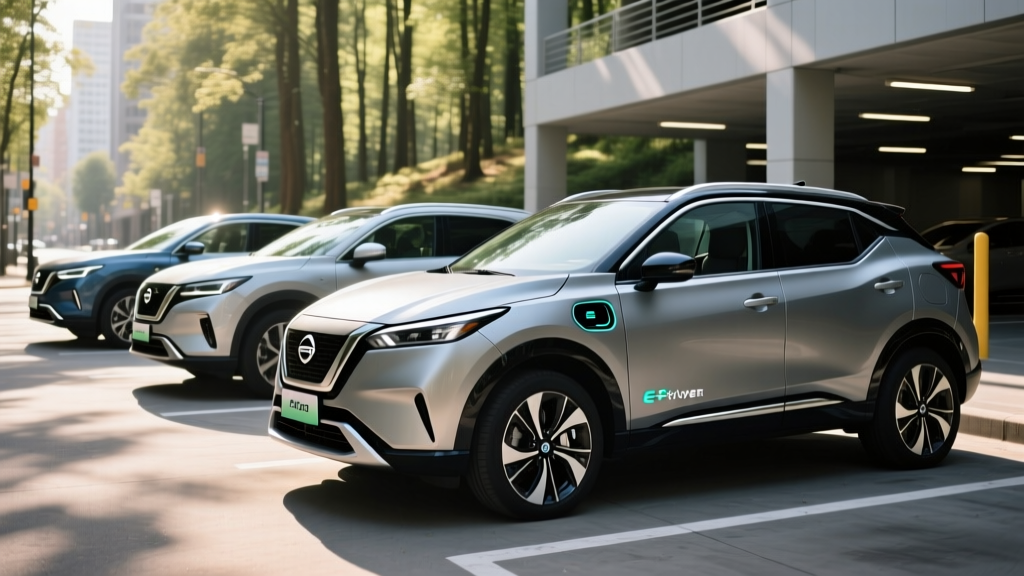
Nissan's hybrid strategy in the U.S. market has historically diverged from Toyota and Honda. While competitors flooded the market with conventional hybrids and plug-in hybrids, Nissan leaned heavily into battery-electric vehicles like the Leaf and Ariya. But for the 2026 model year, Nissan is re-engaging the hybrid segment with renewed vigor — primarily through its unique e-POWER series-hybrid technology and expanded hybrid availability across its crossover lineup.
If you're researching Nissan hybrids 2026, you'll need to understand a critical distinction: Nissan's e-POWER system is fundamentally different from the parallel-hybrid architecture used by Toyota and Honda. This guide breaks down every hybrid and electrified option in Nissan's 2026 U.S. lineup, with exact MPG figures, powertrain data, battery warranty details, and tax credit eligibility so you can make an informed decision.
Understanding Nissan's e-POWER: Series Hybrid vs. Parallel Hybrid
Before diving into individual models, it's essential to understand how Nissan's hybrid system works — because it's unlike anything else on the U.S. market.
HEV vs. PHEV vs. e-POWER Series Hybrid
| Feature | Conventional HEV (Parallel) | PHEV (Plug-In) | Nissan e-POWER (Series) |
|---|---|---|---|
| Engine drives wheels? | Yes, with motor assist | Yes, with motor assist | No — electric motor only |
| Plugs in to charge? | No | Yes | No |
| Electric-only range | Very short (<1 mi) | 20–40+ miles | N/A (always electric drive) |
| Gas engine role | Drives wheels + charges battery | Drives wheels + charges battery | Generator only (charges battery) |
| Driving feel | Blended gas/electric | EV-like until battery depletes | EV-like at all times |
| Federal tax credit (§30D) | No | Up to $7,500 (if eligible) | No |
Nissan's e-POWER system uses a gasoline engine purely as a generator. The engine never mechanically drives the wheels — 100% of propulsion comes from the electric motor. This means e-POWER vehicles deliver the smooth, instant-torque driving experience of an EV, but you refuel with gasoline rather than plugging in. Think of it as an EV with an onboard gas-powered generator.
This architecture is widely used in Japan (where the Nissan Note e-POWER has been a top seller) and is now expanding globally. For the U.S. market, the 2026 lineup offers e-POWER in the X-Trail (sold internationally; U.S. availability is limited/announced) while the Rogue and Kicks use more conventional hybrid setups.
2026 Nissan Kicks: The Entry-Level Hybrid Crossover
The redesigned Nissan Kicks entered its second generation for the 2025 model year, and the 2026 Kicks continues to offer a hybrid powertrain option that positions it as one of the most affordable hybrid crossovers available.
| Specification | Value |
|---|---|
| Powertrain | 1.5L 3-cylinder + electric motor (series-parallel) |
| Combined Horsepower | ~141 hp |
| EPA MPG (City / Highway / Combined) | 36 / 33 / 35 MPG |
| Fuel Tank | 11.9 gallons |
| Total Range | ~416 miles |
| Battery Type | Lithium-ion, ~1.5 kWh (self-charging) |
| Drivetrain | FWD standard; AWD available |
| 0–60 mph | ~8.5 seconds |
| Starting MSRP (Hybrid S trim) | $23,390 |
| AWD Add-On | +$1,500 |
| Federal Tax Credit | Not eligible (§30D requires plug-in capability) |
Real-World MPG: Kicks Hybrid
The EPA rates the 2026 Kicks Hybrid at 36 city / 33 highway / 35 combined. In real-world driving, hybrid crossovers like the Kicks tend to exceed their EPA city rating because regenerative braking recaptures more energy in stop-and-go traffic. Expect 37–40 MPG in urban driving and 30–33 MPG on sustained highway trips at 70+ mph. Overall real-world combined typically lands between 34 and 38 MPG depending on driving style and climate.
Cold weather will reduce efficiency by roughly 5–10% due to increased engine idling for cabin heat and reduced battery efficiency. In sub-freezing conditions, expect combined MPG in the low 30s.
2026 Nissan Rogue Hybrid: The Family Crossover Option
The Nissan Rogue is Nissan's volume-selling crossover, and the hybrid variant returns for 2026 with the updated powertrain that replaced the earlier 2022–2023 Rogue Hybrid. Nissan moved away from the previous parallel-hybrid setup and now offers a more efficient series-parallel system.
| Specification | Value |
|---|---|
| Powertrain | 1.5L VC-Turbo 3-cylinder + electric motor |
| Combined Horsepower | ~201 hp |
| EPA MPG (City / Highway / Combined) | 38 / 35 / 37 MPG |
| Fuel Tank | 14.5 gallons |
| Total Range | ~536 miles |
| Battery Type | Lithium-ion, ~1.8 kWh (self-charging) |
| Drivetrain | AWD standard |
| 0–60 mph | ~7.6 seconds |
| Starting MSRP (SV Hybrid) | $33,590 |
| SL Hybrid Trim | $37,890 |
| Federal Tax Credit | Not eligible |
Rogue Hybrid: Real-World Fuel Economy
The Rogue Hybrid's 38/35/37 MPG EPA rating is competitive with the Toyota RAV4 Hybrid (41/38/39) and slightly behind the Honda CR-V Hybrid (43/36/40). In real-world mixed driving, owners typically report 35–39 MPG combined. The VC-Turbo engine's variable compression ratio helps optimize efficiency under light loads while delivering strong acceleration when needed.
Highway-heavy commutes at 75+ mph will see the Rogue Hybrid drop to around 32–34 MPG. In city driving with frequent stops, the regenerative braking system can push real-world city MPG into the low 40s — a common trait of series-parallel hybrids that benefit from electric-only low-speed operation.
2026 Nissan X-Trail e-POWER: The Series-Hybrid Wildcard
The Nissan X-Trail e-POWER is sold globally (as the X-Trail in most markets; equivalent to the Rogue outside the U.S.). For 2026, Nissan has signaled expanded availability for the e-POWER variant, though U.S. buyers should verify local dealer availability as this powertrain's U.S. rollout has been gradual.
2026 Nissan X-Trail e-POWER — Preliminary Specifications
| Specification | Value |
|---|---|
| Powertrain | 1.5L VC-Turbo (generator) + dual electric motors |
| Combined Output | ~213 hp (front) / ~213 hp (e-4ORCE AWD) |
| Engine Role | Generator only — never drives wheels directly |
| WLTP Combined Consumption | ~5.8 L/100km (~40.5 MPG equivalent) |
| Estimated EPA Combined MPG | ~37–39 MPG (pending EPA certification) |
| Battery | ~1.8 kWh lithium-ion (buffer battery, self-charging) |
| Plugs In? | No |
| Driving Feel | EV-like: single-speed, instant torque, no shift shock |
| Estimated MSRP (U.S.) | $35,000–$40,000 (announced; confirm with dealer) |
Important note: The X-Trail e-POWER is a conventional (non-plug-in) hybrid despite its electric-drive architecture. It does not qualify for the federal §30D clean vehicle tax credit, which requires plug-in capability and minimum battery capacity of 7 kWh. As with all Nissan e-POWER models, you refuel exclusively at gas stations.
Specs listed for the U.S. X-Trail e-POWER are preliminary and based on global-market data. Final EPA certification figures may differ. Contact your local Nissan dealer for confirmed 2026 availability and pricing.
Hybrid Battery Warranty and Longevity: What Nissan Owners Should Expect
Battery replacement cost is consistently the top concern for hybrid buyers. Here's the good news: modern hybrid batteries are designed to last the life of the vehicle, and Nissan backs them with robust warranties.
Nissan Hybrid Battery Warranty Coverage (2026 Models)
- Hybrid Battery Warranty: 8 years / 100,000 miles (whichever comes first)
- Capacity Retention Threshold: Warranty covers defects and abnormal degradation; Nissan defines covered failure as loss of function below operational threshold
- Powertrain Warranty: 5 years / 60,000 miles (covers engine, motor, inverter)
- Basic Bumper-to-Bumper: 3 years / 36,000 miles
In California and states that follow CARB emissions rules (currently 15+ states), the hybrid battery warranty is extended to 10 years / 150,000 miles under the emissions component warranty.
Hybrid Battery Replacement Cost
If a Nissan hybrid battery fails outside of warranty, replacement costs typically range from $2,000 to $4,000 depending on the model and whether you use a new OEM pack, a refurbished unit, or an aftermarket option. For context:
- The hybrid batteries in the Kicks and Rogue are relatively small (1.5–1.8 kWh), making them significantly cheaper to replace than a full EV battery pack.
- Toyota Prius hybrid battery replacements run $2,000–$3,500; Nissan's costs are in a similar range.
- Real-world data from long-running hybrid models (Prius, Camry Hybrid) shows that hybrid batteries routinely last 150,000–200,000+ miles before significant degradation.
Unlike full EV batteries, hybrid battery packs experience less stress because they operate within a narrow state-of-charge window (typically 40–80% SoC). The vehicle's battery management system prevents deep discharges and overcharges, which are the primary causes of lithium-ion degradation.
Tax Credits and Incentives: What 2026 Nissan Hybrid Buyers Get (and Don't Get)
This is where hybrid buyers often face disappointment — and where clarity is critical.
- Federal §30D Clean Vehicle Credit ($7,500 max): Applies only to plug-in electric vehicles (BEVs and PHEVs) with battery capacity ≥ 7 kWh. Nissan's 2026 hybrids (Kicks Hybrid, Rogue Hybrid, X-Trail e-POWER) are not eligible because they are conventional (non-plug-in) hybrids.
- Used EV Credit (§25E, up to $4,000): Also requires plug-in capability. Not applicable to Nissan's HEV lineup.
- State Incentives: Some states offer rebates or HOV lane access for conventional hybrids, but these are increasingly rare as states shift incentives toward BEVs and PHEVs. Check your state's energy office or AFDC state law database for current programs.
- Manufacturer Incentives: Nissan periodically offers cash-back or low-APR financing on hybrid trims. Check Nissan USA's current offers page for 2026 model-year deals.
If tax credit eligibility is a priority for you, you'll need to look at PHEVs from other brands (Toyota RAV4 Prime, Hyundai Tucson PHEV) or full BEVs like the Nissan Ariya or Nissan Leaf, which may qualify depending on your income, the vehicle's MSRP, and battery sourcing requirements under current IRS §30D rules.
Nissan Hybrids vs. Full EVs vs. Gas Cars: Which Is Right for You?
Decision Framework: Which Powertrain Fits Your Life?
Choose a Nissan Hybrid (HEV) if:
- You cannot charge at home (no garage, apartment living, no Level 2 access)
- You want better fuel economy without changing your refueling habits
- You drive 10,000–15,000 miles/year and want to reduce fuel costs by ~30% vs. a gas-only model
- You want a lower purchase price than a PHEV or BEV
- Range anxiety is a genuine concern — you want 400+ miles of range with 5-minute refueling
Choose a PHEV if:
- You can charge at home (Level 1 or Level 2)
- Your daily commute is under 30–40 miles (covering most trips on electric only)
- You want the $7,500 federal tax credit (subject to income and MSRP caps)
- You take occasional long road trips where gas flexibility matters
Choose a Full EV (BEV) if:
- You have reliable home charging (Level 2 strongly recommended)
- Your daily driving is under 250 miles and you can plan road-trip charging
- You want the lowest per-mile fuel cost (electricity at $0.14/kWh ≈ $4.50/gallon equivalent)
- You want the full $7,500 tax credit and minimal maintenance
- You want the strongest acceleration and quietest driving experience
5-Year Cost Comparison: Kicks Hybrid vs. Gas Kicks vs. Comparable BEV
| Vehicle | MPG / MPGe | Fuel Cost (5 yr) | Purchase Price | 5-Yr Total |
|---|---|---|---|---|
| 2026 Kicks Hybrid (35 MPG) | 35 MPG | $5,143 | $23,390 | $28,533 |
| 2026 Kicks Gas (30 MPG) | 30 MPG | $6,000 | $21,590 | $27,590 |
| Comparable BEV (110 MPGe) | 110 MPGe | $2,727 | $30,000* | $32,727 |
*BEV price reflects ~$30,000 after $7,500 tax credit on a $37,500 MSRP vehicle. Gas at $3.00/gal; electricity at $0.14/kWh. Actual costs vary by region. Source: fueleconomy.gov comparison methodology.
The hybrid sits in a pragmatic middle ground: slightly higher upfront cost than the gas model but meaningful fuel savings over time, without the charging infrastructure requirements of a BEV. For apartment dwellers or those without home charging access, the hybrid is often the most practical electrified option.
Pros and Cons: 2026 Nissan Hybrid Lineup
Pros
- e-POWER and hybrid systems deliver EV-like driving smoothness without plug-in requirement
- Kicks Hybrid starts under $24,000 — one of the most affordable hybrid crossovers
- Rogue Hybrid offers competitive 37 MPG combined with standard AWD
- No range anxiety — refuel at any gas station in 5 minutes
- Hybrid battery warranty covers 8 yr/100,000 mi (10 yr/150,000 mi in CARB states)
- Lower maintenance than gas-only models (less brake wear from regen, no alternator/starter)
Cons
- No federal tax credit eligibility for any Nissan hybrid (HEV-only lineup)
- Nissan offers no PHEV in the U.S. for 2026 — limits electric-only commuting
- MPG trails segment leaders (RAV4 Hybrid at 39 combined, CR-V Hybrid at 40 combined)
- e-POWER engine noise under heavy acceleration can feel disconnected from vehicle speed
- X-Trail e-POWER U.S. availability remains limited/unconfirmed for 2026
- Hybrid premium over gas trims adds $1,500–$3,000 to purchase price
Frequently Asked Questions: 2026 Nissan Hybrids
How many MPG do 2026 Nissan hybrids get?
The 2026 Nissan Kicks Hybrid is EPA-rated at 36 city / 33 highway / 35 combined. The 2026 Nissan Rogue Hybrid achieves 38 city / 35 highway / 37 combined. Real-world city driving often exceeds the EPA city rating by 2–5 MPG due to regenerative braking efficiency in stop-and-go traffic. Highway driving at sustained speeds above 70 mph typically yields 2–4 MPG below the EPA highway figure.
Does Nissan make a plug-in hybrid (PHEV) for 2026?
As of the 2026 model year, Nissan does not offer a plug-in hybrid in the United States. All Nissan hybrids use conventional (non-plug-in) hybrid or e-POWER series-hybrid systems. If you want Nissan electrification with plug-in capability, the Nissan Leaf (BEV) and Nissan Ariya (BEV) are the current options. Nissan has not announced a U.S.-market PHEV for 2026.
Is the Nissan hybrid system reliable? What does battery replacement cost?
Nissan's hybrid systems have proven reliable, with the e-POWER architecture in particular benefiting from fewer mechanical complexity points (no traditional transmission, no engine-wheel mechanical linkage). The hybrid battery is warrantied for 8 years / 100,000 miles. Out-of-warranty replacement costs range from approximately $2,000 to $4,000 depending on model and parts source. Industry data shows hybrid batteries typically lasting 150,000–200,000+ miles with proper maintenance.
Do Nissan hybrids qualify for the federal tax credit?
No. The federal §30D Clean Vehicle Credit applies only to plug-in electric vehicles (BEVs and PHEVs) with a battery capacity of at least 7 kWh. Nissan's 2026 hybrids have small batteries (1.5–1.8 kWh) and do not plug in, making them ineligible. The Nissan Ariya and Leaf (BEVs) may qualify depending on your income, the vehicle MSRP, and battery component sourcing requirements. Consult the IRS clean vehicle credit page and a tax professional for your specific eligibility.
How does Nissan e-POWER differ from Toyota's hybrid system?
Toyota's Hybrid Synergy Drive is a parallel hybrid — the gas engine and electric motor can both mechanically drive the wheels, with the system blending between them. Nissan's e-POWER is a series hybrid — the gas engine only generates electricity; the electric motor handles 100% of propulsion. The result is a smoother, more EV-like driving experience with e-POWER, though Toyota's parallel system tends to achieve slightly higher highway MPG because direct engine-to-wheel drive is more efficient at sustained high speeds.
Do I need to plug in a Nissan hybrid?
No. None of Nissan's 2026 hybrid models require plug-in charging. The Kicks Hybrid, Rogue Hybrid, and X-Trail e-POWER all charge their batteries through regenerative braking and the onboard gasoline engine. You refuel exclusively at gas stations, just like a conventional car.
The 2026 Nissan hybrid lineup occupies a practical niche: affordable, no-plug-required electrification that reduces fuel costs without demanding lifestyle changes. The absence of a PHEV option and the ineligibility for federal tax credits are real limitations — but for buyers who can't charge at home and want a simple path to better fuel economy, the Kicks and Rogue hybrids are compelling choices. Verify the latest specs and availability at NissanUSA.com and cross-reference fuel economy data at fueleconomy.gov before visiting your dealer.