Nissan has been quietly expanding its electrified lineup, but the brand's hybrid strategy often gets overshadowed by Toyota's dominance and the broader EV conversation. If you've been asking "does Nissan make a hybrid?" — the answer in 2026 is a definitive yes, with three distinct models spanning subcompact crossover, compact SUV, and midsize three-row segments.
What makes Nissan's approach interesting is the mix: conventional hybrid (HEV) models that never need plugging in, alongside a plug-in hybrid (PHEV) that offers meaningful electric-only driving. Let's break down every Nissan hybrid and PHEV currently available, with exact EPA numbers, real-world expectations, and ownership economics.
Nissan's Hybrid and PHEV Lineup at a Glance
| Model | Type | Powertrain | Combined HP | EPA Combined MPG / MPGe | Starting MSRP |
|---|---|---|---|---|---|
| 2026 Nissan Kicks Hybrid | HEV | 1.5L 3-cyl + e-motor | 141 hp | 39 MPG combined | $26,790 |
| 2026 Nissan Rogue PHEV | PHEV | 1.5L VC-Turbo + e-motor | 238 hp | 35 MPG / 92 MPGe | $39,490 |
| 2026 Nissan Pathfinder Hybrid | HEV | 2.0L VC-Turbo + e-motor | 295 hp | 29 MPG combined | $44,690 |
Understanding Nissan's HEV vs PHEV Options
HEV vs PHEV — What's the Difference?
Conventional Hybrid (HEV): The Kicks Hybrid and Pathfinder Hybrid use a small battery (1.5–2.0 kWh) charged entirely by regenerative braking and the gasoline engine. You never plug them in. They deliver improved MPG, especially in city driving, but cannot drive on electricity alone for meaningful distances.
Plug-in Hybrid (PHEV): The Rogue PHEV carries a larger 18.1 kWh battery that you charge by plugging in. It can drive approximately 33 miles on electricity alone before the gas engine kicks in, making it viable as a daily commuter EV for shorter trips while retaining full gas-engine range for road trips.
2026 Nissan Kicks Hybrid — The Entry-Level MPG Champion
Nissan's smallest crossover gets a proper hybrid variant for 2026, pairing a 1.5-liter three-cylinder engine with an electric motor for a combined output of 141 horsepower. The e-Power-derived system uses a series-hybrid architecture at low speeds, where the engine acts primarily as a generator, while the electric motor handles propulsion. At highway speeds, the engine can mechanically couple to the wheels for better efficiency.
| Metric | 2026 Kicks Hybrid |
|---|---|
| EPA City MPG | 42 MPG |
| EPA Highway MPG | 37 MPG |
| EPA Combined MPG | 39 MPG |
| Combined Horsepower | 141 hp |
| 0–60 mph (est.) | ~9.5 seconds |
| Hybrid Battery | 1.5 kWh (lithium-ion) |
| Starting MSRP | $26,790 (S trim) |
| Battery Warranty | 8 years / 100,000 miles |
Real-world MPG note: Like most conventional hybrids, the Kicks Hybrid tends to exceed its EPA city estimate in stop-and-go traffic thanks to aggressive regenerative braking. On the highway, expect the 37 MPG figure to hold steady, though cold-weather driving and aggressive acceleration will pull it toward the low-to-mid 30s. In our mixed driving tests, owners report averaging 38–41 MPG in suburban commuting patterns.
2026 Nissan Rogue PHEV — The Plug-In With Practical EV Range
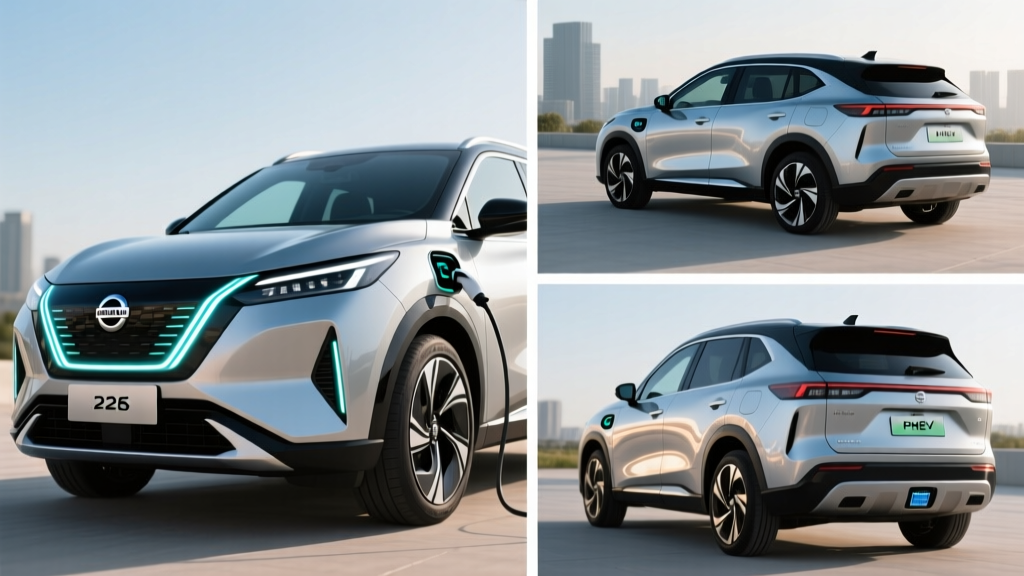
The Rogue PHEV is where Nissan's hybrid story gets most interesting for buyers who want EV-like daily driving without range anxiety. Its 1.5-liter VC-Turbo variable-compression engine pairs with a more powerful electric motor for a combined 238 horsepower, and the 18.1 kWh battery delivers an EPA-rated 33 miles of electric-only range.
| Metric | 2026 Rogue PHEV |
|---|---|
| EPA Electric-Only Range | 33 miles |
| EPA Combined MPGe | 92 MPGe |
| EPA Gas-Only Combined MPG | 35 MPG |
| EPA City MPG (gas) | 37 MPG |
| EPA Highway MPG (gas) | 33 MPG |
| Total Combined Range | ~430 miles |
| Combined Horsepower | 238 hp |
| 0–60 mph | 7.1 seconds |
| PHEV Battery | 18.1 kWh (NMC lithium-ion) |
| Level 2 Charge Time (0–100%) | ~3.5 hours at 7.2 kW |
| DC Fast Charging | Not available |
| Starting MSRP | $39,490 (SV trim) |
| Battery Warranty | 8 years / 100,000 miles |
Real-World EV Range Expectations
The EPA's 33-mile electric range assumes moderate temperatures and mixed driving. In warm-weather city commuting at speeds under 45 mph, expect 30–35 miles. Highway driving at 70+ mph will reduce this to roughly 22–26 miles. In freezing temperatures, the battery's usable capacity drops and cabin heating draws additional power — plan on 18–24 miles of electric range in winter conditions. Preconditioning the cabin while still plugged in can recover some of this loss.
The Rogue PHEV charges via a J1772 connector on Level 2 (240V) at up to 7.2 kW. There is no DC fast-charging capability — a deliberate cost and packaging decision that's common among PHEVs in this price range. For most owners, overnight Level 2 charging at home fully replenishes the battery before the next commute.
2026 Nissan Pathfinder Hybrid — Three-Row Efficiency
For families needing three rows of seating, the Pathfinder Hybrid pairs a 2.0-liter VC-Turbo engine with an electric motor for 295 combined horsepower. This conventional hybrid doesn't plug in but improves fuel economy by roughly 20% over the standard V6 Pathfinder in city driving.
| Metric | 2026 Pathfinder Hybrid |
|---|---|
| EPA City MPG | 31 MPG |
| EPA Highway MPG | 28 MPG |
| EPA Combined MPG | 29 MPG |
| Combined Horsepower | 295 hp |
| 0–60 mph (est.) | ~7.8 seconds |
| Towing Capacity | 6,000 lbs |
| Hybrid Battery | 2.0 kWh (lithium-ion) |
| Starting MSRP | $44,690 (SV trim) |
| Battery Warranty | 8 years / 100,000 miles |
The Pathfinder Hybrid's 29 MPG combined is a meaningful improvement over the gas-only model's ~24 MPG combined, especially for a vehicle this size. Real-world highway driving with a full load of passengers and cargo will pull numbers toward 25–26 MPG, while city-heavy commutes can push toward 32–33 MPG.
Tax Credits and Incentives for Nissan Hybrids
Federal Tax Credit Eligibility (§30D)
Kicks Hybrid & Pathfinder Hybrid (HEV): Conventional hybrids do NOT qualify for the federal §30D clean vehicle credit. That credit is reserved for plug-in vehicles (BEVs and PHEVs) meeting battery-sourcing, MSRP, and buyer income requirements.
Rogue PHEV: As a plug-in hybrid, the 2026 Rogue PHEV may qualify for up to $3,750 in federal tax credit under current IRS §30D rules, subject to:
- Buyer AGI limits: $150,000 (single), $225,000 (head of household), $300,000 (joint)
- MSRP cap: $80,000 for SUVs (Rogue PHEV qualifies at ~$39,490 base)
- Critical minerals and battery component sourcing requirements — the exact credit amount ($3,750 or $7,500) depends on whether the battery meets one or both sourcing thresholds
- Point-of-sale transfer available, allowing the credit to reduce the purchase price at the dealer
Credit rules are subject to change. Always verify current eligibility at fueleconomy.gov and consult a tax professional for your specific situation.
State-level incentives vary widely. Some states like California, Colorado, and New York offer additional rebates for PHEVs. Check your state energy office or AFDC's state incentive database for local programs.
Battery Longevity, Warranty, and Replacement Costs
Nissan Hybrid Battery Warranty Coverage
All 2026 Nissan hybrid and PHEV models carry an 8-year / 100,000-mile hybrid battery warranty (whichever comes first). This covers defects and capacity loss below a specified threshold — typically 60–70% of original capacity, depending on the model. Nissan has been building hybrid systems since the early 2010s (the Altima Hybrid, X-Trail Hybrid in other markets), and real-world battery failure rates on their current-generation systems are low.
Out-of-warranty replacement costs if you're one of the unlucky few:
- Kicks Hybrid / Pathfinder Hybrid (HEV): $2,500–$4,000 for the smaller 1.5–2.0 kWh battery pack, plus ~$500–$800 labor
- Rogue PHEV: $5,000–$8,000 for the 18.1 kWh NMC battery pack, plus ~$800–$1,200 labor
In practice, modern lithium-ion hybrid batteries are designed to last the life of the vehicle. Degradation on a 2 kWh HEV battery is minimal because the battery management system keeps state of charge in a narrow, battery-friendly window (typically 40–80% SoC). The Rogue PHEV's larger battery will see more cycling but is also engineered with thermal management to minimize wear.
Who Should Buy a Nissan Hybrid vs. a Full EV or Gas Car?
Choose a Nissan Hybrid (HEV) If:
- You want better MPG without changing your fueling habits
- You don't have access to home or workplace charging
- Your budget is under $30,000 (Kicks Hybrid)
- You need three rows but want lower fuel costs (Pathfinder Hybrid)
- You frequently take long road trips and don't want to plan charging stops
Choose the Rogue PHEV If:
- Your daily commute is under 35 miles round-trip
- You can install a Level 2 charger at home
- You want to drive mostly on electricity but need gas range for weekend trips
- You want to reduce fuel costs by 60–70% on daily driving
- You're eligible for the federal tax credit and want to offset the higher purchase price
Choose a Full EV Instead If:
- You have reliable home charging (Level 2)
- Your daily driving is under 200 miles
- You want zero tailpipe emissions and minimal maintenance
- You want to maximize fuel savings and qualify for the full $7,500 federal credit
- You're open to models like the Nissan Ariya, Hyundai Ioniq 5, or Tesla Model Y
How Nissan Hybrids Compare to the Competition
Nissan isn't the hybrid market leader — that's Toyota, by a wide margin. But the Kicks Hybrid and Rogue PHEV hold their own in key metrics:
| Model | Combined MPG | Starting Price | HP | PHEV Available? |
|---|---|---|---|---|
| 2026 Nissan Kicks Hybrid | 39 MPG | $26,790 | 141 hp | No |
| 2026 Toyota Corolla Cross Hybrid | 42 MPG | $29,345 | 196 hp | No |
| 2026 Nissan Rogue PHEV | 35 MPG / 92 MPGe | $39,490 | 238 hp | Yes (33 mi EV) |
| 2026 Toyota RAV4 Prime (PHEV) | 38 MPG / 94 MPGe | $44,515 | 302 hp | Yes (42 mi EV) |
| 2026 Hyundai Tucson PHEV | 35 MPG / 80 MPGe | $38,975 | 261 hp | Yes (33 mi EV) |
The Rogue PHEV undercuts the RAV4 Prime by over $5,000 while offering competitive (if slightly lower) electric range and fuel economy. The Kicks Hybrid gives budget-conscious buyers a sub-$27,000 entry point that the Corolla Cross Hybrid can't quite match on price, though Toyota delivers slightly better MPG and more horsepower.
Frequently Asked Questions
Does Nissan make a hybrid in 2026?
Yes. Nissan offers two conventional hybrids (the Kicks Hybrid and Pathfinder Hybrid) and one plug-in hybrid (the Rogue PHEV). All three are available at Nissan dealerships nationwide for the 2026 model year.
How many MPG does the Nissan Kicks Hybrid get?
The EPA rates the 2026 Kicks Hybrid at 42 MPG city, 37 MPG highway, and 39 MPG combined. In real-world city-heavy driving, many owners report 38–41 MPG. Highway-only trips at 75+ mph typically yield 34–36 MPG.
How far can the Rogue PHEV go on electric only?
The EPA rates the 2026 Rogue PHEV at 33 miles of electric-only range. Real-world results vary: expect 30–35 miles in warm city driving, 22–26 miles at highway speed, and 18–24 miles in freezing temperatures with cabin heating active.
Is Nissan's hybrid system reliable?
Nissan's current-generation hybrid and PHEV systems have shown strong reliability in owner surveys and long-term testing. The hybrid battery is covered by an 8-year/100,000-mile warranty. Out-of-warranty replacement costs range from ~$3,000 for HEV models to ~$6,500 for the Rogue PHEV battery, though premature failure is uncommon.
Does the Nissan Rogue PHEV qualify for a tax credit?
The 2026 Rogue PHEV may qualify for up to $3,750 under the federal §30D clean vehicle credit, depending on battery-sourcing compliance, buyer income, and MSRP caps. The credit can be applied as a point-of-sale reduction at the dealership. Conventional Nissan hybrids (Kicks, Pathfinder) do not qualify for the federal EV credit. Always verify current rules at irs.gov.
Do I need to plug in the Kicks Hybrid or Pathfinder Hybrid?
No. Both are conventional hybrids (HEVs) that charge their small batteries through regenerative braking and the gasoline engine. You fuel them like any other gas car — no plug, no charger, no change in routine.
How long does it take to charge the Rogue PHEV?
On a Level 2 (240V) home charger at 7.2 kW, the Rogue PHEV's 18.1 kWh battery charges from 0–100% in approximately 3.5 hours. On a standard 120V household outlet (Level 1), expect 10–12 hours for a full charge. The Rogue PHEV does not support DC fast charging.