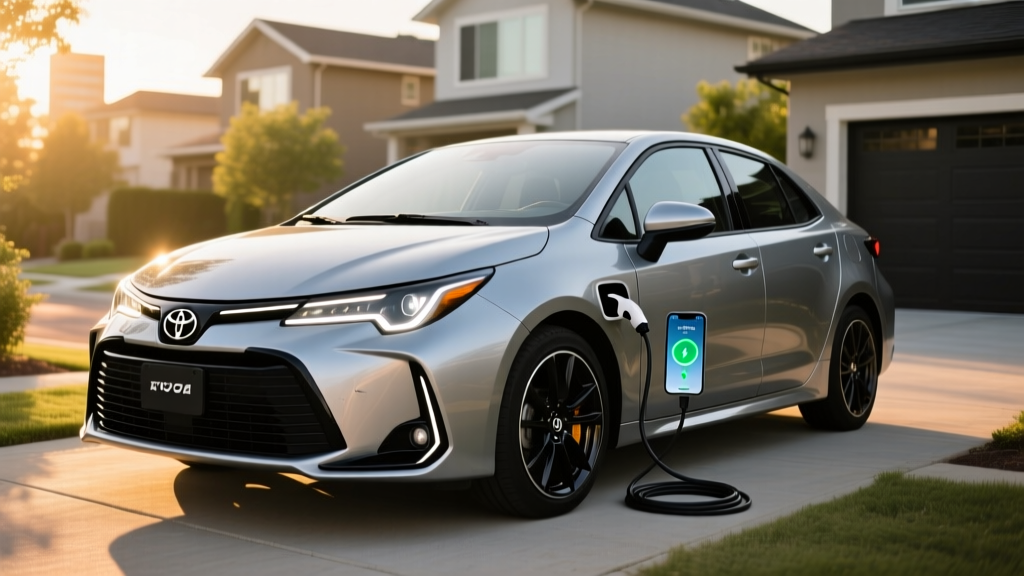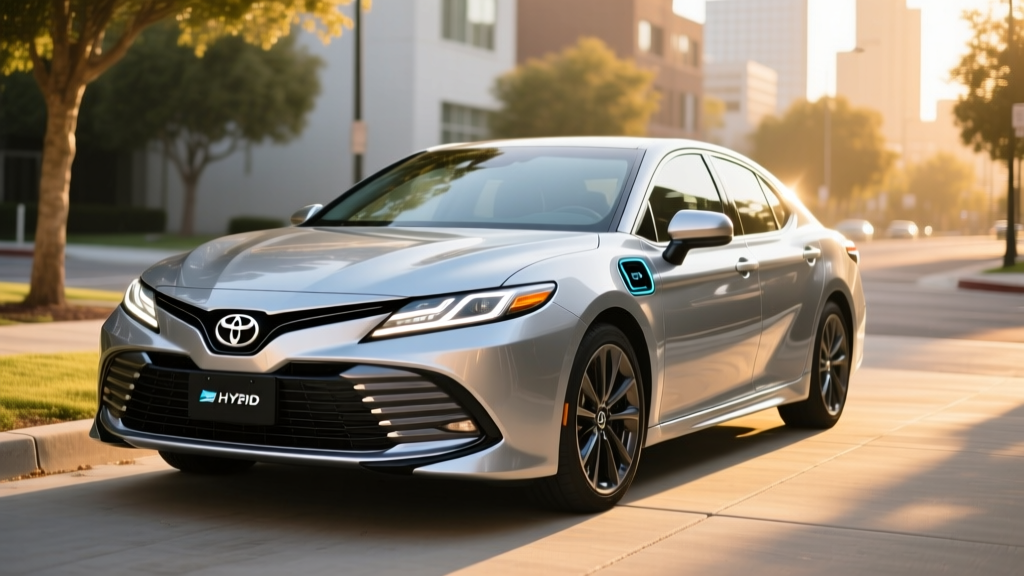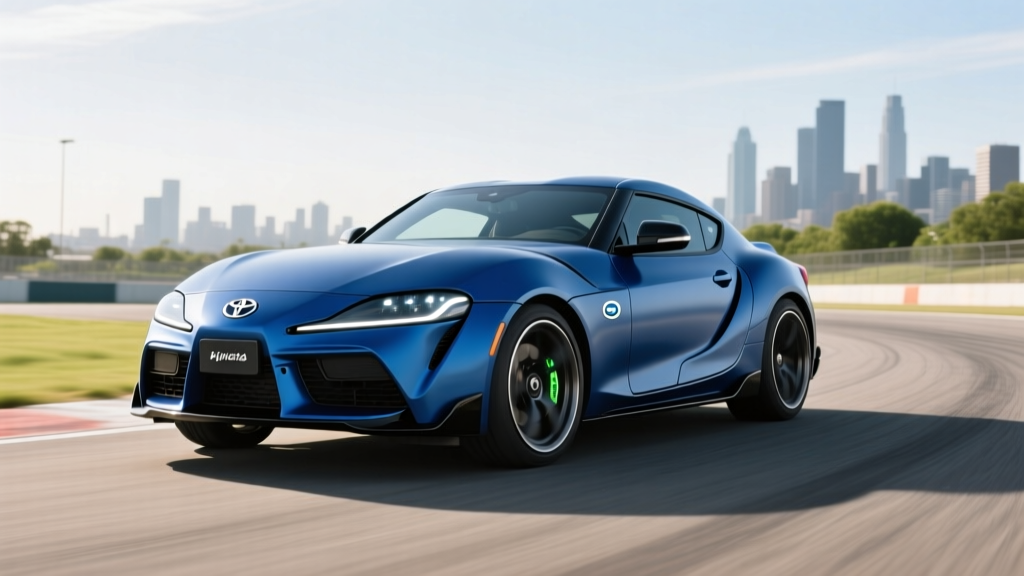
The Toyota Celica nameplate has been dormant since 2006, but persistent industry reports and trademark filings have reignited interest in a potential new Toyota Celica hybrid revival. As of early 2026, Toyota has not officially confirmed a Celica return, but the brand's aggressive hybrid expansion across its lineup — including the GR Corolla, new Prius, and Crown — makes a sporty hybrid coupe a plausible addition. Here's everything we know, what the specs could look like, and how a Celica hybrid would stack up against today's HEV and PHEV options.
Why a Hybrid Celica Makes Sense for Toyota in 2026
Toyota has doubled down on hybrid technology even as competitors pivot to full battery-electric vehicles. The fifth-generation Prius (redesigned for 2023 and refreshed since) proved that hybrids can be stylish and engaging, not just economical. The Crown lineup expanded into a crossover-sedan hybrid, and the GR Corolla demonstrated Toyota's commitment to performance models.
A compact sport coupe slotting between the GR86 and the GR Supra would fill a gap in Toyota's lineup. With the company's fifth-generation Toyota Hybrid System (THS) now deployed across nearly every model, a Celica-badged hybrid would leverage existing, proven powertrain technology at relatively low development cost. The question is whether Toyota would offer it as a conventional hybrid (HEV), a plug-in hybrid (PHEV), or both.
HEV vs PHEV: What Powertrain Would a Celica Hybrid Use?
Understanding the distinction between these two hybrid types is essential before evaluating any Celica hybrid rumors:
Conventional Hybrid (HEV)
- No plug required — the battery charges via regenerative braking and the gas engine
- Small battery (~1.0–2.0 kWh)
- Electric motor assists the engine; cannot drive on electric alone for meaningful distance
- Lower cost, simpler ownership
- Example: Toyota Prius (standard), Toyota Camry Hybrid
Plug-In Hybrid (PHEV)
- Plugs in to charge — has a larger battery you can charge at home or public stations
- Larger battery (~10–20 kWh)
- Can drive 25–45 miles on electricity alone before the gas engine engages
- Higher upfront cost; may qualify for federal tax credits
- Example: Toyota Prius Prime, Toyota RAV4 Prime
Based on Toyota's current strategy, the most likely scenario for a new Celica would be a conventional HEV as the base powertrain, with a possible PHEV variant as a higher trim. Toyota reserves PHEV powertrains for models where the cost premium is justified by utility (SUVs, practical sedans). A sport coupe may lean HEV-first to keep the entry price competitive.
Estimated Powertrain and Performance Specs
If Toyota follows the architecture used in the current Prius and Crown, a new Celica hybrid would likely use a variant of the 2.0-liter Dynamic Force four-cylinder paired with Toyota's fifth-generation hybrid transaxle. Here's a projected spec table based on comparable Toyota hybrid models:
| Specification | HEV (Estimated) | PHEV (Estimated) |
|---|---|---|
| Engine | 2.0L inline-4 | 2.0L inline-4 |
| Combined Horsepower | ~196 hp | ~220 hp |
| Battery Capacity | ~1.5 kWh (NiMH or Li-ion) | ~13.6 kWh (Li-ion) |
| Electric-Only Range | N/A (assist only) | ~30–38 miles (est.) |
| EPA Combined MPG / MPGe | ~50–55 MPG (est.) | ~105 MPGe / 48 MPG gas-only (est.) |
| 0–60 mph | ~7.0 sec (est.) | ~6.5 sec (est.) |
| Drivetrain | FWD or AWD-e | FWD or AWD-e |
| Level 2 Charge Time (PHEV) | N/A | ~4 hours at 3.3 kW (est.) |
| DC Fast Charge (PHEV) | N/A | Unlikely (most Toyota PHEVs lack DCFC) |
| Estimated Base MSRP | $28,000–$32,000 | $35,000–$39,000 |
Note: These figures are projections based on the current Toyota Prius (196 hp, 57 MPG combined EPA) and Prius Prime (220 hp, 44 miles electric-only EPA, 13.6 kWh battery). A sportier Celica tune could sacrifice some efficiency for performance. Source for current Prius data: fueleconomy.gov.
Fuel Economy: How Many MPG Would a Celica Hybrid Get?
If the Celica HEV mirrors the current Prius powertrain, buyers could expect EPA ratings in the 50–55 MPG combined range. The Prius achieves 57 MPG combined (57 city / 56 highway) with its 2.0L hybrid system. A Celica, with a sportier tune and potentially wider tires, might trade a few MPG for responsiveness.
| Metric | Celica HEV (Est.) | 2025 Prius (Actual EPA) | 2025 Prius Prime (Actual EPA) |
|---|---|---|---|
| City MPG | 52–55 | 57 | 50 (gas-only) |
| Highway MPG | 47–50 | 56 | 47 (gas-only) |
| Combined MPG | 50–53 | 57 | 48 (gas-only) |
| Combined MPGe (PHEV) | ~100–110 | N/A | 114 |
Real-world MPG note: Toyota hybrids consistently overperform their EPA city ratings in actual stop-and-go driving because regenerative braking recaptures energy that gas cars waste. Highway MPG tends to run closer to or slightly below the sticker, especially at speeds above 70 mph. In our experience with the current Prius, expect real-world combined figures within 2–4 MPG of the EPA number under normal conditions, with a potential 10–15% drop in sustained cold-weather driving (below 30°F) due to reduced battery efficiency and cabin heating load.
Battery Warranty, Lifespan, and Replacement Cost
Toyota's hybrid battery track record is one of the strongest in the industry. The Prius, now in its fifth generation, has demonstrated that Toyota's hybrid battery packs routinely last 150,000–200,000+ miles with minimal degradation. Unlike full EV batteries, hybrid batteries are small and rarely cycle through deep charge-discharge ranges, which significantly extends their lifespan.
If a Celica hybrid battery did require out-of-warranty replacement, costs would depend on the variant:
- HEV battery replacement: $2,000–$4,000 (small ~1.5 kWh pack)
- PHEV battery replacement: $6,000–$9,000 (larger ~13.6 kWh pack)
For context, a full EV battery replacement can run $10,000–$20,000+. The hybrid battery cost advantage is substantial and should factor into any long-term ownership calculation.
Tax Credit Eligibility: Would a Celica Hybrid Qualify?
Under current IRS §30D rules for 2026, the federal tax credit landscape differs sharply between HEVs and PHEVs:
Conventional HEV (No Plug)
$0 federal tax credit. Conventional hybrids that cannot be plugged in do not qualify for the §30D Clean Vehicle Credit. Some states offer modest rebates ($250–$1,000) for HEVs, but these vary widely.
PHEV (Plug-In) Variant
Up to $7,500 — with major caveats. To qualify, the PHEV Celica would need to meet all of the following:
- MSRP under $55,000 (sedan/coupe cap)
- Buyer AGI under $150K (single) / $300K (joint)
- Battery ≥7 kWh
- Critical minerals and battery component sourcing thresholds (which tighten annually through 2030)
Point-of-sale transfer is available if eligible. (Source: IRS §30D)
Given that Toyota's PHEVs (Prius Prime, RAV4 Prime) have historically struggled with the critical-minerals sourcing requirement — often falling to $3,750 or $0 in recent years — buyers should not count on the full $7,500. Check fueleconomy.gov for the latest eligible-vehicle list at time of purchase.
Hybrid vs PHEV vs Full EV: Which Is Right for You?
If a new Toyota Celica hybrid does arrive, here's a decision framework to determine whether the HEV, PHEV, or a competing full EV suits your situation:
Choose the Celica HEV if:
- You cannot install a home charger (apartment, street parking)
- You want the lowest purchase price and simplest ownership
- Your commute is longer than 40 miles round-trip
- You want 50+ MPG without ever thinking about plugging in
Choose the Celica PHEV if:
- You have Level 2 home charging access
- Your daily commute is under 35 miles (you'd rarely use gas)
- You want EV-like daily driving with gas-engine flexibility for road trips
- You may qualify for federal or state PHEV incentives
Choose a Full EV (e.g., Tesla Model 3, Hyundai Ioniq 6) instead if:
- You want zero tailpipe emissions and the lowest per-mile fuel cost
- You have reliable home and/or workplace charging
- You drive under 300 miles between charging opportunities
- You want the full $7,500 federal credit (more EVs currently qualify than PHEVs)
What We Know vs. What's Still Speculation
To be direct about the current state of information:
| Claim | Confirmed? | Source |
|---|---|---|
| Toyota has filed Celica-related trademarks | ✅ Yes | Trademark office records |
| Toyota executives have hinted at "sporty hybrid" additions | ⚠️ Indirect | Auto industry press reports |
| Celica will return as a 2026 or 2027 model | ❌ Unconfirmed | No official Toyota announcement |
| Specific MPG, HP, pricing, or trim levels | ❌ Unconfirmed | Projections only (see above) |
| A PHEV variant will be offered | ❌ Unconfirmed | Speculation based on Toyota strategy |
Trademark filings alone do not guarantee a production vehicle. Toyota, like other manufacturers, routinely files trademarks to protect names for potential future use. Until Toyota issues an official press release or shows a concept at an auto show, treat all Celica hybrid information as preliminary.
What to Buy Right Now If You Can't Wait
If you're searching for a new Toyota Celica hybrid because you want a sporty, efficient coupe, several currently available models deliver on that promise today:
Toyota Prius (2025)
- 196 hp combined
- 57 MPG combined (EPA)
- 0–60 in 7.0 seconds
- Starting at ~$28,350
- Sportier design than any prior Prius; genuinely quick
Toyota GR86 (2025)
- 228 hp (gas-only, no hybrid)
- ~25 MPG combined
- 0–60 in 6.1 seconds
- Starting at ~$29,495
- Best-handling affordable coupe; no hybrid option
The Prius is the closest proxy to what a Celica HEV might become: a stylish, efficient coupe-like hatchback with genuine performance credentials. The Prius Prime PHEV variant adds 44 miles of electric-only range for ~$33,445.
Frequently Asked Questions
Is Toyota actually making a new Celica hybrid?
As of early 2026, Toyota has not officially announced a new Celica or Celica hybrid. Trademark filings and industry speculation suggest it's under consideration, but no production timeline, specs, or pricing have been confirmed. Any vehicle would likely be a 2027 or 2028 model year at the earliest.
How many MPG would a new Toyota Celica hybrid get?
Based on Toyota's current 2.0L hybrid system (as used in the Prius), a Celica HEV could achieve an estimated 50–55 MPG combined EPA. A sportier tune and wider tires could reduce this to 47–52 MPG. These are projections, not confirmed figures.
Would a Celica PHEV go far on electric only?
If Toyota offers a PHEV Celica using the Prius Prime's 13.6 kWh battery, expect roughly 30–38 miles of electric-only range (the Prius Prime achieves 44 miles EPA, but a sportier, potentially heavier coupe could see slightly less). This covers most daily commutes without using gasoline.
Is a Toyota hybrid battery reliable, and what does replacement cost?
Toyota hybrid batteries are among the most reliable in the industry, routinely lasting 150,000–200,000+ miles. Toyota covers them for 10 years/150,000 miles. Out-of-warranty HEV replacement runs $2,000–$4,000; PHEV replacement runs $6,000–$9,000 — far less than full EV battery replacement.
Would a new Celica hybrid qualify for a federal tax credit?
A conventional HEV Celica would not qualify for any federal tax credit. A PHEV variant could qualify for up to $7,500 under IRS §30D rules, but only if it meets MSRP caps (under $55,000), buyer income limits, and increasingly strict battery-sourcing requirements. Toyota PHEVs have had inconsistent credit eligibility in recent years — verify at purchase time on fueleconomy.gov.
Should I wait for a Celica hybrid or buy something now?
Given that the Celica hybrid is unconfirmed and likely 1–2+ years from production (if it happens at all), waiting carries significant opportunity cost. The current Toyota Prius and Prius Prime deliver nearly identical projected efficiency and powertrain technology today, starting under $29,000. If sport-coupe styling is the priority, the GR86 offers engaging dynamics without hybrid efficiency.