Quick Verdict: The Mitsubishi PHEV SUV for Families Who Can't Go Full EV
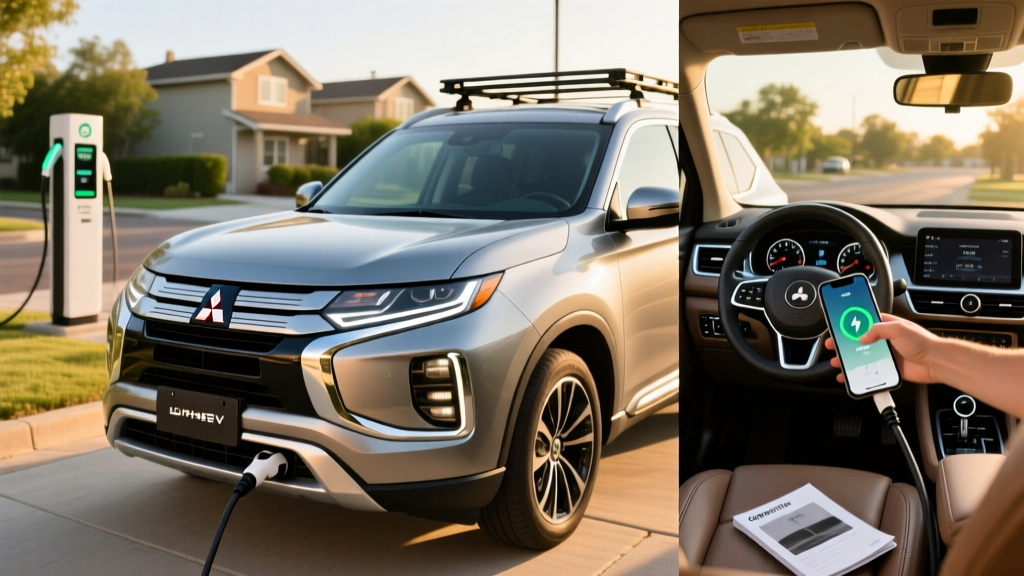
If you've been searching for a Mitsubishi PHEV SUV, you're almost certainly looking at the Outlander Plug-In Hybrid. It's the only plug-in hybrid in Mitsubishi's current US lineup, and for 2026, it remains one of the most practical three-row electrified SUVs you can buy under $45,000. With an EPA-estimated 38 miles of electric-only range, standard all-wheel drive, and the ability to DC fast charge — a rarity in the PHEV segment — the Outlander PHEV occupies a specific niche: families who want daily electric commuting without the range commitment of a full battery-electric vehicle.
But the Outlander PHEV isn't perfect. Its 20.3 kWh battery is modest, highway fuel economy drops once the gasoline engine takes over, and federal tax credit eligibility depends on your income and the vehicle's battery sourcing. This guide breaks down every number you need — EPA MPG, real-world range, charging speeds, pricing by trim, and battery warranty — so you can decide if this is the right electrified SUV for your driveway.
| Spec | Value |
|---|---|
| EPA Electric-Only Range | 38 miles |
| EPA Combined MPGe (EV mode) | 64 MPGe |
| EPA Combined MPG (gasoline-only) | 26 MPG |
| Total Combined Range | ~420 miles |
| Battery Capacity (gross / usable) | 20.3 kWh / ~17.5 kWh |
| Battery Chemistry | NMC (Nickel Manganese Cobalt) |
| Combined System Horsepower | 248 hp / 332 lb-ft torque |
| Gasoline Engine | 2.4L inline-4 Atkinson-cycle (126 hp) |
| Electric Motors | Front (82 kW) + Rear (101 kW) |
| DC Fast Charge (CHAdeMO) | ~50 kW peak, 0-80% in ~38 min |
| Level 2 Charge (240V, 7.2 kW) | 0-100% in ~3.5 hours |
| Drivetrain | Standard S-AWC (twin-motor AWD) |
| 0-60 mph | ~7.2 seconds |
| Towing Capacity | 1,500 lbs |
| Seating | 7 passengers (3 rows) |
| Starting MSRP (2026) | $40,490 (ES trim) |
HEV vs PHEV: What Mitsubishi Actually Offers
Before we go further, let's clarify terminology that trips up many buyers. Mitsubishi currently sells only one plug-in hybrid SUV in the United States: the Outlander PHEV. There is no conventional hybrid (HEV) version of the Outlander available in the US market for 2026. Some markets outside North America receive a mild-hybrid variant, but that's not relevant to US shoppers.
| Feature | Conventional Hybrid (HEV) | Plug-In Hybrid (PHEV) |
|---|---|---|
| Plug in to charge? | No — charges via regenerative braking and engine | Yes — plugs into wall outlet or charger |
| Electric-only range | 0-2 miles at low speed | 20-50 miles typically |
| Battery size | 1-2 kWh | 13-25+ kWh |
| Federal tax credit | None (expired for most) | Up to $7,500 under §30D (subject to rules) |
| Home charging needed? | No | Strongly recommended for value |
| Example | Toyota RAV4 Hybrid | Mitsubishi Outlander PHEV |
The distinction matters because the Outlander PHEV's value proposition depends entirely on whether you can plug in at home or work. If you never charge it, you're carrying around 400+ pounds of battery you're not using, and your fuel economy drops to the gasoline-only EPA rating of 26 MPG combined. That's worse than a conventional hybrid like the Toyota RAV4 Hybrid (39 MPG combined). The Outlander PHEV rewards owners who plug in nightly.
Fuel Economy: EPA Numbers and Real-World MPG
The EPA rates the 2026 Outlander PHEV at 64 MPGe when operating in electric mode (which accounts for electricity consumption converted to gasoline-equivalent) and 26 MPG combined once the battery is depleted and the 2.4L gasoline engine takes over. Here's the full breakdown from fueleconomy.gov:
| Mode | City | Highway | Combined |
|---|---|---|---|
| Electric (MPGe) | 68 MPGe | 60 MPGe | 64 MPGe |
| Gasoline-only (MPG) | 25 MPG | 27 MPG | 26 MPG |
Real-World MPG: What Owners Actually Report
EPA estimates are a starting point, not a guarantee. In real-world driving, the Outlander PHEV's results depend heavily on three variables: how often you charge, ambient temperature, and highway vs city driving mix.
Best-case scenario: If you commute 25 miles round-trip, charge nightly at home on a Level 2 charger, and rarely exceed the 38-mile electric range, you may burn gasoline only a handful of times per month. Many owners on fuel-tracking apps report effective averages of 80-100+ MPGe over months of city-heavy, charge-diligent driving.
Highway road trips: Once you deplete the battery at sustained highway speeds (70-80 mph), expect 24-26 MPG. The Atkinson-cycle 2.4L engine is tuned for efficiency, but the Outlander's boxy aerodynamics and 4,600-pound curb weight work against it. Cold weather (below 30°F) further reduces gasoline-mode efficiency by 10-15% due to engine warm-up cycles and cabin heating demands.
Cold-weather electric range: In freezing temperatures, expect the 38-mile electric range to drop to approximately 28-32 miles. The Outlander PHEV does not have a dedicated battery heater, so the NMC cells lose some output in extreme cold — a common limitation across PHEVs in this price range.
Real-world expectation: ~32-36 miles in mild weather (city/suburban), ~28-32 miles in freezing conditions, ~30-34 miles at sustained 70 mph highway speeds. Plan conservatively if your commute is close to the limit.
Charging the Outlander PHEV: Speeds, Connectors, and the CHAdeMO Question
The Outlander PHEV offers three ways to charge, and understanding each is critical to whether this SUV fits your lifestyle:
| Level | Power | Time (empty to full) | Where |
|---|---|---|---|
| Level 1 (120V household) | ~1.4 kW | ~14 hours | Any standard outlet |
| Level 2 (240V) | ~7.2 kW | ~3.5 hours | Home wallbox or public L2 |
| DC Fast Charge | ~50 kW peak | 0-80% in ~38 min | CHAdeMO public stations |
The CHAdeMO Connector Reality
The Outlander PHEV uses the CHAdeMO DC fast-charging standard — the same connector used by the Nissan LEAF. This is a significant limitation in 2026. The North American charging industry has largely standardized around NACS (Tesla's connector, now adopted by Ford, GM, Rivian, and others) and CCS1 (used by most legacy automakers). CHAdeMO infrastructure is shrinking, not growing.
That said, DC fast charging a PHEV is a niche use case. Most Outlander PHEV owners charge at home on Level 2 and rarely, if ever, use DC fast charging. The 20.3 kWh battery is small enough that a full Level 2 charge takes only about 3.5 hours — you'll be full before dinner is over. If you do take a road trip and find a CHAdeMO-equipped station (still available at many Electrify America and EVgo locations), the ~50 kW peak rate will add roughly 25 miles of electric range in 20 minutes.
Important kW vs kWh distinction: The battery stores 20.3 kWh (kilowatt-hours) of energy. The DC fast charger delivers up to 50 kW (kilowatts) of power. Think of kWh as the size of the fuel tank and kW as how fast the pump fills it.
Powertrain Deep Dive: 248 HP Twin-Motor AWD
The Outlander PHEV's powertrain is genuinely clever. Unlike many PHEVs that bolt an electric motor onto a conventional transmission, Mitsubishi uses a series-parallel hybrid system with twin electric motors — one on each axle — and no traditional gearbox. Here's the hardware:
- Gasoline engine: 2.4-liter inline-4, Atkinson-cycle, 126 hp / 147 lb-ft
- Front electric motor: 82 kW (110 hp) / 188 lb-ft
- Rear electric motor: 101 kW (135 hp) / 144 lb-ft
- Combined system output: 248 hp / 332 lb-ft
- Drivetrain: Mitsubishi S-AWC (Super All-Wheel Control) — standard on every trim
The result is a 0-60 mph time of approximately 7.2 seconds — adequate for highway merging and passing, though not sporty. The twin-motor AWD system provides genuine traction benefits in snow and rain, actively torque-vectoring between front and rear axles without a mechanical driveshaft connection.
Three primary drive modes manage the powertrain automatically:
- EV Mode: Pure electric driving up to ~80 mph (if battery allows)
- Series Hybrid Mode: Engine generates electricity to power the motors (used at moderate speeds and under heavy acceleration)
- Parallel Hybrid Mode: Engine directly drives the front wheels via a clutch (engages at sustained highway speeds for efficiency)
You don't need to manage these modes — the system selects them transparently. But understanding them helps explain why highway gasoline efficiency (27 MPG) is slightly better than city (25 MPG): at steady highway speeds, the engine can directly drive the wheels without the conversion losses of generating electricity first.
Pricing, Trims, and Federal Tax Credit Eligibility
The 2026 Mitsubishi Outlander PHEV starts at $40,490 (including destination) for the ES trim and climbs to approximately $50,000 for a fully loaded Platinum Edition. Here's the approximate trim breakdown:
- ES: ~$40,490 — 18-inch wheels, 8-inch touchscreen, heated front seats, basic ADAS
- SE: ~$43,490 — 20-inch wheels, 9-inch touchscreen, synthetic leather, power liftgate
- SEL: ~$46,490 — Nappa leather, panoramic sunroof, Bose audio, heated steering wheel
- Platinum Edition: ~$49,990 — Two-tone paint, unique interior, all SEL features
Federal Tax Credit: §30D Rules for 2026
The Outlander PHEV may qualify for the federal plug-in vehicle tax credit under IRS §30D, but eligibility is not guaranteed and depends on several factors that change periodically. As of early 2026, the key requirements per IRS guidelines include:
- MSRP cap: SUVs/vans/pickups must be under $80,000 MSRP — the Outlander PHEV passes easily
- Buyer income limits: AGI must not exceed $150,000 (single), $225,000 (head of household), or $300,000 (joint)
- Battery component sourcing: Increasing percentages of battery components must be manufactured or assembled in North America, and critical minerals must be sourced from the US or free-trade-agreement countries
- Point-of-sale transfer: As of 2024+, eligible buyers can transfer the credit to the dealer at purchase for an immediate price reduction rather than waiting to claim it on their tax return
- Credit amount: Up to $7,500, split between battery component ($3,750) and critical minerals ($3,750) requirements — the Outlander PHEV may qualify for the full amount, partial, or none depending on current-year sourcing compliance
Critical caveat: Mitsubishi's battery supply chain sourcing determines how much of the $7,500 credit the Outlander PHEV qualifies for in any given year. This changes as manufacturers shift suppliers. Before purchasing, confirm the current credit eligibility on the IRS clean vehicle credit page or with your dealer's finance department. Do not assume the full $7,500 applies — verify for the specific model year and build month.
Additionally, some states offer separate incentives. California's CVRP program, Colorado's state EV credit, and various utility rebates may stack on top of federal incentives. Check your state's energy office or utility provider for current programs.
Reliability, Battery Warranty, and Replacement Costs
Hybrid and PHEV buyers consistently rank battery longevity as a top concern. Here's what Mitsubishi provides:
10 years / 100,000 miles (whichever comes first) on the main traction battery pack.
Capacity retention threshold: Mitsubishi's warranty covers defects and excessive degradation — typically defined as falling below ~70% of original capacity. Normal gradual loss is expected.
Powertrain warranty: 10 years / 100,000 miles on the engine, electric motors, and hybrid control systems.
Basic vehicle warranty: 5 years / 60,000 miles bumper-to-bumper.
Real-World Battery Degradation
The Outlander PHEV has been sold globally since 2013 (with the current generation launching for the 2023 model year). Long-term data from earlier-generation models in Europe and Australia suggests NMC battery packs in PHEV applications lose approximately 10-15% capacity over 8-10 years of typical use. That means a 38-mile electric range today might become 32-34 miles after a decade. This is gradual and generally acceptable for most owners.
Battery Replacement Cost
If the battery pack fails outside of warranty, replacement costs are significant. Based on current dealer parts pricing and independent hybrid shop data, a full Outlander PHEV battery replacement runs between $8,000 and $12,000 including labor. However, individual cell module replacement (if only a portion of the pack has failed) can sometimes be done for $2,000-$4,000 at specialized hybrid repair shops.
The 10-year/100,000-mile warranty provides substantial protection. Mitsubishi's warranty terms are among the best in the PHEV segment, matching Hyundai and Kia. For comparison, Toyota covers its PHEV batteries for 10 years / 150,000 miles.
Pros
- Standard twin-motor AWD on every trim — no FWD base model
- 38-mile electric range covers most daily commutes
- DC fast charging capability (rare for PHEVs)
- 10-year/100,000-mile battery and powertrain warranty
- Three-row seating for up to 7 passengers
- Competitive starting MSRP under $41,000
- No range anxiety — gasoline engine as backup
Cons
- CHAdeMO DC connector is a shrinking standard
- 26 MPG gas-only is below conventional hybrid competitors
- Third row is tight for adults — best for small children
- No battery thermal management heater (cold-weather range loss)
- 1,500-lb towing capacity is low for a 3-row SUV
- Infotainment system trails competitors in responsiveness
- Federal tax credit eligibility uncertain — must verify yearly
Outlander PHEV vs Full EV vs Conventional Hybrid: Which Fits You?
The decision between a PHEV like the Outlander, a full battery-electric vehicle (BEV), and a conventional hybrid (HEV) comes down to your charging access, daily mileage, and risk tolerance.
Decision Framework
Choose the Mitsubishi Outlander PHEV if:
- You can install a Level 2 charger at home (240V outlet or wallbox)
- Your daily round-trip commute is under 35 miles
- You regularly take road trips of 300+ miles where charging infrastructure may be sparse
- You need three rows of seating and AWD
- You want to reduce gasoline consumption without committing to a full EV
Choose a full EV (e.g., Kia EV9, Tesla Model Y) if:
- You have reliable home charging and your daily driving is under 250 miles
- You want to eliminate gasoline entirely and minimize maintenance (no oil changes, no engine)
- You want access to the full $7,500 federal tax credit with fewer sourcing complications
- You're comfortable planning road trips around DC fast-charging networks
Choose a conventional hybrid (e.g., Toyota RAV4 Hybrid, Highlander Hybrid) if:
- You cannot charge at home (apartment, street parking, no garage)
- You want maximum MPG simplicity — no plugging in, ever
- Your budget is tighter (RAV4 Hybrid starts ~$6,000 less than the Outlander PHEV)
- You want proven 39+ MPG combined without behavioral changes
Frequently Asked Questions
How many MPG does the Mitsubishi Outlander PHEV get?
The EPA rates the 2026 Outlander PHEV at 64 MPGe combined in electric mode and 26 MPG combined (25 city / 27 highway) when running on gasoline only. Real-world results vary dramatically based on charging habits. Owners who plug in daily and commute under 38 miles may use almost no gasoline on weekdays. Those who never charge will see 24-26 MPG — worse than a conventional hybrid.
How far can the Outlander PHEV go on electric only?
The EPA-estimated electric-only range is 38 miles. In real-world conditions, expect 32-36 miles in mild weather with mixed city/suburban driving, and 28-32 miles in freezing temperatures or at sustained highway speeds. The total combined range (electric + gasoline) is approximately 420 miles.
Does the Mitsubishi Outlander PHEV qualify for a tax credit?
It may qualify for up to $7,500 under the federal §30D clean vehicle credit, but eligibility depends on your income (AGI caps apply), the vehicle's battery sourcing compliance for the specific build month, and MSRP limits (the Outlander passes the $80,000 SUV cap). Always verify current eligibility on IRS.gov before purchasing. Some state and utility incentives may also apply.
Is the Outlander PHEV reliable, and what does a battery replacement cost?
Mitsubishi backs the PHEV battery and powertrain with a 10-year/100,000-mile warranty, which is among the longest in the segment. Real-world degradation data from earlier Outlander PHEV generations suggests 10-15% capacity loss over a decade. Full battery replacement outside warranty costs approximately $8,000-$12,000, though module-level repairs can be less. Mitsubishi's overall reliability ratings are mid-pack among mainstream brands per sources like Consumer Reports and J.D. Power.
Can I charge the Outlander PHEV at home on a regular outlet?
Yes, Level 1 charging on a standard 120V household outlet works, but it takes approximately 14 hours for a full charge — impractical if you drive daily. A Level 2 (240V) home charger is strongly recommended and reduces charge time to about 3.5 hours. Most owners install a 240V NEMA 14-50 outlet or a hardwired Level 2 wallbox. Expect $500-$2,000 for professional installation depending on your electrical panel's capacity and proximity to the parking spot.
Why does the Outlander PHEV use CHAdeMO instead of CCS or NACS?
Mitsubishi adopted CHAdeMO early (the original Outlander PHEV launched with it in 2013) and has maintained the connector for backward compatibility. The broader industry has shifted to CCS1 and NACS for DC fast charging. In 2026, CHAdeMO stations are still available but declining. For most PHEV owners who charge primarily at home, this is a minor inconvenience rather than a dealbreaker.
How does the Outlander PHEV compare to the Toyota RAV4 Prime?
The RAV4 Prime (Toyota's PHEV) offers 42 miles of electric range, 94 MPGe, and 38 MPG gas-only — all superior to the Outlander PHEV. However, the RAV4 Prime has only two rows (5 passengers), uses a CCS connector, and has faced chronic availability issues with dealer markups. The Outlander PHEV offers three rows, standard AWD on every trim, and typically better dealer availability at MSRP. If you need 7 seats, the Outlander wins by default. If you don't, the RAV4 Prime is the more efficient PHEV.