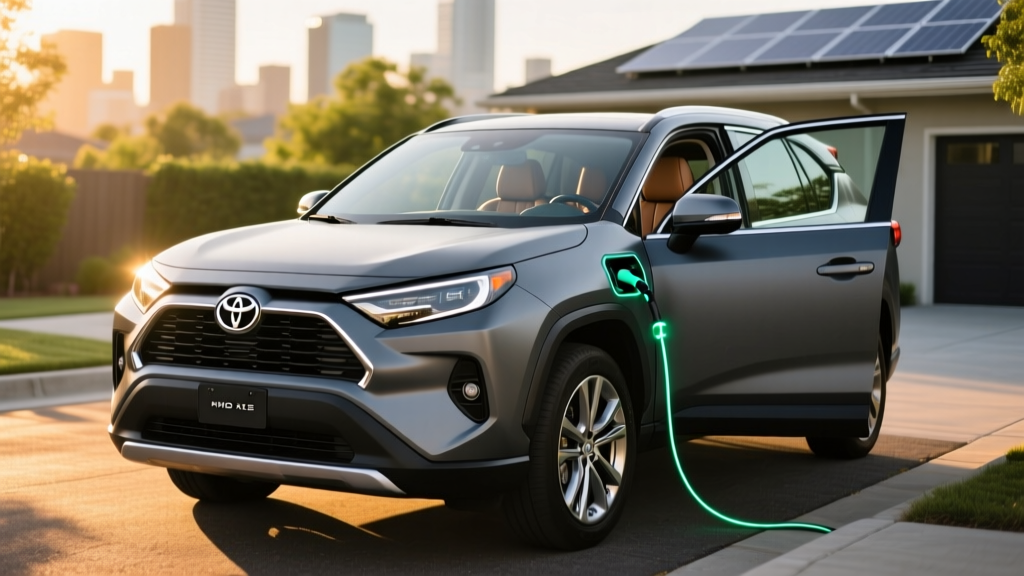
The 2026 Toyota RAV4 Hybrid XLE sits at the intersection of practicality and efficiency that has made the RAV4 nameplate America's best-selling non-truck. For buyers weighing a conventional hybrid against a plug-in hybrid (PHEV) or a full battery-electric vehicle (BEV), the XLE trim offers the strongest value proposition in the lineup: all-wheel drive, a proven hybrid powertrain, and an EPA-estimated 39 MPG combined — all starting at $33,495 before destination.
This guide breaks down the 2026 RAV4 Hybrid XLE's real-world fuel economy, powertrain specs, battery longevity, and whether it qualifies for any federal tax credits — so you can decide if this hybrid SUV fits your daily driving and budget.
HEV vs PHEV: Which RAV4 Hybrid Is Right for You?
Toyota offers the RAV4 in two distinct hybrid flavors for 2026. Understanding the difference is essential before stepping into a dealership.
| Feature | RAV4 Hybrid (HEV) | RAV4 Prime (PHEV) |
|---|---|---|
| Plug-in required? | No — self-charging via regenerative braking and engine | Yes — plug in to access electric-only driving |
| Electric-only range | N/A (electric motor assists engine) | 42 miles EPA |
| Combined horsepower | 219 hp | 302 hp |
| Battery capacity | ~1.6 kWh (NiMH) | 18.1 kWh (Li-ion) |
| DC fast charging | N/A | No — Level 1/2 only |
| Starting MSRP (2026) | $30,495 (LE) | $44,590 (SE) |
| Federal tax credit (§30D) | Not eligible | Not eligible (credit phase-out for Toyota) |
The 2026 RAV4 Hybrid XLE is a conventional HEV. It never needs to be plugged in. The gasoline engine and regenerative braking keep the small battery charged. If you want 42 miles of electric-only commuting, you need the RAV4 Prime PHEV — but you'll pay roughly $11,000 more and sacrifice some cargo space to the larger battery pack.
Fuel Economy: EPA Ratings vs Real-World MPG
Fuel efficiency is the primary reason buyers choose the RAV4 Hybrid over the gas-only model. Here is how the 2026 RAV4 Hybrid XLE (equipped with standard Electronic On-Demand AWD) stacks up according to EPA data from fueleconomy.gov:
| Driving Cycle | EPA Estimate | Real-World Expectation |
|---|---|---|
| City | 41 MPG | 42–45 MPG (hybrids excel in stop-and-go) |
| Highway | 38 MPG | 35–37 MPG (aerodynamic drag at 70+ mph) |
| Combined | 39 MPG | 38–41 MPG (mixed driving) |
Why city MPG beats highway: Conventional hybrids recapture kinetic energy during braking and low-speed driving through regenerative braking. The electric motor handles launch and low-speed cruising, where gasoline engines are least efficient. On sustained highway runs above 65 mph, the 2.5-liter four-cylinder does most of the work, and efficiency drops accordingly.
Real-World Range Note: With a 14.5-gallon fuel tank and an observed 39 MPG combined, expect approximately 565 miles between fill-ups in mixed driving. In cold weather (below 30°F), anticipate a 5–10% fuel-economy reduction due to engine warm-up cycles and increased cabin-heating load — bringing combined MPG closer to 35–37.
Powertrain and Performance Specs
The 2026 RAV4 Hybrid XLE uses Toyota's fifth-generation Hybrid Synergy Drive. The system pairs a 2.5-liter Dynamic Force four-cylinder engine with two electric motor-generators (one front, one rear for AWD) through an electronically controlled continuously variable transmission (eCVT).
| Specification | 2026 RAV4 Hybrid XLE |
|---|---|
| Engine | 2.5L 4-cyl Dynamic Force (176 hp / 163 lb-ft) |
| Front electric motor | 88 kW (118 hp) |
| Rear electric motor (AWD) | 40 kW (54 hp) |
| Net combined horsepower | 219 hp |
| Transmission | eCVT |
| Drivetrain | Electronic On-Demand AWD (standard) |
| 0–60 mph | 7.4 seconds |
| Towing capacity | 1,750 lbs |
| Cargo volume (behind rear seats) | 37.5 cu ft |
| Cargo volume (seats folded) | 69.8 cu ft |
| Curb weight | ~3,800 lbs |
The eCVT is a power-split device, not a belt-driven CVT. It delivers smooth, linear acceleration without the rubber-band feel of traditional CVTs. Off-the-line response is brisk thanks to the front motor's instant torque, and the rear motor provides confident traction in rain and light snow without a mechanical driveshaft.
Pricing, Trims, and Tax Credit Eligibility
The 2026 RAV4 Hybrid XLE starts at $33,495 including destination charge. Here is how the hybrid trims break down:
| Trim | MSRP (incl. destination) | Key Additions over LE |
|---|---|---|
| LE | $30,495 | Base hybrid, 8" touchscreen, TSS 3.0 |
| XLE | $33,495 | Blind-spot monitor, dual-zone climate, Smart Key, 10-way power driver seat |
| XLE Premium | $36,295 | SofTex seats, moonroof, 12.3" digital cluster |
| Woodland Edition | $37,095 | TRD-tuned suspension, all-terrain tires, roof rack |
| Limited | $40,295 | Leather, JBL audio, panoramic moonroof, 360° camera |
Federal Tax Credit Status
Does the 2026 RAV4 Hybrid XLE qualify for the §30D federal tax credit? No. Under current IRS rules, the §30D Clean Vehicle Credit applies exclusively to plug-in electric vehicles (BEVs and PHEVs) with sufficient battery capacity. Conventional hybrids like the RAV4 HEV do not plug in and are categorically ineligible.
Even the RAV4 Prime PHEV does not currently qualify: Toyota exhausted its §30D manufacturer cap (200,000 eligible vehicles sold) in prior years, and the sourcing and critical-mineral requirements under the Inflation Reduction Act further restrict eligibility. Always verify current credit status on irs.gov before purchasing, as rules can shift.
Some states offer rebates for hybrids — check your state energy office or AFDC state incentive database for local programs.
Battery Longevity, Warranty, and Replacement Cost
Hybrid battery anxiety is the number-one concern we hear from first-time hybrid buyers. Here are the facts for the 2026 RAV4 Hybrid:
| Coverage | Term |
|---|---|
| Hybrid battery warranty | 10 years / 150,000 miles (whichever comes first) |
| Hybrid system components (inverter, motors, ECU) | 8 years / 100,000 miles |
| Powertrain warranty (engine, transaxle) | 5 years / 60,000 miles |
| Basic bumper-to-bumper | 3 years / 36,000 miles |
Battery chemistry and degradation: The RAV4 Hybrid uses a nickel-metal hydride (NiMH) battery pack, not the lithium-ion chemistry found in BEVs. NiMH is less energy-dense but extremely durable and well-understood. Toyota has deployed this chemistry across millions of hybrids since the 1997 Prius. Real-world data from fleet operators and long-term owners shows NiMH hybrid batteries routinely lasting 150,000–200,000+ miles before significant capacity loss.
Replacement cost: If the hybrid battery does fail outside warranty, a new OEM replacement runs approximately $3,000–$4,500 installed at a Toyota dealer. Refurbished packs from independent hybrid specialists are available for $1,500–$2,500. For context, that is roughly equivalent to one major transmission repair on a conventional gas car — and far less than a BEV battery replacement ($8,000–$20,000+).
Reliability and Safety Ratings
The RAV4 Hybrid has consistently earned top reliability marks. Toyota's hybrid powertrain is among the most proven in the industry, with fewer moving parts than a conventional automatic transmission (no torque converter, no traditional gear sets in the eCVT).
For the 2026 model year, the RAV4 carries the following safety credentials:
- IIHS: TOP SAFETY PICK+ (when equipped with acceptable headlights on applicable trims) — see iihs.org for the latest test cycle results
- NHTSA: 5-Star Overall Safety Rating (carryover from current-generation testing)
- Toyota Safety Sense 3.0 (standard on all trims): Pre-Collision System with Pedestrian Detection, Full-Speed Range Dynamic Radar Cruise Control, Lane Departure Alert with Steering Assist, Lane Tracing Assist, Automatic High Beams, Road Sign Assist, and Proactive Driving Assist
TSS 3.0 is an SAE Level 2 driver-assistance system. It provides steering and speed support but requires the driver to remain fully engaged with hands on the wheel and eyes on the road at all times. It is not autonomous driving.
Who Should Buy the RAV4 Hybrid XLE — and Who Shouldn't
Choose the 2026 RAV4 Hybrid XLE if:
- You want maximum fuel savings without changing your refueling habits (no plug, no charging apps, no range planning)
- Your daily commute is under 60 miles round-trip and you want lower operating costs vs. a gas-only RAV4 (~$500–$700/year in fuel savings at 12,000 miles/year)
- You live in an area with limited public charging infrastructure
- You need AWD for rain, snow, or light trails but don't want the weight and cost penalty of a PHEV or BEV
- You want a proven, low-risk powertrain backed by a 10-year hybrid battery warranty
Consider a PHEV (RAV4 Prime) or full EV instead if:
- You have home Level 2 charging and a short commute — the RAV4 Prime's 42-mile EV range could eliminate most gasoline use
- You want access to HOV/carpool lane stickers (available in some states for PHEVs and BEVs, not HEVs)
- You want one-pedal driving and the silence of pure electric operation
- You want to minimize tailpipe emissions as much as possible with current technology
Pros
- 41 MPG city — among the best in the compact SUV segment
- Standard AWD at no extra cost vs. FWD-only competitors
- No plug-in required — zero lifestyle change from a gas car
- 10-year / 150,000-mile hybrid battery warranty
- Strong resale value; RAV4 holds top segment retention
- Spacious cargo area (37.5 cu ft) with no battery intrusion
Cons
- No federal tax credit eligibility
- eCVT drones under hard acceleration (common to power-split hybrids)
- 1,750-lb towing capacity — light-duty only
- Infotainment system functional but not class-leading in responsiveness
- Rear-seat legroom is adequate but trails the Honda CR-V Hybrid
- No DC fast charging (N/A for HEV, but worth noting vs. PHEV/BEV)
Frequently Asked Questions
How many MPG does the 2026 RAV4 Hybrid XLE get?
The EPA rates the 2026 RAV4 Hybrid XLE at 41 MPG city, 38 MPG highway, and 39 MPG combined. In real-world mixed driving, most owners report 38–42 MPG. City-heavy commutes can push above 43 MPG thanks to regenerative braking and electric motor assist at low speeds.
Does the RAV4 Hybrid need to be plugged in?
No. The RAV4 Hybrid is a conventional HEV. Its small NiMH battery recharges through the gasoline engine and regenerative braking. You fuel it exactly like a gas car — at a gas station. If you want plug-in capability, look at the RAV4 Prime (PHEV).
How far can the RAV4 Hybrid drive on electric power alone?
The conventional RAV4 Hybrid cannot drive on electric power alone for any meaningful distance. The electric motor assists the gasoline engine during acceleration and low-speed maneuvers, but the engine is always available. Only the RAV4 Prime PHEV offers a dedicated EV mode with 42 miles of electric-only range.
Is the hybrid battery reliable and expensive to replace?
Toyota's NiMH hybrid batteries are among the most durable in the industry, routinely lasting 150,000–200,000+ miles. The 2026 RAV4 Hybrid carries a 10-year / 150,000-mile hybrid battery warranty. Out-of-pocket replacement, if needed, costs approximately $3,000–$4,500 at a dealer — comparable to a major gas-car repair.
Does the 2026 RAV4 Hybrid qualify for any tax credit?
The conventional RAV4 Hybrid does not qualify for the federal §30D Clean Vehicle Credit, which is reserved for plug-in vehicles. The RAV4 Prime PHEV also currently does not qualify due to Toyota's prior manufacturer cap phase-out. Check irs.gov and your state's incentive database for any updated programs.
How does the RAV4 Hybrid XLE compare to the gas RAV4 XLE?
The hybrid XLE costs approximately $1,500 more than the gas AWD XLE but returns 39 MPG combined vs. 30 MPG combined — a 30% improvement. At 12,000 miles per year and $3.50/gallon fuel, the hybrid saves roughly $500–$650 annually in fuel, paying back the price premium in about 2.5–3 years.
Is the RAV4 Hybrid XLE good in snow?
Yes. The standard Electronic On-Demand AWD uses the rear electric motor to send torque to the rear wheels when front-wheel slip is detected. It responds faster than a mechanical AWD system because there's no driveshaft to engage. Combined with 8.1 inches of ground clearance and available all-weather floor mats, the RAV4 Hybrid handles moderate snow and ice confidently. For severe winter conditions, dedicated winter tires make a significant improvement.