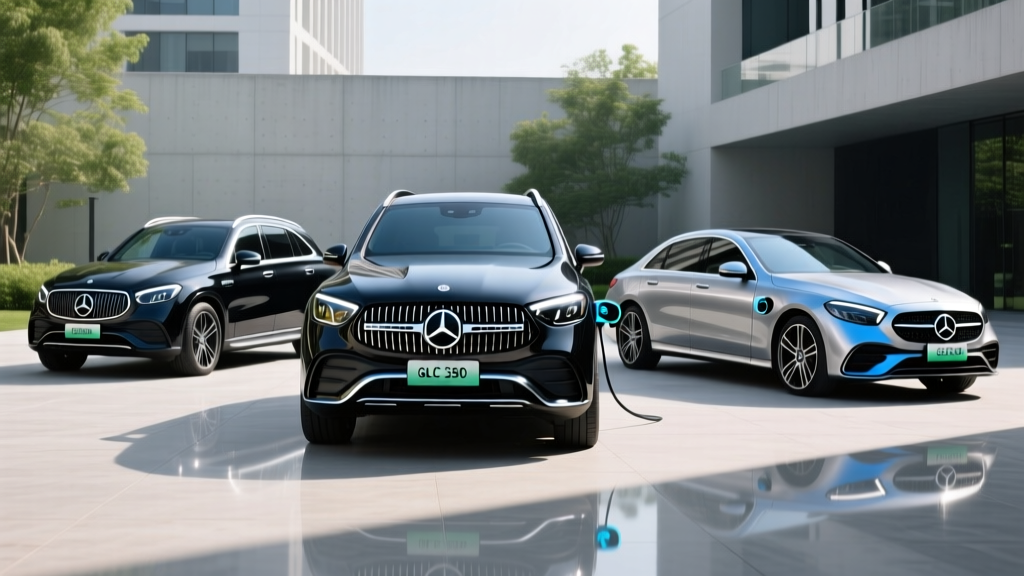
Mercedes-Benz has committed to plug-in hybrid electric vehicles (PHEVs) as a bridge technology, and by 2026 the lineup spans compact SUVs to flagship sedans. If you're researching a Mercedes plug-in hybrid, you're likely weighing whether a PHEV makes more sense than a full battery-electric vehicle (BEV) like the EQE or EQS — or a conventional hybrid (HEV) from a rival brand. This guide breaks down every current Mercedes PHEV with exact EPA figures, battery specs, real-world efficiency, and tax-credit eligibility so you can decide which model fits your driving pattern.
HEV vs PHEV: What Mercedes Actually Offers in 2026
Before diving into specific models, it's essential to distinguish the two hybrid types, because Mercedes only sells plug-in hybrids in the US market — there are no conventional (self-charging) HEVs in the current lineup.
| Feature | Conventional Hybrid (HEV) | Plug-In Hybrid (PHEV) |
|---|---|---|
| Battery size | 1–2 kWh | 13–29 kWh (Mercedes range) |
| Plug-in charging | No — regenerates via braking/engine | Yes — Level 2 AC (and some DC) |
| Electric-only range | 0–1 mile at low speed | 25–55+ miles (EPA) |
| Fuel when battery depletes | Engine + motor blend | Operates as a hybrid (engine + motor) |
| Tax credit eligibility | Generally no | Up to $7,500 under §30D (if eligible) |
| Example | Toyota RAV4 Hybrid | Mercedes GLC 350e |
Every Mercedes hybrid sold in the US for 2026 is a PHEV. This means you can plug in to gain meaningful electric-only range for daily commuting, but the vehicle still has a gasoline engine for longer trips — eliminating the range-anxiety concern that keeps some buyers from going full EV.
2026 Mercedes PHEV Lineup: Specs at a Glance
| Model | Battery (kWh) | EV Range (EPA) | Combined HP | 0–60 mph | EPA MPGe | EPA MPG (gas) | Base MSRP |
|---|---|---|---|---|---|---|---|
| GLC 350e 4MATIC SUV | 25.4 (19.8 usable) | 47 mi | 312 hp | 6.2 sec | 68 MPGe | 30 combined | $59,900 |
| GLE 350e 4MATIC SUV | 23.3 (18.5 usable) | 45 mi | 302 hp | 6.8 sec | 58 MPGe | 25 combined | $69,900 |
| S 580e 4MATIC Sedan | 28.6 (22.0 usable) | 48 mi | 442 hp | 5.0 sec | 60 MPGe | 26 combined | $120,500 |
| C 350e Sedan | 25.4 (19.8 usable) | 55 mi | 312 hp | 5.9 sec | 72 MPGe | 32 combined | $56,950 |
Sources: fueleconomy.gov (EPA estimates), Mercedes-Benz USA official specifications. MSRP excludes destination charge. Specs reflect 2026 model year.
Electric-Only Range: Real-World vs EPA Sticker
EPA electric-only range for a Mercedes plug-in hybrid is measured under ideal conditions: moderate temperatures, flat terrain, and moderate speeds. In real-world driving, expect variation:
GLC 350e — EPA: 47 miles electric-only
Real-world expectations:
- Summer city driving (55 mph avg): ~44–48 miles
- Highway at 75 mph: ~32–38 miles
- Winter (30°F) mixed driving: ~30–35 miles
The S 580e and C 350e show similar patterns. Highway speeds above 70 mph and cold weather are the biggest range killers for PHEVs, because the battery is relatively small (19–22 kWh usable) and aerodynamic drag plus cabin heating draw heavily from it. Mercedes equips most PHEVs with a heat pump for cabin heating, which mitigates cold-weather loss compared to resistive heaters — but expect a 25–35% reduction in electric range when temperatures drop below freezing.
For context, the average American drives roughly 37 miles per day according to the Federal Highway Administration. A Mercedes PHEV with 45–55 miles of EPA electric range can cover most daily commutes without using a drop of gasoline — provided you charge at home overnight.
Charging: What You Need to Know Before You Buy
One of the most important questions for PHEV buyers: how long does it take to charge, and can I use a DC fast charger?
| Charging Level | Power (kW) | Time 0–100% (GLC 350e) | Miles of EV Range per Hour |
|---|---|---|---|
| Level 1 (120V household) | ~1.4 kW | ~14 hours | ~3–4 mi/hr |
| Level 2 (240V, home wallbox) | 7.4 kW (onboard max) | ~2.75 hours | ~18–22 mi/hr |
| DC Fast Charge (optional on some trims) | Up to 60 kW | ~30 min (10–80%) | N/A — session-based |
Key details on kW vs kWh: The battery capacity is measured in kWh (energy stored — think of it as the "tank size"). Charging speed is measured in kW (power — the "flow rate"). A 25.4 kWh battery charging at 7.4 kW takes roughly 25.4 ÷ 7.4 ≈ 3.4 hours from empty, minus some efficiency losses.
Mercedes offers DC fast charging capability as an option on the GLC 350e and standard on the S 580e. This is unusual in the PHEV segment — most competitors (BMW X5 xDrive50e, Volvo XC60 Recharge) only support Level 2 AC charging. A 60 kW DC fast charger can replenish the PHEV battery from 10–80% in roughly 25–30 minutes, which is useful on road trips if you want to maximize electric driving around town at your destination.
For home charging, a Level 2 wallbox (240V, 32A or higher) is strongly recommended. Installation costs vary widely:
| Component | Typical Cost Range |
|---|---|
| Level 2 charger (Mercedes wallbox or ChargePoint Home Flex) | $400–$700 |
| Electrician labor (240V/50A circuit run) | $500–$2,000 |
| Electrical permit | $50–$200 |
| Panel upgrade (if needed for 200A service) | $1,500–$4,000 |
| Total (no panel upgrade) | $950–$2,900 |
Consult a licensed electrician for a final assessment of your home's electrical capacity. Many homes with 200-amp service can support a Level 2 charger without a panel upgrade.
Fuel Economy: EPA Numbers and Real-World MPG
Once the battery is depleted, a PHEV operates as a conventional hybrid — blending engine and electric motor. Here's how the Mercedes PHEV lineup performs in gas-only (charge-sustaining) mode:
| Model | EPA City | EPA Highway | EPA Combined | Real-World Combined (owner reports) |
|---|---|---|---|---|
| C 350e Sedan | 34 mpg | 30 mpg | 32 mpg | 29–33 mpg |
| GLC 350e SUV | 32 mpg | 28 mpg | 30 mpg | 27–31 mpg |
| GLE 350e SUV | 27 mpg | 23 mpg | 25 mpg | 23–27 mpg |
| S 580e Sedan | 28 mpg | 25 mpg | 26 mpg | 24–28 mpg |
Real-world MPG in charge-sustaining mode depends heavily on driving style, terrain, and climate. City driving with frequent stops allows more regenerative braking, which helps. Highway cruising at 80+ mph will push fuel consumption higher than the EPA highway estimate.
One advantage of the Mercedes PHEV powertrain: the combined output is substantial. The GLC 350e pairs a 2.0L turbocharged inline-4 with an electric motor integrated into the 9G-TRONIC transmission for a combined 312 hp and 406 lb-ft of torque. This means passing power and highway merging are effortless — you don't sacrifice performance for efficiency.
Powertrain and Battery Technology Deep Dive
Mercedes uses a consistent PHEV architecture across its lineup: a turbocharged gasoline engine paired with a permanently excited synchronous electric motor mounted between the engine and the 9-speed automatic transmission. This "P2" hybrid layout allows pure electric driving, blended operation, and aggressive regenerative braking.
The high-voltage battery in all current Mercedes PHEVs uses NMC (nickel manganese cobalt) lithium-ion chemistry, chosen for its high energy density — critical when packaging a large battery into an existing vehicle platform. NMC batteries offer excellent range-per-kWh but are more sensitive to sustained high states of charge and extreme temperatures than LFP (lithium iron phosphate) chemistry used in some full EVs.
Mercedes manages battery longevity through:
- Buffer zones: The usable capacity is significantly less than the gross capacity (e.g., 19.8 kWh usable from a 25.4 kWh gross battery). This top-and-bottom buffer reduces stress on cells.
- Thermal management: Liquid cooling and heating maintain optimal battery temperature during charging and driving.
- Charge scheduling: The MBUX system allows you to set departure times and charge limits, so the battery reaches full charge just before you leave rather than sitting at 100% for hours.
Mercedes PHEV Battery Warranty
Mercedes-Benz covers the high-voltage battery for 6 years or 62,000 miles (whichever comes first) against defects and capacity loss below 70% of original capacity. This is shorter than the 8-year/100,000-mile warranty common among competitors like Toyota, Hyundai, and BMW.
Battery replacement cost estimate: If out of warranty, a Mercedes PHEV battery replacement ranges from $12,000 to $18,000 depending on the model, including parts and labor. Individual module replacement (if only some cells degrade) can reduce this cost significantly.
Tax Credit Eligibility: Does a Mercedes PHEV Qualify?
Under the current IRS §30D Clean Vehicle Credit rules, plug-in hybrids with at least 7 kWh of battery capacity are potentially eligible for up to $7,500 in federal tax credits. However, eligibility is complex and depends on multiple factors:
- MSRP cap: SUVs (GLC, GLE) must have an MSRP ≤ $80,000; sedans (C-Class, S-Class) must be ≤ $55,000. This immediately disqualifies the S 580e ($120,500 MSRP) and most GLE 350e trims.
- Buyer income cap: Modified adjusted gross income must not exceed $150,000 (single), $225,000 (head of household), or $300,000 (joint filing).
- Battery component sourcing: A percentage of battery components must be manufactured or assembled in North America. As of 2026, the sourcing thresholds are strict, and many Mercedes PHEVs use battery cells sourced from Asia or Europe, potentially reducing or eliminating the credit.
- Critical minerals: A percentage of critical minerals must be sourced from the US or a free-trade-agreement country. This requirement tightens annually.
- Point-of-sale transfer: If eligible, the credit can be transferred to the dealer at purchase, reducing your out-of-pocket cost immediately rather than waiting for tax filing.
Bottom line: The C 350e sedan (MSRP ~$56,950) is closest to qualifying, but even it may exceed the $55,000 sedan cap on higher trims. The GLC 350e at $59,900 falls under the $80,000 SUV cap but must still pass battery-sourcing requirements. Always check the latest eligibility list at IRS.gov and consult a tax professional before assuming credit eligibility.
Reliability, Ownership Costs, and Long-Term Outlook
Mercedes-Benz as a brand ranks in the middle-to-lower tier of major reliability surveys. The PHEV powertrain adds complexity — you have both a full internal-combustion engine and a full electric drivetrain, plus the associated power electronics. However, the electric motor and battery have fewer moving parts than a conventional powertrain, and regenerative braking reduces wear on friction brakes.
Key ownership considerations:
- Maintenance: Mercedes PHEVs still require oil changes, spark plug replacements, and transmission fluid service for the gasoline engine. Expect maintenance costs similar to a conventional Mercedes, with slightly reduced brake wear.
- Insurance: PHEVs typically carry 5–15% higher insurance premiums than their gas-only counterparts due to higher repair costs for high-voltage components. Get quotes before purchasing.
- Depreciation: Luxury PHEVs historically depreciate faster than luxury BEVs or conventional models, partly because the technology evolves quickly and battery health becomes a concern for second owners.
- Fuel savings: If you charge daily and drive under 50 miles, you may use very little gasoline. At $3.50/gallon and 30 mpg combined, a gas-only GLC costs roughly $1,750/year in fuel (15,000 miles). A GLC 350e driven 80% on electricity might use $400–$600/year in gasoline plus $500–$700 in electricity — a net savings of roughly $600–$900/year.
Mercedes Plug-In Hybrid vs Full EV vs Gas: Which Should You Choose?
Choose a Mercedes PHEV if:
- Your daily commute is under 45 miles and you can charge at home overnight
- You take road trips of 200+ miles regularly and don't want to plan around charging stations
- You want electric driving around town but need the range and convenience of gasoline for longer hauls
- You don't have reliable access to public DC fast charging on your common routes
Choose a full EV (like the Mercedes EQE or EQS) if:
- You can charge at home and your daily driving is under 250 miles
- You want minimal maintenance (no oil changes, no spark plugs, no transmission fluid)
- You want the strongest tax credit eligibility and lowest per-mile operating cost
- You're comfortable planning longer road trips around DC fast-charging stops
Choose a conventional gas vehicle if:
- You cannot install a home charger (apartment, street parking, no garage)
- You regularly tow heavy loads or drive in extreme rural areas with no charging infrastructure
- Your budget doesn't accommodate the PHEV price premium ($8,000–$15,000 over gas equivalents)
Mercedes PHEV Pros
- 45–55 miles of electric range covers most daily commutes
- DC fast charging available (rare for PHEVs)
- Strong combined horsepower — no performance compromise
- No range anxiety on road trips — gas engine as backup
- Heat pump standard for efficient cold-weather cabin heating
Mercedes PHEV Cons
- Battery warranty (6 yr/62k mi) shorter than competitors
- Tax credit eligibility uncertain due to battery-sourcing rules
- Higher complexity — two full powertrains to maintain
- MSRP premium of $8,000–$15,000 over gas-only equivalents
- Electric range drops significantly in cold weather and at highway speeds
Frequently Asked Questions
How many MPG does a Mercedes plug-in hybrid get?
Once the battery is depleted, a Mercedes PHEV operates as a hybrid. EPA combined ratings range from 25 mpg (GLE 350e) to 32 mpg (C 350e). During electric-only driving, efficiency is measured in MPGe — up to 72 MPGe for the C 350e. Real-world MPG in gas mode typically falls within 2–3 mpg of the EPA estimate in mixed driving.
How far can a Mercedes PHEV go on electric only?
EPA-rated electric-only range spans 45–55 miles across the 2026 lineup (GLC 350e: 47 mi, GLE 350e: 45 mi, S 580e: 48 mi, C 350e: 55 mi). In real-world conditions, expect 30–48 miles depending on speed, temperature, and terrain. Highway driving at 75+ mph and winter cold are the biggest range reducers.
Is the Mercedes PHEV battery reliable, and what does replacement cost?
Mercedes PHEV batteries use NMC chemistry with liquid thermal management and buffer zones to reduce degradation. The battery is warranted for 6 years or 62,000 miles against defects and capacity loss below 70%. Out-of-warranty replacement costs range from $12,000 to $18,000 depending on the model. With proper care (avoiding frequent 100% charges and extreme heat exposure), the battery should last well beyond the warranty period.
Does a Mercedes plug-in hybrid qualify for the federal tax credit?
Potentially, but it's complicated. Under IRS §30D rules, the vehicle must meet MSRP caps ($80,000 for SUVs, $55,000 for sedans), the buyer must meet income limits, and the battery must satisfy critical-mineral and component-sourcing requirements. Many Mercedes PHEVs face challenges with the sourcing rules. Always verify current eligibility at IRS.gov before purchasing.
Can I charge a Mercedes PHEV at a Tesla Supercharger?
Mercedes PHEVs use the J1772 connector for Level 2 AC charging and CCS1 for DC fast charging (where equipped). They cannot use Tesla Superchargers, which use the NACS connector. However, adapters (J1772-to-NACS for AC, CCS-to-NACS for DC) are available from third-party manufacturers, and Tesla has begun opening some Supercharger stalls to non-Tesla vehicles via the Tesla app at select locations.
Do I have to plug in a Mercedes PHEV, or does it charge itself?
You don't have to plug in — the vehicle will operate as a conventional hybrid using the gasoline engine and regenerative braking. However, you'll miss the entire benefit of 45–55 miles of electric-only driving if you never plug in. To get the fuel savings and electric-commuting capability that justify the PHEV price premium, daily home charging is essential.