Quick Verdict: The GLC 350e PHEV in 30 Seconds
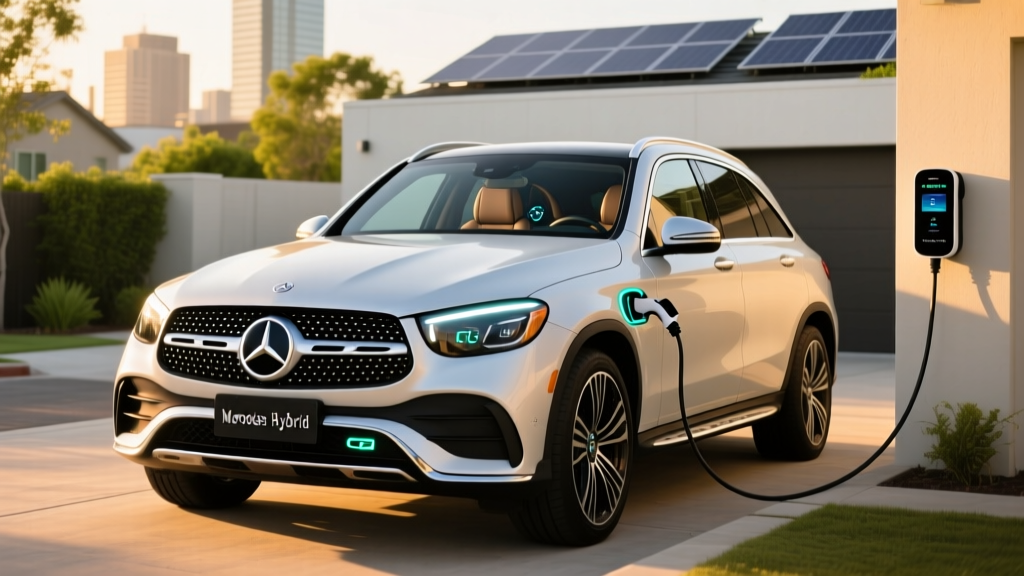
The 2026 Mercedes-Benz GLC 350e 4MATIC is a plug-in hybrid (PHEV) that pairs a turbocharged 2.0-liter four-cylinder with a rear-mounted electric motor for 252 combined horsepower. Its 31.2 kWh battery delivers an EPA-rated 39 miles of electric-only range — enough for most daily commutes without burning a drop of fuel. When the battery depletes, the gasoline engine kicks in, yielding a combined 56 MPGe (electric + gas) or roughly 25 MPG on gas alone. Starting at $59,900 before destination, the GLC 350e targets luxury buyers who want electric daily driving without range anxiety on longer road trips.
| Spec | Value |
|---|---|
| Powertrain | 2.0L turbo I4 + electric motor (PHEV) |
| Combined Horsepower | 252 HP / 406 lb-ft torque |
| Battery Capacity | 31.2 kWh (gross) / ~24.8 kWh usable |
| EPA Electric-Only Range | 39 miles |
| EPA MPGe (combined) | 56 MPGe |
| EPA MPG (gas-only, combined) | 25 MPG (23 city / 27 highway) |
| Total Combined Range | ~410 miles (electric + gas) |
| AC Charging (Level 2) | 7.4 kW onboard charger, ~4.5 hours 0–100% |
| DC Fast Charging | Not available |
| 0–60 mph | 6.7 seconds |
| Base MSRP | $59,900 + $1,150 destination |
| Federal Tax Credit (§30D) | Up to $3,750 (subject to eligibility) |
| Battery Warranty | 6 years / 62,000 miles |
HEV vs PHEV: Which GLC Hybrid Are You Looking At?
Mercedes-Benz currently sells the GLC as a PHEV (the GLC 350e) in the United States. There is no conventional hybrid (HEV) GLC variant for the 2026 model year. Understanding the difference matters:
| Feature | HEV (e.g., Toyota RAV4 Hybrid) | PHEV (GLC 350e) |
|---|---|---|
| Plugs in? | No — charges via regenerative braking and engine | Yes — plugs into Level 1 or Level 2 charger |
| Electric-only range | 0–2 miles at low speed | 39 miles EPA |
| Battery size | 1–2 kWh | 31.2 kWh gross |
| Fuel economy | Consistent MPG in all conditions | MPGe when charged; lower MPG when battery depleted |
| Tax credit eligible? | No | Potentially (up to $3,750 under §30D) |
| Home charging needed? | No | Strongly recommended for full benefit |
If you cannot install a home charger or lack reliable access to Level 2 charging, a PHEV still works — it simply operates as a heavier, slightly less efficient hybrid once the battery is depleted. But you'll miss the core value proposition: cheap, silent electric commuting.
Fuel Economy: EPA Numbers and Real-World MPG
The EPA rates the 2026 GLC 350e at 56 MPGe when operating in combined electric-and-gas mode, and 25 MPG combined (23 city / 27 highway) when running on gasoline alone after battery depletion. According to fueleconomy.gov, these figures place the GLC 350e ahead of most luxury compact SUVs on efficiency when regularly charged.
| Mode | City | Highway | Combined |
|---|---|---|---|
| Electric + Gas (MPGe) | 58 MPGe | 54 MPGe | 56 MPGe |
| Gas Only (MPG) | 23 MPG | 27 MPG | 25 MPG |
Real-world expectations: In mixed suburban driving with regular overnight charging, owners typically report 35–42 miles of electric range in mild weather — slightly above the EPA estimate thanks to conservative Mercedes calibration. However, highway driving at 75+ mph and cold-weather operation (below 35°F) can reduce electric range by 15–25%. On gas-only highway road trips, expect 26–28 MPG, which is better than the EPA city figure because the engine operates at its most efficient steady-state load. In stop-and-go city traffic on a depleted battery, real-world consumption may dip to 21–22 MPG.
Electric Range, Battery, and Charging
The GLC 350e's 31.2 kWh lithium-ion battery pack (approximately 24.8 kWh usable, with the remainder held as a protective buffer) delivers an EPA-rated 39 miles of zero-emission driving. This covers the average American's one-way commute of roughly 16 miles with margin to spare, according to U.S. Census data.
Charging is handled exclusively through AC power — there is no DC fast-charging capability, which is a notable limitation for road-trip scenarios:
- Level 1 (120V household outlet): ~1.4 kW, adding roughly 4 miles of range per hour. A full charge takes approximately 22–24 hours — impractical for daily use.
- Level 2 (240V home or public charger): The onboard charger accepts up to 7.4 kW. A full 0–100% charge takes roughly 4.5 hours. Plug in at 10 PM and you'll wake up to a full battery by 3 AM.
- DC Fast Charging: Not available. Mercedes omitted DC capability to save weight and cost — acceptable for a commuter-oriented PHEV but a disadvantage if you want to top up on road trips.
Battery Warranty: Mercedes-Benz covers the GLC 350e's high-voltage battery for 6 years or 62,000 miles (whichever comes first), with a capacity-retention threshold of 70%. Note that this warranty period is shorter than the 8-year/100,000-mile standard common among many competitors. If the battery degrades below 70% capacity within the warranty window, Mercedes will repair or replace it at no cost. Out-of-warranty replacement costs are estimated at $8,000–$12,000 including labor, though PHEV batteries rarely require full replacement — individual cell modules can often be serviced.
Powertrain and Performance
The GLC 350e pairs a 2.0-liter turbocharged inline-four (producing 215 HP on its own) with a permanently excited synchronous electric motor integrated into the rear axle. Combined system output is 252 HP and 406 lb-ft of torque, routed through a 9-speed automatic transmission to all four wheels via 4MATIC all-wheel drive.
The result is a 0–60 mph time of 6.7 seconds — brisk enough for confident highway merging and passing. The electric motor fills in the torque gap before the turbo spools, delivering smooth, linear acceleration from a stop. In EV mode, the GLC 350e operates in near silence, with the gasoline engine engaging seamlessly when the battery depletes or when you demand full throttle.
Mercedes offers several drive modes: Electric, Hybrid, and Battery Hold. Hybrid mode intelligently manages the powertrain for optimal efficiency. Battery Hold preserves your current charge level for later use — useful if you want to save electric range for city driving after a highway segment.
Pricing, Trims, and Tax Credit Eligibility
The 2026 GLC 350e 4MATIC starts at $59,900 (plus $1,150 destination), placing it roughly $4,000 above the gas-only GLC 300 4MATIC. Key standard features include MBUX infotainment with a 11.9-inch OLED touchscreen, wireless Apple CarPlay and Android Auto, heated front seats, and the full suite of Mercedes driver-assistance systems.
Federal Tax Credit (§30D): The GLC 350e may qualify for up to $3,750 under the federal plug-in vehicle tax credit, depending on battery-component and critical-mineral sourcing requirements. The credit is subject to buyer income caps ($150,000 single / $300,000 joint modified AGI) and can be transferred to the dealer as a point-of-sale discount. Because sourcing requirements tighten annually, the exact credit amount varies — check the latest eligibility list at IRS.gov before purchasing. The GLC 350e's MSRP falls well under the $80,000 SUV cap for §30D eligibility.
Many states offer additional incentives for PHEVs. California's CVRP, for example, has historically included rebates for plug-in hybrids, though program availability and amounts change frequently — check your state energy office for current offers.
Who Should Choose the GLC Hybrid vs a Full EV or Gas Car?
Choose the GLC 350e PHEV if:
- Your daily round-trip commute is under 40 miles and you can charge at home overnight
- You take road trips of 200+ miles several times a year and don't want to plan around DC fast chargers
- You want luxury-brand refinement and Mercedes safety tech without fully committing to a battery-electric vehicle
- You lack access to reliable public fast-charging infrastructure in your area
Choose a full EV (e.g., Mercedes EQB, BMW iX3, Tesla Model Y) if:
- You can charge at home and your daily driving stays under 250 miles
- You want zero tailpipe emissions and minimal maintenance (no oil changes, no spark plugs)
- You want access to DC fast charging for road trips at 150–250 kW
Choose the gas-only GLC 300 if:
- You cannot charge at home (apartment, no garage, no outlet access)
- The $4,000 price premium for the PHEV isn't justified by your low annual mileage
- You prefer the slightly lighter weight and more cargo space of the non-PHEV variant
Reliability and Long-Term Ownership
Mercedes-Benz PHEV systems have matured significantly since the earlier-generation GLC 350e (2020–2022), which had some reported issues with battery management software and charging-port electronics. The current-generation system uses a more robust thermal management setup and a larger, less stressed battery pack that should exhibit slower degradation.
The 2.0L turbocharged engine is well-proven across the Mercedes lineup and has no major systemic failure patterns. The 9-speed automatic transmission is similarly mature. Expect routine maintenance costs to be slightly lower than the gas-only GLC because regenerative braking reduces brake-pad wear, and the engine runs fewer total hours when electric commuting covers most of your miles.
For reliability ratings, consult IIHS crash-test results and J.D. Power dependability studies once sufficient model-year data is available. Mercedes includes 4 years / 50,000 miles of basic bumper-to-bumper coverage alongside the 6-year high-voltage battery warranty.
Pros
- 39-mile electric range covers most daily commutes
- Smooth, quiet EV-mode driving with seamless engine transition
- 252 HP and 406 lb-ft deliver confident acceleration
- No range anxiety — gasoline engine for long trips
- Potential $3,750 federal tax credit reduces effective price
- Full Mercedes luxury interior and MBUX tech
Cons
- No DC fast charging — road-trip top-ups require Level 2 stops
- 6-year / 62,000-mile battery warranty is shorter than competitors
- $59,900 starting price is steep for a compact luxury SUV
- Gas-only MPG (25 combined) is unremarkable once battery depletes
- Cargo space slightly reduced vs gas GLC due to battery placement
- Level 1 charging too slow for practical daily use
Frequently Asked Questions
How many MPG does the GLC hybrid get?
The 2026 GLC 350e achieves 56 MPGe combined when operating with a charged battery (electric + gas). On gasoline alone after the battery is depleted, it returns 25 MPG combined (23 city / 27 highway). Real-world gas-only highway driving often yields 26–28 MPG.
How far can the GLC 350e go on electric only?
The EPA rates the GLC 350e at 39 miles of electric-only range. In mild weather with moderate speeds, real-world results of 35–42 miles are common. Cold weather (below 35°F) and sustained highway speeds above 70 mph can reduce this to 28–33 miles.
Does the GLC 350e qualify for a tax credit?
It may qualify for up to $3,750 under the federal §30D plug-in vehicle credit, subject to battery-sourcing requirements, buyer income limits ($150K single / $300K joint), and the $80,000 MSRP cap for SUVs. The credit can be applied as a point-of-sale discount at the dealer. Always verify current eligibility at IRS.gov before purchase.
Is the GLC hybrid reliable, and what does battery replacement cost?
The current-generation PHEV system is more reliable than earlier iterations. The high-voltage battery is covered for 6 years / 62,000 miles at a 70% capacity threshold. Out-of-warranty battery replacement is estimated at $8,000–$12,000, though complete replacement is rare — individual modules can often be repaired. The gasoline powertrain components are well-proven with no systemic failure patterns.
Can I charge the GLC 350e at a DC fast charger?
No. The GLC 350e supports only AC charging — Level 1 (120V) and Level 2 (240V up to 7.4 kW). There is no DC fast-charge port. A full Level 2 charge takes approximately 4.5 hours.
Do I need to plug in the GLC 350e, or does it charge itself?
You should plug it in to get the full benefit. The GLC 350e is a plug-in hybrid (PHEV), meaning its 39-mile electric range requires external charging. While regenerative braking and the gasoline engine can maintain some charge, they cannot fully replenish the 31.2 kWh battery. Without plugging in, you'll operate on gasoline at 25 MPG combined — negating the efficiency advantage.
Hybrid vs PHEV vs EV — which fits me?
A conventional hybrid (HEV) suits drivers who cannot plug in and want better MPG without behavior changes. A PHEV like the GLC 350e fits drivers who can charge at home, commute under 40 miles daily, but also take long road trips. A full EV is ideal for drivers who can charge at home, want zero tailpipe emissions, and have access to DC fast charging for trips over 250 miles.