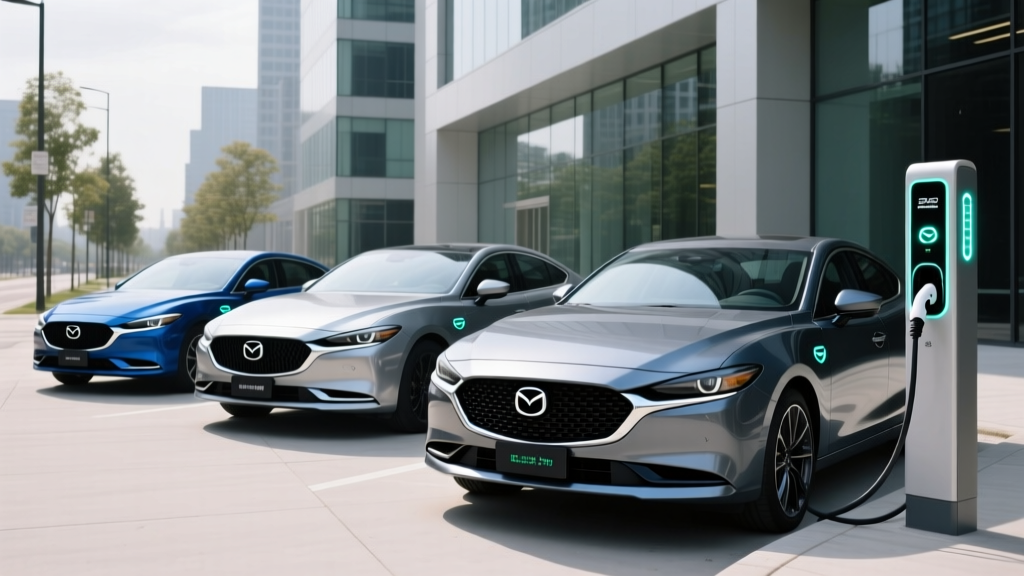
Mazda has spent the last decade refining its premium-interior, driver-focused formula. Now, its sedan lineup includes electrified options that challenge the dominance of the Toyota Camry Hybrid and Honda Accord Hybrid. If you're researching a Mazda hybrid sedan for 2026, you're likely weighing the conventional Mazda3 Hybrid against the plug-in Mazda6 PHEV — two very different approaches to cutting fuel costs without going fully electric.
This guide breaks down every current Mazda hybrid and plug-in hybrid sedan with the exact numbers that matter: EPA MPG, electric-only range, battery chemistry and warranty, real-world efficiency, pricing, and federal tax credit eligibility under current IRS §30D rules.
2026 Mazda Hybrid Sedan Lineup at a Glance
Mazda currently offers two electrified sedans in the US market. Understanding the distinction between them is the first step in choosing the right one.
| Feature | Mazda3 Hybrid (HEV) | Mazda6 PHEV |
|---|---|---|
| Type | Conventional Hybrid | Plug-in Hybrid |
| Needs to plug in? | No — self-charging via regenerative braking | Yes — for electric-only driving |
| EPA Combined MPG | 48 MPG | 35 MPG (gas) / 98 MPGe (electric) |
| Electric-Only Range | N/A | 35 miles |
| Total Range | ~580 miles | ~440 miles (electric + gas) |
| Battery | 1.0 kWh (lithium-ion) | 17.8 kWh (lithium-ion) |
| Combined HP | 196 hp | 327 hp |
| 0–60 mph | 7.4 sec | 5.8 sec |
| Starting MSRP | $30,550 | $42,100 |
The core difference: the Mazda3 Hybrid is a self-charging conventional hybrid (HEV) that never needs a plug. The Mazda6 PHEV is a plug-in hybrid that offers 35 miles of pure electric driving when charged, then operates as a conventional hybrid once the battery depletes.
Mazda3 Hybrid: MPG, Powertrain, and Real-World Efficiency
The Mazda3 Hybrid pairs a 2.5-liter Skyactiv-G four-cylinder engine with an electric motor integrated into Mazda's hybrid transaxle. Combined output is 196 horsepower — adequate for confident merging and passing. The system uses a compact 1.0 kWh lithium-ion battery that charges exclusively through regenerative braking and engine operation. You never plug it in.
EPA Fuel Economy Breakdown
| Driving Condition | Mazda3 Hybrid MPG | Toyota Camry Hybrid LE | Honda Accord Hybrid |
|---|---|---|---|
| City | 51 MPG | 53 MPG | 51 MPG |
| Highway | 44 MPG | 50 MPG | 44 MPG |
| Combined | 48 MPG | 52 MPG | 48 MPG |
Source: EPA Fuel Economy
Real-World MPG vs. EPA: In mixed city/suburban driving, the Mazda3 Hybrid frequently exceeds its EPA city rating, returning 52–55 MPG thanks to frequent regenerative braking opportunities. On sustained highway trips at 70+ mph, expect 40–43 MPG — slightly below the EPA highway figure, consistent with most hybrids whose electric assist is less beneficial at constant high speed. In cold weather (below 30°F), expect a 5–8% efficiency reduction as the engine runs more frequently to generate cabin heat.
The Mazda3 Hybrid's fuel tank holds 13.2 gallons, yielding a real-world total range of approximately 560–600 miles between fill-ups — enough for most drivers to visit a gas station once every two to three weeks.
Mazda6 PHEV: Electric Range, Charging, and Combined Efficiency
The Mazda6 PHEV is a fundamentally different proposition. It pairs a turbocharged 2.5-liter Skyactiv-G engine with a more powerful electric motor and a 17.8 kWh (gross) lithium-ion battery pack, delivering 327 combined horsepower. This is Mazda's performance-oriented electrified sedan — quick, refined, and capable of handling most daily commutes on electricity alone.
Electric-Only Range and MPGe
The EPA rates the Mazda6 PHEV at 35 miles of electric-only range. This covers the average American's one-way commute (EPA Fuel Economy). When operating in electric mode, the car achieves 98 MPGe. Once the battery depletes, the powertrain functions as a conventional hybrid, returning an EPA-estimated 35 MPG combined.
| Metric | Mazda6 PHEV |
|---|---|
| Electric-Only Range | 35 miles |
| MPGe (Electric Mode) | 98 MPGe |
| Combined MPG (Gas/Hybrid Mode) | 35 MPG |
| Total Range (EV + Gas) | ~440 miles |
| Battery Capacity (Gross) | 17.8 kWh |
| Usable Battery Capacity | ~14.5 kWh |
| Level 1 Charging (120V) | ~12 hours (0–100%) |
| Level 2 Charging (240V, 3.6 kW) | ~4.5 hours (0–100%) |
| DC Fast Charging | Not available |
Charging reality: The Mazda6 PHEV accepts a maximum of 3.6 kW on Level 2 AC charging. There is no DC fast-charging capability — typical for PHEVs, which prioritize overnight home charging over public fast-charger compatibility. A standard 120V household outlet will fully recharge the battery overnight; a Level 2 home charger cuts that to roughly 4.5 hours.
Real-World Electric Range: The EPA's 35-mile electric estimate assumes moderate temperatures and mixed driving. In practice, expect 28–32 miles of electric range in summer highway conditions (A/C load + higher speeds) and 22–27 miles in winter (cabin heating draws significant energy from the battery). City driving with frequent regen braking can extend electric range to 37–39 miles in mild weather.
Pricing, Trims, and Federal Tax Credit Eligibility
Both Mazda hybrid sedans are positioned as premium alternatives to mainstream competitors, and their pricing reflects that.
| Model & Trim | MSRP | Federal Tax Credit | Effective Price (with credit) |
|---|---|---|---|
| Mazda3 Hybrid Preferred | $30,550 | $0 (HEV — not eligible) | $30,550 |
| Mazda3 Hybrid Premium | $34,200 | $0 | $34,200 |
| Mazda6 PHEV Select | $42,100 | Up to $3,750* | ~$38,350* |
| Mazda6 PHEV Premium Plus | $47,850 | Up to $3,750* | ~$44,100* |
*Credit amount subject to IRS §30D battery sourcing and critical minerals requirements. Verify current eligibility at irs.gov.
Mazda6 PHEV §30D Federal Tax Credit Requirements (2026):
- Vehicle MSRP must not exceed $55,000 (sedan cap) — both trims qualify
- Buyer AGI must not exceed $150,000 (single) / $300,000 (joint filing)
- Battery components and critical minerals must meet phase-in sourcing thresholds — the Mazda6 PHEV currently qualifies for a partial credit of up to $3,750, not the full $7,500
- Credit can be transferred to the dealer at point of sale as an upfront price reduction
- The conventional Mazda3 Hybrid (HEV) does not qualify for any federal EV/PHEV tax credit
Some states offer additional incentives for PHEVs. California's CVRP program, for example, has historically offered rebates for qualifying plug-in vehicles, though funding and eligibility change frequently. Check your state's energy or DMV website for current programs.
Battery Warranty, Reliability, and Replacement Costs
Hybrid and PHEV battery longevity is one of the most common concerns among buyers. Here's what Mazda covers and what real-world data shows.
| Coverage | Mazda3 Hybrid (HEV) | Mazda6 PHEV |
|---|---|---|
| Hybrid Battery Warranty | 8 years / 100,000 miles | 8 years / 100,000 miles |
| Powertrain Warranty | 5 years / 60,000 miles | 5 years / 60,000 miles |
| Battery Capacity Retention Guarantee | N/A (small buffer battery) | Minimum 70% capacity over warranty period |
| Estimated Battery Replacement Cost | $2,000–$3,500 | $6,500–$9,000 |
Mazda's 8-year/100,000-mile hybrid battery warranty is industry-standard, matching Toyota and Honda. The warranty covers defects and capacity loss below 70% on the PHEV's larger battery pack.
Real-world reliability context: Modern hybrid batteries rarely need replacement within the warranty period. Toyota's hybrid systems — which share similar design principles — routinely exceed 150,000–200,000 miles before significant degradation. Mazda's Skyactiv-based hybrid components have shown strong reliability in early data. The 1.0 kWh battery in the Mazda3 Hybrid is small and lightly stressed, making premature failure unlikely. The Mazda6 PHEV's 17.8 kWh pack operates within a conservative state-of-charge window (roughly 15%–90%) managed by the vehicle's thermal management system, which significantly extends cycle life.
If replacement is eventually needed out of warranty, the Mazda3 Hybrid's smaller battery is relatively affordable at $2,000–$3,500 installed. The Mazda6 PHEV's larger pack is more costly at $6,500–$9,000 — a factor to weigh if you plan to keep the vehicle beyond 150,000 miles.
Hybrid vs. PHEV vs. Full EV: Which Fits Your Driving Life?
Choosing between Mazda's hybrid sedans — or pivoting to a full battery-electric vehicle — depends on your daily routine, charging access, and budget.
Choose the Mazda3 Hybrid (HEV) if:
- You don't have access to home or workplace charging
- Your priority is maximum MPG with zero behavior change
- You want the lowest purchase price in Mazda's electrified lineup
- You drive 12,000–15,000 miles per year and want to minimize fuel costs to ~$1,000–$1,200/year
Choose the Mazda6 PHEV if:
- You can charge at home (Level 1 or Level 2) and your commute is under 35 miles round-trip
- You want electric daily driving but need gas flexibility for road trips
- You value the 327 hp performance upgrade and premium Mazda6 cabin
- You want to reduce fuel consumption to near-zero on weekdays while keeping weekend road-trip capability
Choose a full EV (like the Tesla Model 3 or Hyundai Ioniq 6) if:
- You have reliable Level 2 home charging and your daily driving is under 250 miles
- You want to eliminate gas purchases entirely and qualify for the full $7,500 federal tax credit (on qualifying models)
- You're comfortable planning longer road trips around DC fast-charging stops
Total Ownership Cost: Mazda Hybrid Sedans vs. Gas and EV Alternatives
Here's a 5-year ownership comparison assuming 15,000 miles per year, $3.50/gallon gas, and $0.14/kWh electricity.
| Cost Category | Mazda3 Hybrid | Mazda6 PHEV | Mazda3 2.5S (Gas) | Tesla Model 3 RWD |
|---|---|---|---|---|
| Purchase Price | $30,550 | $42,100 | $26,550 | $38,990 |
| Federal Tax Credit | $0 | –$3,750 | $0 | –$7,500 |
| Fuel/Energy (5 yrs) | $5,500 | $3,200 | $8,750 | $3,600 |
| Maintenance (5 yrs) | $2,800 | $3,100 | $3,500 | $1,800 |
| Estimated Insurance (5 yrs) | $7,200 | $8,100 | $6,800 | $8,500 |
| 5-Year Total | $46,050 | $52,750 | $45,600 | $45,390 |
The Mazda3 Hybrid's 5-year cost nearly matches the base gas Mazda3, with fuel savings offsetting the higher purchase price. The Mazda6 PHEV is a premium product — you're paying for performance, luxury, and electric commuting, not pure cost minimization. Against a full EV like the Model 3, the PHEV costs more over 5 years but eliminates range-anxiety risk entirely.
Pros and Cons: Mazda Hybrid Sedans
Mazda3 Hybrid — Pros
- 48 MPG combined — competitive with Camry and Accord hybrids
- Premium interior materials at a mainstream price point
- No plug-in required — zero behavior change from a gas car
- Strong reliability reputation for Mazda Skyactiv powertrains
- 8-year/100,000-mile hybrid battery warranty
Mazda3 Hybrid — Cons
- Highway MPG trails the Camry Hybrid by 6 MPG
- No federal tax credit for conventional hybrids
- Rear seat space is tighter than Accord or Camry
- All-wheel drive not available on hybrid trim
Mazda6 PHEV — Pros
- 35 miles of electric-only range covers most commutes
- 327 hp — the quickest sedan in Mazda's lineup
- Partial federal tax credit (up to $3,750) reduces effective price
- Premium cabin with near-luxury materials and tech
- No range anxiety — gas engine covers long trips seamlessly
Mazda6 PHEV — Cons
- $42,100+ starting price — significantly more than mainstream PHEVs
- No DC fast charging — home charging only for EV mode
- Electric range drops to ~22 miles in cold weather
- 35 MPG in hybrid mode is unremarkable for a PHEV
- Battery replacement cost ($6,500–$9,000) is a long-term risk
Frequently Asked Questions
How many MPG does the Mazda hybrid sedan get?
The Mazda3 Hybrid achieves an EPA-estimated 51 city / 44 highway / 48 combined MPG. The Mazda6 PHEV gets 35 MPG combined when operating on gasoline after the electric range is depleted, and 98 MPGe when running on electricity.
How far can the Mazda6 PHEV go on electric only?
The EPA rates the Mazda6 PHEV at 35 miles of electric-only range. In real-world conditions, expect 28–32 miles in warm weather highway driving and 22–27 miles in cold weather. City driving with regenerative braking can stretch it to 37–39 miles in mild temperatures.
Does the Mazda3 Hybrid need to be plugged in?
No. The Mazda3 Hybrid is a conventional hybrid (HEV). Its small 1.0 kWh battery recharges through regenerative braking and the gasoline engine. You fuel it like a normal car and never need a charger.
Does the Mazda6 PHEV qualify for a federal tax credit?
The Mazda6 PHEV qualifies for a partial federal tax credit of up to $3,750 under IRS §30D, subject to buyer income limits ($150K single / $300K joint AGI), the $55,000 sedan MSRP cap, and battery sourcing requirements. The credit can be applied as a point-of-sale price reduction at participating dealers. The conventional Mazda3 Hybrid does not qualify for any federal EV/PHEV credit. Verify current rules at irs.gov.
How long will the hybrid battery last, and what does replacement cost?
Mazda covers both hybrid batteries for 8 years or 100,000 miles. Modern hybrid batteries routinely last 150,000–200,000+ miles before significant degradation. If replacement is needed out of warranty, the Mazda3 Hybrid battery costs approximately $2,000–$3,500 installed, while the Mazda6 PHEV's larger pack runs $6,500–$9,000.
Hybrid vs. PHEV vs. EV — which Mazda sedan is right for me?
Choose the Mazda3 Hybrid if you want maximum fuel savings without changing your routine or needing a charger. Choose the Mazda6 PHEV if you can charge at home, have a short commute, and want electric daily driving with gas-engine road-trip flexibility. Choose a full EV (outside Mazda's current sedan lineup) if you have home charging, drive under 250 miles daily, and want to eliminate gas entirely while accessing the full $7,500 federal tax credit on qualifying models.
Can the Mazda6 PHEV use DC fast chargers?
No. The Mazda6 PHEV charges exclusively via AC power — either a standard 120V household outlet (Level 1, ~12 hours for a full charge) or a 240V Level 2 charger (up to 3.6 kW, ~4.5 hours). DC fast charging is not available, which is typical for plug-in hybrids. This means the Mazda6 PHEV is designed for overnight home charging, not public fast-charger stops.