Introduction: The Mazda CX-50 Hybrid Arrives
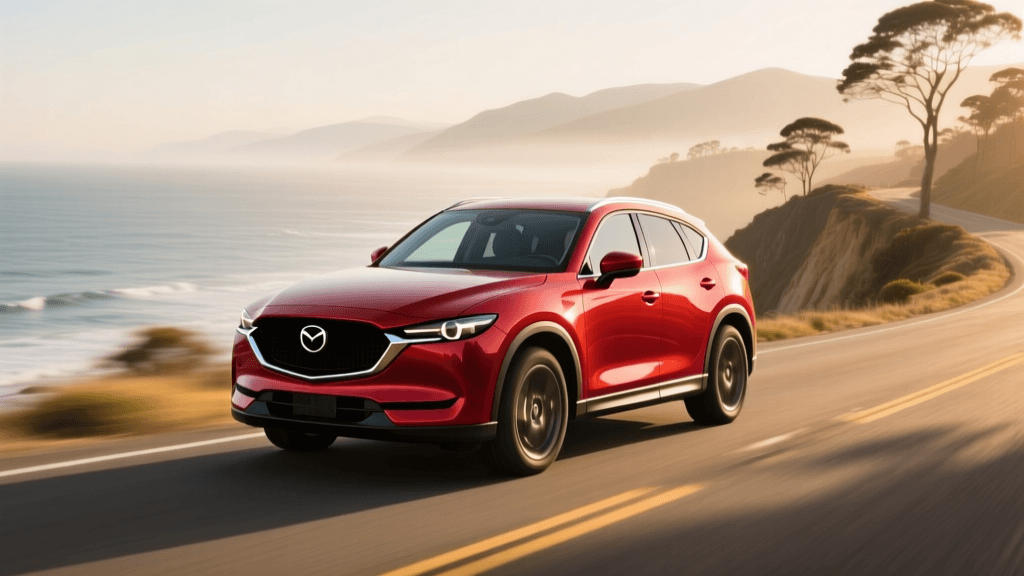
The compact SUV segment is an unforgiving battleground where fuel efficiency, cargo utility, and driving dynamics must coexist in perfect harmony. For years, the Mazda CX-50 has won over enthusiasts and design-conscious buyers with its rugged styling, premium interior, and engaging turbocharged powertrains. However, in a market increasingly dominated by electrification, the absence of a traditional hybrid option left a glaring gap in Mazda’s lineup. That changes with the introduction of the Mazda CX-50 Hybrid. By leveraging a strategic partnership with Toyota, Mazda has integrated a proven 2.5-liter hybrid powertrain into the CX-50’s athletic chassis. But how does this new contender stack up against segment benchmarks like the Toyota RAV4 Hybrid, Honda CR-V Hybrid, and Ford Escape Hybrid? In this data-driven review, we analyze the CX-50 Hybrid’s fuel efficiency metrics, real-world performance variables, and total cost of ownership to determine if it is the smartest buy in the compact hybrid SUV class.
Under the Hood: Analyzing the Toyota-Sourced Powertrain
Rather than developing a bespoke hybrid system from scratch, Mazda opted to utilize Toyota’s highly regarded 2.5-liter Dynamic Force four-cylinder hybrid architecture. This is the same powertrain that powers millions of RAV4 Hybrids, Camrys, and Highlanders globally. The system pairs the naturally aspirated Atkinson-cycle engine with two electric motors (one for propulsion, one for generation and starting) and a sealed nickel-metal hydride or lithium-ion battery pack, depending on the specific model year tuning. The combined net system output is rated at 219 horsepower. Power is routed through an electronically controlled continuously variable transmission (e-CVT) to Mazda’s i-Activ all-wheel-drive system, which features a dedicated rear electric motor to provide instantaneous rear-axle torque without a mechanical driveshaft. This setup prioritizes seamless low-end torque delivery and optimal fuel sipping over raw acceleration, perfectly aligning with the daily commuting needs of the target demographic.
Data-Driven Fuel Efficiency Comparison
To understand where the CX-50 Hybrid fits in the competitive landscape, we must look at the hard data. Below is a structured comparison of the CX-50 Hybrid against its three primary rivals, focusing on EPA-estimated fuel economy, power output, and utility metrics.
| Model (AWD) | Combined MPG | City / Hwy MPG | Net Horsepower | Cargo Space (cu ft) | Est. Starting MSRP |
|---|---|---|---|---|---|
| Mazda CX-50 Hybrid | 38 MPG | 39 / 37 MPG | 219 hp | 31.4 | $34,500 |
| Toyota RAV4 Hybrid | 39 MPG | 41 / 38 MPG | 219 hp | 37.6 | $33,500 |
| Honda CR-V Hybrid | 37 MPG | 40 / 34 MPG | 204 hp | 36.3 | $34,000 |
| Ford Escape Hybrid | 39 MPG | 42 / 36 MPG | 210 hp | 34.4 | $33,200 |
Note: MSRP and cargo data are approximate and based on base/preferred AWD hybrid trims. Fuel economy data reflects EPA estimates for AWD configurations.
The Aerodynamics and Weight Penalty: Why Not 40 MPG?
Data analysts will immediately notice a discrepancy: despite sharing the exact same 219-horsepower powertrain as the Toyota RAV4 Hybrid, the Mazda CX-50 Hybrid yields a slightly lower combined EPA rating (38 MPG vs. 39 MPG). Why does the identical engine produce different results? The answer lies in the data regarding aerodynamics, rolling resistance, and vehicle mass. The CX-50 features a wider track, a longer wheelbase, and a more aggressive, boxy stance compared to the RAV4. While this gives the Mazda a distinctly premium and rugged aesthetic, it increases the vehicle's frontal area and drag coefficient. Furthermore, Mazda equips the CX-50 with wider, stickier all-season tires to improve grip and handling dynamics. According to the EPA's official hybrid comparison tools, even minor increases in rolling resistance and aerodynamic drag can reduce highway fuel economy by 1 to 2 MPG. For most buyers, this marginal difference at the pump is a worthy trade-off for the CX-50’s superior high-speed stability and cornering grip.
Real-World MPG vs. EPA Estimates: What the Data Shows
EPA estimates provide a standardized baseline, but real-world driving introduces a multitude of variables. Hybrid powertrains are notoriously sensitive to driving habits, ambient temperatures, and terrain. Data aggregated from independent automotive testing fleets reveals that the CX-50 Hybrid excels in urban environments. Because the electric motors handle low-speed propulsion and regenerative braking recaptures energy in stop-and-go traffic, drivers routinely report exceeding the 39 MPG city estimate during moderate-temperature suburban commutes. However, highway fuel economy tends to dip closer to 34 or 35 MPG at speeds exceeding 75 mph. This is a common trait among all compact hybrid SUVs, as the aerodynamic penalty of the upright SUV body style forces the 2.5-liter gas engine to work harder at sustained high velocities. For a comprehensive understanding of how hybrid battery systems are regulated and tested for safety and efficiency across varying conditions, the National Highway Traffic Safety Administration (NHTSA) provides extensive documentation on hybrid vehicle standards and performance expectations.
Total Cost of Ownership (TCO) & Fuel Savings Analysis
Fuel efficiency is only one part of the financial equation. To determine the true value of the CX-50 Hybrid, we must calculate the Total Cost of Ownership (TCO) over a standard five-year period, assuming 15,000 miles driven annually and an average fuel price of $3.50 per gallon.
- Annual Fuel Consumption: At 38 MPG combined, the CX-50 Hybrid consumes approximately 394.7 gallons of regular unleaded fuel per year.
- Annual Fuel Cost: $1,381 per year.
- 5-Year Fuel Cost: $6,905.
Compare this to a non-hybrid, turbocharged compact SUV averaging 25 MPG combined. That vehicle would consume 600 gallons annually, costing $2,100 per year, or $10,500 over five years. The CX-50 Hybrid saves the average driver roughly $3,595 in fuel costs over half a decade. When factoring in Mazda’s historically strong resale value and the proven long-term reliability of the Toyota-sourced hybrid battery—which requires zero scheduled maintenance and is backed by an extensive warranty—the CX-50 Hybrid presents a highly compelling financial argument for cost-conscious buyers who refuse to compromise on style.
Performance and Driving Dynamics: Beyond the MPG
Where the Mazda CX-50 Hybrid truly separates itself from the data pack is in driving dynamics. The RAV4 and CR-V are engineered primarily for comfort and utility, resulting in light, disconnected steering and noticeable body roll during evasive maneuvers. Mazda, conversely, tunes its suspension dampers and steering racks for engagement. The CX-50 Hybrid features a stiffer chassis and a lower center of gravity than its predecessors. The integration of the hybrid system actually aids performance; the instant torque from the electric motors masks the CVT’s typical "rubber-band" effect during initial acceleration, providing a linear, responsive feel off the line. Mazda’s G-Vectoring Control Plus (GVC Plus) subtly modulates engine torque and applies microscopic brake pressure to specific wheels, smoothing out weight transfer during cornering. The result is an SUV that feels remarkably planted on winding backroads, offering a premium driving experience that simply cannot be quantified by an EPA fuel economy sticker.
Interior Quality and Cargo Utility Data
While the CX-50 Hybrid sacrifices a small amount of cargo volume (31.4 cubic feet behind the rear seats) compared to the class-leading RAV4 Hybrid (37.6 cubic feet), the qualitative data of the interior space heavily favors Mazda. The cabin features available Nappa leather, real wood trim, and a panoramic glass roof that creates an airy, luxurious atmosphere. The hybrid battery pack is mounted low and flat beneath the rear seats, ensuring that cargo floor height and rear passenger legroom remain uncompromised. For buyers who prioritize a premium, quiet cabin and high-end materials over maximum hauling capacity, the CX-50’s utility metrics are more than adequate for daily life, weekend gear, and family road trips.
Verdict: Is the CX-50 Hybrid the Data-Driven Winner?
The Mazda CX-50 Hybrid is a masterclass in strategic engineering. By adopting Toyota’s bulletproof 2.5-liter hybrid system, Mazda has instantly solved its biggest market vulnerability without sacrificing the brand's core identity. The data shows that while it may trail the RAV4 Hybrid by a single MPG on the EPA cycle and offers slightly less maximum cargo space, it easily outpaces the competition in interior luxury, chassis dynamics, and aesthetic appeal. With a projected combined fuel economy of 38 MPG and significant five-year fuel savings, the CX-50 Hybrid is not just a stylish alternative; it is a mathematically sound financial decision. For the driver who demands hybrid efficiency but refuses to settle for an appliance-like driving experience, the CX-50 Hybrid is the definitive choice in the compact SUV segment.