Quick Verdict: The CX-50 Hybrid Is a Toyota in Mazda Clothing
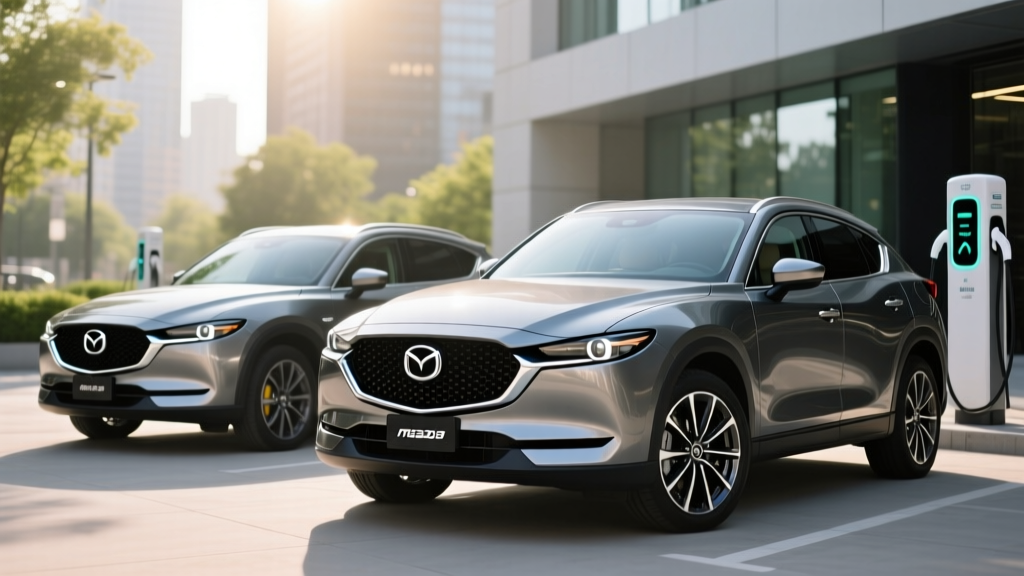
The Mazda CX-50 Hybrid pairs Mazda's rugged styling and interior quality with Toyota's proven 2.5-liter hybrid powertrain — the same system that powers the RAV4 Hybrid. For 2026, Mazda offers the CX-50 Hybrid across three trim levels, all delivering an EPA-estimated 38 MPG combined with standard all-wheel drive. It's a conventional hybrid (HEV), meaning you never plug it in; the battery recharges through regenerative braking and the gasoline engine.
If you want the CX-50's outdoorsy aesthetic without the fuel penalty of the turbocharged gas model, the hybrid trims are the most practical choice in the lineup. Here's exactly what each trim offers, what you'll spend, and how the real-world MPG stacks up.
2026 Mazda CX-50 Hybrid Trim Levels and Pricing
All three CX-50 Hybrid trims share the same powertrain and AWD system. The differences come down to comfort, technology, and exterior upgrades. Prices below include the $1,420 destination charge.
| Trim | MSRP (incl. destination) | Key Features |
|---|---|---|
| Preferred Hybrid | $35,395 | 18" alloy wheels, heated front seats, power liftgate, 10.25" display, wireless Apple CarPlay/Android Auto, Mazda i-Activsense safety suite |
| Premium Hybrid | $39,195 | Adds Bose 12-speaker audio, panoramic moonroof, leather-trimmed seats, ventilated front seats, head-up display, 360° camera |
| Premium Plus Hybrid | $42,495 | Adds 20" alloy wheels, adaptive LED headlights, heated steering wheel, rear heated seats, Nappa leather, navigation |
The $3,800 jump from Preferred to Premium is where most buyers find the best value — you gain the panoramic roof, upgraded audio, and ventilated seats, all features that hold resale value. The Premium Plus commands another $3,300 primarily for cosmetic and luxury upgrades that don't affect efficiency or performance.
Fuel Economy: EPA Ratings vs. Real-World MPG
Because every CX-50 Hybrid trim uses the same powertrain, fuel economy is identical across the lineup. The 20-inch wheels on the Premium Plus do not carry an EPA penalty, though real-world testing shows a slight variance.
| Cycle | EPA Estimate | Real-World Expectation |
|---|---|---|
| City | 39 MPG | 38–42 MPG (hybrids excel in stop-and-go) |
| Highway | 34 MPG | 32–35 MPG (less electric assist at sustained speed) |
| Combined | 38 MPG | 35–39 MPG |
Source: EPA Fuel Economy
Conventional hybrids like the CX-50 Hybrid routinely match or exceed their EPA city estimates because regenerative braking recovers energy in traffic. Highway driving is the weak point — the electric motor contributes less at sustained 70–80 mph speeds, and the CX-50's boxy, rugged shape creates more aerodynamic drag than a sleeker crossover. On a 200-mile highway trip at 75 mph, expect closer to 32–33 MPG.
Compared to the non-hybrid CX-50 with the 2.5L turbo (23 city / 29 highway / 25 combined), the hybrid saves roughly 130 gallons of fuel per year at 15,000 miles — approximately $450–$550 annually at current fuel prices.
Powertrain: Toyota's Hybrid System, Mazda's Tuning
The CX-50 Hybrid uses Toyota's fifth-generation hybrid synergy drive, built under a supply agreement between the two automakers. Mazda has retuned the throttle mapping, steering feel, and transmission calibration to match its brand character, but the hardware is Toyota-sourced.
| Specification | Detail |
|---|---|
| Engine | 2.5L inline-4 Atkinson cycle |
| Engine Output | 176 hp / 163 lb-ft torque |
| Electric Motor | 134 hp (front) + 54 hp (rear AWD motor) |
| Combined System Output | 219 hp |
| Transmission | eCVT (planetary gearset, not a belt-driven CVT) |
| Drivetrain | Electronic AWD (eAWD) — rear motor engages on demand |
| Hybrid Battery | ~1.6 kWh nickel-metal hydride (NiMH), self-charging |
| 0–60 mph | ~7.2 seconds |
| Towing Capacity | 1,500 lbs (hybrid); gas turbo models tow up to 3,500 lbs |
The 219 combined horsepower is competitive with turbocharged rivals, and the electric motor's instant torque makes the CX-50 Hybrid feel responsive in city driving. The eAWD system uses the rear electric motor to send power to the rear axle when slip is detected or during hard acceleration — there is no mechanical driveshaft connecting the engine to the rear wheels.
Hybrid Battery Warranty and Long-Term Reliability
The CX-50 Hybrid's battery pack is small (~1.6 kWh) and uses proven NiMH chemistry — the same technology Toyota has deployed across millions of hybrids over two decades. This is significant because NiMH hybrid batteries have a well-documented longevity record, with many RAV4 Hybrid and Camry Hybrid batteries lasting well beyond 150,000 miles without replacement.
- Hybrid Battery: 10 years / 150,000 miles (whichever comes first) — covers capacity loss below a defined threshold and defects
- Hybrid System Components: 8 years / 100,000 miles (inverter, electric motors, eCVT)
- Powertrain (engine): 5 years / 60,000 miles
- Bumper-to-Bumper: 3 years / 36,000 miles
If the hybrid battery does need replacement outside of warranty, expect a cost between $2,500 and $4,000 including labor for a new OEM pack. Refurbished or reconditioned NiMH packs are available for $1,500–$2,500 through independent hybrid specialists. However, given Toyota's track record with this battery chemistry and the fact that the CX-50 Hybrid's pack operates within a narrow state-of-charge window (typically 40–80%) to minimize degradation, most owners will never face this expense.
The CX-50 carries strong reliability predictions. Mazda as a brand consistently ranks in the top third of Consumer Reports reliability surveys, and the Toyota hybrid hardware underneath adds further confidence. The eCVT planetary gearset has no belts or clutches to wear, which historically makes it more durable than conventional automatic or belt-driven CVT transmissions.
Tax Credit Eligibility for the CX-50 Hybrid
Because the CX-50 Hybrid is a conventional HEV — not a plug-in vehicle — it does not qualify for the federal §30D Clean Vehicle Credit, which is limited to battery electric vehicles (BEVs) and plug-in hybrids (PHEVs) meeting battery sourcing and critical mineral requirements.
However, hybrid buyers should check the following:
- State incentives: Some states offer rebates or HOV lane access for hybrids. Check your state's energy or DMV website for current programs.
- Employer or utility rebates: A growing number of utilities and employers offer purchase incentives for any electrified vehicle, including HEVs.
- Fuel savings as the incentive: At 38 MPG combined versus 25 MPG for the turbo gas model, the hybrid saves roughly $450–$550 per year in fuel. Over a 5-year ownership period, that's $2,250–$2,750 — effectively offsetting much of the hybrid's price premium over the gas-only CX-50.
For current federal credit rules, consult the IRS §30D guidance page or speak with a tax professional. Rules change annually, and eligibility depends on your income, vehicle MSRP, and battery component sourcing.
CX-50 Hybrid vs. the Competition
The CX-50 Hybrid competes directly with other compact hybrid crossovers. Here's how the key specs compare:
| Vehicle | Combined MPG | Combined HP | AWD | Starting MSRP |
|---|---|---|---|---|
| Mazda CX-50 Hybrid | 38 | 219 | Standard | $35,395 |
| Toyota RAV4 Hybrid | 39 | 219 | Standard | $33,425 |
| Honda CR-V Hybrid | 37 | 204 | Standard (Sport trims) | $36,350 |
| Ford Escape Hybrid | 39 | 210 | Available | $34,755 |
The CX-50 Hybrid slots between the RAV4 and CR-V on price while offering a more premium interior and a more rugged exterior design. It shares the RAV4 Hybrid's powertrain, so efficiency and reliability should be nearly identical. Where the CX-50 loses ground is cargo space (31.4 cu ft behind the rear seats vs. 37.5 cu ft in the RAV4) and rear-seat legroom.
Who Should Choose the CX-50 Hybrid (and Who Shouldn't)
- You want 35+ MPG without plugging in or changing your routine
- You prefer Mazda's interior design and driving dynamics over Toyota's
- You need AWD for snow or light trails but don't tow more than 1,500 lbs
- You drive a mix of city and highway and want the hybrid efficiency sweet spot
- You plan to keep the vehicle 8+ years (the warranty covers the hybrid system)
- You need to tow more than 1,500 lbs (get the CX-50 Turbo or a RAV4 Hybrid, which tows 1,750 lbs)
- You want electric-only commuting — consider a PHEV like the RAV4 Prime (42 mi EV range) or a full BEV
- Maximum cargo space is a priority (RAV4 Hybrid and CR-V Hybrid both offer more)
- You want federal tax credits — only PHEVs and BEVs qualify under current §30D rules
- You rarely drive in the city — highway-heavy commutes reduce the hybrid advantage
Which CX-50 Hybrid Trim Level Is the Best Value?
For most buyers, the Preferred Hybrid at $35,395 is the smart pick. You get the full hybrid fuel economy benefit, AWD, heated seats, and Mazda's complete safety suite at the lowest entry price. The features you miss — Bose audio, panoramic roof, ventilated seats — are nice but don't change the driving or ownership experience in a meaningful way.
The Premium Hybrid at $39,195 makes sense if you live in a hot climate (ventilated seats matter) or value the panoramic roof and upgraded audio. It's the trim most likely to appear on dealer lots with incentives, as Mazda typically stocks this mid-tier option heavily.
The Premium Plus Hybrid at $42,495 is harder to justify purely on value. The 20-inch wheels look great but may slightly reduce real-world highway MPG and produce a firmer ride. The Nappa leather and heated rear seats are luxury touches that push the CX-50 into near-luxury pricing territory where buyers might cross-shop the Lexus NX Hybrid instead.
Frequently Asked Questions
How many MPG does the Mazda CX-50 Hybrid get?
The EPA rates the 2026 CX-50 Hybrid at 39 city / 34 highway / 38 combined MPG. In real-world driving, city commuters often see 39–42 MPG thanks to regenerative braking, while highway-heavy drivers should expect 32–35 MPG. This rating is identical across all three trim levels.
Does the CX-50 Hybrid need to be plugged in?
No. The CX-50 Hybrid is a conventional hybrid (HEV). Its small battery recharges automatically through regenerative braking and the gasoline engine. You simply fill up with gas and drive — no plug, no charger, no electric-only range.
Is there a CX-50 plug-in hybrid (PHEV)?
Not for 2026. Mazda only offers the CX-50 as a conventional hybrid or a gasoline turbo model. If you want a Mazda PHEV, the larger CX-70 PHEV and CX-90 PHEV are available with roughly 26 miles of electric-only range, but both are significantly more expensive and larger vehicles.
Is the CX-50 Hybrid reliable?
The CX-50 Hybrid uses Toyota's proven hybrid powertrain, which has been deployed across millions of vehicles with strong long-term reliability records. Mazda backs the hybrid battery with a 10-year/150,000-mile warranty and the hybrid system components with 8 years/100,000 miles. Independent reliability forecasters rate it above average for the compact SUV segment.
What does a CX-50 Hybrid battery replacement cost?
If the hybrid battery needs replacement outside warranty, expect $2,500–$4,000 for a new OEM NiMH pack. Refurbished options run $1,500–$2,500. However, NiMH hybrid batteries from Toyota's supply chain routinely last 150,000+ miles, and the CX-50's battery management system keeps the pack in a conservative state-of-charge window to minimize degradation.
Does the CX-50 Hybrid qualify for any tax credits?
The CX-50 Hybrid does not qualify for the federal §30D Clean Vehicle Credit because it is a conventional hybrid, not a plug-in vehicle. Some states, utilities, or employers may offer separate incentives for hybrid purchases. Check your local programs. The fuel savings alone — roughly $450–$550 per year over the gas turbo model — partially offset the hybrid's price premium.
How does the CX-50 Hybrid compare to the RAV4 Hybrid?
They share the same 219-hp Toyota hybrid powertrain and achieve nearly identical fuel economy (38 vs. 39 combined MPG). The CX-50 offers a more premium interior, a more rugged design, and slightly sportier handling. The RAV4 Hybrid counters with more cargo space (37.5 vs. 31.4 cu ft), a lower starting price (~$2,000 less), and broader dealer availability. Both are excellent choices; the decision comes down to design preference and space needs.