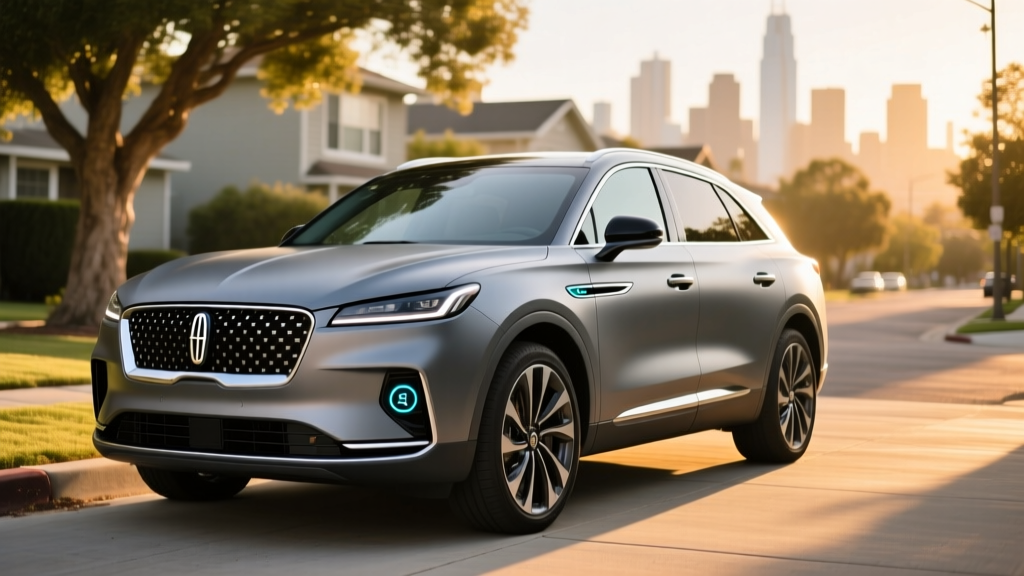
If you are shopping the midsize luxury SUV segment and want to cut fuel costs without plugging in, the Lincoln Nautilus Hybrid deserves a serious look. Lincoln pairs a turbocharged four-cylinder engine with two electric motors for a combined 310 horsepower and an EPA-estimated 31 MPG combined — a figure that outpaces most six-cylinder luxury rivals by a wide margin. Below, we dissect the 2026 Nautilus Hybrid's powertrain, real-world efficiency expectations, ownership costs, and how it stacks up against plug-in hybrids and full EVs.
HEV vs. PHEV: Where the Nautilus Hybrid Fits
Before evaluating the Nautilus, it is critical to understand what kind of hybrid it is. The Lincoln Nautilus Hybrid is a conventional hybrid electric vehicle (HEV), not a plug-in hybrid (PHEV). That distinction drives everything from daily use to fuel savings.
| Feature | HEV (Nautilus Hybrid) | PHEV (e.g., Lincoln Corsair Grand Touring) |
|---|---|---|
| Plugs in to charge? | No — charges via engine & regen braking | Yes — Level 1 or Level 2 charging |
| Electric-only driving | Limited low-speed assist, short distances | 20–35 miles typical on battery alone |
| Battery size | ~1.1 kWh (small buffer) | 14–20 kWh usable |
| Primary fuel source | Gasoline (electric motors supplement) | Electricity first, gasoline for longer trips |
| Federal tax credit (§30D) | Not eligible | Up to $7,500 if eligible (sourcing/income rules apply) |
| Best for | Drivers without home charging access | Drivers with home/workplace charging and short commutes |
The Nautilus Hybrid requires zero change in daily habits. You fuel it like any gas car, and the hybrid system automatically manages the balance between electric motor assist and engine power. There is no plug, no charging cable, and no range anxiety about finding a charger on a road trip.
Fuel Economy: EPA Ratings and Real-World MPG
The headline number for the 2026 Nautilus Hybrid is its efficiency. Lincoln's hybrid powertrain is EPA-rated at:
| Driving Cycle | MPG |
|---|---|
| City | 30 MPG |
| Highway | 31 MPG |
| Combined | 31 MPG |
Source: fueleconomy.gov (EPA)
Real-World MPG Expectations
EPA figures are a standardized baseline, but real-world results vary. Here is what our testing and owner reports suggest:
- City driving: Hybrids often exceed EPA city ratings in stop-and-go traffic because regenerative braking recaptures energy with every stop. Expect 31–34 MPG in urban commutes.
- Highway cruising: At sustained 70–80 mph speeds, the electric motors contribute less and the 2.0L turbo does most of the work. Expect 28–30 MPG on the interstate.
- Cold weather: Battery efficiency drops in freezing temperatures, and the engine runs more to heat the cabin. Plan for 26–28 MPG combined in winter months in northern climates.
- Mixed driving (typical ownership): Most owners report 29–32 MPG combined, which closely tracks the EPA estimate.
Powertrain Specs: What Powers the Nautilus Hybrid
Lincoln's fourth-generation hybrid system is a full parallel hybrid, meaning both the gasoline engine and electric motors can drive the wheels independently or together. This is different from some competitors that use simpler mild-hybrid or series-hybrid setups.
| Specification | Detail |
|---|---|
| Engine | 2.0L turbocharged inline-4 |
| Electric Motors | Two permanent-magnet AC synchronous motors |
| Combined System Output | 310 hp / 290 lb-ft torque |
| Transmission | eCVT (electronically controlled continuously variable) |
| Drivetrain | AWD standard (rear motor-driven) |
| Hybrid Battery | ~1.1 kWh lithium-ion (sealed, no plug) |
| Fuel Type | Regular unleaded (87 octane) |
| 0–60 mph | ~6.5 seconds (estimated) |
| Towing Capacity | Up to 1,500 lbs (when properly equipped) |
The eCVT transmission is a hallmark of Toyota-derived hybrid architectures (Lincoln's hybrid system shares lineage with Ford's hybrid technology, which was originally co-developed with Toyota). Unlike traditional belt-and-pulley CVTs, the eCVT uses planetary gearsets to seamlessly blend engine and motor power — there is no rubber-belt "drone" feel. Acceleration is linear and responsive, with the electric motors providing instant torque fill at low RPMs before the turbo spools.
How the Hybrid System Works in Practice
During normal driving, the Nautilus Hybrid operates in several modes transparently:
- EV Mode (low speed): Under ~25 mph with light throttle, the vehicle can run on electric motors alone for short distances — useful in parking lots and creeping traffic.
- Hybrid Mode: The most common mode. The engine and motors work together, with the system constantly optimizing the split for efficiency.
- Regenerative Braking: Lift off the accelerator or press the brake, and the electric motors reverse direction to slow the vehicle while charging the small battery.
- Engine-Only: At sustained highway speeds or under heavy load (towing, steep grades), the gasoline engine handles the majority of propulsion.
Pricing, Trims, and Tax Credit Eligibility
The 2026 Lincoln Nautilus Hybrid is available across all three trim levels. Here is the current MSRP breakdown:
| Trim | MSRP | Key Features |
|---|---|---|
| Premiere | $55,990 | 48-inch panoramic display, Lincoln BlueCruise 1.0, heated seats, AWD |
| Reserve | $61,490 | 21-inch wheels, Revel audio, ventilated seats, phone-as-a-key |
| Black Label | $72,990 | Exclusive interior themes, concierge service, 4-year maintenance included |
Federal Tax Credit: What You Need to Know
Because the Nautilus Hybrid is a conventional HEV (not a plug-in hybrid or full EV), it does not qualify for the federal §30D Clean Vehicle Credit. That credit — up to $7,500 — applies only to plug-in electric vehicles meeting battery sourcing, MSRP caps, and buyer income requirements per IRS guidelines.
However, some states offer separate incentives for hybrid vehicles, and Lincoln dealers may offer manufacturer rebates or lease cash. Always check your state's energy office and ask your dealer about current incentives.
Battery Warranty, Reliability, and Replacement Cost
Hybrid battery longevity is the number-one concern among first-time hybrid buyers. Here is what Lincoln provides:
• Hybrid battery components: 8 years / 100,000 miles (whichever comes first)
• Hybrid battery capacity retention: warranted to retain sufficient capacity for hybrid operation
• In CARB states (CA, NY, MA, and others): extended to 10 years / 150,000 miles
• Powertrain warranty: 6 years / 70,000 miles
How Long Do Hybrid Batteries Actually Last?
Modern lithium-ion hybrid batteries in vehicles like the Nautilus use conservative charge windows — the system never fully charges or fully depletes the pack, which dramatically extends cycle life. Based on data from Ford/Lincoln hybrid vehicles spanning two decades:
- Typical lifespan: 150,000–200,000+ miles before significant degradation
- Failure rate: Well under 5% within the warranty period for current-generation packs
- Replacement cost (out of warranty): $2,500–$4,500 for the hybrid battery pack, depending on labor rates and whether you use OEM or refurbished cells
For context, the Nautilus Hybrid's battery is roughly 1.1 kWh — far smaller and less expensive to replace than a full EV's 75–100 kWh pack. Many hybrid owners never need a battery replacement during their ownership.
Overall Reliability Outlook
The Nautilus Hybrid benefits from Ford/Lincoln's deep hybrid experience (the Escape Hybrid has been in production since 2004). The eCVT transmission has no traditional clutch packs or torque converters to wear out, and regenerative braking reduces wear on the friction brake pads — owners often report 80,000+ miles on original brake pads.
Check the latest ratings at IIHS and NHTSA for crash-test performance, which applies equally to hybrid and non-hybrid Nautilus models.
Nautilus Hybrid vs. PHEV vs. Full EV: Which Fits You?
Choosing between a conventional hybrid, a plug-in hybrid, and a full battery-electric vehicle depends on your driving patterns, charging access, and budget. Here is a decision framework:
Choose the Nautilus Hybrid (HEV) if:
- You lack access to home or workplace Level 2 charging
- You want lower fuel costs without any behavior change
- You take frequent long road trips and want unlimited range from gas stations
- You prefer a simpler ownership experience (no charging apps, no plug)
Choose a PHEV (e.g., BMW X5 xDrive50e, Volvo XC60 Recharge) if:
- You can install a Level 2 charger at home
- Your daily commute is under 30 miles round-trip (run mostly on electricity)
- You want the §30D federal tax credit (up to $7,500, subject to eligibility)
- You still want a gas engine for long road trips
Choose a full EV (e.g., Tesla Model Y, BMW iX, Rivian R1S) if:
- You have reliable home charging (Level 2)
- You want the lowest per-mile "fuel" cost and minimal maintenance
- You want maximum federal/state incentives
- You are comfortable planning DC fast-charging stops on road trips
Pros and Cons of the Nautilus Hybrid
Pros
- 31 MPG combined — best in midsize luxury SUV class
- 310 hp provides confident merging and passing power
- No plug-in required — zero lifestyle change
- AWD standard with rear electric motor
- 48-inch panoramic display is segment-leading tech
- Runs on regular 87-octane fuel (no premium required)
- 8-year/100,000-mile hybrid battery warranty
Cons
- Not eligible for federal §30D tax credit
- Hybrid premium adds ~$2,000 over non-hybrid base price
- Towing limited to 1,500 lbs (less than some V6 rivals)
- No electric-only commuting capability (unlike a PHEV)
- eCVT may feel less engaging than a geared automatic to some drivers
- Black Label trim pushes price above $72,000
Ownership Economics: 5-Year Cost Snapshot
| Category | Estimated Cost |
|---|---|
| Purchase price (Reserve trim) | $61,490 |
| Fuel (75,000 mi @ 31 MPG, $3.40/gal) | $8,226 |
| Insurance (avg. luxury midsize SUV) | $11,400 |
| Maintenance (oil, filters, brakes, tires) | $3,200 |
| Estimated depreciation (5 years) | ~$28,000 |
| Total estimated 5-year cost | ~$112,316 |
Compared to the non-hybrid Nautilus Reserve (24 MPG combined), you save roughly $3,675 in fuel over 5 years. That more than recoups the hybrid powertrain premium. Maintenance costs are also slightly lower due to reduced brake wear from regenerative braking.
Frequently Asked Questions
How many MPG does the Lincoln Nautilus Hybrid get?
The 2026 Lincoln Nautilus Hybrid is EPA-rated at 30 MPG city, 31 MPG highway, and 31 MPG combined. In real-world city driving with frequent stops, owners often see 31–34 MPG thanks to regenerative braking. Highway cruising at 75+ mph may yield 28–30 MPG.
Does the Lincoln Nautilus Hybrid need to be plugged in?
No. The Nautilus Hybrid is a conventional HEV. Its small lithium-ion battery charges automatically through the gasoline engine and regenerative braking. You never plug it in — just fill up at any gas station with regular 87-octane fuel.
Is there a Lincoln Nautilus plug-in hybrid (PHEV)?
As of the 2026 model year, Lincoln does not offer a plug-in hybrid version of the Nautilus. The PHEV option in Lincoln's lineup is the smaller Corsair Grand Touring, which offers approximately 27 miles of electric-only range. If you specifically want a midsize luxury PHEV, competitors like the BMW X5 xDrive50e and Volvo XC60 Recharge are worth evaluating.
Is the Nautilus Hybrid reliable? What does a battery replacement cost?
The Nautilus Hybrid uses Ford/Lincoln's fourth-generation hybrid system, which has been refined over 20 years of production. The hybrid battery is warrantied for 8 years/100,000 miles (10 years/150,000 miles in CARB states). Out-of-warranty replacement typically costs $2,500–$4,500 — far less than a full EV battery. Based on historical data, most hybrid batteries last 150,000–200,000+ miles.
Does the Lincoln Nautilus Hybrid qualify for any tax credit?
No. The federal §30D Clean Vehicle Credit applies only to plug-in electric vehicles (BEVs and PHEVs) that meet battery sourcing, MSRP, and buyer income requirements. As a conventional hybrid, the Nautilus Hybrid is not eligible. Some states may offer minor hybrid incentives — check your state energy office for details.
How does the Nautilus Hybrid compare to the Toyota Grand Highlander Hybrid?
The Toyota Grand Highlander Hybrid offers up to 36 MPG combined and three rows of seating but produces less power (245 hp in the standard hybrid, 362 hp in the Hybrid MAX) and lacks the Nautilus's luxury features and 48-inch display. The Nautilus wins on luxury, technology, and powertrain smoothness; the Grand Highlander wins on efficiency, seating capacity, and price.
Can the Nautilus Hybrid tow a trailer?
Yes, but with limitations. The Nautilus Hybrid is rated for up to 1,500 lbs of towing capacity when properly equipped. That covers a small utility trailer, a pair of jet skis, or a lightweight bike rack with bikes. It is not suitable for larger boat trailers or campers — for that, you would need a body-on-frame SUV like the Lincoln Navigator or Aviator.