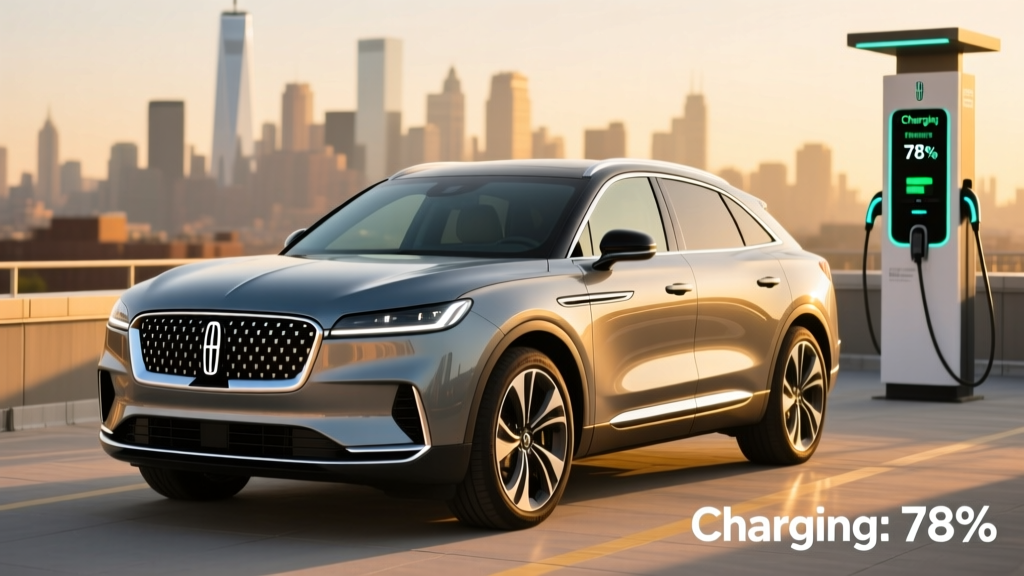
The Lincoln Corsair Grand Touring occupies a narrow but appealing lane: a compact luxury plug-in hybrid (PHEV) that lets you commute on electricity during the week and drive cross-country on gas without a second thought. For 2026, Lincoln continues the Corsair's 2.5-liter PHEV powertrain with modest updates to infotainment and driver-assistance features. If you've been searching for a corsair hybrid, this guide breaks down exactly what you're getting — electric range, real-world fuel economy, charging logistics, tax-credit eligibility, and how it stacks up against going full EV or sticking with a conventional hybrid.
HEV vs PHEV: What's the Difference?
Conventional Hybrid (HEV): A small battery recharges through regenerative braking and the gas engine. You never plug it in. Electric-only driving is limited to very low speeds and short distances. Think Toyota RAV4 Hybrid.
Plug-In Hybrid (PHEV): A larger battery you can charge from a wall outlet or public charger. It delivers meaningful electric-only range (typically 20–40 miles) before the gas engine takes over. The Corsair Grand Touring is a PHEV.
2026 Corsair Grand Touring: Powertrain and Performance Specs
| Specification | 2026 Lincoln Corsair Grand Touring |
|---|---|
| Powertrain | 2.5L Atkinson-cycle I-4 + front electric motor (PHEV) |
| Combined Horsepower | 266 hp |
| Drivetrain | eCVT, FWD standard (eAWD available) |
| Battery Capacity | 14.4 kWh (usable ~11.2 kWh) |
| Battery Chemistry | Lithium-ion (NMC) |
| Electric-Only Range (EPA) | 27 miles |
| Total Combined Range | ~430 miles |
| 0–60 mph | ~6.2 seconds |
| Base MSRP | $52,090 (Grand Touring trim) |
The 2.5-liter Atkinson-cycle four-cylinder pairs with an electric motor integrated into the transmission housing. Combined output of 266 hp gives the Corsair Grand Touring confident highway merging and passing ability — a meaningful step up from the 250 hp turbocharged gas-only Corsair. The eCVT prioritizes smoothness over sportiness, which suits the Lincoln brand's luxury-cruiser character.
Fuel Economy: EPA Numbers vs Real-World MPG
| Mode | City | Highway | Combined |
|---|---|---|---|
| Charge-Depleting (EV mode) | — | — | 84 MPGe |
| Charge-Sustaining (hybrid mode) | 32 mpg | 33 mpg | 33 mpg |
Source: fueleconomy.gov
Real-World MPG Expectations
The EPA rates the Corsair Grand Touring at 33 mpg combined once the battery is depleted and it operates as a conventional hybrid. In real-world driving, owners frequently report 34–37 mpg in city-heavy commuting thanks to generous regenerative braking and frequent engine-off coasting. Highway-only trips at 75+ mph typically yield 29–31 mpg, as the Atkinson-cycle engine is optimized for lower-RPM efficiency. If your commute falls within the 27-mile electric range and you charge daily, you may go weeks without visiting a gas station.
Electric-Only Range and Charging: What PHEV Owners Need to Know
The Corsair Grand Touring's 14.4 kWh battery (approximately 11.2 kWh usable) delivers an EPA-rated 27 miles of electric-only range. That number holds up reasonably well in mild weather — expect 24–26 miles in mixed driving at 65–70°F. In freezing temperatures, the electric range can drop to 18–22 miles as the battery management system limits output and cabin heating draws additional energy.
| Charging Level | Power | 0–100% Time | Notes |
|---|---|---|---|
| Level 1 (120V household) | ~1.4 kW | ~8–10 hours | Overnight top-up from near-empty |
| Level 2 (240V home/public) | ~3.3 kW (onboard limit) | ~3.5–4 hours | Standard J1772 connector |
| DC Fast Charging | Not supported | N/A | No CCS or NACS inlet |
A critical detail: the Corsair Grand Touring's onboard charger maxes out at 3.3 kW. Even if you plug into a 7.2 kW or 11.5 kW Level 2 station, the vehicle will only accept 3.3 kW. For most PHEV owners, this isn't a dealbreaker — a 3.5-hour Level 2 charge easily replenishes the battery overnight or during a workday. But it does mean that investing in a 48-amp home charger won't speed up your Corsair's charging.
No DC fast charging. The Corsair PHEV uses a standard J1772 inlet and cannot accept DC fast charging (CCS or NACS). This is typical for PHEVs in this class — the battery is small enough that Level 2 is sufficient for daily needs.
Pricing, Trims, and Federal Tax Credit Eligibility
The 2026 Lincoln Corsair Grand Touring starts at $52,090 (including destination). Key options packages — such as the Elements Technology package and upgraded audio — can push a well-equipped build past $60,000.
§30D Federal Tax Credit: Does the Corsair PHEV Qualify?
- Vehicle MSRP cap: SUVs must be under $80,000 — the Corsair Grand Touring clears this.
- Battery capacity: Must be ≥7 kWh — the 14.4 kWh battery qualifies.
- Buyer income cap: MAGI ≤ $150,000 (single) / $300,000 (joint) / $225,000 (head of household).
- Critical minerals & battery sourcing: The credit is split into two halves ($3,750 + $3,750). The Corsair's battery sourcing may qualify for one or both halves depending on current-year supply chain compliance. Check the latest IRS guidance for the specific VIN.
- Point-of-sale transfer: Available — you can apply the credit as a down-payment reduction at the dealer rather than waiting for tax filing.
Important: Tax credit eligibility depends on battery component and critical-mineral sourcing requirements that change periodically. Consult a tax professional and verify on fueleconomy.gov before purchasing.
Reliability, Battery Warranty, and Long-Term Ownership Costs
Battery and Powertrain Warranty
Hybrid/EV battery components: 8 years / 100,000 miles (federal mandate for emissions-related hybrid components, covers battery capacity falling below a defined threshold).
Powertrain warranty: 6 years / 70,000 miles.
Bumper-to-bumper: 4 years / 50,000 miles.
PHEV battery degradation is a legitimate concern, but the data is reassuring. The Corsair's 14.4 kWh pack is relatively small and operates with conservative charge/discharge buffers managed by the vehicle's thermal system. Industry-wide, PHEV batteries from major manufacturers have shown 10–15% capacity loss over 8–10 years in typical use. A replacement battery, should one be needed out of warranty, is estimated at $4,000–$7,000 depending on labor and parts availability — significantly less than a full EV battery replacement.
Lincoln's reliability track record for the Corsair platform has been middling according to IIHS and consumer surveys, with some owners reporting minor electrical gremlins and infotainment glitches. The hybrid powertrain itself, however, shares architecture with the Ford Escape PHEV, which has proven durable in fleet and taxi applications.
Corsair Hybrid vs EV vs Gas: Which Should You Choose?
The Decision Framework
Choose the Corsair Grand Touring PHEV if:
- Your daily commute is under 25 miles round-trip and you can charge at home (Level 1 or 2).
- You want luxury-brand refinement without committing to a full EV's charging logistics on road trips.
- You live in an area with sparse DC fast-charging infrastructure.
- You want to reduce fuel consumption significantly without range anxiety on long drives.
Choose a full EV (e.g., Tesla Model Y, Genesis Electrified GV70) if:
- You have reliable home Level 2 charging and your daily driving is under 250 miles.
- You want the lowest per-mile energy cost (~$0.04/mi on home electricity vs ~$0.10/mi on gas in hybrid mode).
- You want to eliminate oil changes and most drivetrain maintenance.
Choose the gas-only Corsair (or a conventional HEV like the RAV4 Hybrid) if:
- You cannot charge at home (apartment, street parking, no garage).
- Your budget is tighter — the gas Corsair starts ~$14,000 lower than the Grand Touring.
- You drive primarily long highway routes where PHEV electric range offers minimal benefit.
Pros and Cons at a Glance
✓ Pros
- 27 miles EV range covers most daily commutes gas-free
- 33 mpg combined in hybrid mode is competitive for a luxury compact SUV
- 266 hp provides confident acceleration
- Quiet, refined cabin with Lincoln's signature ride comfort
- Eligible for partial or full §30D federal tax credit (verify by VIN)
- No range anxiety on road trips — just fill up with gas
✗ Cons
- $52,090 starting price is steep vs non-luxury PHEVs
- 3.3 kW onboard charger limits Level 2 speed
- No DC fast charging capability
- 27-mile EV range is shorter than rivals (Toyota RAV4 Prime: 42 mi)
- Cargo space reduced slightly vs gas Corsair due to battery placement
- Reliability ratings trail Japanese competitors
How the Corsair PHEV Compares to Key Rivals
| Spec | Lincoln Corsair Grand Touring | Toyota RAV4 Prime | BMW X3 xDrive30e |
|---|---|---|---|
| EV Range | 27 mi | 42 mi | ~35 mi |
| Combined HP | 266 | 302 | 288 |
| Hybrid MPG | 33 | 38 | ~28 |
| Battery kWh | 14.4 | 18.1 | ~19.7 |
| Level 2 Max kW | 3.3 | 6.6 | 7.4 |
| Starting MSRP | $52,090 | $44,515 | $58,395 |
The RAV4 Prime dominates on EV range, fuel economy, and price — but it isn't a luxury vehicle. The BMW X3 xDrive30e offers a sportier drive and more EV range, but at a higher entry price and lower hybrid-mode MPG. The Corsair Grand Touring's appeal is specifically its combination of American luxury comfort, adequate (if not class-leading) electric range, and a ride quality that neither rival quite matches.
Frequently Asked Questions
How many MPG does the Lincoln Corsair hybrid get?
Once the battery is depleted, the Corsair Grand Touring operates as a conventional hybrid and delivers an EPA-rated 33 mpg combined (32 city / 33 highway). In real-world city driving with frequent stops, owners often see 34–37 mpg. Highway cruising at 75+ mph typically yields 29–31 mpg.
How far can the Corsair PHEV go on electric only?
The EPA rates the Corsair Grand Touring at 27 miles of electric-only range. In mild conditions (60–75°F, moderate speeds), expect 24–26 real-world miles. In freezing weather, the range can drop to 18–22 miles due to battery chemistry limitations and cabin heating demands.
Does the Corsair hybrid qualify for a federal tax credit?
The Corsair Grand Touring may qualify for a partial or full §30D federal tax credit (up to $7,500), depending on the buyer's income, the vehicle's battery sourcing compliance, and current IRS rules. The MSRP is under the $80,000 SUV cap. Point-of-sale transfer is available. Always verify eligibility on fueleconomy.gov and consult a tax professional before purchasing.
Is the Lincoln Corsair hybrid reliable, and what does a battery replacement cost?
The PHEV powertrain shares architecture with the Ford Escape PHEV, which has demonstrated solid durability. The hybrid battery is covered by an 8-year / 100,000-mile warranty. Out-of-warranty battery replacement is estimated at $4,000–$7,000. Overall vehicle reliability ratings are average for the luxury compact SUV segment — not class-leading, but not problematic.
Do I need to plug in the Corsair Grand Touring?
To get the benefit of the 27-mile electric range, yes — plug it in nightly using a standard 120V outlet (Level 1, ~8–10 hours for a full charge) or a 240V Level 2 charger (~3.5 hours). If you never plug it in, it will still operate as a conventional hybrid at 33 mpg combined, but you'll miss the fuel-cost savings and emissions benefit of electric-only driving.
Can the Corsair PHEV DC fast charge?
No. The Corsair Grand Touring only accepts AC charging via a J1772 connector, at a maximum rate of 3.3 kW. There is no CCS or NACS DC fast-charging inlet. For a 14.4 kWh battery, this is adequate — a full Level 2 charge takes about 3.5 hours.