Quick Verdict: A Three-Row Luxury Hybrid That Bridges the Gap
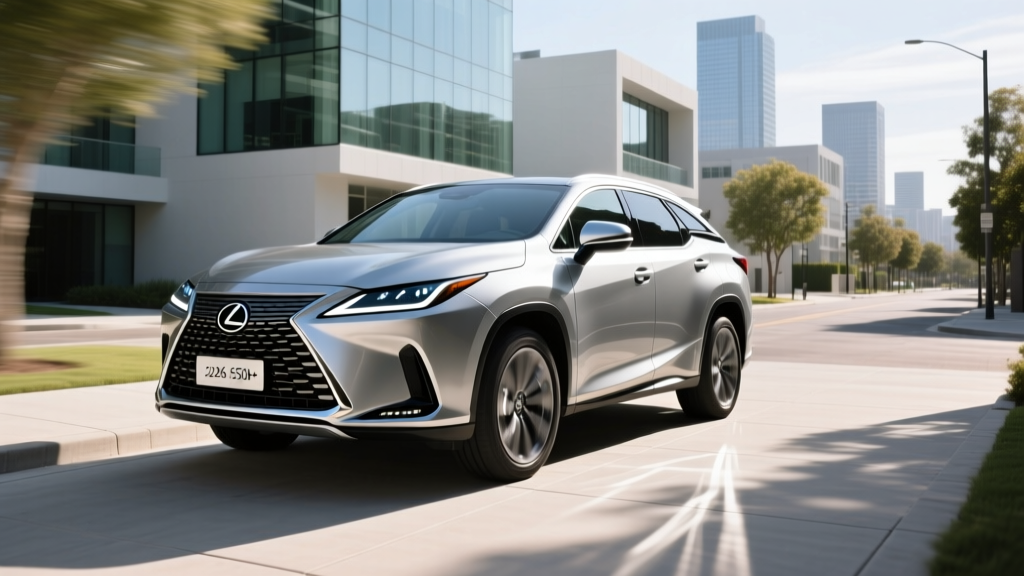
If you want three rows of premium seating, genuine electric-only commuting capability, and the ability to road-trip without planning charger stops, the 2026 Lexus TX 550h+ occupies a narrow but compelling lane. As a plug-in hybrid electric vehicle (PHEV), it pairs a turbocharged V6 with a 22.7 kWh battery to deliver 33 miles of zero-emission driving before the gasoline engine seamlessly picks up the slack. Total system output is 406 horsepower, and EPA combined fuel economy lands at 35 MPG once the battery is depleted.
But at a starting MSRP of $72,100, this luxury hybrid demands scrutiny. Below, we break down every spec, real-world expectation, tax credit variable, and ownership cost so you can decide whether the TX 550h+ fits your garage—or whether a full EV or conventional hybrid serves you better.
HEV vs PHEV: What the TX 550h+ Actually Is
Conventional Hybrid (HEV)
A standard hybrid like the Lexus TX 500h uses a small battery (typically 1–2 kWh) recharged by regenerative braking and the engine. You never plug it in. Electric-only driving is limited to brief low-speed moments. Think of it as a more efficient gas car.
Plug-In Hybrid (PHEV) — The TX 550h+
The TX 550h+ carries a much larger 22.7 kWh lithium-ion battery you can charge from a wall outlet, Level 2 home charger, or (rarely for PHEVs) a DC fast charger. It drives 33 miles on electricity alone before operating as a conventional hybrid. This gives you EV-like daily commuting with gas-engine range insurance.
The distinction matters because the TX lineup also offers the TX 500h (a conventional HEV, no plug, 27 MPG combined) and the TX 350 (gasoline-only). Only the 550h+ delivers meaningful electric-only range and qualifies for certain federal incentives. Don't let a salesperson conflate the three.
Range, MPG, and Efficiency: The Numbers That Matter
| Metric | EPA Estimate | Real-World Expectation |
|---|---|---|
| Electric-Only Range | 33 miles | 28–31 mi (highway/cold weather) |
| Combined MPGe (charge-depleting) | 64 MPGe | Varies with charge frequency |
| Gas-Only Combined MPG | 35 MPG | 32–34 MPG highway-heavy trips |
| City MPG (gas-only) | 38 MPG | 36–39 MPG (hybrids excel in stop-and-go) |
| Highway MPG (gas-only) | 33 MPG | 30–32 MPG at 75+ mph |
| Total Combined Range | ~440 miles | ~400–420 mi mixed driving |
| Fuel Tank Capacity | 17.2 gallons | — |
Real-World Range Note: The EPA's 33-mile electric estimate assumes moderate temperatures and mixed driving. In sub-40°F weather, expect 25–28 miles of electric range due to battery chemistry limitations and cabin heating demands. On a pure highway commute at 70 mph, the electric range drops to roughly 28–30 miles. However, once the engine engages, hybrids actually exceed their EPA city estimates in real stop-and-go traffic thanks to aggressive regenerative braking.
For context, the average American one-way commute is roughly 16 miles according to Census Bureau data. That means many TX 550h+ owners could complete daily round trips entirely on electricity, only burning gas on weekends or longer trips. According to fueleconomy.gov, the TX 550h+ achieves its 64 MPGe combined figure when regularly charged.
Powertrain and Performance Specs
| Specification | 2026 Lexus TX 550h+ |
|---|---|
| Powertrain Type | Plug-In Hybrid (PHEV) |
| Engine | 3.5L V6 Twin-Turbo + 2 electric motors |
| Combined Horsepower | 406 HP |
| Combined Torque | 406 lb-ft |
| Transmission | eCVT (electronically controlled) |
| Drivetrain | AWD (DIRECT4 with rear e-axle) |
| 0–60 mph | 5.5 seconds |
| Battery Chemistry | Lithium-ion (NMC) |
| Usable Battery Capacity | 22.7 kWh |
| Towing Capacity | 5,000 lbs |
| Cargo Volume (behind 3rd row) | 20.2 cu ft |
| Seating | 6 or 7 passengers |
The twin-turbo V6 and dual-motor DIRECT4 all-wheel-drive system give the TX 550h+ genuine passing power. The 5.5-second 0–60 time beats most V6 luxury SUVs and makes highway merging effortless. The eCVT avoids the rubber-band feeling of some hybrids by simulating stepped gear ratios under hard acceleration—a tuning choice Lexus has refined since the RX 500h.
Charging: Speeds, Times, and What You Need at Home
| Level | Power | Time (0–100%) | Where |
|---|---|---|---|
| Level 1 (120V household) | ~1.4 kW | ~16 hours | Standard outlet |
| Level 2 (240V home/public) | 7.7 kW | ~3 hours | Home wallbox, public L2 |
| DC Fast Charge | Not supported | — | — |
The TX 550h+ accepts up to 7.7 kW on Level 2 AC charging—adequate for overnight replenishment but slower than some PHEV rivals like the Jeep Grand Cherokee 4xe (which supports 7.4 kW but has a smaller battery). Critically, the TX 550h+ does not support DC fast charging, which is typical for PHEVs given their smaller batteries. A full charge on a home Level 2 unit takes roughly three hours, meaning you could top off during a workday if your office offers charging.
Home charging setup: A 240V/40-amp circuit with a J1772 connector handles the TX 550h+ easily. Budget $500–$800 for a quality Level 2 charger (ChargePoint Home Flex, Emporia Level 2) and $600–$2,000 for electrician installation depending on panel proximity. No panel upgrade is typically needed for a PHEV's modest draw. Always have a licensed electrician verify your panel capacity before installation.
Pricing, Trims, and Tax Credit Eligibility
| Trim | MSRP (2026) | Key Additions |
|---|---|---|
| TX 550h+ Premium | $72,100 | 20" wheels, heated/ventilated front seats, Mark Levinson audio |
| TX 550h+ Luxury | $78,600 | 22" wheels, semi-aniline leather, panoramic roof, head-up display |
Federal §30D Tax Credit — Key Requirements (2026 rules per IRS.gov):
- Vehicle MSRP cap: SUVs/vans/pickups must be under $80,000. Both TX 550h+ trims qualify.
- Buyer income cap: AGI must not exceed $150K (single), $225K (head of household), or $300K (joint).
- Battery sourcing: Critical minerals and battery components must meet phased-in thresholds that tighten annually. Lexus sources from multiple suppliers; confirm current-year compliance on the IRS eligible vehicle list before purchasing.
- Credit amount: Up to $7,500, split between critical minerals ($3,750) and battery components ($3,750). Partial credit is possible if only one threshold is met.
- Point-of-sale transfer: You can transfer the credit to the dealer at purchase to reduce your out-of-pocket cost, even if you owe less than $7,500 in taxes.
Caveat: Battery sourcing requirements tighten each year under the Inflation Reduction Act. A vehicle eligible in 2025 may not be in 2026. Always verify on the fueleconomy.gov tax credit page and consult a tax professional before relying on this credit.
At $72,100 base and with a potential $7,500 federal credit (bringing the effective price to ~$64,600), the TX 550h+ undercuts comparable luxury PHEV SUVs like the BMW X5 xDrive50e ($68,900 base) while offering three rows. However, it faces stiff competition from the Volvo XC90 Recharge ($73,100, 33 mi electric) and the Mercedes GLE 350de (diesel PHEV, not sold in the US).
Battery Warranty, Reliability, and Replacement Costs
Lexus Hybrid Battery Warranty:
- Coverage: 10 years / 150,000 miles (whichever comes first)
- Capacity threshold: Warranty covers defects and capacity loss below 70% of original capacity
- Hybrid system components: Inverter, electric motors, and control modules covered for 8 years / 100,000 miles
- Transferability: Warranty transfers to subsequent owners automatically
Lexus (and parent company Toyota) has the deepest hybrid track record in the industry, dating to the 2001 Prius. Real-world data from fleet operators and owner surveys consistently shows Toyota/Lexus hybrid batteries lasting 150,000–200,000+ miles before significant degradation. The NMC chemistry in the TX 550h+ is proven, and Lexus employs active thermal management to limit heat-related wear.
Battery replacement cost: If out of warranty, a TX 550h+ hybrid battery replacement is estimated at $8,000–$12,000 based on current Lexus PHEV parts pricing (comparable to the RX 450h+ battery at ~$9,500 for parts alone). However, the 10-year/150,000-mile warranty and typical battery longevity make this a low-probability expense for most first and second owners.
Overall vehicle reliability ratings are strong. Lexus consistently ranks at or near the top in J.D. Power Vehicle Dependability Studies and Consumer Reports reliability surveys. The TX platform (shared with the Grand Highlander) carries no major recalls as of early 2026, per NHTSA.
Who Should Buy the TX 550h+ vs. a Full EV or Gas SUV?
Choose the Lexus TX 550h+ (luxury PHEV) if:
- Your daily commute is under 30 miles round-trip and you can charge at home
- You need three rows but don't want to commit to full EV charging infrastructure on road trips
- You frequently drive in areas with sparse DC fast-charging networks
- You want 5,000-lb towing without the range penalties a full EV suffers while towing
- You qualify for the §30D tax credit and value the point-of-sale price reduction
Choose a full EV (e.g., Rivian R1S, Tesla Model X, Kia EV9) if:
- You have reliable home Level 2 charging and your typical trips stay under 250 miles
- You want zero maintenance on the powertrain (no oil changes, no engine)
- You prioritize the lowest per-mile fuel cost (electricity at $0.12/kWh ≈ $0.04/mi vs. gas at ~$0.12/mi)
Choose a conventional hybrid (TX 500h) if:
- You cannot install a home charger (apartment, street parking, no garage)
- Your budget is closer to $60,000 and you don't need electric-only driving
- You want simplicity—no charging routine to manage
Choose a gas-only SUV if:
- You drive fewer than 8,000 miles per year (the fuel savings won't offset a PHEV premium)
- You live in an extremely cold climate where PHEV electric range drops significantly year-round
Pros and Cons at a Glance
Pros
- 33 miles electric covers most daily commutes gas-free
- 406 HP and 5.5-sec 0–60 provide genuine passing confidence
- Three-row seating in a PHEV is rare at this price point
- Lexus reliability reputation and 10-year/150K-mile battery warranty
- Eligible for up to $7,500 federal tax credit (verify sourcing yearly)
- 5,000-lb towing without EV range anxiety
Cons
- $72,100+ starting price is steep for the segment
- No DC fast charging (common PHEV limitation, but notable)
- Electric range drops to ~25 mi in cold weather
- Only two trims available—limited customization
- Third row is tight for adults on long trips
- Heavy vehicle: ~5,200 lbs curb weight affects tire wear and braking
Frequently Asked Questions
How many MPG does the Lexus TX 550h+ get?
The EPA rates the TX 550h+ at 35 MPG combined in gas-only (charge-sustaining) mode, with 38 MPG city and 33 MPG highway. In real-world driving, city MPG often exceeds the EPA estimate thanks to regenerative braking, while sustained highway driving at 75+ mph typically yields 30–32 MPG. When regularly charged and driven within its 33-mile electric range, effective fuel consumption drops dramatically—many owners report using only a few gallons per month.
How far can the TX 550h+ go on electric only?
The EPA rates the TX 550h+ at 33 miles of electric-only range. Real-world results vary: expect 28–31 miles in moderate weather on mixed roads, 25–28 miles in cold weather (below 40°F), and roughly 28–30 miles at sustained highway speeds. Once the battery is depleted, the gasoline engine engages seamlessly and the vehicle operates as a conventional hybrid.
Hybrid vs PHEV vs EV — which is right for me?
A conventional hybrid (HEV) is best if you can't charge at home and want simple fuel savings. A PHEV like the TX 550h+ is ideal if you can charge at home, have a short commute, but need gas-engine flexibility for road trips. A full EV (BEV) makes sense if you have home charging, mostly drive under 250 miles per trip, and want the lowest operating cost and zero powertrain maintenance. The TX 550h+ sits in the middle: EV-like commuting without range anxiety.
Is the TX 550h+ reliable, and what does a battery replacement cost?
Lexus has an industry-leading hybrid reliability record spanning 25 years. The TX 550h+ hybrid battery is warranted for 10 years / 150,000 miles. Historical data from Lexus/Toyota hybrids suggests batteries routinely last well beyond 150,000 miles. If replacement is needed out of warranty, expect $8,000–$12,000. The overall vehicle earns strong reliability marks from Consumer Reports and J.D. Power.
Does the TX 550h+ qualify for a tax credit?
The TX 550h+ may qualify for up to $7,500 under the federal §30D clean vehicle credit, provided the buyer meets income caps ($300K joint / $150K single) and the vehicle's battery meets current-year critical mineral and component sourcing thresholds. Both trims fall under the $80,000 SUV MSRP cap. The credit can be transferred to the dealer at point of sale. However, sourcing requirements tighten annually—always verify eligibility on the IRS eligible vehicle list before purchasing, and consult a tax professional.
Does the TX 550h+ need to be plugged in?
To get the full 33 miles of electric range and maximum fuel savings, yes—you should plug it in regularly using a standard 120V outlet (slow, ~16 hours) or a 240V Level 2 charger (~3 hours). However, if you forget or can't plug in, the vehicle operates perfectly as a conventional hybrid, achieving 35 MPG combined on gasoline alone. You are never stranded without charge.