Quick Verdict: Two Flavors of Lexus NX Hybrid
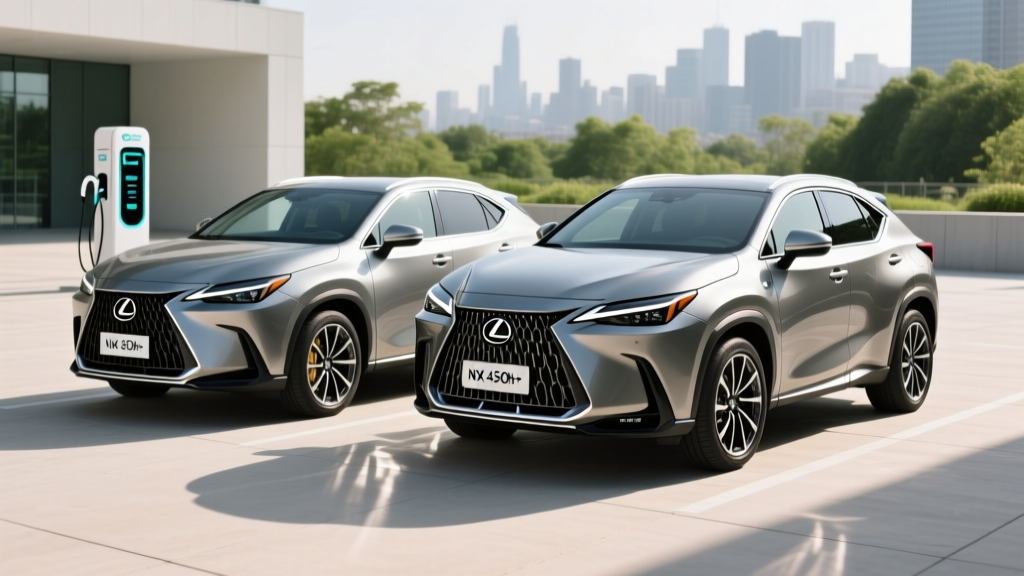
The 2026 Lexus NX SUV hybrid lineup gives buyers two distinct electrification paths in a compact luxury crossover: the NX 350h (a conventional hybrid, or HEV) and the NX 450h+ (a plug-in hybrid, or PHEV). Neither requires you to commit to a full battery-electric vehicle, but they serve very different driving patterns. The NX 350h is the set-it-and-forget-it fuel miser. The NX 450h+ is for drivers who want EV-like daily commuting with a gas engine as a safety net for road trips.
Both share the same refined 2.5-liter four-cylinder-based powertrain architecture, Lexus's trademark build quality, and a well-appointed interior that punches above its price class in quietness. Where they diverge is in battery size, electric capability, and how you fuel them. Let's break down every number that matters.
HEV vs PHEV: Which Lexus NX Hybrid Are You Looking At?
Before diving into specs, it's critical to understand the difference — these two powertrains are not interchangeable.
NX 350h — Conventional Hybrid (HEV)
- You never plug it in. The battery recharges through regenerative braking and the gas engine.
- Small battery (~1.6 kWh) acts as a buffer to assist the engine and capture braking energy.
- No electric-only driving beyond very low-speed crawling.
- Lower purchase price, simpler ownership, excellent city MPG.
NX 450h+ — Plug-In Hybrid (PHEV)
- You plug it in to access its full electric range. A Level 2 home charger fills it in roughly 4 hours.
- Larger battery (18.1 kWh usable) enables meaningful electric-only driving at highway speeds.
- Operates as a full EV for daily commutes, then switches to hybrid mode when the battery depletes.
- Higher purchase price, eligible for federal tax credit, lower daily fuel cost if you charge at home.
Fuel Economy: How Many MPG Does the Lexus NX Hybrid Get?
This is the number most shoppers search for first. Here are the EPA-rated figures for both powertrains, alongside what you can expect in real-world driving.
| Metric | NX 350h (HEV) | NX 450h+ (PHEV) — Hybrid Mode | NX 450h+ (PHEV) — EV Mode |
|---|---|---|---|
| City MPG | 41 MPG | 38 MPG | N/A (electric) |
| Highway MPG | 37 MPG | 33 MPG | N/A (electric) |
| Combined MPG | 39 MPG | 36 MPG | 84 MPGe |
| Electric-Only Range | N/A | 37 miles (EPA) | 37 miles |
| Total Range (gas + electric) | ~530 miles | ~510 miles combined | — |
| Fuel Tank | 14.5 gal | 14.5 gal | 14.5 gal |
Source: EPA Fuel Economy
Real-World MPG vs. EPA Sticker
The NX 350h's hybrid system thrives in stop-and-go city traffic, where the electric motor handles low-speed acceleration and the engine operates only at its most efficient RPM range. In real-world city driving, many owners report 42–45 MPG — exceeding the EPA city estimate. On the highway at 75+ mph, expect the number to dip to 33–35 MPG, as aerodynamic drag overwhelms the hybrid system's advantages.
For the NX 450h+, the 37-mile EPA electric range holds up well in moderate weather (50–80°F). In cold weather (below 30°F), expect that range to contract to roughly 28–32 miles due to cabin heating demands and reduced battery efficiency. Once the battery depletes, the NX 450h+ operates as a conventional hybrid and delivers approximately 33–35 MPG combined — slightly less than the NX 350h due to the added weight of the larger battery pack.
Powertrain Specs: Horsepower, Engines, and Motors
| Specification | NX 350h (HEV) | NX 450h+ (PHEV) |
|---|---|---|
| Engine | 2.5L 4-cyl Atkinson-cycle | 2.5L 4-cyl Atkinson-cycle |
| Electric Motors | 2 (front + rear) | 2 (front + rear, higher output) |
| Combined Horsepower | 240 hp | 304 hp |
| 0–60 mph | 7.2 seconds | 6.0 seconds |
| Drivetrain | AWD (E-Drive rear motor) | AWD (E-Drive rear motor) |
| Transmission | eCVT | eCVT |
| Battery Capacity | ~1.6 kWh (NiMH) | 18.1 kWh (lithium-ion) |
| Towing Capacity | 2,000 lbs | 2,000 lbs |
The NX 450h+'s 304 combined horsepower makes it genuinely quick — the 6.0-second 0–60 time puts it in the territory of sporty compact crossovers. The NX 350h's 240 hp is adequate for daily driving and highway merging, though it won't thrill anyone. Both use Lexus's eCVT, which is a planetary gearset (not a belt-driven CVT), so it avoids the rubber-band drone associated with conventional CVTs.
NX 450h+ Charging: How to Plug In and How Long It Takes
If you're considering the PHEV variant, charging logistics will determine whether it makes financial sense for you.
| Charging Level | Power (kW) | Time (0–100%) | Notes |
|---|---|---|---|
| Level 1 (120V household outlet) | ~1.4 kW | ~12 hours | Emergency/trickle only; adds ~5 mi/hr |
| Level 2 (240V home charger, 16A) | ~3.3 kW (vehicle-limited) | ~4 hours | Recommended for daily use |
| DC Fast Charging | Not supported | N/A | No DC fast charge capability |
The NX 450h+'s onboard charger maxes out at 3.3 kW, meaning even if you plug into a 48-amp Level 2 home charger capable of delivering 11.5 kW, the car will only draw 3.3 kW. That's adequate — 4 hours to a full charge means you can plug in when you get home and wake up to a full battery every morning. But it also means there's no benefit to installing a higher-amperage charger specifically for this vehicle.
Critical limitation: The NX 450h+ does not support DC fast charging. You won't be able to top up at Electrify America or Tesla Supercharger stations (with adapter). For a PHEV with 37 miles of range, this isn't a dealbreaker — the use case is home charging overnight — but it's worth knowing before you plan a road trip expecting electric top-ups.
Pricing, Trims, and Tax Credit Eligibility
| Model / Trim | 2026 MSRP (est.) | Federal Tax Credit (§30D) |
|---|---|---|
| NX 350h Base | ~$43,500 | Not eligible (HEV) |
| NX 350h Premium | ~$46,500 | Not eligible (HEV) |
| NX 350h Luxury | ~$50,000 | Not eligible (HEV) |
| NX 450h+ Premium | ~$59,000 | Up to $7,500 (see rules below) |
| NX 450h+ Luxury | ~$62,500 | Up to $7,500 (see rules below) |
§30D Federal Tax Credit Rules for the NX 450h+ (2026)
The NX 450h+ may qualify for up to $7,500 in federal tax credits under IRS §30D, but eligibility depends on several factors that change periodically:
- MSRP cap: SUVs must have an MSRP at or below $80,000. Both NX 450h+ trims clear this threshold.
- Buyer income cap: Modified AGI must not exceed $150,000 (single), $225,000 (head of household), or $300,000 (joint filers).
- Battery sourcing requirements: The credit is split into two halves ($3,750 each) — one for critical minerals sourcing and one for battery component manufacturing. Sourcing rules tighten annually, and the exact credit amount depends on whether the NX 450h+'s battery meets current-year thresholds for North American processing and assembly.
- Point-of-sale transfer: As of 2024+, you can transfer the credit to the dealer at purchase, reducing your out-of-pocket cost at the dealership rather than waiting for a tax refund.
- Lease loophole: Leased PHEVs may qualify for the full $7,500 commercial clean vehicle credit (§45W) passed through by the lessor, regardless of income or sourcing rules. Ask your dealer how this applies.
Always verify current eligibility at IRS.gov and consult a tax professional before purchase.
Reliability, Battery Warranty, and Replacement Cost
This is where Lexus's reputation carries real weight. Toyota/Lexus hybrid systems have been in continuous production since the 1997 Prius, and the NX benefits from decades of iterative refinement.
Hybrid Battery Warranty
- NX 350h (HEV): 10 years / 150,000 miles hybrid battery warranty (all 50 states)
- NX 450h+ (PHEV): 10 years / 150,000 miles hybrid battery warranty; 8 years / 100,000 miles on PHEV-specific high-voltage components
- General warranty: 4 years / 50,000 miles bumper-to-bumper; 6 years / 70,000 miles powertrain
Real-world battery longevity: Lexus hybrid batteries routinely last 150,000–200,000+ miles before significant degradation. The NX 350h's NiMH pack is particularly robust — this chemistry is less energy-dense than lithium-ion but extremely tolerant of charge cycling. The NX 450h+'s lithium-ion pack will see gradual capacity loss over time (expect ~10–15% range loss by year 8–10), but the warranty protects you if it falls below a usable threshold.
Battery replacement cost (out of warranty):
- NX 350h hybrid battery: approximately $3,000–$4,500 (parts + labor)
- NX 450h+ PHEV battery: approximately $8,000–$12,000 (parts + labor)
These are worst-case scenarios. Given Lexus's track record and the 10-year warranty, most original owners will never face a battery replacement bill. If you're buying used, check the remaining warranty transferability — Lexus hybrid warranties transfer to subsequent owners.
Who Should Choose Which: Hybrid vs PHEV vs Full EV?
Choose the NX 350h (HEV) if:
- You don't have access to home or workplace charging (apartment, street parking).
- You want maximum simplicity — no plugs, no charging apps, no range planning.
- Your budget is under $50,000 and you don't qualify for the PHEV tax credit.
- You drive mostly in the city where hybrid MPG shines (41+ MPG real-world city).
- You plan to own the car 10+ years and value proven long-term reliability.
Choose the NX 450h+ (PHEV) if:
- You have a garage or driveway where you can install a Level 2 charger (even a standard 240V outlet works).
- Your daily round-trip commute is under 35 miles — you could drive months without using gas.
- You want EV-like daily driving but need the gas engine for road trips or towing.
- You qualify for the §30D tax credit and/or the lease loophole, reducing the effective price gap.
- You want the performance bump (304 hp, 6.0s 0–60) that comes with the larger battery and motors.
Choose a full EV (e.g., Lexus RZ, Tesla Model Y, Hyundai Ioniq 5) if:
- You have reliable home charging and your daily driving is under 250 miles.
- You want zero tailpipe emissions and the lowest per-mile fuel cost.
- You're ready to plan around DC fast charging on road trips.
- You want the lowest long-term maintenance cost (no oil changes, no gas engine to service).
Pros and Cons at a Glance
Pros
- NX 350h delivers 39+ MPG combined with no behavior change required
- NX 450h+ offers 37 miles of genuine EV commuting with zero range anxiety
- Class-leading reliability reputation and 10-year hybrid battery warranty
- Quiet, refined cabin with excellent ride quality
- NX 450h+ qualifies for up to $7,500 federal tax credit (subject to eligibility)
- Standard AWD on both hybrid variants
- Strong resale value — Lexus hybrids hold value well
Cons
- NX 450h+ is significantly more expensive (~$15,000 premium over NX 350h)
- No DC fast charging on the PHEV — limits road-trip electric flexibility
- 3.3 kW onboard charger is slow by modern PHEV standards
- Infotainment system, while improved, still lags behind competitors in responsiveness
- Cargo space slightly reduced in NX 450h+ due to larger battery pack
- Tax credit eligibility is not guaranteed — depends on income, sourcing, and annual rule changes
Frequently Asked Questions
How many MPG does the Lexus NX hybrid get?
The NX 350h (conventional hybrid) achieves an EPA-rated 41 city / 37 highway / 39 combined MPG. In real-world city driving, many owners see 42–45 MPG. The NX 450h+ (plug-in hybrid) gets 36 MPG combined once its electric range is depleted, and 84 MPGe when operating on its electric battery.
How far can the NX 450h+ go on electric only?
The EPA rates the NX 450h+ at 37 miles of electric-only range. In moderate temperatures (50–80°F) with mixed city/highway driving, expect 33–37 real-world miles. In cold weather (below 30°F), that drops to roughly 28–32 miles due to battery chemistry limitations and cabin heating load.
Does the Lexus NX hybrid qualify for a tax credit?
The NX 350h (conventional hybrid) does not qualify for any federal tax credit — it's not a plug-in vehicle. The NX 450h+ (PHEV) may qualify for up to $7,500 under IRS §30D, subject to buyer income limits ($150K single / $300K joint), MSRP caps (under $80K for SUVs — both trims qualify), and battery component/critical mineral sourcing requirements that tighten annually. Check IRS.gov for current-year rules. Leasing may unlock the full credit regardless of sourcing requirements.
Is the Lexus NX hybrid reliable?
Lexus consistently ranks at or near the top of J.D. Power Vehicle Dependability Studies, and the hybrid powertrain is among the most proven in the industry. Toyota/Lexus has produced millions of hybrid vehicles since 1997, and the hybrid battery is warrantied for 10 years / 150,000 miles. Out-of-warranty battery replacement costs range from $3,000–$4,500 for the HEV and $8,000–$12,000 for the PHEV, but replacements before 150K miles are rare.
Do I need to plug in the NX 350h?
No. The NX 350h is a conventional hybrid (HEV). It charges its small battery through regenerative braking and the gas engine. You simply fill it with gasoline like any other car. Only the NX 450h+ (PHEV) requires plugging in to access its electric-only range.
Can the NX 450h+ DC fast charge?
No. The NX 450h+ does not support DC fast charging. It charges exclusively via AC — either a standard 120V outlet (~12 hours) or a 240V Level 2 charger (~4 hours at the vehicle's 3.3 kW limit). For a PHEV with 37 miles of range, overnight home charging covers the intended use case.
Hybrid vs PHEV vs EV — which should I choose?
If you lack home charging access, the NX 350h (HEV) is the clear choice — it requires zero infrastructure. If you can charge at home and your commute is under 35 miles round-trip, the NX 450h+ (PHEV) lets you drive electrically most days while keeping a gas tank for longer trips. If you have home charging, drive under 250 miles daily, and want the lowest operating cost, consider a full EV like the Lexus RZ or a competitor. The right answer depends entirely on your charging access and driving pattern.