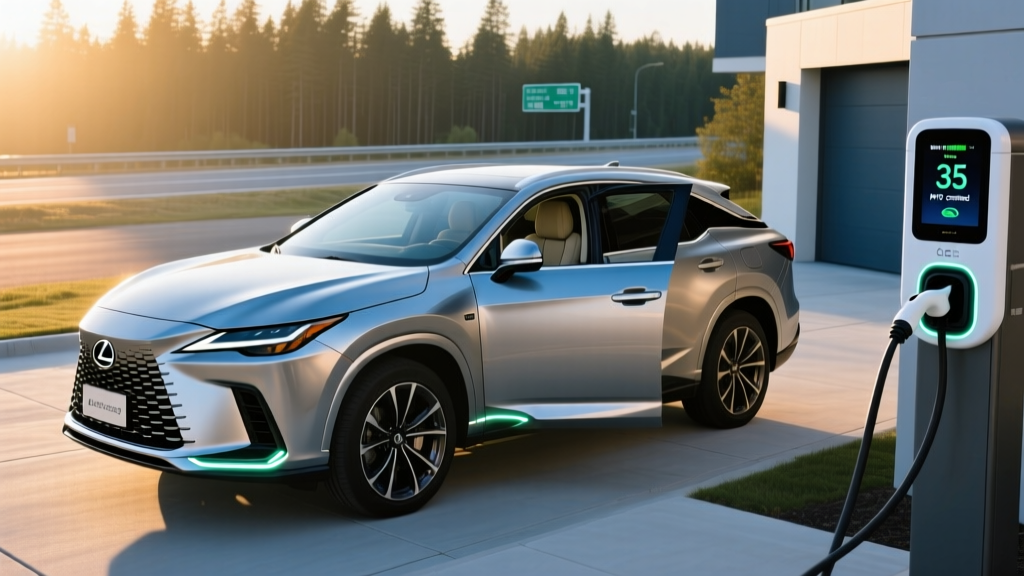
If you've been asking whether Lexus makes a hybrid SUV, the answer is a definitive yes — in fact, Lexus offers more hybrid SUVs than almost any other luxury brand. For the 2026 model year, the Lexus lineup includes six conventional hybrid (HEV) SUVs and two plug-in hybrid (PHEV) SUVs, spanning subcompact to full-size three-row segments.
This guide breaks down every current Lexus hybrid SUV with exact EPA fuel economy figures, powertrain specs, pricing, and real-world ownership data so you can decide which one fits your driving needs — and whether a hybrid, PHEV, or full EV makes more sense for you.
HEV vs PHEV: What's the Difference in the Lexus Lineup?
Before we get into individual models, it's essential to understand the two types of hybrid SUVs Lexus sells. The distinction affects how you fuel the vehicle, what you pay, and whether you qualify for federal incentives.
| Feature | Conventional Hybrid (HEV) | Plug-In Hybrid (PHEV) |
|---|---|---|
| Needs to be plugged in? | No — charges via regenerative braking and the engine | Yes — plug in to access electric-only range |
| Electric-only driving | Brief, low-speed only (typically under 1 mile) | Yes — 20–37+ miles depending on model |
| Battery size | ~1.0–1.6 kWh (small buffer) | ~18.1 kWh (usable) |
| Charging hardware | None needed | Level 1 (120V) included; Level 2 (240V) optional; no DC fast charging |
| Federal tax credit | Not eligible under §30D | May qualify — subject to income, MSRP caps, and battery sourcing rules |
| Best for | Drivers who want better MPG without changing habits | Drivers with home charging who want short electric commutes plus gas flexibility |
Neither type requires you to install a home charger, though PHEV owners who do plug in regularly will see the biggest fuel savings. Conventional Lexus hybrids refuel exactly like a gas car — you simply benefit from improved efficiency.
Every 2026 Lexus Hybrid SUV: Specs at a Glance
Here's the full current lineup with the numbers that matter. All EPA data sourced from fueleconomy.gov and Lexus specifications.
| Model | Type | Powertrain | Combined HP | EPA MPG (City/Hwy/Combined) | PHEV Electric Range | Starting MSRP |
|---|---|---|---|---|---|---|
| UX 300h | HEV | 2.0L 4-cyl + 2 motors (FWD) / 3 motors (AWD) | 196 hp | 43 / 41 / 42 | — | $39,390 |
| NX 350h | HEV | 2.5L 4-cyl + 3 motors (AWD) | 240 hp | 41 / 37 / 39 | — | $44,315 |
| NX 450h+ | PHEV | 2.5L 4-cyl + 3 motors (AWD) | 304 hp | 84 MPGe combined / 36 MPG gas-only | 37 miles | $54,465 |
| RX 350h | HEV | 2.5L 4-cyl + 3 motors (AWD) | 250 hp | 37 / 34 / 36 | — | $53,200 |
| RX 450h+ | PHEV | 2.5L 4-cyl + 3 motors (AWD) | 304 hp | 83 MPGe combined / 35 MPG gas-only | 37 miles | $63,300 |
| TX 500h | HEV | 2.4L turbo 4-cyl + 2 motors (AWD) | 371 hp | 27 / 28 / 27 | — | $64,700 |
| LX 700h | HEV | 3.5L twin-turbo V6 + 1 motor (4WD) | 457 hp | 20 / 22 / 21 | — | $114,510 |
| GX 550h (Overtrail) | HEV | 2.4L turbo 4-cyl + 1 motor (4WD) | 326 hp | 23 / 24 / 23 | — | $80,700 |
Every Lexus hybrid SUV except the UX 300h FWD comes standard with all-wheel drive. The PHEV models (NX 450h+ and RX 450h+) share a similar powertrain architecture but are tuned for different vehicle weights and aerodynamics.
Fuel Economy Deep Dive: EPA vs Real-World MPG
Lexus hybrids tend to perform exceptionally well in real-world city driving — often matching or exceeding their EPA city estimates. This is because regenerative braking captures energy during stop-and-go traffic that a conventional gas car simply wastes as heat.
| Model | EPA Combined | Real-World City (Observed) | Real-World Highway (Observed) | Notes |
|---|---|---|---|---|
| UX 300h | 42 MPG | 42–46 MPG | 37–40 MPG | City driving maximizes regen benefit |
| NX 350h | 39 MPG | 38–42 MPG | 34–37 MPG | AWD adds slight drag vs FWD-only competitors |
| RX 350h | 36 MPG | 35–38 MPG | 31–34 MPG | Larger/heavier; highway efficiency drops at 75+ mph |
| TX 500h | 27 MPG | 25–28 MPG | 25–28 MPG | Turbo hybrid prioritizes power; 3-row weight penalty |
| NX 450h+ (gas only) | 36 MPG | 34–37 MPG | 33–35 MPG | After battery depleted; still efficient as a hybrid |
On the highway, hybrids lose some of their advantage because there's less braking to recapture energy. Expect highway MPG to run 3–5 MPG below the EPA combined figure for most Lexus HEV SUVs. The UX 300h is the standout — its compact size and low curb weight help it achieve genuinely impressive efficiency regardless of driving conditions.
PHEV Electric-Only Range: NX 450h+ and RX 450h+
Both Lexus PHEV SUVs use an 18.1 kWh lithium-ion battery pack (total capacity; usable capacity is slightly less to preserve longevity). Here's what that delivers:
- NX 450h+: 37 miles EPA electric-only range, 550+ miles total combined range
- RX 450h+: 37 miles EPA electric-only range, 520+ miles total combined range
Neither PHEV supports DC fast charging. Charging happens via Level 1 (standard 120V household outlet) or Level 2 (240V). On a Level 2 charger rated at 6.6 kW, a full charge takes approximately 2.5 hours. On a 120V outlet, expect 10–12 hours for a full charge — fine for overnight replenishment.
PHEV Battery and Charging Quick Facts
- Battery capacity: 18.1 kWh (total)
- Electric-only range: 37 miles EPA (both models)
- Level 2 charge time (6.6 kW): ~2.5 hours, 0–100%
- Level 1 charge time (120V): ~10–12 hours
- DC fast charging: Not available
- After battery depletion: Operates as a conventional hybrid at 35–36 MPG combined
The 37-mile electric range is enough to cover most daily commutes. According to FHWA data, the average American drives roughly 37 miles per day — meaning many PHEV owners could run almost entirely on electricity during the work week and use gas only for longer weekend trips.
Powertrain Details: How Lexus Hybrids Deliver Power
Lexus uses Toyota's proven hybrid synergy drive architecture across its lineup, with variations tuned to each vehicle's size and purpose.
HEV models (UX, NX 350h, RX 350h): A naturally aspirated Atkinson-cycle 4-cylinder engine paired with electric motors through a planetary gearset eCVT. This isn't a traditional belt-and-cone CVT — it's a power-split device that seamlessly blends engine and motor output. Acceleration is smooth and linear, with no shift shock.
Turbo HEV models (TX 500h, GX 550h): A turbocharged engine paired with electric motors and a traditional 6-speed automatic transmission. These prioritize performance and towing capability (up to 6,000 lbs for the TX 500h) over maximum efficiency.
PHEV models (NX 450h+, RX 450h+): The same planetary eCVT architecture as the HEVs, but with a much larger battery and more powerful electric motors. The result is 304 combined horsepower and the ability to drive in pure EV mode at highway speeds (up to ~84 mph) before the engine engages.
LX 700h: The flagship pairs a twin-turbo V6 with a hybrid motor integrated into the 10-speed automatic, delivering 457 hp and serious off-road capability while modestly improving efficiency over the non-hybrid LX 600.
Pricing and Tax Credit Eligibility
Lexus hybrid SUVs span a wide price range, from under $40,000 to well over $100,000. Here's how federal incentives apply:
Conventional hybrids (HEV): None of the standard Lexus HEV SUVs qualify for the federal §30D clean vehicle tax credit. That credit applies only to plug-in vehicles (BEVs and PHEVs) meeting specific battery sourcing, MSRP, and buyer income requirements. Some states offer their own hybrid incentives — check your state's energy office for current programs.
Plug-in hybrids (NX 450h+, RX 450h+): These may qualify for up to $7,500 under the federal §30D credit, but eligibility is complex and changes frequently. Per IRS guidelines, key requirements include:
- MSRP cap: SUVs must have an MSRP at or below $80,000 (both PHEVs qualify at base; loaded trims may exceed)
- Buyer income cap: AGI must not exceed $150,000 (single) / $300,000 (joint filing)
- Battery sourcing: Critical minerals and battery components must meet escalating domestic/free-trade-partner sourcing thresholds — these requirements tighten each year through 2030
- Point-of-sale transfer: Eligible buyers can transfer the credit to the dealer at purchase for an immediate price reduction, rather than waiting to claim it on their tax return
Because battery sourcing rules are updated annually and depend on specific supply-chain certifications, always verify current eligibility on fueleconomy.gov or consult a tax professional before relying on the credit in your purchase decision.
Reliability, Battery Warranty, and Replacement Cost
Lexus consistently ranks at or near the top in J.D. Power and Consumer Reports reliability studies, and its hybrid systems are among the most proven in the industry. Toyota/Lexus has been building hybrids since the 1997 Prius, and the core architecture in today's SUVs benefits from nearly three decades of refinement.
Lexus Hybrid Battery Warranty Coverage
- Hybrid battery warranty: 10 years / 150,000 miles (whichever comes first), all 50 states
- Hybrid system components warranty: 8 years / 100,000 miles
- Capacity retention guarantee: Lexus warrants the hybrid battery against defects and abnormal loss of capacity — if it drops below a defined performance threshold within the warranty period, Lexus replaces it at no cost
- Typical out-of-warranty replacement cost: $2,000–$4,000 for HEV models (smaller batteries); $6,000–$9,000 for PHEV models (larger 18.1 kWh pack)
In practice, Lexus hybrid batteries routinely last well beyond the warranty period. It's common to see Lexus RX 400h and RX 450h models from the mid-2000s and early 2010s still running on their original battery packs at 150,000–200,000+ miles. The smaller HEV batteries experience less stress because they cycle through a narrower state-of-charge window (typically 40–80%), which reduces degradation.
For PHEV models, the larger battery does experience more cycling, but Lexus engineers the thermal management system to keep the pack within optimal temperature ranges. Expect gradual capacity loss of roughly 1–2% per year under normal use — meaning a 37-mile electric range might become 33–34 miles after five years.
Which Lexus Hybrid SUV Is Right for You?
Choose the UX 300h if:
You want maximum MPG (42 combined) in a compact luxury crossover for city commuting and don't need much cargo space. Starting at ~$39,400, it's the most affordable entry point into Lexus hybrid ownership.
Choose the NX 350h if:
You want a compact luxury SUV with excellent efficiency (39 MPG combined), AWD, and a well-appointed interior. It's the best all-around value in the lineup at ~$44,300.
Choose the NX 450h+ (PHEV) if:
You have home charging, a commute under 37 miles, and want to drive on electricity most days while retaining gas flexibility for road trips. You may also qualify for the federal tax credit.
Choose the RX 350h if:
You need a midsize two-row SUV with more interior room and a smoother ride than the NX, and you value comfort over sportiness. At 36 MPG combined, it's remarkably efficient for its size.
Choose the RX 450h+ (PHEV) if:
You want the RX experience with 37 miles of electric-only commuting and the strongest acceleration in the RX lineup (304 hp, 0–60 in ~5.9 seconds).
Choose the TX 500h if:
You need three rows of seating and don't want to compromise on power. At 371 hp, it's the performance hybrid option, though 27 MPG combined reflects its size and turbocharged engine.
Choose the GX 550h or LX 700h if:
You need serious off-road capability and towing. These body-on-frame SUVs prioritize ruggedness over efficiency — but still improve MPG over their non-hybrid counterparts.
Hybrid vs PHEV vs Full EV: Which Fits Your Life?
Not sure whether to go hybrid, plug-in hybrid, or full battery electric? Here's a practical framework:
Choose a conventional hybrid (HEV) if: You don't have access to home or workplace charging, you want to reduce fuel costs without any behavioral change, or you frequently drive in areas with sparse charging infrastructure. A Lexus HEV requires zero lifestyle adjustment — just fill up at any gas station.
Choose a PHEV if: You can install a Level 2 charger at home (or have reliable workplace charging), your daily commute is under 35 miles, and you take occasional road trips where you don't want to plan around DC fast chargers. A PHEV gives you an EV for daily driving and a gas car for everything else.
Choose a full EV if: You have reliable home charging, your daily driving is predictable, you want to eliminate gas entirely, and you're comfortable planning longer trips around charging stops. Full EVs like the Tesla Model Y or Hyundai Ioniq 5 offer lower per-mile fuel costs and less maintenance, but require more upfront planning.
Frequently Asked Questions
How many MPG does a Lexus hybrid SUV get?
It depends on the model. The UX 300h leads the lineup at 42 MPG combined (43 city / 41 highway). The NX 350h achieves 39 MPG combined, the RX 350h gets 36 MPG combined, and the three-row TX 500h returns 27 MPG combined. In real-world city driving, most owners report matching or slightly exceeding the EPA city estimates thanks to regenerative braking.
How far can the Lexus PHEV SUVs go on electric only?
Both the NX 450h+ and RX 450h+ deliver 37 miles of EPA-rated electric-only range. That's enough to cover the average American's daily commute. Once the battery is depleted, they continue operating as conventional hybrids at 35–36 MPG combined — so you're never stranded.
Do Lexus hybrid SUVs need to be plugged in?
Only the PHEV models (NX 450h+ and RX 450h+) benefit from being plugged in. The conventional hybrids (UX 300h, NX 350h, RX 350h, TX 500h, GX 550h, LX 700h) charge their batteries entirely through regenerative braking and the gasoline engine — no plug required.
Is the Lexus hybrid system reliable?
Yes. Lexus hybrid systems are among the most reliable in the automotive industry, backed by a 10-year/150,000-mile hybrid battery warranty. The planetary eCVT design has fewer moving parts than a conventional automatic transmission, and real-world data shows hybrid batteries routinely lasting 150,000–200,000+ miles.
What does it cost to replace a Lexus hybrid battery?
Out of warranty, a conventional hybrid battery replacement typically costs $2,000–$4,000 (parts and labor). The larger PHEV battery in the NX 450h+ and RX 450h+ costs approximately $6,000–$9,000 to replace. However, replacements are uncommon within the first 150,000 miles.
Do any Lexus hybrid SUVs qualify for a tax credit?
The conventional hybrids do not qualify for the federal §30D tax credit. The PHEV models (NX 450h+ and RX 450h+) may qualify for up to $7,500, subject to buyer income limits ($150K single / $300K joint), MSRP caps ($80K for SUVs), and battery sourcing requirements that change annually. Always verify current eligibility on irs.gov before purchasing.
Can a Lexus PHEV DC fast charge?
No. Neither the NX 450h+ nor the RX 450h+ supports DC fast charging. They accept up to 6.6 kW on Level 2 (240V), which fully charges the battery in about 2.5 hours. On a standard 120V outlet (Level 1), a full charge takes 10–12 hours.