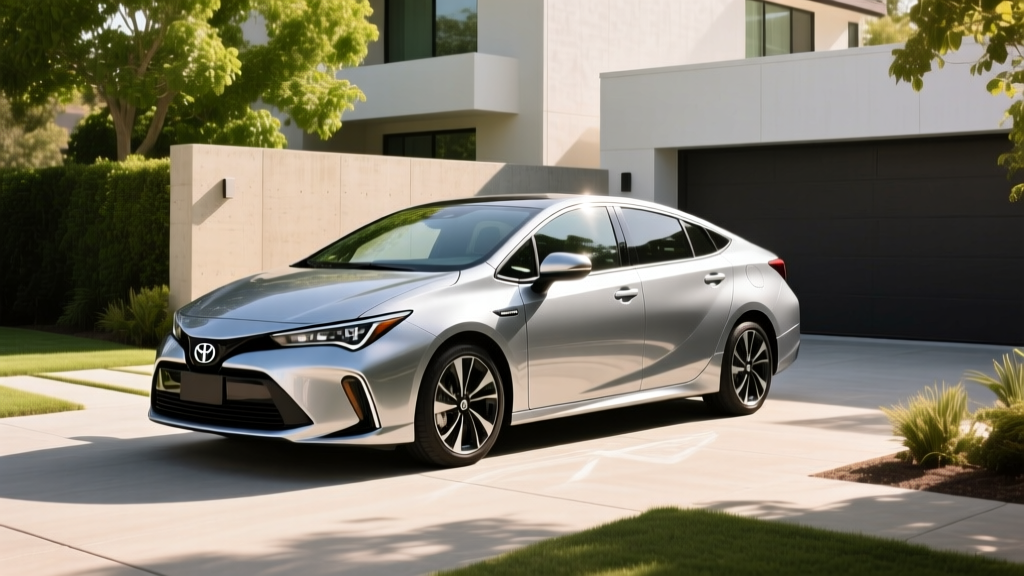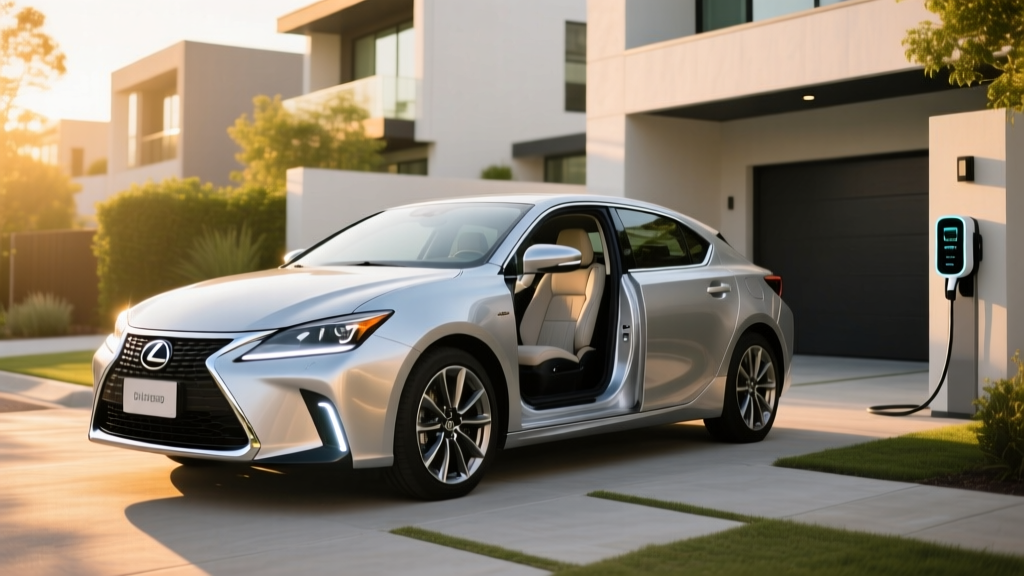
The Lexus CT Hybrid in 2026: A Compact HEV That Still Turns Heads
If you've searched for a Lexus CT hybrid recently, you've likely noticed something: Lexus discontinued the CT 200h after the 2017 model year in the United States. Yet more than 1,300 buyers per month still search for this compact luxury hybrid hatchback. The reason is simple — no direct replacement exists in the Lexus lineup, and the used CT 200h market remains active for drivers who want Toyota Hybrid Synergy Drive efficiency wrapped in a premium badge.
This guide covers everything you need to know about the Lexus CT hybrid in 2026: real-world MPG, battery longevity, replacement costs, and whether this aging HEV still holds up against modern plug-in hybrids and battery-electric alternatives.
HEV vs PHEV: Where the Lexus CT 200h Fits
Before diving into specs, it's essential to clarify a common point of confusion. The Lexus CT 200h is a conventional hybrid electric vehicle (HEV), not a plug-in hybrid (PHEV). Here's what that distinction means in practice:
| Feature | HEV (Lexus CT 200h) | PHEV (e.g., Toyota Prius Prime) | BEV (e.g., Tesla Model 3) |
|---|---|---|---|
| Plug-in required? | No — regenerative braking charges the battery | Yes — Level 1 or Level 2 | Yes — Level 2 or DC fast charge |
| Electric-only range | Less than 1 mile at low speed | 25–44 miles (model dependent) | 250–360+ miles |
| Gas engine | 1.8L 4-cylinder (always available) | 2.0L 4-cylinder (backup) | None |
| Fuel for long trips | Gasoline only | Gasoline after battery depletes | Electricity only |
| Home charging install | Not needed | Recommended (Level 2) | Required (Level 2) |
The CT 200h never plugs in. Its 1.3 kWh nickel-metal hydride (NiMH) traction battery charges exclusively through regenerative braking and the gasoline engine. This is a significant advantage for apartment dwellers or anyone without home charging access — but it also means no electric-only commuting and no federal plug-in tax credit.
Fuel Economy: EPA Ratings and Real-World MPG
The Lexus CT 200h shares its powertrain with the third-generation Toyota Prius, one of the most efficient vehicles ever produced. Here's the official EPA breakdown:
| Driving Condition | EPA MPG (CT 200h) | Real-World Expectation |
|---|---|---|
| City | 43 MPG | 40–45 MPG (hybrids often beat EPA in city driving) |
| Highway | 40 MPG | 35–39 MPG (aerodynamic drag and higher speeds reduce hybrid advantage) |
| Combined | 42 MPG | 38–43 MPG depending on driving mix |
Source: EPA Fuel Economy Guide
Real-world note: Hybrid efficiency peaks in stop-and-go city traffic, where regenerative braking recaptures energy and the electric motor handles low-speed driving. On sustained highway runs at 75+ mph, the CT 200h's efficiency drops closer to 35–37 MPG — a pattern common to all parallel hybrids. In cold weather (below 30°F), expect a 5–10% MPG reduction as the engine runs longer to heat the cabin and maintain battery temperature.
With a 10.6-gallon fuel tank, the CT 200h delivers roughly 400–445 miles of total range per fill-up. That's competitive with many modern EVs on range alone, with the advantage of 5-minute refueling at any gas station.
Powertrain and Performance Specs
| Specification | Lexus CT 200h (2011–2017) |
|---|---|
| Engine | 1.8L inline-4 Atkinson cycle |
| Engine horsepower | 98 hp @ 5,200 rpm |
| Electric motor output | 80 hp (60 kW) |
| Combined system output | 134 hp |
| 0–60 mph | ~9.8 seconds |
| Transmission | eCVT (planetary gearset, not a belt CVT) |
| Traction battery | 1.3 kWh NiMH (27 modules) |
| Drivetrain | Front-wheel drive |
| Curb weight | ~3,130 lbs |
| Cargo volume | 14.3 cu ft (rear seats up) / 35.5 cu ft (folded) |
The 134 combined horsepower figure is modest by 2026 standards, and the 9.8-second 0–60 time reflects that. The CT 200h is a deliberate efficiency-first design, not a performance vehicle. Where it shines is in seamless, vibration-free electric starts, quiet low-speed maneuvering, and the smooth torque fill from the electric motor during acceleration from stops.
Battery Longevity, Warranty, and Replacement Cost
Battery lifespan is the single biggest concern for any used hybrid buyer. Here's the full picture for the CT 200h:
Lexus Hybrid Battery Warranty
- Original coverage: 8 years / 100,000 miles (10 years / 150,000 miles in CARB states including California, New York, Massachusetts, and others)
- Capacity threshold: Lexus does not publish a specific degradation percentage, but warranty covers defects and significant capacity loss that impairs function
- Transferability: Warranty transfers to subsequent owners for the remaining term
Real-world longevity data: The CT 200h's NiMH battery pack is among the most proven in the industry. Toyota and Lexus hybrid batteries routinely reach 150,000–200,000 miles before significant degradation, and many exceed 200,000 miles with minimal capacity loss. The NiMH chemistry is less energy-dense than modern lithium-ion but offers superior cycle-life stability and thermal tolerance.
Battery replacement cost (2026):
- New OEM Lexus battery pack: $2,500–$3,800 installed at a dealership
- Refurbished/remanufactured pack: $1,200–$2,000 installed at an independent hybrid specialist
- Individual module replacement (if only 1–3 of 27 modules fail): $300–$800 at a specialist shop
Most CT 200h owners will never need a full battery replacement. The more common maintenance item is the hybrid battery cooling fan filter (located behind the rear seat), which should be cleaned every 15,000–20,000 miles to prevent overheating-related degradation.
Pricing and Tax Credit Eligibility in 2026
Since the Lexus CT 200h was discontinued after the 2017 model year, all examples on the market are used. Current pricing reflects that:
- 2011–2013 models: $8,000–$13,000 (80,000–130,000 miles typical)
- 2014–2015 models (refresh): $12,000–$17,000 (60,000–100,000 miles typical)
- 2016–2017 models (final years): $15,000–$21,000 (40,000–80,000 miles typical)
Does the Lexus CT 200h qualify for any tax credit?
No. The federal §30D new clean vehicle credit applies only to new plug-in vehicles (BEVs and PHEVs) meeting battery sourcing, MSRP cap, and buyer income requirements per IRS guidelines. The CT 200h is a conventional HEV that doesn't plug in, so it never qualified for the federal credit even when new.
However, buyers may be eligible for the §25E used clean vehicle credit — but only if purchasing a qualifying used PHEV or BEV. Since the CT 200h is an HEV, it does not qualify for this credit either. If tax incentives are a priority, consider a used Toyota Prius Prime (PHEV) or a used Chevrolet Bolt EV instead.
Who Should Buy the Lexus CT Hybrid — and Who Shouldn't
Reasons to Choose the CT 200h
- No home charging needed — ideal for apartment dwellers
- Proven 42 MPG combined with minimal maintenance
- Lexus build quality and interior materials at a used-car price
- NiMH battery longevity exceeds 150,000 miles routinely
- Low annual fuel cost (~$1,050/year at 12,000 miles and $3.50/gal)
- Strong reliability record per Consumer Reports
Reasons to Look Elsewhere
- Discontinued — no new examples available, aging infotainment
- Modest 134 hp; slow acceleration by modern standards
- No plug-in option, no electric-only commuting
- No federal or state tax credit eligibility
- Limited cargo space (14.3 cu ft) compared to modern crossovers
- NiMH battery, while durable, is heavier and less energy-dense than Li-ion
Hybrid vs PHEV vs EV: Which Fits Your Situation?
Choose the Lexus CT 200h (HEV) if: You lack home charging access, want zero behavior change from a gas car, prioritize low purchase price ($10K–$20K used), and drive a mix of city and highway miles.
Choose a PHEV (e.g., Toyota Prius Prime, Hyundai Tucson PHEV) if: You can install a Level 2 home charger, your daily commute is under 40 miles (covering most trips on electricity), and you want a gas backup for road trips. A used PHEV may qualify for up to $4,000 via the §25E used clean vehicle credit.
Choose a full BEV (e.g., Chevrolet Bolt EV, Tesla Model 3) if: You have reliable home charging, your daily driving is under 250 miles, you want to eliminate gasoline entirely, and you're eligible for the $7,500 §30D federal credit on a new purchase (subject to MSRP, income, and battery sourcing requirements).
Frequently Asked Questions
How many MPG does the Lexus CT 200h hybrid get?
The EPA rates the Lexus CT 200h at 43 MPG city, 40 MPG highway, and 42 MPG combined. In real-world driving, owners typically see 38–45 MPG depending on driving conditions. City-heavy routes favor the hybrid system, while sustained highway driving at higher speeds reduces efficiency to 35–39 MPG.
Is the Lexus CT 200h a plug-in hybrid?
No. The CT 200h is a conventional hybrid (HEV). It charges its battery exclusively through regenerative braking and the gasoline engine. You never plug it in. If you want plug-in capability with a similar platform, look at the Toyota Prius Prime (PHEV), which shares Toyota's hybrid architecture but adds a larger lithium-ion battery and plug-in charging.
How long does the Lexus CT hybrid battery last?
The CT 200h's NiMH hybrid battery typically lasts 150,000–200,000+ miles with proper maintenance (keeping the cooling fan filter clean). Many examples exceed 200,000 miles on the original pack. The original warranty was 8 years/100,000 miles (10 years/150,000 miles in CARB states), and most 2011–2017 models are now outside warranty unless in a CARB state with a low-mileage example.
What does it cost to replace the CT 200h hybrid battery?
A new OEM battery replacement runs $2,500–$3,800 at a Lexus dealer. Refurbished packs cost $1,200–$2,000 installed at independent hybrid specialists. In many cases, only individual modules need replacement ($300–$800), since the pack consists of 27 separate NiMH modules that can be individually tested and swapped.
Does the Lexus CT 200h qualify for any tax credit?
No. The CT 200h is a conventional HEV, not a plug-in vehicle. It never qualified for the federal §30D new vehicle credit and does not qualify for the §25E used clean vehicle credit. Only plug-in hybrids (PHEVs) and battery-electric vehicles (BEVs) are eligible for federal tax incentives under current IRS rules.
Is the Lexus CT 200h reliable?
Yes. The CT 200h consistently earns above-average reliability ratings. It shares its powertrain with the third-generation Toyota Prius, which has one of the strongest long-term reliability records of any vehicle. Common maintenance items are minimal: standard brake service (regenerative braking reduces pad wear significantly), coolant changes for the hybrid inverter cooling system, and the battery fan filter cleaning mentioned above.
Why was the Lexus CT 200h discontinued?
Lexus ended US sales of the CT 200h after the 2017 model year due to declining sales as buyers shifted toward compact luxury crossovers like the Lexus UX (which is itself a hybrid). The CT 200h continued in some international markets through 2022. Lexus has not announced a direct successor in the compact hatchback segment.