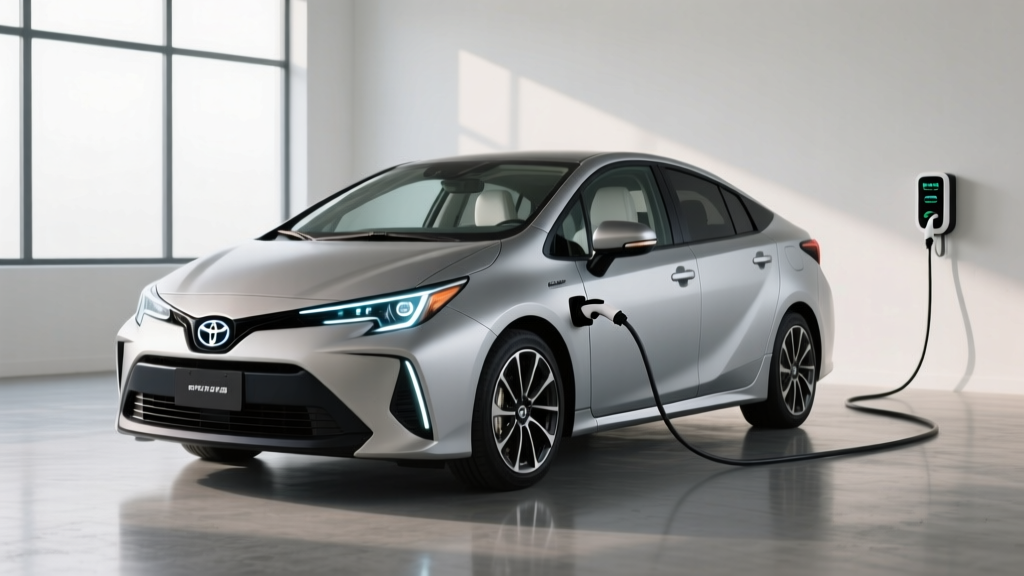
The fifth-generation Toyota Prius finally shed its science-project styling and delivered something buyers actually want: striking design, 196 horsepower, and up to 57 MPG combined. For shoppers weighing whether to buy or lease a Prius hybrid, the math has shifted in 2026. Toyota's lease offers are aggressive, federal tax-credit pass-through on the Prius Prime (the plug-in variant) can knock thousands off a lease, and the standard hybrid remains one of the most fuel-efficient non-plug-in vehicles you can drive off a lot today.
This guide walks through every number that matters — EPA MPG by trim, real-world fuel economy, Prius vs. Prius Prime differences, battery longevity, and the lease-vs-buy decision framework — so you can walk into the dealership knowing exactly what you're signing.
2026 Prius Hybrid vs. Prius Prime: What's the Difference?
Toyota sells two distinct electrified Prius models. Confusing them is the single most common mistake shoppers make.
Prius (HEV — Conventional Hybrid)
- No plug required. The gasoline engine and regenerative braking recharge a small 1.0 kWh lithium-ion battery.
- EPA fuel economy: Up to 57 MPG combined (LE FWD).
- Powertrain: 2.0L four-cylinder + two motor-generators, 196 net system horsepower (FWD). AWD-e trims add a rear motor for 196 HP total.
- Price range: ~$28,550–$36,900 MSRP depending on trim.
- Federal tax credit: None — §30D credits apply only to plug-in vehicles with ≥7 kWh battery capacity.
Prius Prime (PHEV — Plug-In Hybrid)
- Plugs in. A larger 13.6 kWh lithium-ion battery delivers up to 44 miles of electric-only driving (SE trim, per fueleconomy.gov).
- EPA fuel economy: 127 MPGe (electric + gas combined), 52 MPG combined once the battery depletes.
- Powertrain: 2.0L four-cylinder + motor-generators, 220 net system horsepower.
- Price range: ~$33,450–$40,700 MSRP.
- Federal tax credit: Eligible for up to $3,750 under current IRS §30D rules (see IRS.gov), with income, MSRP, and battery-sourcing requirements. On a lease, the lessor may pass this credit through as a capitalized-cost reduction.
Bottom line: If you never want to plug in, the standard Prius HEV is your car. If you have home charging and a short commute, the Prius Prime can eliminate most weekday gasoline use.
EPA MPG and Real-World Fuel Economy
| Trim | City MPG | Highway MPG | Combined MPG |
|---|---|---|---|
| Prius LE (FWD) | 57 | 56 | 57 |
| Prius XLE / Limited (FWD) | 52 | 52 | 52 |
| Prius LE / XLE (AWD-e) | 49 | 50 | 49 |
| Prius Prime SE | 127 MPGe / 53 MPG | 114 MPGe / 49 MPG | 127 MPGe / 52 MPG |
| Prius Prime XSE / XSE Premium | 119 MPGe / 50 MPG | 106 MPGe / 47 MPG | 114 MPGe / 48 MPG |
What to Expect in the Real World
Hybrids often beat their EPA city numbers because stop-and-go driving maximizes regenerative braking and electric-motor assist. On a mixed suburban commute at 35–45 mph, owners regularly report 55–60 MPG in the LE FWD. Highway driving at 75+ mph reduces the hybrid advantage — expect 48–52 MPG on the LE in sustained interstate travel.
Cold weather hits all vehicles, but hybrids suffer less range loss than full EVs since the gasoline engine provides heat. Expect a 5–10% MPG dip in freezing temperatures, primarily from cabin-heating load and winter fuel blends. The Prius Prime's electric-only range may drop from 44 miles to roughly 36–38 miles in winter.
Prius Prime Electric-Only Range and Charging
The Prius Prime's 13.6 kWh lithium-ion battery pack delivers 44 miles of electric-only range on the SE trim and 40 miles on XSE/XSE Premium (heavier wheels and equipment reduce efficiency slightly).
| Spec | Prius Prime SE | Prius Prime XSE |
|---|---|---|
| Battery capacity | 13.6 kWh | 13.6 kWh |
| EV-only range (EPA) | 44 miles | 40 miles |
| Total range (EV + gas) | ~460 miles | ~440 miles |
| Level 1 charging (120V) | ~11 hours | ~11 hours |
| Level 2 charging (240V, 3.3 kW) | ~4 hours | ~4 hours |
| DC fast charging | Not supported | |
| Charge port | J1772 (Level 1 & 2 AC) | |
Charging reality check: The Prius Prime does not support DC fast charging. Its onboard charger tops out at 3.3 kW, meaning a full Level 2 charge takes roughly four hours. For a plug-in hybrid with 44 miles of range, this is perfectly adequate — most owners plug in overnight at home and never need public charging. If you need fast DC charging for road trips, you want a full BEV, not a PHEV.
Powertrain, Performance, and Driving Impressions
The current-generation Prius is genuinely quick by hybrid standards:
| Metric | Prius (HEV FWD) | Prius (HEV AWD-e) | Prius Prime |
|---|---|---|---|
| Net system horsepower | 196 HP | 196 HP | 220 HP |
| Engine | 2.0L DOHC 4-cylinder + motor-generators | ||
| 0–60 mph | ~7.2 sec | ~7.0 sec | ~6.6 sec |
| Drivetrain | FWD | AWD-e (rear motor) | FWD |
| Transmission | eCVT (planetary gearset, no belt) | ||
The eCVT is Toyota's power-split device — not a traditional belt-and-cone CVT. It's smooth, reliable, and avoids the rubber-band sensation that plagues some competitors. The 220-HP Prius Prime will surprise you at merge lanes; this is no longer the slowest car on the highway.
Pricing, Lease Deals, and Tax-Credit Eligibility
Here's what 2026 Prius pricing looks like at MSRP (destination included):
| Trim | MSRP (approx.) |
|---|---|
| Prius LE (FWD) | $28,550 |
| Prius XLE (FWD) | $32,400 |
| Prius Limited (FWD) | $36,200 |
| Prius LE (AWD-e) | $29,950 |
| Prius Prime SE | $33,450 |
| Prius Prime XSE | $37,100 |
| Prius Prime XSE Premium | $40,700 |
Federal Tax Credit: Lease vs. Buy
For the standard Prius HEV, there is no federal tax credit — it doesn't plug in and its battery is far below the §30D minimum of 7 kWh.
For the Prius Prime PHEV, the current §30D credit offers up to $3,750 (subject to battery-component and critical-mineral sourcing requirements). Key eligibility rules from the IRS:
- Buyer income caps: AGI ≤ $150,000 (single), $225,000 (head of household), $300,000 (joint).
- MSRP cap: Vehicle MSRP must not exceed $55,000 (sedans, including Prius Prime — qualifies).
- Battery sourcing: Credit amount depends on whether battery components and critical minerals meet North American sourcing thresholds. The exact credit amount ($3,750 or $7,500) depends on which requirements the vehicle satisfies in the current model year.
- Point-of-sale transfer: Buyers can transfer the credit to the dealer at purchase for an immediate price reduction, or claim it on their tax return.
- Lease pass-through: On a lease, the §30D credit technically goes to the lessor (the finance company). Many Toyota Financial Services leases pass this through as a capitalized-cost reduction, effectively lowering your monthly payment. Always confirm this in writing before signing.
Why Lease a Prius in 2026?
Leasing makes sense when:
- Toyota is offering subsidized money factors. Toyota Financial Services periodically offers lease rates below market — check current offers on Toyota's site or through a dealer.
- You want the PHEV credit without tax-liability risk. If your income exceeds §30D caps, a lease may still allow the lessor to claim the commercial clean-vehicle credit (§45W) and pass savings to you.
- You plan to upgrade every 3 years. Hybrid battery technology and infotainment evolve; leasing keeps you current.
- You drive under 12,000–15,000 miles/year. Lease mileage caps penalize high-mileage drivers.
Buying makes sense when:
- You plan to keep the car 8+ years (Toyota hybrids are famously durable).
- You drive 15,000+ miles/year (lease overage fees add up fast).
- You want to modify the car or avoid wear-and-tear charges at lease-end.
Battery Warranty, Reliability, and Replacement Cost
Toyota Hybrid Battery Warranty
Hybrid battery: 10 years / 150,000 miles (whichever comes first), transferable to subsequent owners.
Hybrid system components (inverter, motor-generators, eCVT): 8 years / 100,000 miles.
New-vehicle limited warranty: 3 years / 36,000 miles.
Powertrain warranty: 5 years / 60,000 miles.
Toyota's hybrid battery track record is among the best in the industry. The Prius has been in production since 1997 (globally) and 2000 (US), and real-world data shows hybrid battery packs frequently lasting 150,000–200,000+ miles before significant degradation. The current-generation lithium-ion pack is lighter and more energy-dense than the nickel-metal-hydride packs in older Priuses, but long-term 15-year data on this specific pack is still accumulating.
Replacement cost if out of warranty: A new OEM hybrid battery for the current Prius runs approximately $2,500–$3,500 installed at a Toyota dealer. Independent hybrid specialists often offer refurbished packs for $1,500–$2,200. For the Prius Prime's larger 13.6 kWh pack, expect $4,000–$5,500 OEM. These are worst-case scenarios — most owners never replace the hybrid battery.
According to IIHS crash-test data and J.D. Power reliability surveys, the Prius consistently scores at or near the top of its segment. Toyota's hybrid synergy drive system has fewer wear components than a conventional automatic transmission (no torque converter, no friction clutches to replace).
Who Should Lease a Prius — and Who Shouldn't?
Choose the Prius HEV (Lease or Buy) If:
- You don't have reliable home or workplace charging.
- You want maximum MPG with zero behavior change — just fill up with gas.
- Your commute is long or unpredictable and you don't want to think about range.
- You want the lowest entry price (~$28,550 MSRP for the LE).
Choose the Prius Prime PHEV If:
- You can charge at home (even a standard 120V outlet works overnight).
- Your daily round-trip commute is under 40 miles — you'll rarely use gasoline on weekdays.
- You want EV-like daily driving with gasoline backup for road trips.
- You can leverage the federal tax credit via purchase or lease pass-through.
Choose a Full BEV Instead If:
- You want zero tailpipe emissions and minimal maintenance (no oil changes, no spark plugs).
- You have reliable home Level 2 charging and access to DC fast charging for road trips.
- You want the maximum available federal tax credit ($7,500 for qualifying vehicles).
- Your daily driving is predictable and under 250 miles.
Skip the Prius Entirely If:
- You need more than ~27 cubic feet of cargo space (consider a RAV4 Hybrid or Sienna).
- You want a three-row vehicle.
- You tow — the Prius is not rated for towing.
Pros and Cons at a Glance
Pros
- Class-leading fuel economy: 57 MPG combined (LE FWD)
- 196–220 HP — genuinely quick for a hybrid
- Striking design that stands out in a sea of crossovers
- 10-year / 150,000-mile hybrid battery warranty
- Low starting MSRP (~$28,550)
- Prius Prime offers 44 miles EV-only for gas-free commuting
- Toyota Safety Sense 3.0 standard (AEB, lane-keep, adaptive cruise)
- Strong resale value and proven long-term reliability
Cons
- Rear headroom is tight for taller passengers (sloping roofline)
- Cargo space (~24 cu ft) trails compact SUVs
- No DC fast charging on Prius Prime
- AWD-e trims drop to 49 MPG combined
- Infotainment is functional but not class-leading
- No federal tax credit on standard HEV trims
- Road noise is noticeable on coarse pavement
- XSE Premium Prime trim pushes past $40K
Frequently Asked Questions
How many MPG does the 2026 Prius hybrid get?
The Prius LE FWD achieves an EPA-estimated 57 MPG city, 56 highway, and 57 combined. Higher trims (XLE, Limited) rate at 52 combined. AWD-e trims drop to 49 combined. Real-world city driving often exceeds EPA figures thanks to regenerative braking; highway driving at 75+ mph typically yields 48–52 MPG.
How far can the Prius Prime go on electric only?
The Prius Prime SE delivers an EPA-estimated 44 miles of electric-only range. The XSE and XSE Premium trims rate at 40 miles. Total combined range (electric + gasoline) is approximately 440–460 miles. In cold weather, expect EV-only range to drop roughly 15–20%.
Does the Prius hybrid qualify for a federal tax credit?
The standard Prius HEV does not qualify — §30D requires plug-in capability and a battery of at least 7 kWh. The Prius Prime PHEV may qualify for up to $3,750 under current IRS rules, subject to buyer income caps, MSRP limits, and battery-sourcing requirements. On a lease, the credit may be passed through as a capitalized-cost reduction. Consult a tax professional and review current rules at IRS.gov.
Is the Prius hybrid reliable? What does a battery replacement cost?
The Prius has one of the strongest long-term reliability records in the auto industry. Toyota's hybrid battery is warrantied for 10 years / 150,000 miles. Out-of-warranty replacement runs $2,500–$3,500 for the HEV and $4,000–$5,500 for the Prime's larger pack. Most hybrid batteries last well beyond 150,000 miles based on two decades of real-world data.
Is it better to lease or buy a Prius in 2026?
Leasing makes sense if Toyota Financial Services is offering subsidized money factors, you drive under 15,000 miles/year, and you want a lower monthly payment with potential PHEV credit pass-through on the Prime. Buying makes more sense if you plan to keep the car 8+ years, drive high mileage, or want to avoid lease-end wear charges. The Prius's strong resale value and legendary durability favor buying for long-term owners.
Does the Prius Prime need to be plugged in?
No — it operates as a regular hybrid if you never plug it in, achieving 48–52 MPG combined. However, you forfeit the 40–44 miles of electric-only range and the associated fuel savings. To get the most value from a Prius Prime, plan to charge at home nightly, even on a standard 120V outlet.
Can I charge the Prius Prime at a public DC fast charger?
No. The Prius Prime supports only AC charging via a J1772 connector: Level 1 (120V, ~11 hours for a full charge) and Level 2 (240V at 3.3 kW, ~4 hours). There is no DC fast-charge port. This is typical for PHEVs — their smaller batteries don't require rapid charging.
Whether you lease a Prius hybrid or buy one, the 2026 lineup delivers real efficiency, real performance, and a decade of battery peace of mind. The decision between HEV and PHEV comes down to one question: can you plug in at home? If yes, the Prime's 44 electric miles transform your daily commute. If no, the standard hybrid's 57 MPG asks nothing of you but an occasional stop at the pump.