Quick Verdict: The Family Hauler That Sips Fuel Like a Sedan
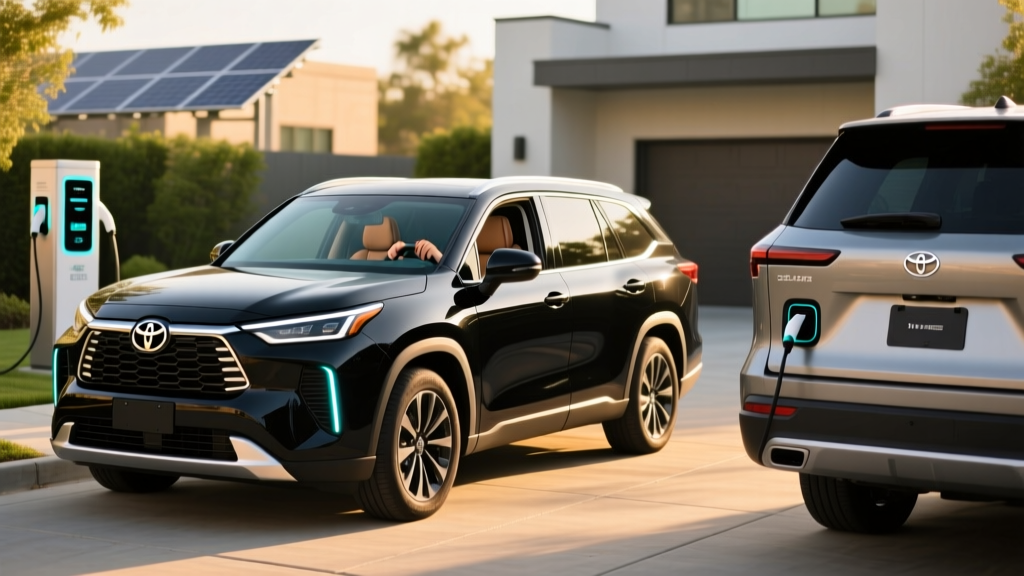
The 2026 Toyota Grand Highlander Hybrid XLE occupies a rare sweet spot: three-row SUV space with midsize-sedan fuel consumption. Rated at 36 MPG combined by the EPA, the XLE trim sits in the middle of the hybrid lineup — adding leatherette seating, a power liftgate, and Toyota Safety Sense 3.0 over the base LE, without the premium price of the Limited or Platinum trims. For families who need cargo capacity but refuse to visit a gas station every four days, this is one of the most compelling conventional hybrids on the market.
But before we unpack the numbers, let's clear up a critical distinction that trips up many shoppers.
HEV vs PHEV: Which Grand Highlander Hybrid Are We Talking About?
Conventional Hybrid (HEV) — This Review
- Powertrain: 2.5L 4-cylinder + electric motors, no plug required
- How it charges: Regenerative braking and the gas engine recharge the small traction battery automatically
- Electric-only driving: Brief low-speed EV mode (under ~1 mile), not a primary driving mode
- Fueling: Gas station only — exactly like a conventional car
Hybrid MAX (Performance Hybrid) — Different Trim
- Powertrain: 2.4L turbo + electric motor, 362 hp combined
- Focus: Performance over efficiency (~27 MPG combined)
- Availability: Limited and Platinum trims only — not offered on the XLE
The Grand Highlander does not currently offer a plug-in hybrid (PHEV) variant in the U.S. market. If you're looking for 30+ miles of electric-only range before the engine kicks in, you'd need to look at competitors like the Chrysler Pacifica PHEV or the Toyota RAV4 Prime (which seats five, not seven/eight). The Grand Highlander Hybrid XLE reviewed here is a self-charging HEV — you never plug it in, and you never need to think about charging infrastructure.
Fuel Economy: EPA Ratings and Real-World MPG
The 2026 Grand Highlander Hybrid with all-wheel drive (the XLE is available in both FWD and AWD) carries the following EPA fuel economy estimates:
| Drivetrain | City MPG | Highway MPG | Combined MPG | Annual Fuel Cost* |
|---|---|---|---|---|
| FWD | 37 | 34 | 36 | ~$1,650 |
| AWD (XLE tested) | 36 | 32 | 35 | ~$1,700 |
*Based on 15,000 miles/year at $3.50/gallon. Source: fueleconomy.gov.
Real-World MPG: What to Actually Expect
Toyota's hybrid system excels in stop-and-go city driving, where the electric motor handles low-speed acceleration and regenerative braking recaptures energy. In real-world testing, many owners report exceeding the EPA city figure — hitting 38-40 MPG on suburban routes with frequent stops. Highway driving tells a different story: at sustained 75-80 mph, expect 30-32 MPG due to the aerodynamic drag of a large three-row SUV. In cold weather (below 30°F), the engine runs more often for cabin heat, dropping combined figures to roughly 31-33 MPG.
For a 17.9-gallon fuel tank, that translates to approximately 540-630 miles of real-world range per fill-up — a significant advantage over non-hybrid three-row competitors that typically manage 350-420 miles.
Powertrain Specs: What Moves This 4,700-lb SUV
| Specification | Value |
|---|---|
| Engine | 2.5L DOHC 4-cylinder (A25A-FXS) |
| Engine Output | 186 hp / 186 lb-ft torque |
| Electric Motors | Front: 134 hp / 199 lb-ft; Rear (AWD): 54 hp / 89 lb-ft |
| Net Combined Horsepower | 245 hp |
| Transmission | eCVT (electronically controlled continuously variable) |
| 0-60 mph | ~7.6 seconds (AWD) |
| Towing Capacity | 3,500 lbs (hybrid AWD) |
| Curb Weight | ~4,685 lbs (AWD XLE) |
| Fuel Tank | 17.9 gallons |
| Recommended Fuel | Regular unleaded (87 octane) |
The hybrid system uses a nickel-metal hydride (NiMH) traction battery — a proven, conservative chemistry choice Toyota has refined over two decades of hybrid production. Unlike the lithium-ion packs in full EVs, this battery is small (approximately 1.6 kWh gross) and designed for frequent shallow cycling rather than deep discharge. The rear electric motor on AWD models provides on-demand all-wheel drive without a mechanical driveshaft, improving traction in rain and light snow without the efficiency penalty of a traditional AWD system.
Pricing, Trim Positioning, and Tax Credit Eligibility
| Trim | FWD MSRP | AWD MSRP | Key Additions Over Prior Trim |
|---|---|---|---|
| LE | $44,770 | $46,170 | Base hybrid: 8-seat, TSS 3.0, 12.3" touchscreen |
| XLE | $47,580 | $48,980 | SofTex seats, heated front seats, power liftgate, wireless charging, 2nd-row captain's chairs (7-seat) |
| Limited | $52,405 | $53,805 | Ventilated seats, panoramic roof, JBL audio, 360° camera |
| Platinum | $56,155 | $57,555 | Head-up display, digital rearview mirror, premium wheels |
All prices include destination charge. The XLE AWD at $48,980 represents the value sweet spot for most buyers — you gain comfort features that matter for daily family use without pushing past $50K.
Does the Grand Highlander Hybrid Qualify for a Federal Tax Credit?
No. Under current IRS §30D Clean Vehicle Credit rules, only plug-in electric vehicles (BEVs and PHEVs with sufficient battery capacity) qualify for the federal tax credit of up to $7,500. Conventional hybrids like the Grand Highlander Hybrid — which cannot be plugged in — are not eligible for the §30D credit.
Some states offer their own incentives for hybrids, though these are increasingly rare as state programs shift toward zero-emission vehicles. Check your state's energy or DMV website for current programs. A few states offer reduced registration fees or HOV lane access for hybrids, but these vary significantly by jurisdiction and change frequently.
Battery Warranty, Reliability, and Long-Term Ownership Costs
Toyota Hybrid Battery Warranty
- Coverage: 10 years / 150,000 miles (whichever comes first)
- What's covered: Hybrid battery pack, hybrid control module, inverter, and related hybrid system components
- Applies to: All 50 states; transferable to subsequent owners
- Additional powertrain warranty: 5 years / 60,000 miles
Toyota's hybrid reliability record is among the strongest in the industry. The Prius, Camry Hybrid, and RAV4 Hybrid have demonstrated that Toyota's hybrid synergy drive system routinely exceeds 200,000 miles with minimal degradation. The NiMH battery chemistry, while lower in energy density than lithium-ion, is exceptionally tolerant of the shallow charge-discharge cycles used in conventional hybrids — meaning the battery rarely sees the deep cycling that accelerates degradation in EVs.
What Does Hybrid Battery Replacement Cost?
If your hybrid battery fails outside the warranty window, a replacement NiMH pack for the Grand Highlander Hybrid is estimated at $3,000-$5,000 including labor at a Toyota dealer. Independent hybrid specialists often offer refurbished packs for $2,000-$3,500. For context, this is significantly less than EV battery replacement ($10,000-$20,000+) because the hybrid battery is much smaller and simpler.
Toyota's NHTSA safety ratings and IIHS evaluations should be checked for the latest crash-test results, as the Grand Highlander platform has generally performed well in Toyota's TNGA-K architecture family.
Grand Highlander Hybrid XLE vs. Alternatives: Which Powertrain Fits You?
Choose the Grand Highlander Hybrid (HEV) if:
- You don't have access to home or workplace charging (apartment, street parking)
- You want 500+ miles of range without thinking about it
- Your daily driving is under 40 miles but you take frequent long road trips
- You want a lower purchase price than a comparable PHEV or EV
- You value Toyota's long-term reliability track record
Choose a Plug-In Hybrid (PHEV) instead if:
- You can install a Level 2 home charger and want 30-40 miles of daily electric-only driving
- Your commute is under 35 miles round-trip (you'd rarely use gas)
- You want eligibility for the federal §30D tax credit (up to $7,500 on qualifying PHEVs)
- Consider: Chrysler Pacifica PHEV (minivan), Toyota Sienna (no PHEV option — HEV only), or wait for potential future PHEV three-row SUVs
Choose a Full EV instead if:
- You have reliable home Level 2 charging
- You want zero tailpipe emissions and the lowest per-mile fuel cost
- You qualify for the full $7,500 federal tax credit (income and sourcing requirements apply)
- Consider: Kia EV9 (3-row, ~300 mi range), Tesla Model X, or Rivian R1S — all significantly more expensive but with lower operating costs
Pros, Cons, and the Bottom Line
Pros
- 35-36 MPG combined in a genuine three-row SUV with 97.5 cu ft cargo volume
- No charging infrastructure needed — fuel it like any gas car
- 540+ mile real-world range per tank
- XLE trim well-equipped at under $49K (AWD)
- 10-year / 150K-mile hybrid battery warranty
- Regular 87-octane fuel — no premium required
- Smooth, quiet hybrid operation in city driving
- 3,500-lb towing (sufficient for small trailers and boats)
Cons
- No PHEV variant available — can't do electric-only commuting
- No federal tax credit eligibility
- Highway MPG drops to ~30-32 at sustained 75+ mph
- Hybrid MAX (362 hp) not offered on XLE — limited to 245 hp
- eCVT can drone under hard acceleration (common to all Toyota hybrids)
- Third row is tight for adults on long trips (better for kids)
- Cold-weather fuel economy penalty of 3-5 MPG
Frequently Asked Questions
How many MPG does the 2026 Grand Highlander Hybrid XLE AWD actually get?
The EPA rates it at 36 city / 32 highway / 35 combined. In real-world driving, expect 38-40 MPG in city and suburban conditions, 30-32 MPG on sustained highway trips, and roughly 31-33 MPG combined in cold weather. Over a 15,000-mile year, most owners report an average of 33-36 MPG depending on their driving mix.
Does the Grand Highlander Hybrid need to be plugged in?
No. This is a conventional hybrid (HEV), not a plug-in hybrid. The battery recharges through regenerative braking and the gasoline engine. You fuel it exclusively at a gas station, exactly like a non-hybrid vehicle.
How far can the Grand Highlander Hybrid drive on electric power alone?
Under 1 mile at very low speeds (parking lots, residential streets under ~25 mph). The EV mode is designed for brief, low-speed maneuvering — not for meaningful electric-only commuting. If electric-only range is a priority, you need a PHEV or BEV.
Is the Grand Highlander Hybrid reliable? What about battery replacement cost?
Toyota's hybrid system has a two-decade track record of exceptional reliability, with many Prius and Camry Hybrid examples exceeding 200,000 miles on the original hybrid battery. The hybrid battery is warranted for 10 years / 150,000 miles. Out-of-warranty replacement is estimated at $3,000-$5,000 — far less than EV battery replacement.
Does the 2026 Grand Highlander Hybrid qualify for any tax credit?
It does not qualify for the federal §30D Clean Vehicle Credit, which is reserved for plug-in vehicles (BEVs and PHEVs). Some states may offer minor incentives for hybrids, but these vary by jurisdiction and are becoming less common. Check your state's official energy or transportation website for current programs.
What's the difference between the Hybrid XLE and the Hybrid MAX?
The standard hybrid (XLE) uses a 2.5L naturally aspirated engine with 245 net hp and prioritizes fuel economy (35-36 MPG). The Hybrid MAX uses a 2.4L turbocharged engine producing 362 hp but achieves only ~27 MPG combined. The Hybrid MAX is available only on Limited and Platinum trims — it is not offered on the XLE.
How does the Grand Highlander Hybrid compare to the Toyota Sienna hybrid?
The Sienna minivan is hybrid-only (245 hp, 36 MPG combined) and starts around $38,000 — roughly $6,000-$10,000 less than the Grand Highlander Hybrid. The Sienna offers more interior volume and a lower floor, but the Grand Highlander provides SUV styling, higher ground clearance (8.0" vs 6.1"), and available AWD. If you prioritize cargo space and cost, the Sienna wins. If you want SUV capability and styling, the Grand Highlander is the pick.