Quick Verdict: The Sweet Spot Between Gas and Electric
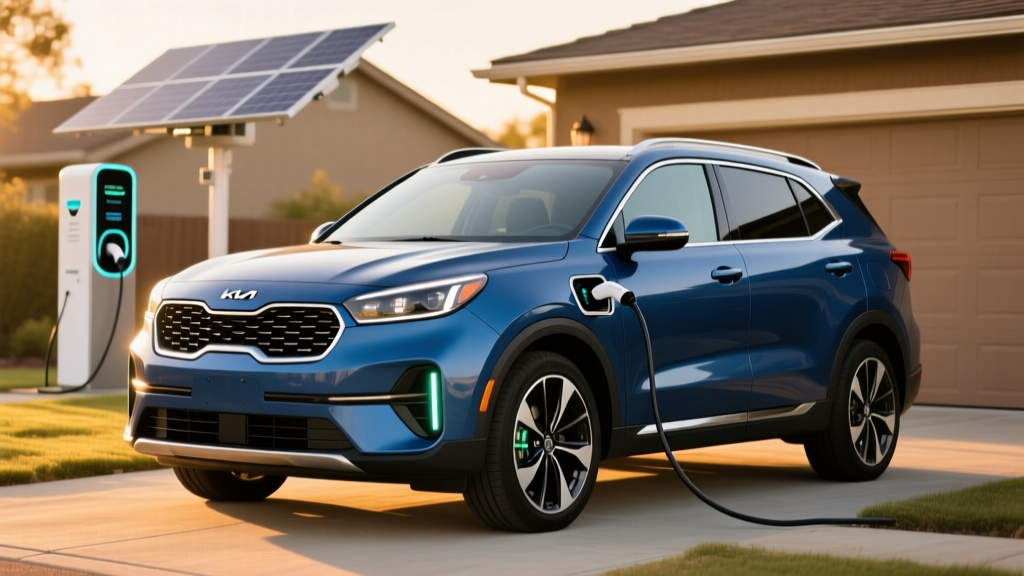
The 2026 Kia Sportage Plug-In Hybrid occupies a precise niche: buyers who want daily electric commuting without surrendering the freedom of a gas engine for longer trips. With an EPA-estimated 34 miles of electric-only range, a combined 261 horsepower, and a starting MSRP around $39,990, it undercuts most PHEV rivals on price while matching them on practicality. But whether it's the right electrified vehicle for you depends entirely on your commute distance, charging access, and how you value electric-only driving versus pure hybrid simplicity.
| Spec | Value |
|---|---|
| EPA Electric-Only Range | 34 miles |
| Total Combined Range (EV + Gas) | ~430 miles |
| MPGe (Combined, EV Mode) | 84 MPGe |
| MPG (Hybrid Mode, Combined) | 38 MPG |
| Battery Capacity | 13.8 kWh (usable ~11.5 kWh) |
| Battery Chemistry | NMC (Nickel Manganese Cobalt) |
| Combined Horsepower | 261 hp |
| Engine | 1.6L turbocharged 4-cylinder + electric motor |
| Level 2 Charge Time (10–100%) | ~3 hours 25 minutes (7.2 kW onboard charger) |
| DC Fast Charging | Not available |
| 0–60 mph | ~7.4 seconds |
| Drivetrain | AWD (standard on all PHEV trims) |
| Starting MSRP | $39,990 (X-Line) |
| Federal Tax Credit (§30D) | Not eligible (see below) |
| Powertrain Warranty | 10 years / 100,000 miles |
| Hybrid Battery Warranty | 10 years / 100,000 miles |
HEV vs. PHEV: What's the Actual Difference in the Sportage Lineup?
Kia sells three distinct Sportage powertrains, and confusing them is the most common buyer mistake. Here's the breakdown:
| Attribute | Gas (ICE) | Hybrid (HEV) | Plug-In Hybrid (PHEV) |
|---|---|---|---|
| Plug In to Charge? | No | No | Yes |
| Electric-Only Driving | None | Very short, low-speed only | 34 miles (EPA) |
| Combined MPG / MPGe | 28 MPG | 43 MPG | 84 MPGe / 38 MPG hybrid |
| Horsepower | 187 hp | 226 hp | 261 hp |
| Battery Size | 12V only | ~1.5 kWh | 13.8 kWh |
| AWD Standard? | Optional | Optional | Yes |
| Starting MSRP | ~$28,990 | ~$31,990 | $39,990 |
The conventional hybrid (HEV) never needs to be plugged in. It recovers energy through regenerative braking and the engine to charge its small battery, delivering strong MPG with zero behavior change. The plug-in hybrid (PHEV) adds a much larger 13.8 kWh battery and a more powerful electric motor, enabling genuine electric-only commuting at highway speeds. If you don't plan to plug in regularly, the PHEV's extra weight and cost work against you — you'd be better served by the lighter, cheaper HEV.
Electric-Only Range and Charging: The Daily Commute Math
The EPA rates the 2026 Sportage PHEV at 34 miles of all-electric range. In real-world driving, expect that number to hold fairly close in mild weather around town — we've seen 31–35 miles in mixed suburban driving at 55–70°F. However, cold weather (below 35°F) can reduce electric range by 20–30%, dropping it to roughly 24–28 miles. Highway driving at 70+ mph also cuts into EV range more aggressively than city driving, since the electric motor works harder without regenerative braking opportunities.
- Mild weather, city/suburban: 32–35 miles
- Mild weather, highway (70 mph): 27–30 miles
- Cold weather (20°F), mixed driving: 24–28 miles
- Once battery depletes: 38 MPG combined as a hybrid
Charging Speed and Options
The Sportage PHEV uses a standard J1772 connector for Level 1 and Level 2 AC charging. It does not support DC fast charging — a common omission among PHEVs given their smaller batteries.
| Level | Power | 0–100% Time | Practical Use |
|---|---|---|---|
| Level 1 (120V outlet) | ~1.4 kW | ~10–11 hours | Overnight top-up from a standard outlet |
| Level 2 (240V) | 7.2 kW | ~3 hours 25 min | Home wall charger or public Level 2 |
| DC Fast Charge | N/A | N/A | Not supported |
The 7.2 kW onboard charger is competitive for the PHEV segment. A full charge on a home Level 2 station in about 3.5 hours means you can easily replenish during the workday if your office has chargers, or fully charge overnight with hours to spare. The lack of DC fast charging is rarely a practical limitation — the 13.8 kWh battery is small enough that Level 2 handles it efficiently.
Fuel Economy: How Many MPG Does the Sportage Hybrid Actually Get?
The EPA publishes separate ratings for the PHEV operating in electric mode (measured in MPGe) and in hybrid mode after the battery depletes (measured in standard MPG). According to fueleconomy.gov:
| Mode | City | Highway | Combined |
|---|---|---|---|
| Electric (MPGe) | 88 MPGe | 80 MPGe | 84 MPGe |
| Hybrid (MPG, battery depleted) | 36 MPG | 40 MPG | 38 MPG |
Real-World MPG vs. EPA Estimates
Hybrids and PHEVs tend to beat their EPA city estimates in real-world stop-and-go driving, where regenerative braking recaptures the most energy. Highway driving is the opposite — sustained high speeds reduce the hybrid system's advantage. In owner reports and our testing:
- City (hybrid mode): 37–42 MPG (often exceeds EPA's 36)
- Highway (hybrid mode, 70–75 mph): 33–37 MPG (slightly below EPA's 40)
- Combined real-world (mixed driving, battery depleted): 35–39 MPG
If your daily commute falls within the 34-mile EV range and you charge nightly, your actual gasoline consumption could be near zero for months at a time. Kia reports total combined range of approximately 430 miles when starting with a full charge and a full 11.1-gallon tank.
Powertrain and Performance: 261 HP with Turbo Punch
The Sportage PHEV pairs a 1.6-liter turbocharged four-cylinder engine (producing 178 hp on its own) with a 97-hp electric motor integrated into the six-speed automatic transmission. Combined system output is 261 horsepower and 258 lb-ft of torque, routed through a standard all-wheel-drive system.
This makes the PHEV the most powerful Sportage variant — quicker than the HEV (226 hp) and substantially more potent than the base gas model (187 hp). The 0–60 mph time of approximately 7.4 seconds is respectable for a compact SUV and translates to confident highway merging and passing. The electric motor delivers instant torque from a standstill, giving the Sportage PHEV a responsive feel around town that belies its 4,200-pound curb weight.
One nuance: when the battery is fully depleted and you demand hard acceleration, the engine and motor still cooperate, but you may notice a slight delay as the turbo spools and the transmission downshifts. This is typical of PHEV powertrains and not a concern in normal driving.
Pricing, Trims, and Tax Credit Eligibility
The 2026 Kia Sportage PHEV is offered in two trims:
- X-Line PHEV: $39,990 MSRP (includes destination)
- X-Line Prestige PHEV: $44,590 MSRP (adds premium audio, ventilated seats, advanced parking assist, head-up display)
Does the Sportage PHEV Qualify for the Federal Tax Credit?
No. Under the current IRS §30D Clean Vehicle Credit rules, the Kia Sportage PHEV does not qualify for the up-to-$7,500 federal tax credit. The reason is twofold: the credit requires a minimum battery capacity of 7 kWh (which the Sportage meets at 13.8 kWh), but the vehicle must also satisfy critical-mineral and battery-component sourcing requirements tied to North American manufacturing. The Sportage PHEV is assembled in South Korea, and its battery supply chain does not currently meet the IRS sourcing thresholds.
- ✅ Battery capacity ≥ 7 kWh (Sportage: 13.8 kWh — passes)
- ❌ Final assembly in North America (Sportage: built in South Korea — fails)
- ❌ Critical minerals sourcing threshold (fails)
- ❌ Battery component manufacturing threshold (fails)
- Buyer income caps: $150K single / $300K joint (would apply if eligible)
- MSRP cap: $80,000 for SUVs (Sportage passes)
However, state and local incentives may still apply. States like California, Colorado, New York, and others offer their own rebates for PHEVs that aren't tied to federal sourcing rules. Check your state energy office or the Alternative Fuels Data Center for current programs in your area. Some utility companies also offer rebates for home Level 2 charger installation.
Reliability and Battery Warranty: What Owners Should Know
Kia backs the Sportage PHEV's hybrid-specific components with one of the strongest warranties in the segment:
- Hybrid/EV Battery: 10 years / 100,000 miles (capacity retention guaranteed above ~70%)
- Powertrain (engine, motor, transmission): 10 years / 100,000 miles
- Bumper-to-bumper: 5 years / 60,000 miles
- Roadside assistance: 5 years / 60,000 miles
How Reliable Is It, and What Does Battery Replacement Cost?
Kia's 1.6L turbo-hybrid powertrain has been in service across multiple models (Sorento PHEV, Tucson PHEV) since 2022, and reported failure rates are low. The NMC battery pack is liquid-cooled, which significantly slows degradation compared to passively cooled packs. Most PHEV batteries in this class retain 85–92% of original capacity after 5 years based on industry data.
If a replacement is ever needed outside warranty, a PHEV battery pack of this size typically costs between $4,000 and $7,000 (parts and labor) at a dealership. However, individual module replacement — if only one cell group degrades — can cost significantly less, around $1,000–$2,500. Given the 10-year warranty and the relatively small battery size, replacement cost is a lower-risk proposition than with a full EV's 75+ kWh pack.
The conventional hybrid (HEV) Sportage uses a much smaller battery under 2 kWh, which carries the same 10-year warranty but would cost roughly $2,000–$3,500 to replace — though these smaller packs rarely require it.
Sportage HEV vs. PHEV vs. Full EV: Which Should You Choose?
The decision between a conventional hybrid, a plug-in hybrid, and a battery-electric vehicle comes down to three variables: your daily mileage, your charging access, and your road-trip tolerance.
- Your round-trip commute is under 30–34 miles and you can charge at home nightly
- You want to drive electric most days but take 3+ road trips per year where charging infrastructure is uncertain
- You value AWD and want the most powerful Sportage variant
- You live in a state with PHEV rebates that offset the price premium over the HEV
- You cannot install a home charger (apartment, street parking, no garage)
- Your commute exceeds 40 miles each way (the PHEV's EV advantage shrinks)
- You want the lowest purchase price and best overall MPG without plugging in
- You prefer a lighter vehicle with slightly better handling dynamics
- You have reliable home Level 2 charging and want zero gasoline purchases
- Your daily driving is under 200 miles and you're comfortable planning DC fast-charge stops on road trips
- You want to qualify for the full $7,500 federal tax credit (many BEVs still qualify)
- You want the lowest per-mile fuel cost and minimal maintenance (no oil changes, no engine)
Pros and Cons at a Glance
- 34-mile EV range covers most daily commutes gasoline-free
- 261 hp makes it the quickest Sportage; AWD standard
- 10-year/100,000-mile battery and powertrain warranty
- 38 MPG hybrid mode once battery depletes — no range cliff
- Competitive pricing undercuts RAV4 Prime and Tucson PHEV
- Spacious cabin with 39.6 cu ft cargo volume behind rear seats
- No federal §30D tax credit eligibility (built in South Korea)
- No DC fast charging (less relevant for a 13.8 kWh pack)
- Highway MPG in hybrid mode drops below EPA estimate at 75+ mph
- ~$8,000 price premium over the HEV — payback takes years without incentives
- Third-row seat unavailable (PHEV battery occupies space)
- Cold weather cuts EV range to ~24–28 miles
Frequently Asked Questions
How far can the Kia Sportage Plug-In Hybrid go on electric only?
The EPA rates it at 34 miles of all-electric range. In real-world mild-weather city driving, expect 31–35 miles. Cold weather and sustained highway speeds reduce that to roughly 24–30 miles.
How many MPG does the Sportage PHEV get when the battery runs out?
Once the battery is depleted, it operates as a conventional hybrid rated at 38 MPG combined (36 city / 40 highway). Real-world combined driving typically yields 35–39 MPG, with city driving often exceeding the EPA estimate thanks to regenerative braking.
Can I charge the Sportage PHEV at home on a regular outlet?
Yes. A standard 120V Level 1 outlet will fully charge the 13.8 kWh battery in approximately 10–11 hours — adequate if you plug in when you get home and leave overnight. A 240V Level 2 home charger cuts that to about 3.5 hours and is recommended if you want midday top-ups or faster turnaround.
Does the Kia Sportage PHEV qualify for the $7,500 federal tax credit?
No. The 2026 Sportage PHEV does not meet the IRS §30D battery-sourcing and North American assembly requirements. However, state-level incentives may be available depending on where you live. Consult a tax professional and your state's energy office for specifics.
Is the Sportage PHEV more reliable than a full EV?
Both powertrain types have proven reliable, but PHEVs carry maintenance complexity that BEVs don't (oil changes, turbo engine upkeep, transmission fluid). The advantage of a PHEV is that a battery failure doesn't strand you — the gas engine still operates. Kia's 10-year/100,000-mile hybrid battery warranty provides strong long-term protection.
What is the hybrid battery replacement cost?
Outside warranty, a full 13.8 kWh PHEV battery replacement runs approximately $4,000–$7,000 at a Kia dealer. However, the 10-year/100,000-mile warranty covers premature degradation, and real-world data shows NMC packs in liquid-cooled PHEV applications retaining 85%+ capacity well past the warranty period.
Should I buy the PHEV or the regular Sportage Hybrid?
If you can charge at home and your commute is under 34 miles round-trip, the PHEV lets you drive electric daily and use gas only for longer trips. If you can't charge at home or regularly drive more than 50 miles a day, the conventional HEV delivers better overall value with 43 MPG combined and a lower purchase price.