Toyota sold more hybrids in 2023 than any other automaker in the United States, and for good reason: the lineup spans a $24,000 compact sedan to a $40,000+ plug-in SUV, covering nearly every buyer segment. But Toyota's hybrid strategy also creates confusion. The brand offers both conventional hybrids (HEVs) that never need plugging in and plug-in hybrids (PHEVs) that deliver 25–42 miles of electric-only driving. The specs, economics, and ideal use cases differ sharply between the two.
This guide breaks down every 2023 Toyota hybrid model with exact EPA figures, real-world MPG observations, powertrain details, battery warranty coverage, and current tax credit eligibility. Whether you're cross-shopping a RAV4 Hybrid against the RAV4 Prime or deciding between a Corolla Hybrid and a full EV, the data below will clarify the decision.
HEV vs PHEV: Understanding Toyota's Two Hybrid Paths
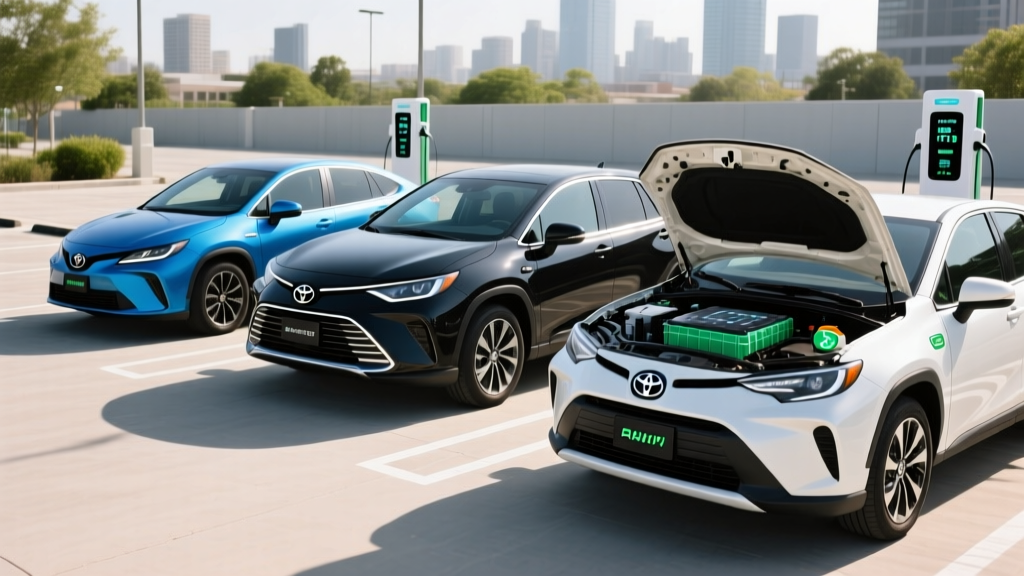
Conventional Hybrid (HEV): A small battery (typically 1.0–1.6 kWh) recharges through regenerative braking and the gasoline engine. You never plug it in. The electric motor assists the gas engine to boost MPG, particularly in city driving. Toyota's HEV models include the Corolla Hybrid, Camry Hybrid, RAV4 Hybrid, Highlander Hybrid, Sienna, and the standard Prius.
Plug-In Hybrid (PHEV): A much larger battery (13.6–18.1 kWh) can be charged from a wall outlet or public charger, delivering 25–42 miles of pure electric driving before the gas engine engages. Toyota's 2023 PHEV offerings are the Prius Prime and the RAV4 Prime. Once the electric range depletes, these function as conventional hybrids.
The key tradeoff: PHEVs cost $5,000–$8,000 more upfront but can eliminate gasoline use entirely for short commutes if you charge daily. HEVs deliver excellent MPG with zero behavior change—just fill up and drive.
2023 Toyota Hybrid MPG: Full Lineup Breakdown
Below are the official EPA fuel economy figures for every 2023 Toyota hybrid, sourced from fueleconomy.gov. Note that Toyota hybrids consistently achieve higher real-world MPG in city driving than the EPA sticker suggests, thanks to aggressive regenerative braking and electric-motor assist at low speeds.
| Model | Type | City MPG | Highway MPG | Combined MPG | EV Range (PHEV) |
|---|---|---|---|---|---|
| Corolla Hybrid (AWD) | HEV | 47 | 41 | 44 | — |
| Camry Hybrid LE | HEV | 51 | 53 | 52 | — |
| Camry Hybrid SE/XLE | HEV | 44 | 47 | 46 | — |
| Prius LE | HEV | 57 | 56 | 57 | — |
| Prius XLE/Limited | HEV | 52 | 52 | 52 | — |
| Prius Prime SE | PHEV | 127 MPGe | — | 127 MPGe | 44 mi |
| Prius Prime XSE | PHEV | 114 MPGe | — | 114 MPGe | 39 mi |
| RAV4 Hybrid | HEV | 41 | 38 | 40 | — |
| RAV4 Prime | PHEV | 94 MPGe | — | 94 MPGe | 42 mi |
| Highlander Hybrid | HEV | 36 | 35 | 36 | — |
| Sienna | HEV | 36 | 36 | 36 | — |
| Venza | HEV | 40 | 37 | 39 | — |
| Crown | HEV | 42 | 41 | 42 | — |
Real-World MPG: What Owners Actually See
Toyota's hybrid system excels in stop-and-go traffic, where the electric motor handles low-speed propulsion and regenerative braking recaptures energy. In real-world testing and owner reports aggregated by Fuelly and Edmunds:
- Camry Hybrid LE: Owners regularly report 50–55 MPG combined in mixed suburban driving, matching or slightly exceeding the EPA 52 MPG sticker.
- RAV4 Hybrid: Expect 37–41 MPG real-world; highway-dominant commutes may dip to 34–36 MPG due to the boxy aerodynamics.
- Prius (2023 redesign): The new fifth-generation Prius LE consistently delivers 55–60 MPG in city-heavy driving, exceeding its 57 MPG EPA rating in urban conditions.
- Highlander Hybrid: Real-world figures cluster around 33–37 MPG. Heavy loads and mountain driving can push this below 30 MPG.
- RAV4 Prime: Owners who charge daily report using gasoline only on road trips. Once the 42-mile EV range depletes, it operates as a RAV4 Hybrid at roughly 38–40 MPG.
Powertrain Specs: Horsepower, Engines, and Motors
| Model | Engine | Combined HP | Drivetrain | 0-60 mph |
|---|---|---|---|---|
| Corolla Hybrid | 1.8L 4-cyl + 2 motors | 138 hp | AWD (e-AWD) | ~9.0 sec |
| Camry Hybrid | 2.5L 4-cyl + motor | 208 hp | FWD / AWD | 7.2 sec |
| Prius (2023) | 2.0L 4-cyl + motor | 196 hp | FWD / AWD | 7.0 sec |
| Prius Prime | 2.0L 4-cyl + motor | 220 hp | FWD | 6.6 sec |
| RAV4 Hybrid | 2.5L 4-cyl + 3 motors | 219 hp | AWD (e-AWD) | 7.4 sec |
| RAV4 Prime | 2.5L 4-cyl + 3 motors | 302 hp | AWD (e-AWD) | 5.7 sec |
| Highlander Hybrid | 2.5L 4-cyl + 3 motors | 243 hp | FWD / AWD | 7.9 sec |
| Sienna | 2.5L 4-cyl + 3 motors | 245 hp | FWD / AWD | ~7.5 sec |
| Venza | 2.5L 4-cyl + 3 motors | 219 hp | AWD (e-AWD) | 7.6 sec |
| Crown | 2.5L 4-cyl + 3 motors | 236 hp | AWD | 7.6 sec |
The 2023 Prius redesign is worth highlighting: Toyota bumped the combined output from 121 hp (previous generation) to 196 hp, making it genuinely quick while simultaneously improving fuel economy. The RAV4 Prime's 302 hp makes it the fastest RAV4 Toyota has ever built—quicker to 60 mph than a Toyota GR86.
PHEV Deep Dive: Prius Prime and RAV4 Prime Electric Range
For buyers considering a Toyota PHEV, electric-only range and charging logistics are the critical decision factors.
2023 Prius Prime
- Battery: 13.6 kWh lithium-ion (usable capacity ~10.5 kWh)
- EPA electric range: 44 miles (SE trim) / 39 miles (XSE trim with larger wheels)
- Total combined range: ~440 miles (EV + gas tank)
- Charging (Level 1, 120V): ~11 hours from empty
- Charging (Level 2, 240V): ~4 hours from empty
- DC fast charging: Not available. The Prius Prime uses a J1772 connector for Level 1/2 only.
2023 RAV4 Prime
- Battery: 18.1 kWh lithium-ion (usable capacity ~14.5 kWh)
- EPA electric range: 42 miles
- Total combined range: ~600 miles (EV + gas tank)
- Charging (Level 1, 120V): ~12 hours from empty (with standard 1.4 kW charger); ~5 hours with optional 3.3 kW onboard charger
- Charging (Level 2, 240V): ~4.5 hours (3.3 kW) or ~2.5 hours (6.6 kW onboard charger, available on XSE with Premium package)
- DC fast charging: Not available. J1772 connector only.
Key limitation: Neither Toyota PHEV supports DC fast charging. This is a deliberate engineering choice to reduce cost and weight. For daily home charging, this is irrelevant—most owners charge overnight on Level 2. But it means you cannot rapidly top up at a highway DC fast charger on road trips.
Pricing and Tax Credit Eligibility
Below are the base MSRPs for 2023 Toyota hybrids at launch. Actual dealer pricing in 2026 varies based on inventory, trim availability, and whether you're buying new-old-stock or certified pre-owned.
| Model | Base MSRP (2023) | Federal Tax Credit (§30D) | Used EV Credit (§25E) |
|---|---|---|---|
| Corolla Hybrid LE | $22,050 | Not eligible (HEV) | Not eligible (HEV) |
| Camry Hybrid LE | $28,655 | Not eligible (HEV) | Not eligible (HEV) |
| Prius LE | $27,450 | Not eligible (HEV) | Not eligible (HEV) |
| Prius Prime SE | $32,350 | Up to $7,500* | Up to $4,000** |
| RAV4 Hybrid LE | $30,225 | Not eligible (HEV) | Not eligible (HEV) |
| RAV4 Prime SE | $41,590 | Up to $7,500* | Up to $4,000** |
| Highlander Hybrid LE | $40,220 | Not eligible (HEV) | Not eligible (HEV) |
| Sienna LE | $35,385 | Not eligible (HEV) | Not eligible (HEV) |
*New PHEV credit (§30D): The Prius Prime and RAV4 Prime may qualify for up to $7,500 under the federal new clean vehicle credit, but eligibility depends on three IRS requirements that must all be met: buyer income caps ($150K single / $300K joint AGI), vehicle MSRP caps ($55K sedans / $80K SUVs/vans), and critical mineral + battery component sourcing thresholds that tighten annually. Check the latest rules at irs.gov. Point-of-sale transfer is available at participating dealers, reducing your purchase price at checkout.
**Used PHEV credit (§25E): A 2023 Prius Prime or RAV4 Prime purchased used in 2026 may qualify for up to $4,000 (30% of sale price, capped at $4,000) if the sale price is $25,000 or less and buyer income is within limits ($75K single / $150K joint). The vehicle must be at least 2 model years old. Verify eligibility at fueleconomy.gov.
Reliability and Hybrid Battery Longevity
Toyota's hybrid system is among the most proven in the industry. The company has sold over 20 million hybrids globally since the original Prius in 1997, and the powertrain architecture is now in its fourth generation.
Battery Warranty
All 2023 Toyota hybrids: Hybrid battery covered for 10 years / 150,000 miles (whichever comes first) from date of first use. This applies to both HEV and PHEV models. The powertrain (engine, transaxle, hybrid control module) carries the same 10yr/150K coverage.
Real-World Battery Lifespan
Based on fleet data and owner reports, Toyota hybrid batteries routinely last 150,000–200,000+ miles before significant degradation. The Prius, in particular, has a well-documented track record: many first- and second-generation models exceed 200,000 miles on the original battery pack. The nickel-metal hydride (NiMH) packs in earlier models proved extremely durable, and the newer lithium-ion packs in 2023 models are expected to perform at least as well.
Battery Replacement Cost
If a hybrid battery does fail outside warranty:
- Prius / Corolla Hybrid: $2,000–$3,500 for a new OEM replacement battery (parts + labor)
- Camry Hybrid / RAV4 Hybrid: $2,500–$4,500
- RAV4 Prime / Prius Prime (larger PHEV battery): $5,000–$8,000
- Highlander Hybrid / Sienna: $3,000–$5,000
Aftermarket refurbished battery options are available for $1,000–$2,000 less. Independent hybrid specialists in most metro areas can perform replacements at lower labor rates than dealerships.
Hybrid vs PHEV vs Full EV: Which Fits Your Life?
Choose a Toyota HEV (Corolla, Camry, RAV4, Highlander, Sienna Hybrid) if:
- You lack access to home or workplace charging (apartment, street parking, no garage)
- You want maximum MPG with zero behavior change
- Your budget is under $35,000
- You drive more than 15,000 miles/year and want predictable, low fuel costs
Choose a Toyota PHEV (Prius Prime, RAV4 Prime) if:
- You can install a Level 2 charger at home (or have reliable workplace charging)
- Your daily commute is under 40 miles round-trip (enabling EV-only daily driving)
- You want to reduce gasoline use without range anxiety on road trips
- You qualify for the federal tax credit, narrowing the price gap with HEV trims
Choose a full BEV (bZ4X or competitor) if:
- You have reliable home Level 2 charging
- Your daily driving is under 200 miles and you take road trips fewer than 5 times/year
- You want the lowest per-mile fuel cost (~$0.04/mile on home electricity vs $0.10–0.14/mile for a Toyota hybrid on gas)
- You want zero tailpipe emissions and minimal maintenance (no oil changes, no engine)
Pros and Cons: 2023 Toyota Hybrids
Pros
- Best-in-class fuel economy across multiple segments (57 MPG Prius, 52 MPG Camry Hybrid)
- 10-year / 150,000-mile hybrid battery warranty
- Proven reliability with decades of real-world data
- No charging infrastructure required (HEV models)
- RAV4 Prime delivers 302 hp and 42 mi EV range—genuine performance SUV
- Strong resale value; Toyota hybrids hold value better than most competitors
- PHEV models eligible for up to $7,500 federal credit (subject to IRS rules)
Cons
- PHEV models carry a $5,000–$8,000 premium over equivalent HEV trims
- No DC fast charging on any Toyota PHEV
- RAV4 Prime has faced persistent supply constraints and dealer markups
- Highlander Hybrid and Sienna deliver only 36 MPG—good for their class but far below sedan hybrids
- HEV models ineligible for any federal tax credit
- Infotainment and interior materials lag behind Hyundai/Kia hybrid competitors
Frequently Asked Questions
How many MPG does the 2023 Toyota RAV4 Hybrid get in real-world driving?
The EPA rates the RAV4 Hybrid at 41 city / 38 highway / 40 combined MPG. In real-world ownership, expect 37–41 MPG combined depending on your driving mix. City-dominant driving tends to match or exceed the EPA figure, while highway-heavy commutes at 75+ mph may drop to 34–36 MPG. Cold weather (below 30°F) can reduce MPG by 5–10% due to the engine running more frequently for cabin heat.
How far can the RAV4 Prime drive on electric power alone?
The 2023 RAV4 Prime delivers an EPA-rated 42 miles of electric-only range on a full charge. In real-world conditions, expect 36–42 miles depending on temperature, terrain, and speed. Highway driving at 70 mph reduces EV range to roughly 32–35 miles. Once the battery depletes, the RAV4 Prime operates as a conventional hybrid at approximately 38–40 MPG.
Do Toyota conventional hybrids need to be plugged in?
No. Toyota HEVs (Corolla Hybrid, Camry Hybrid, RAV4 Hybrid, Highlander Hybrid, Sienna, standard Prius, Venza, Crown) charge their small batteries entirely through regenerative braking and the gasoline engine. There is no plug, no charging cable, and no electric-only driving mode of meaningful distance. You fuel them like any gas car—they simply use less fuel.
Is the Toyota hybrid battery reliable, and what does replacement cost?
Toyota hybrid batteries are among the most reliable in the industry, routinely lasting 150,000–200,000+ miles. All 2023 Toyota hybrids carry a 10-year / 150,000-mile hybrid battery warranty. If replacement is needed out of warranty, expect $2,000–$4,500 for HEV models and $5,000–$8,000 for PHEV models (Prius Prime, RAV4 Prime) due to the larger battery pack.
Does any 2023 Toyota hybrid qualify for a federal tax credit?
Only the PHEV models—the Prius Prime and RAV4 Prime—are eligible for the federal §30D new clean vehicle credit (up to $7,500) or the §25E used vehicle credit (up to $4,000). Conventional Toyota hybrids (HEVs) do not qualify for any federal tax credit because they lack plug-in capability. Credit eligibility depends on buyer income, MSRP caps, and battery sourcing rules. Check current requirements at irs.gov.
How long does it take to charge a Toyota PHEV at home?
On a standard 120V household outlet (Level 1), the Prius Prime takes about 11 hours and the RAV4 Prime takes about 12 hours for a full charge. On a 240V Level 2 home charger, the Prius Prime charges in roughly 4 hours, and the RAV4 Prime in 2.5–4.5 hours depending on the onboard charger configuration (3.3 kW standard, 6.6 kW optional on XSE Premium). Neither PHEV supports DC fast charging.
Toyota hybrid vs full EV—which saves more money over 5 years?
It depends on your electricity rate, gasoline price, and annual mileage. At 15,000 miles/year: a RAV4 Hybrid at 40 MPG with $3.50/gal gas costs ~$1,313/year in fuel. A comparable EV at 3.5 miles/kWh with $0.14/kWh home electricity costs ~$600/year. Over 5 years, the EV saves ~$3,500 in fuel. However, the RAV4 Hybrid costs ~$10,000 less upfront than many comparable EVs and has no charging infrastructure cost. The breakeven point depends on your specific situation. A PHEV like the RAV4 Prime splits the difference: if you charge daily and drive under 42 miles, your fuel cost approaches the EV figure for most trips.