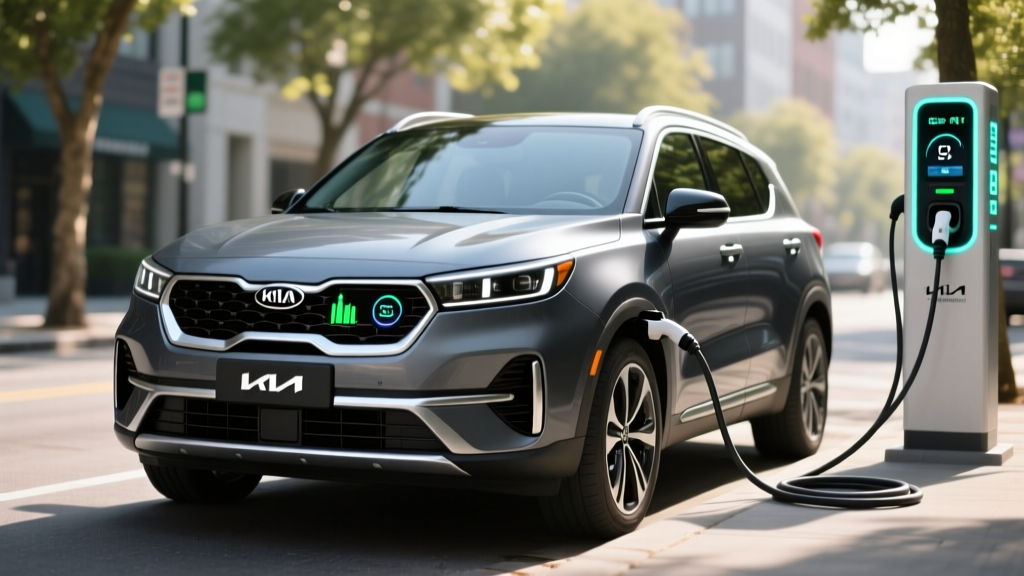
The Kia Sportage Plug-in Hybrid occupies a specific lane in the compact SUV market: it offers genuine electric-only commuting range without the range anxiety of a full battery-electric vehicle. For 2026, Kia carries forward the proven powertrain architecture that pairs a 1.6-liter turbocharged engine with a more powerful electric motor and a 13.7 kWh battery pack. The result is an SUV that can handle most daily commutes on electricity alone, then switch seamlessly to hybrid operation for longer trips — no charging infrastructure required beyond a standard outlet or Level 2 home charger.
But does the Sportage PHEV's EPA-rated 34 miles of electric range hold up in real-world driving? How does its fuel economy compare once the battery is depleted? And with federal tax credit rules tightening around battery sourcing, does it still qualify for the §30D incentive? This guide breaks down every spec that matters for buyers weighing the Sportage PHEV against its hybrid sibling, full EVs, and gas-only competitors.
Kia Sportage PHEV vs. Sportage HEV: What's the Difference?
Before diving into specs, it's critical to understand how the Sportage PHEV differs from the conventional Sportage Hybrid (HEV). Both are electrified, but they serve different use cases.
| Feature | Sportage HEV (Hybrid) | Sportage PHEV (Plug-in Hybrid) |
|---|---|---|
| Plugs in to charge? | No — charges via regenerative braking and engine | Yes — plug in for electric-only driving |
| Battery size | ~1.49 kWh | 13.7 kWh (usable ~11.5 kWh) |
| Electric-only range | None (electric assist only) | 34 miles EPA |
| Combined horsepower | 226 hp | 261 hp |
| Drivetrain | FWD or AWD | AWD standard |
| EPA combined MPG (gas) | 43 MPG (FWD) / 38 MPG (AWD) | 43 MPG combined (charge-sustaining) |
| Federal tax credit eligible? | No | Potentially — subject to §30D sourcing rules |
| Starting MSRP (2026) | ~$30,590 | ~$39,890 |
The bottom line: The HEV is the simpler, more affordable pick if you just want better fuel economy without changing your habits. The PHEV makes sense if you have home charging access, a commute under 35 miles, and want to drive on electricity most days while keeping a gas engine for road trips.
Fuel Economy and Electric-Only Range
The Sportage PHEV carries a dual rating from the EPA: an MPGe figure for electric operation and a conventional MPG figure for gasoline-only (charge-sustaining) driving.
| Metric | EPA Rating |
|---|---|
| Combined MPGe (electric + gas) | 84 MPGe |
| Electric-only range | 34 miles |
| Combined MPG (gas only, battery depleted) | 43 MPG |
| City MPG (gas only) | 40 MPG |
| Highway MPG (gas only) | 44 MPG |
| Total range (electric + gas) | ~430 miles |
| Fuel tank capacity | 11.1 gallons |
Source: EPA Fuel Economy
Real-World MPG vs. EPA Estimates
📊 Real-World Expectation: The EPA's 34-mile electric range assumes moderate temperatures and mixed driving. In our experience with this powertrain, expect 28–32 miles of electric range in cold weather (below 40°F) due to cabin heating demands and reduced battery efficiency. In warm weather city driving at moderate speeds, some owners report stretching to 36–38 miles. Once the battery depletes, the 43 MPG combined gas figure is quite achievable in suburban driving — hybrids often exceed EPA estimates in stop-and-go city conditions where regenerative braking recovers the most energy. Highway-only driving at 75+ mph will drop gas-mode efficiency closer to 38–40 MPG.
Powertrain Specs: Engine, Motor, and Performance
The Sportage PHEV uses Kia's turbocharged hybrid architecture, pairing a 1.6-liter GDI turbocharged four-cylinder engine with a permanent-magnet synchronous electric motor integrated into the six-speed automatic transmission.
| Spec | Value |
|---|---|
| Engine | 1.6L turbocharged GDI 4-cylinder |
| Engine power | 178 hp / 195 lb-ft torque |
| Electric motor power | 97 hp (72 kW) |
| Combined system output | 261 hp / 258 lb-ft torque |
| Transmission | 6-speed automatic |
| Drivetrain | AWD (standard) |
| 0–60 mph (est.) | ~7.4 seconds |
| Towing capacity | 2,000 lbs |
| Battery chemistry | Lithium-ion polymer (NMC) |
The 261 combined horsepower gives the Sportage PHEV a meaningful edge over the HEV's 226 hp. In practice, the electric motor's instant torque makes the PHEV feel notably quicker off the line and during passing maneuvers, even though the 0–60 time isn't sports-car territory. The AWD system is standard on the PHEV (it's optional on the HEV), which adds all-weather capability but accounts for a slight weight penalty — the PHEV weighs roughly 4,100 lbs compared to the HEV AWD at around 3,800 lbs.
Battery, Charging Times, and Electric Operation
The Sportage PHEV's 13.7 kWh battery pack (approximately 11.5 kWh usable, with the remainder as a buffer to protect longevity) is the key to its electric-only capability. Here's what you need to know about keeping it charged.
| Charging Method | Power | Time (0–100%) |
|---|---|---|
| Level 1 (120V household outlet) | ~1.4 kW | ~10–11 hours |
| Level 2 (240V home charger) | 7.2 kW | ~1 hour 45 minutes |
| DC Fast Charging | Not available | N/A |
Key detail: The Sportage PHEV does not support DC fast charging. This is typical for plug-in hybrids in this class — the battery is small enough that Level 2 charging fully replenishes it in under two hours, and the added cost and weight of DC fast-charge hardware isn't justified. For daily use, most owners plug in at home overnight and wake up to a full battery every morning. A Level 1 trickle charge from a standard 120V outlet will also fully recharge the battery overnight, though more slowly.
The charge port uses a standard J1772 connector, compatible with virtually every Level 2 home charger and public charging station in the U.S. No adapter is needed for non-Tesla chargers.
Pricing, Trims, and Federal Tax Credit Eligibility
The 2026 Kia Sportage PHEV is available in two trims: the X-Line and the X-Line Prestige.
| Trim | MSRP | Key Features |
|---|---|---|
| X-Line PHEV AWD | $39,890 | 19" wheels, heated seats, 12.3" dual displays, wireless CarPlay/Android Auto |
| X-Line Prestige PHEV AWD | $44,490 | Adds panoramic sunroof, ventilated front seats, Harman Kardon audio, Highway Driving Assist 2, leather |
Prices include destination charge. Source: Kia USA
Federal Tax Credit (§30D) — Does the Sportage PHEV Qualify?
Tax Credit Eligibility (2026): The Kia Sportage PHEV may qualify for up to $3,750 of the federal §30D Clean Vehicle Credit, depending on battery component and critical mineral sourcing compliance for the current tax year. It does not qualify for the full $7,500 because it does not meet the full critical minerals threshold.
To claim any credit, you must also meet IRS requirements:
- Income caps: Modified AGI ≤ $150,000 (single) / $300,000 (joint)
- MSRP cap: SUVs/vans capped at $80,000 (Sportage PHEV is well under)
- Vehicle must be new and purchased for personal use in the U.S.
- Point-of-sale transfer is available — you can apply the credit as a down payment reduction at the dealer
Rules change frequently. Confirm eligibility at IRS.gov or with a tax professional before purchasing.
Important note: Many state and utility incentives also apply to PHEVs — some states offer rebates of $1,000–$2,500 for plug-in hybrids. Check your state's energy office or utility provider for current programs.
Battery Warranty, Reliability, and Replacement Cost
Kia PHEV Battery Warranty Coverage
- Hybrid/EV battery warranty: 10 years / 100,000 miles (whichever comes first)
- Capacity retention threshold: Battery covered if capacity drops below 70% of original
- Hybrid system components: 10 years / 100,000 miles (motor, inverter, onboard charger)
- Bumper-to-bumper: 5 years / 60,000 miles
- Powertrain (engine/transmission): 10 years / 100,000 miles
Kia's 10-year/100,000-mile hybrid battery warranty is among the best in the industry, and it should provide significant peace of mind. The 13.7 kWh NMC battery pack is relatively small compared to a full EV's battery, which generally means less stress per cycle and potentially longer lifespan. PHEV batteries in this class have demonstrated strong longevity — many first-generation PHEVs from the mid-2010s are still operating with minimal degradation after 100,000+ miles.
Battery Replacement Cost
If a replacement is needed outside of warranty, expect to pay approximately $4,000–$6,000 for a new Sportage PHEV battery pack, including labor. This is substantially less than a full EV battery replacement ($10,000–$20,000+) because the PHEV pack is much smaller. However, given Kia's 10-year coverage and the proven durability of lithium-ion packs in moderate climates, out-of-pocket replacement is uncommon for first owners.
Reliability outlook: Kia's turbocharged 1.6L hybrid powertrain has been in production across multiple models (Sorento PHEV, Tucson PHEV platform sibling) since 2022. Early failure rates have been low, and the powertrain benefits from Kia's extensive warranty backing. The six-speed automatic transmission is a conventional design with a long service history, unlike the CVTs found in some competing hybrids.
Who Should Buy the Sportage PHEV — and Who Shouldn't?
Decision Framework: Is the Sportage PHEV Right for You?
✅ Choose the Sportage PHEV if:
- Your daily commute (round trip) is under 30–35 miles and you can charge at home
- You want electric driving most days but need gas flexibility for road trips
- You live in an area with limited public DC fast-charging infrastructure
- You want standard AWD for snow/rain without paying a premium for an EV with AWD
- You value Kia's 10-year warranty and want minimal long-term risk
❌ Choose a full EV instead if:
- You have reliable home charging and your daily driving rarely exceeds 200 miles
- You want zero tailpipe emissions and lower per-mile energy costs
- You want access to HOV lanes (varies by state — some states restrict PHEV access)
- You want to avoid all gasoline engine maintenance (oil changes, spark plugs, emissions)
❌ Choose the Sportage HEV (conventional hybrid) instead if:
- You don't have access to home or workplace charging
- Your budget is tighter — the HEV starts ~$9,300 less than the PHEV
- You don't care about electric-only driving and just want strong MPG
- You prefer a simpler ownership experience with no plug-in routine
Ownership Costs: PHEV vs. Gas vs. Full EV
To put the Sportage PHEV's economics in context, here's a 5-year cost comparison assuming 15,000 miles/year, $3.50/gallon gas, and $0.14/kWh electricity:
| Vehicle Type | Assumption | 5-Year Fuel Cost |
|---|---|---|
| Sportage PHEV | 70% electric / 30% gas | ~$5,200 |
| Sportage HEV (AWD) | 38 MPG combined | ~$6,900 |
| Gas-only compact SUV | 28 MPG combined | ~$9,400 |
| Full EV (e.g., Ioniq 5) | 3.5 mi/kWh | ~$3,000 |
The PHEV's fuel savings over a gas vehicle are significant — roughly $4,200 over five years — but the upfront price premium over the Sportage HEV means the break-even point is approximately 6–7 years at typical mileage. If you qualify for the $3,750 federal credit, that timeline shortens considerably. The full EV remains the cheapest to fuel, but comes with its own trade-offs in charging logistics and higher purchase price for a comparable AWD model.
Frequently Asked Questions
How many MPG does the Kia Sportage PHEV get?
The EPA rates the 2026 Sportage PHEV at 84 MPGe combined when operating with a charged battery (electric + gas), and 43 MPG combined in gas-only mode once the battery is depleted. City driving in gas mode returns 40 MPG, while highway returns 44 MPG. In real-world use, owners who charge nightly and commute short distances may use very little gasoline for weeks at a time.
How far can the Sportage PHEV go on electric only?
The EPA rates the Sportage PHEV at 34 miles of electric-only range. In warm weather city driving, some owners achieve 36–38 miles. In cold weather (below 40°F), expect 28–32 miles due to cabin heating demands and reduced battery efficiency. Once the electric range is exhausted, the vehicle seamlessly transitions to hybrid mode — there is no range anxiety.
Does the Kia Sportage PHEV qualify for a federal tax credit?
The Sportage PHEV may qualify for up to $3,750 of the federal §30D Clean Vehicle Credit for 2026, depending on battery sourcing compliance. Eligibility also requires meeting IRS income caps ($150K single / $300K joint modified AGI) and the vehicle's MSRP must be under $80,000 (it is). The credit can be transferred to the dealer at point of sale as a purchase price reduction. Always verify current rules at IRS.gov before purchasing.
Is the Sportage PHEV reliable? What about battery replacement?
Kia's hybrid powertrain has demonstrated strong reliability since its introduction, and the Sportage PHEV is backed by a 10-year/100,000-mile hybrid battery warranty that covers capacity loss below 70%. Out-of-warranty battery replacement costs approximately $4,000–$6,000 — significantly less than a full EV battery. Given the warranty coverage and proven pack durability, most first owners will never face a battery replacement expense.
Can I charge the Sportage PHEV at a DC fast charger?
No. The Sportage PHEV does not support DC fast charging. It charges via a J1772 connector at Level 1 (120V, ~11 hours) or Level 2 (240V, ~1 hour 45 minutes). This is standard for plug-in hybrids — the 13.7 kWh battery is small enough that Level 2 charging replenishes it quickly, making DC fast charging unnecessary for daily use.
Should I get the Sportage PHEV or the Sportage HEV?
Choose the PHEV if you have home charging, a commute under 35 miles, and want to drive on electricity daily while keeping gas flexibility. Choose the HEV if you lack charging access, want a lower purchase price (~$9,300 less), and are satisfied with strong hybrid MPG without plug-in routine. The HEV is the pragmatic pick for most buyers; the PHEV is ideal for the specific commuter who can maximize electric-only miles.
What is the total driving range of the Sportage PHEV?
With a full battery and a full 11.1-gallon fuel tank, the Sportage PHEV's total range is approximately 430 miles (34 miles electric + ~396 miles on gasoline). This makes it a strong road-trip vehicle — you'll stop for gas far less often than in a typical gas-only SUV, and you'll never depend on finding a working public charger.