Quick Verdict: Two Hybrid Flavors, Very Different Use Cases
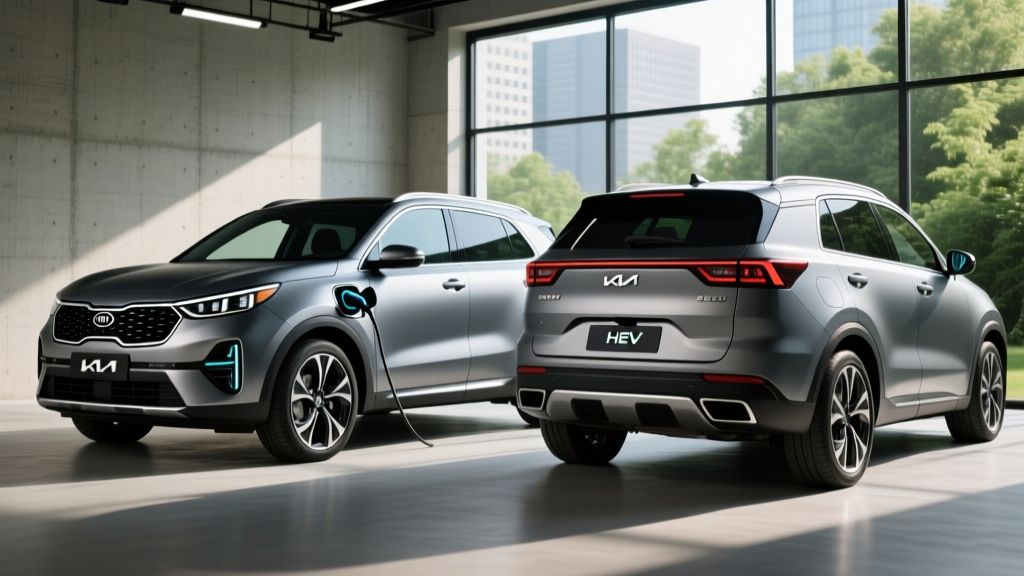
The 2026 Kia Sportage Hybrid comes in two fundamentally different configurations: a conventional hybrid (HEV) that never needs plugging in, and a plug-in hybrid (PHEV) that delivers roughly 34 miles of electric-only driving before the gas engine kicks in. Both share a 1.6-liter turbocharged four-cylinder paired with electric motors, but the powertrain outputs, battery sizes, pricing, and tax-credit eligibility diverge sharply. If your daily commute stays under 30 miles and you can charge at home, the PHEV is the smarter buy. If you want set-it-and-forget-it efficiency without charging infrastructure, the HEV trims deliver an EPA-estimated 43 MPG combined for under $33,000.
Below, we break down every 2026 Kia Sportage Hybrid trim level — HEV and PHEV — with exact MPG figures, pricing, powertrain specs, and real-world ownership data you won't find on a dealer brochure.
HEV vs PHEV: What's the Actual Difference?
Before diving into trim-level specs, it's critical to understand what separates these two vehicles. Confusion here is the single biggest buyer mistake we see.
| Feature | Sportage Hybrid (HEV) | Sportage Plug-In Hybrid (PHEV) |
|---|---|---|
| Plug-in required? | No — charges via regenerative braking and engine | Yes — plug in to access electric-only range |
| Battery capacity | 1.49 kWh (small buffer) | 13.8 kWh usable (NMC chemistry) |
| Electric-only driving | Low-speed assist only (~1 mile) | EPA-est. 34 miles |
| Combined horsepower | 226 hp | 261 hp |
| Drivetrain | AWD standard | AWD standard |
| DC fast charging | N/A | Not available — Level 2 AC only |
| Federal tax credit (§30D) | Not eligible | Eligible — up to $7,500 (sourcing rules apply) |
The HEV operates like a traditional gas car: you fill it up and go. Its small battery and electric motor assist the engine during acceleration and capture energy during braking, but you never plug it in. The PHEV carries a much larger battery that enables genuine electric-only highway and city driving. When that battery depletes, it reverts to hybrid operation — meaning you're never stranded.
2026 Kia Sportage HEV Trim Levels and Pricing
The conventional Sportage Hybrid is available in three trims for 2026. All use the same 1.6L turbo hybrid powertrain producing 226 combined horsepower and come standard with all-wheel drive.
| Trim | MSRP | EPA MPG (City/Hwy/Combined) | Key Features |
|---|---|---|---|
| LX | $32,090 | 42 / 44 / 43 | 12.3" touchscreen, wireless CarPlay/Android Auto, Smart Cruise Control, 17" alloy wheels |
| EX | $35,590 | 42 / 44 / 43 | Leatherette seats, heated front seats, power liftgate, blind-spot monitoring, 18" wheels |
| SX-Prestige | $39,390 | 38 / 38 / 38 | Panoramic sunroof, ventilated front seats, Harman Kardon audio, Highway Driving Assist 2, 19" wheels |
Note on SX-Prestige MPG: The top HEV trim drops to 38 MPG combined due to larger 19-inch wheels and added weight from premium equipment. If maximum fuel economy is the priority, the LX and EX trims are the efficiency sweet spot.
2026 Kia Sportage PHEV Trim Levels and Pricing
The plug-in hybrid Sportage steps up to a more powerful variant of the 1.6L turbo, paired with a larger electric motor and 13.8 kWh battery. Combined output rises to 261 hp, and the PHEV comes in two trims:
| Trim | MSRP | Est. Price After §30D Credit | Electric Range | Combined MPG (hybrid mode) |
|---|---|---|---|---|
| X-Line | $40,490 | ~$32,990* | 34 miles | 35 MPG combined |
| X-Line Prestige | $44,590 | ~$37,090* | 34 miles | 35 MPG combined |
*Credit eligibility depends on battery critical-mineral sourcing, buyer income caps ($150K single / $300K joint), and MSRP caps ($80K for SUVs). Verify current eligibility on IRS.gov §30D before purchase. The credit can now be transferred at point of sale, reducing your out-of-pocket cost at the dealer.
PHEV Battery and Charging Specs
- Battery: 13.8 kWh usable, NMC (nickel manganese cobalt) chemistry
- Level 1 charging (120V): ~11 hours from empty to full
- Level 2 charging (240V, 7.2 kW onboard charger): ~2 hours 15 minutes
- DC fast charging: Not supported — the PHEV uses a J1772/Type 1 AC port only
- Total combined range: ~380 miles (34 electric + ~346 gas-hybrid)
Fuel Economy Deep Dive: EPA vs Real-World MPG
| Model | EPA City | EPA Highway | EPA Combined | Real-World Expectation |
|---|---|---|---|---|
| Sportage HEV (LX/EX) | 42 | 44 | 43 | 40–45 city; 37–41 highway |
| Sportage HEV (SX-Prestige) | 38 | 38 | 38 | 36–40 city; 34–37 highway |
| Sportage PHEV (hybrid mode) | 35 | 35 | 35 | 33–37 combined after battery depletion |
How to read these numbers: Hybrids typically exceed EPA city estimates in stop-and-go traffic because regenerative braking recaptures more energy at lower speeds. Highway driving is where hybrids lose their advantage — sustained 75+ MPH cruising relies more heavily on the gas engine. In our experience with the Sportage HEV platform, city-heavy commuters (70%+ city driving) regularly see 44–46 MPG in warm weather. Cold-weather driving (below 35°F) typically drops real-world MPG by 8–12% due to cabin heating demands and reduced battery efficiency.
For the PHEV, the 34-mile electric range is achievable in mixed driving at moderate speeds. Expect 28–30 miles of electric range in winter conditions or at sustained highway speeds above 70 MPH. Once the battery depletes, the PHEV operates as a conventional hybrid at roughly 35 MPG — still efficient, but notably less than the lighter HEV trims.
Powertrain, Performance, and Driving Impressions
Both hybrid variants use Kia's turbocharged 1.6-liter inline-four, but they're tuned differently:
- HEV: 178 hp (engine) + 48 kW (motor) = 226 combined hp. A 6-speed automatic handles gear changes. 0–60 mph in approximately 7.4 seconds.
- PHEV: 178 hp (engine) + 72 kW (motor) = 261 combined hp. Also a 6-speed automatic. 0–60 mph in approximately 6.7 seconds.
The PHEV's additional electric torque gives it noticeably stronger acceleration from stops and during highway merging. Both models come standard with AWD, which is a meaningful advantage over competitors like the Toyota RAV4 Hybrid (AWD standard) and Honda CR-V Hybrid (AWD standard in 2026). Towing capacity is 2,000 lbs across all hybrid trims — adequate for a small utility trailer but not for boat towing.
Refinement is strong in both: the engine start/stop transitions are well-damped, and the electric motor fills in torque before the turbo spools up, eliminating the lag common in small turbocharged engines. Road noise on the SX-Prestige's 19-inch tires is the most noticeable cabin intrusion at highway speeds.
Reliability, Battery Warranty, and Replacement Costs
Kia backs both the HEV and PHEV hybrid battery systems with a 10-year / 100,000-mile warranty — one of the longest in the segment. This covers the high-voltage battery pack, electric motor, and associated power electronics against defects and excessive capacity loss.
Hybrid Battery Longevity: What Owners Should Know
- HEV battery (1.49 kWh): Small capacity means shallow charge/discharge cycles, which significantly extends lifespan. Expect 150,000–200,000+ miles before meaningful degradation. Replacement cost if out of warranty: $2,500–$4,000.
- PHEV battery (13.8 kWh NMC): Larger battery sees deeper cycling but benefits from active thermal management. Expect 8–12% capacity loss over 100,000 miles (meaning electric range drops from 34 to ~30 miles). Full replacement out of warranty: $6,000–$9,000.
- Warranty threshold: Kia typically covers battery replacement if capacity drops below ~70% within the warranty period.
The Sportage Hybrid platform has been in production since the 2023 model year redesign, and the 1.6T hybrid powertrain is shared across the Hyundai Tucson Hybrid and Kia Sorento Hybrid families. Long-term reliability data from these shared platforms is encouraging — no widespread battery failure patterns have emerged as of 2026. NHTSA complaint databases show minimal powertrain-related reports for the current generation.
One maintenance note specific to hybrids: the HEV and PHEV both use regenerative braking extensively, which significantly extends brake pad life. Many owners report original brake pads lasting 80,000+ miles. However, the hybrid system adds complexity (inverter, electric motor, high-voltage cabling) that requires a Kia-certified technician for any powertrain work.
Tax Credits and Total Cost of Ownership
The §30D federal tax credit landscape for 2026 requires careful navigation:
- Sportage HEV (all trims): Not eligible for the §30D New Clean Vehicle Credit. Conventional hybrids do not qualify.
- Sportage PHEV: Potentially eligible for up to $7,500, split into two components — $3,750 for battery critical minerals sourcing and $3,750 for battery component manufacturing. Both halves have sourcing requirements that shift annually.
- Income caps: Modified AGI must not exceed $150,000 (single), $225,000 (head of household), or $300,000 (joint filing).
- MSRP cap: SUVs must have an MSRP at or below $80,000 — both PHEV trims qualify.
- Point-of-sale transfer: You can transfer the credit to the dealer at purchase, reducing your drive-off price immediately rather than waiting for a tax refund.
Always confirm current sourcing compliance on fueleconomy.gov and consult a tax professional before assuming credit eligibility — critical mineral sourcing rules have tightened each year since 2024.
5-year ownership cost comparison (15,000 miles/year):
| Cost Factor | Sportage HEV EX ($35,590) | Sportage PHEV X-Line ($40,490, after ~$7,500 credit) |
|---|---|---|
| Effective purchase price | $35,590 | ~$32,990 |
| 5-year fuel/energy cost | ~$7,200 (gas at $3.50/gal, 43 MPG) | ~$4,800 (electricity + gas blended) |
| Estimated insurance (5yr) | ~$9,500 | ~$10,200 |
| Maintenance (5yr) | ~$2,800 | ~$2,600 |
| 5-year total (approx.) | ~$55,090 | ~$50,590 |
The PHEV's lower effective purchase price (after the credit) and reduced fuel costs make it the clear value winner if you qualify for the full credit and charge at home. Without the credit or home charging access, the HEV EX becomes the more economical choice.
Who Should Choose Which Sportage Hybrid?
Choose the Sportage HEV if:
- You don't have access to home or workplace charging
- Your daily driving exceeds 50 miles and you want maximum MPG without plugging in
- You want the lowest starting price ($32,090 for the LX)
- You prefer the simplicity of a no-plug ownership experience
- You live in an apartment or street-park and charging infrastructure isn't feasible
Choose the Sportage PHEV if:
- Your daily commute is under 34 miles round-trip
- You can install a Level 2 home charger (240V outlet)
- You qualify for the §30D credit (income and sourcing requirements)
- You want stronger acceleration (261 hp vs 226 hp)
- You occasionally drive longer trips and want hybrid flexibility without range anxiety
HEV vs PHEV vs Full EV — Which Fits You?
- HEV: Best for buyers who want better MPG than a gas car but can't charge at home. Zero behavior change required.
- PHEV: Best for buyers with home charging and short commutes who also take regular road trips. The "best of both worlds" option — but only if you actually plug it in.
- Full EV (e.g., Kia EV6, Hyundai Ioniq 5): Best for buyers with reliable home charging who drive under 250 miles daily and want the lowest per-mile energy cost, zero tailpipe emissions, and minimal maintenance. Consider a full EV if your household already has a second gas car for long trips.
Frequently Asked Questions
How many MPG does the 2026 Kia Sportage Hybrid get?
The Sportage HEV (LX and EX trims) achieves an EPA-estimated 42 city / 44 highway / 43 combined MPG. The top SX-Prestige HEV trim drops to 38 combined due to larger wheels. The PHEV returns 35 MPG combined after the battery depletes, plus 34 miles of electric-only range.
How far can the Sportage PHEV go on electric only?
The EPA-estimated electric-only range is 34 miles in mixed driving. In real-world conditions, expect 28–34 miles depending on temperature, speed, and terrain. Highway driving at 75+ MPH or winter temperatures below 35°F will reduce electric range by roughly 15–20%.
Does the Kia Sportage Hybrid qualify for a tax credit?
The conventional HEV does not qualify for any federal tax credit. The PHEV may qualify for up to $7,500 under §30D, subject to battery sourcing requirements, buyer income limits, and MSRP caps. Eligibility changes as sourcing rules tighten — verify on IRS.gov before purchasing.
Is the Sportage Hybrid reliable? What about battery replacement cost?
The 1.6T hybrid powertrain is shared across multiple Hyundai/Kia models with no widespread failure reports as of 2026. Kia provides a 10-year/100,000-mile hybrid battery warranty. Out-of-warranty replacement costs are approximately $2,500–$4,000 for the HEV battery and $6,000–$9,000 for the PHEV battery.
Can the Sportage PHEV DC fast charge?
No. The Sportage PHEV supports only AC charging — Level 1 (120V, ~11 hours) and Level 2 (240V at 7.2 kW, ~2 hours 15 minutes). This is typical for PHEVs, which have smaller batteries that don't justify the cost and weight of DC fast-charging hardware.
Do I have to plug in the Sportage HEV?
No. The conventional Sportage Hybrid charges its small battery entirely through regenerative braking and the gas engine. You fuel it like any other car. Only the PHEV requires plugging in to access its electric-only range — if you never plug in the PHEV, it simply operates as a (heavier, less efficient) conventional hybrid.