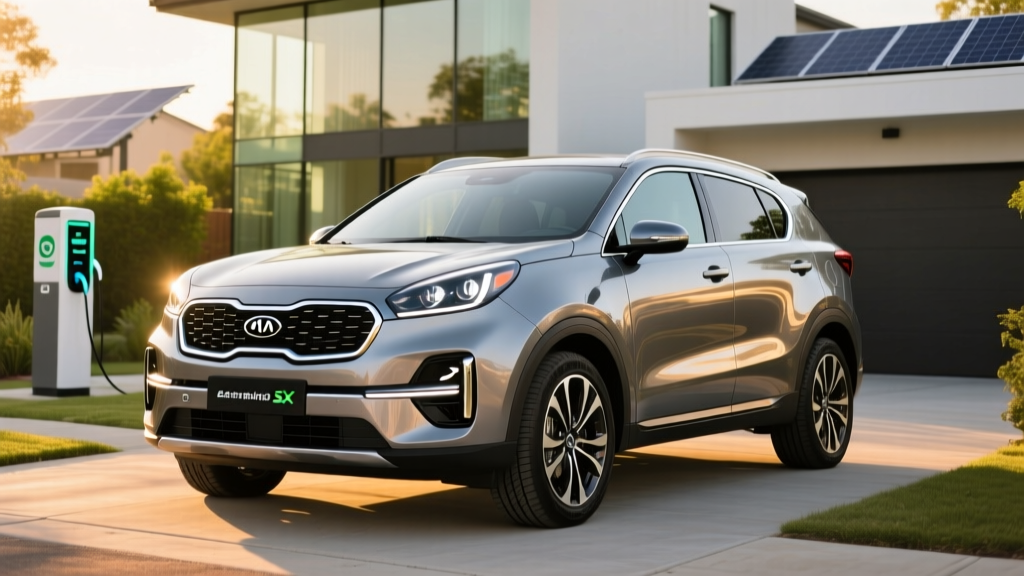
Quick Verdict: The Sportage Hybrid SX Prestige at a Glance
The 2026 Kia Sportage Hybrid SX Prestige sits at the top of the conventional hybrid (HEV) trim ladder — not a plug-in, not a gas-only model, but a self-charging hybrid that squeezes serious efficiency out of every gallon without ever needing a charging cable. If you've been cross-shopping the RAV4 Hybrid, CR-V Hybrid, and Tucson Hybrid, the Sportage Hybrid's 231-horsepower turbocharged powertrain and premium SX Prestige equipment list make it one of the more compelling choices in the compact hybrid SUV segment.
This review breaks down exactly what you get: EPA-rated and real-world MPG, how the hybrid system actually works, what the SX Prestige trim adds over lower tiers, tax-credit eligibility (spoiler: conventional hybrids don't qualify for the federal EV credit), and the battery warranty details that matter for long-term ownership.
| Spec | Value |
|---|---|
| Powertrain | 1.6L Turbo I-4 + electric motor (HEV) |
| Combined Horsepower | 231 hp |
| Combined Torque | 258 lb-ft |
| Transmission | 6-speed automatic |
| Drivetrain | AWD (standard on SX Prestige) |
| EPA MPG (City / Hwy / Combined) | 38 / 38 / 38 |
| Fuel Tank Capacity | 13.7 gallons |
| Total Driving Range | ~520 miles |
| 0–60 mph (est.) | ~7.4 seconds |
| Cargo Volume (behind rear seats) | 39.5 cu ft |
| Base MSRP (SX Prestige AWD) | ~$40,490 |
| Hybrid Battery Warranty | 10 years / 100,000 miles |
HEV vs. PHEV: What the Sportage Hybrid Actually Is
Before we get into the numbers, a critical distinction: the Kia Sportage Hybrid is a conventional hybrid electric vehicle (HEV). It does not plug in. The small traction battery recharges through regenerative braking and the gasoline engine. You fuel it at a gas station exactly like any other car.
Kia also sells a Sportage Plug-In Hybrid (PHEV) as a separate model. That version has a larger 13.7 kWh battery, an electric-only range of about 34 miles, and requires plugging in to realize its efficiency benefits. The PHEV qualifies for a portion of the federal tax credit (subject to IRS §30D sourcing rules and income caps) and starts at a higher MSRP.
| Feature | Sportage Hybrid (HEV) | Sportage Plug-In Hybrid (PHEV) |
|---|---|---|
| Plugs in? | No | Yes (Level 1/Level 2) |
| Electric-only range | N/A (motor assists engine) | ~34 miles |
| Battery size | ~1.49 kWh | 13.7 kWh |
| Combined HP | 231 hp | 261 hp |
| EPA Combined MPG / MPGe | 38 MPG | 84 MPGe (elec+gas) / 35 MPG (gas only) |
| DC Fast Charging | N/A | No (Level 2 AC only, ~3.5 hrs) |
| Federal Tax Credit (§30D) | Not eligible | Up to $7,500 (eligibility varies) |
| Starting MSRP (AWD) | ~$32,490 | ~$40,490 |
If you don't have access to home or workplace charging, the HEV is almost certainly the better fit. You'll still save substantially on fuel compared to the gas-only Sportage (rated at 25 MPG combined with AWD) without changing your refueling habits at all.
Fuel Economy: EPA Ratings and Real-World MPG
The 2026 Kia Sportage Hybrid AWD carries an EPA rating of 38 MPG city, 38 MPG highway, and 38 MPG combined, according to fueleconomy.gov. That balanced city/highway figure is somewhat unusual — many hybrids skew heavily toward city efficiency — and it reflects the Sportage Hybrid's turbocharged engine, which doesn't rely as heavily on Atkinson-cycle tricks as some competitors.
| Vehicle | City | Highway | Combined |
|---|---|---|---|
| Kia Sportage Hybrid AWD | 38 | 38 | 38 |
| Toyota RAV4 Hybrid AWD | 41 | 38 | 39 |
| Honda CR-V Hybrid AWD | 40 | 34 | 37 |
| Hyundai Tucson Hybrid AWD | 38 | 38 | 38 |
| Ford Escape Hybrid AWD | 42 | 36 | 39 |
Real-World MPG: What to Actually Expect
Hybrid SUVs frequently exceed their EPA city ratings in stop-and-go driving because regenerative braking recaptures energy that gas cars waste as heat. In mixed suburban and city driving, owners commonly report 39–42 MPG in the Sportage Hybrid. On sustained highway trips at 75+ mph, expect the number to dip to roughly 34–36 MPG — the turbo engine works harder at speed and aerodynamic drag rises.
Cold weather impacts hybrid efficiency too. In temperatures below freezing, expect a 5–10% reduction in fuel economy as the engine runs more frequently to heat the cabin and maintain battery temperature. This is less severe than the 20–30% range loss a full EV experiences in cold weather, but it's real.
EPA combined: 38 MPG × 13.7-gal tank = ~520 miles theoretical range.
Real-world mixed driving: expect 470–540 miles per tank depending on conditions, driving style, and climate.
Powertrain Deep Dive: How the 231-HP Hybrid System Works
The Sportage Hybrid pairs a 1.6-liter turbocharged four-cylinder engine (producing roughly 178 hp on its own) with a 47.7 kW (64 hp) electric motor integrated into the transmission housing. Combined system output is 231 hp and 258 lb-ft of torque, routed through a traditional 6-speed automatic transmission to all four wheels.
This is a different approach than the Toyota Hybrid System's planetary gearset (eCVT). Kia's setup uses a conventional stepped automatic, which means shifts are perceptible — some drivers prefer this feel over the drone of a CVT, while others notice the slight hesitation during gear changes under hard acceleration.
The electric motor primarily serves three functions:
- Launch assist: The motor provides instant torque from 0 RPM, filling the gap before the turbo spools up. This makes the Sportage Hybrid feel quicker off the line than its 0–60 time of roughly 7.4 seconds suggests.
- Low-speed electric driving: At parking-lot speeds and light-load cruising, the vehicle can operate on electric power alone for short distances (typically under 1 mile).
- Regenerative braking: The motor acts as a generator during deceleration, converting kinetic energy back into battery charge.
The traction battery is a ~1.49 kWh lithium-ion pack mounted under the rear seats. It's small by design — it doesn't need to store much energy because the engine is always available. This also means there's no meaningful cargo-space penalty compared to the gas-only Sportage.
SX Prestige Trim: What You Get for the Money
The SX Prestige is the top-tier Sportage Hybrid trim, and it carries a significant equipment upgrade over the mid-range EX and X-Line trims. At an MSRP of approximately $40,490 (including destination), the SX Prestige AWD adds:
- 12.3-inch dual panoramic displays (instrument cluster + infotainment)
- Harman Kardon premium audio system
- Heated and ventilated front seats, heated steering wheel
- Synthetic leather (Sofino) upholstery
- Wireless Apple CarPlay and Android Auto
- Highway Driving Assist 2 (HDA2) with lane-centering and adaptive cruise
- Remote Smart Parking Assist
- Surround-view monitor with blind-spot view
- LED projection headlights with dynamic bending light
- Panoramic sunroof with power shade
- Smart power liftgate
Compared to the Sportage Hybrid EX (starting around $34,090), the SX Prestige commands a roughly $6,400 premium. Whether that's justified depends on how much you value the ventilated seats, premium audio, and HDA2 driver-assistance suite — features that are difficult to add aftermarket.
- Strong 231-hp output beats most hybrid competitors
- Conventional 6-speed auto avoids CVT drone
- Generous 39.5 cu ft cargo volume
- 10-year/100,000-mile hybrid battery warranty
- SX Prestige equipment rivals luxury compacts
- No charging infrastructure needed
- 38 MPG combined trails RAV4 Hybrid's 39
- SX Prestige pricing pushes into PHEV territory
- Turbo engine requires premium fuel for max output
- No spare tire (tire-inflator kit only)
- Electric-only driving limited to very low speeds
- AWD system adds weight vs. FWD hybrid rivals
Tax Credits and Incentives: Does the Sportage Hybrid Qualify?
This is where the HEV vs. PHEV distinction matters financially. The conventional Sportage Hybrid does not qualify for the federal §30D Clean Vehicle Credit. That credit — up to $7,500 — is reserved for plug-in electric vehicles with a minimum battery capacity of 7 kWh, which excludes all conventional hybrids.
- ✅ Vehicle must be a plug-in EV or PHEV — Sportage Hybrid (HEV) does NOT qualify
- ✅ Battery capacity ≥ 7 kWh (Sportage Hybrid: ~1.49 kWh)
- ✅ MSRP caps: $80,000 for SUVs / $55,000 for sedans
- ✅ Buyer income caps: $150K single / $300K joint (MAGI)
- ✅ Critical mineral and battery component sourcing requirements
- ✅ Point-of-sale transfer available for qualifying vehicles
Source: IRS.gov — Clean Vehicle Credits. Rules current as of 2026; consult a tax professional for your specific situation.
However, the Sportage Hybrid may qualify for certain state-level incentives. Some states offer rebates or HOV-lane access for hybrid vehicles, though these programs are increasingly focused on full EVs and PHEVs. Check your state's energy or environmental agency website for current offerings.
If the federal tax credit is a priority for you, the Sportage Plug-In Hybrid is the variant to consider — though its credit eligibility depends on the current battery-sourcing requirements under §30D, which have tightened significantly since 2024. The PHEV also starts at a higher price, so run the math on fuel savings versus the credit amount before deciding.
Battery Warranty, Reliability, and Replacement Costs
Hybrid battery longevity remains a top concern for buyers switching from gas-only vehicles. Here's what Kia provides:
- Duration: 10 years / 100,000 miles (whichever comes first)
- Coverage: Defects and capacity loss below a defined threshold (typically ~70% of original capacity)
- Transferability: Yes, to subsequent owners (may reduce to 5yr/60K in some states — confirm with dealer)
- Hybrid system components: Motor, inverter, and related electronics also covered under the 10-year powertrain warranty
Kia's 10-year/100,000-mile warranty is among the best in the industry and matches Hyundai's coverage. Toyota offers a similar 10-year/150,000-mile hybrid battery warranty on the RAV4 Hybrid, which is slightly longer on mileage.
How Long Do Hybrid Batteries Actually Last?
Modern lithium-ion hybrid batteries are substantially more durable than the nickel-metal hydride packs in early-2000s hybrids. Because the Sportage Hybrid's battery is small (~1.49 kWh) and the vehicle's battery management system keeps the state of charge in a narrow middle band (roughly 40–80%), the cells experience relatively shallow charge-discharge cycles. This dramatically reduces degradation.
Based on long-term data from similar Hyundai/Kia hybrid systems, most owners will never need a hybrid battery replacement during typical ownership. When replacements have been necessary out of warranty, costs for the Sportage Hybrid battery pack are estimated at $2,000–$4,000 including labor — far less than a full EV battery replacement, which can exceed $10,000–$20,000.
The conventional 6-speed automatic transmission is also a reliability positive. Unlike the eCVT planetary gearsets in Toyota hybrids (which are also quite reliable), Kia's transmission is a well-understood design with a long service history.
Sportage Hybrid vs. PHEV vs. Full EV: Which Fits Your Life?
Choosing between the Sportage Hybrid, the Sportage PHEV, and a full battery-electric vehicle (BEV) comes down to three variables: charging access, daily mileage, and budget.
Choose the Sportage Hybrid (HEV) if:
- You lack reliable home or workplace charging
- You want maximum simplicity — no cables, no apps, no charging networks
- Your budget is under $42,000 and you want AWD
- You regularly take long road trips where charging infrastructure is sparse
Choose the Sportage Plug-In Hybrid (PHEV) if:
- You can install a Level 2 charger at home
- Your daily commute is under 34 miles round-trip (enabling mostly electric driving)
- You want to reduce fuel consumption to near-zero on weekdays while keeping gas for road trips
- You qualify for the federal tax credit, which can offset the PHEV's price premium
Choose a full EV (e.g., Kia EV6, Hyundai Ioniq 5) if:
- You have home charging and your daily driving is under 250 miles
- You want the lowest per-mile energy cost (~$0.04/mile on home electricity vs. ~$0.12/mile on gas at 38 MPG)
- You want to eliminate oil changes, transmission fluid, and exhaust-system maintenance
- You're comfortable planning around DC fast charging on longer trips
For most buyers without dedicated charging, the Sportage Hybrid HEV represents the lowest-friction path to better fuel economy. You'll save roughly $500–$700 per year on fuel compared to the gas-only Sportage AWD (assuming 12,000 miles/year and $3.50/gallon), and the hybrid system adds minimal maintenance complexity.
Frequently Asked Questions
How many MPG does the Kia Sportage Hybrid get?
The 2026 Kia Sportage Hybrid AWD is EPA-rated at 38 MPG city, 38 MPG highway, and 38 MPG combined. In real-world mixed driving, many owners report 39–42 MPG in city-heavy conditions and 34–36 MPG on sustained highway trips.
Does the Sportage Hybrid need to be plugged in?
No. The Sportage Hybrid is a conventional HEV — it charges its own small battery through regenerative braking and the gasoline engine. You only ever visit a gas station. If you want a plug-in version, look at the separate Sportage PHEV model.
How far can the Sportage PHEV go on electric only?
The Sportage Plug-In Hybrid offers an EPA-estimated 34 miles of electric-only range on its 13.7 kWh battery. Once that's depleted, it operates as a conventional hybrid at roughly 35 MPG combined. Note: the PHEV is a different, higher-priced model than the HEV reviewed here.
Is the hybrid battery reliable, and what does replacement cost?
Kia covers the hybrid battery for 10 years or 100,000 miles. Modern hybrid batteries with shallow-cycle management rarely fail within this period. Out-of-warranty replacement is estimated at $2,000–$4,000 — significantly less than a full EV battery.
Does the Sportage Hybrid qualify for any federal tax credit?
No. The conventional Sportage Hybrid (HEV) does not qualify for the federal §30D Clean Vehicle Credit, which requires a plug-in vehicle with at least 7 kWh of battery capacity. The Sportage PHEV may qualify, depending on current IRS sourcing rules and your income. Some state-level hybrid incentives may apply — check your local programs.
What's the difference between the Sportage Hybrid SX Prestige and lower trims?
The SX Prestige adds premium features over the EX and X-Line trims: ventilated front seats, Harman Kardon audio, a panoramic sunroof, Highway Driving Assist 2 (HDA2), a surround-view camera, and LED projection headlights. The hybrid powertrain (231 hp, 38 MPG) is identical across all Sportage Hybrid trims.
How does the Sportage Hybrid compare to the Toyota RAV4 Hybrid?
The RAV4 Hybrid AWD edges out the Sportage on fuel economy (39 vs. 38 MPG combined) and has a longer track record. The Sportage Hybrid counters with more horsepower (231 vs. 219), a conventional automatic transmission (no CVT), more cargo space (39.5 vs. 37.6 cu ft), and a longer base warranty. Both are strong choices — the decision often comes down to driving feel and feature preferences.