Quick Verdict: The Sportage Hybrid Prestige at a Glance
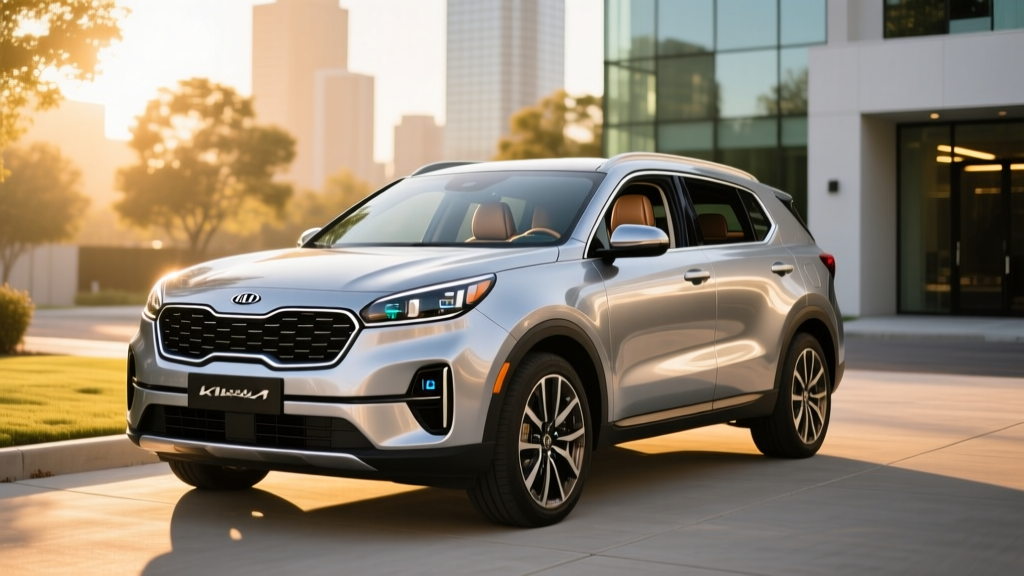
The 2026 Kia Sportage Hybrid Prestige sits at the top of Kia's compact hybrid SUV lineup, pairing a turbocharged 1.6-liter engine with an electric motor for a combined 232 horsepower and an EPA-estimated 43 MPG combined. It is a conventional hybrid (HEV), meaning it never needs to be plugged in — the battery recharges through regenerative braking and the gasoline engine. For buyers who want premium features, all-wheel drive, and strong fuel economy without the lifestyle change of a plug-in hybrid or full EV, the Sportage Hybrid Prestige makes a compelling case at roughly $39,590 MSRP before destination.
The Sportage is sold in three powertrains: gas-only, hybrid (HEV), and plug-in hybrid (PHEV). This review focuses on the conventional hybrid (HEV) Prestige trim. The HEV requires no plug — you simply fuel it like any gas car. The Sportage PHEV offers roughly 34 miles of electric-only range but costs more and requires home charging access to realize its benefits. A full EV like the Kia EV6 eliminates gas entirely but demands reliable charging infrastructure. We break down which powertrain fits your situation later in this guide.
Fuel Economy: EPA Ratings and Real-World MPG
The headline number for the 2026 Sportage Hybrid is its efficiency. Here is the EPA-estimated breakdown for the AWD Prestige trim, sourced from fueleconomy.gov:
| Metric | EPA Estimate | Real-World Expectation |
|---|---|---|
| City MPG | 42 MPG | 43–46 MPG (hybrids often exceed EPA in stop-and-go) |
| Highway MPG | 44 MPG | 38–42 MPG (sustained 75+ mph reduces regen benefit) |
| Combined MPG | 43 MPG | 40–44 MPG depending on driving mix |
| Total Range | ~520 miles | ~475–530 miles per tank |
How Many MPG Does the Sportage Hybrid Actually Get?
In mixed suburban and highway driving, owners typically report 40–44 MPG combined. The hybrid system's advantage is city driving: frequent stops allow regenerative braking to recapture energy, and the electric motor handles low-speed propulsion where gasoline engines are least efficient. On long interstate trips at 75–80 mph, expect highway MPG to dip to the high 30s. Cold weather (below 30°F) can reduce fuel economy by 5–10% as the engine runs more often to generate cabin heat.
Compared to the gas-only Sportage AWD (EPA 25 combined), the hybrid saves roughly 240 gallons of fuel per year at 15,000 miles driven — approximately $840 annually at $3.50/gallon.
Powertrain: 232 HP Turbo Hybrid System
The 2026 Sportage Hybrid pairs a 1.6-liter turbocharged four-cylinder gasoline engine with a 47.7 kW (64 hp) permanent-magnet electric motor, routed through a 6-speed automatic transmission. Combined system output is 232 horsepower and 258 lb-ft of torque. Unlike some hybrids that use a continuously variable transmission (CVT), Kia's 6-speed automatic delivers more natural shift feel and stronger highway passing response.
| Specification | Detail |
|---|---|
| Gasoline Engine | 1.6L turbocharged 4-cylinder, 178 hp / 195 lb-ft |
| Electric Motor | 47.7 kW (64 hp) / 195 lb-ft |
| Combined System Output | 232 hp / 258 lb-ft |
| Transmission | 6-speed automatic |
| Drivetrain | AWD (standard on Prestige) |
| 0–60 mph | ~7.4 seconds (est.) |
| Hybrid Battery | ~1.49 kWh lithium-ion (sealed, not plug-in) |
| Towing Capacity | 2,000 lbs |
The 0–60 mph time of roughly 7.4 seconds places the Sportage Hybrid ahead of most competitors in the compact hybrid SUV segment, including the Toyota RAV4 Hybrid (~7.8 sec) and Honda CR-V Hybrid (~7.6 sec). The turbocharged engine provides strong mid-range torque for merging and overtaking.
HEV vs PHEV vs EV: Which Sportage Powertrain Fits You?
Kia sells the Sportage in three flavors. Here is how they compare:
Sportage Hybrid (HEV)
- EPA: 43 MPG combined
- No plug required
- ~$39,590 MSRP (Prestige)
- Best for: Drivers without home charging who want max fuel savings with zero routine change
Sportage PHEV
- EPA: ~34 mi electric-only, 84 MPGe combined
- Plug-in required for EV benefit
- ~$43,090 MSRP (top trim)
- Best for: Home chargers with short commutes (<30 mi) who want occasional gas-free driving
Full EV (e.g., Kia EV6)
- EPA: ~310 mi range
- Home + public charging required
- ~$42,600 MSRP (base)
- Best for: Drivers with reliable home Level 2 charging who want zero gas and lowest fuel cost
Hybrid vs PHEV vs EV — Which Fits the Reader?
Choose the HEV if you live in an apartment without charging access, frequently take road trips beyond 300 miles, or want the simplest transition from a gas car. The Sportage Hybrid Prestige delivers excellent fuel economy with zero infrastructure requirements.
Choose the PHEV if you can install a Level 2 home charger, your daily commute is under 34 miles round-trip, and you want to drive on electricity most days while keeping a gas engine for longer trips. The PHEV qualifies for a federal tax credit (up to $7,500 under IRS §30D, subject to income, MSRP caps, and battery sourcing rules — see irs.gov for current eligibility).
Choose a full EV if you have home charging, want the lowest per-mile fuel cost (~$0.04/mile vs ~$0.08/mile for the hybrid), and your daily driving stays within ~250 miles.
Pricing, Trims, and Tax Credit Eligibility
The 2026 Kia Sportage Hybrid is offered in three trims. The Prestige is the top-tier model:
| Trim | MSRP (incl. destination) | Key Features |
|---|---|---|
| LX | ~$30,590 | FWD, 8" touchscreen, wireless CarPlay/Android Auto |
| EX | ~$34,090 | AWD, 12.3" dual displays, heated seats, power liftgate |
| Prestige | ~$39,590 | AWD, panoramic sunroof, leather, Harman Kardon audio, Highway Driving Assist 2, ventilated front seats, 360° camera |
Does the Sportage Hybrid Qualify for a Tax Credit?
The conventional hybrid (HEV) Sportage does not qualify for the federal §30D clean vehicle tax credit. That credit applies only to plug-in electric vehicles (BEVs and PHEVs) that meet battery sourcing, critical mineral, MSRP cap ($80,000 for SUVs), and buyer income limits. The Sportage HEV has no plug and no qualifying battery capacity.
However, the Sportage PHEV may qualify for up to $7,500 under §30D, depending on the buyer's adjusted gross income (caps: $300K joint / $150K single), the vehicle's battery component and critical-mineral sourcing compliance, and the MSRP staying under $80,000. Eligibility rules are complex and updated periodically — consult IRS guidance and a tax professional before relying on the credit.
Some states offer additional rebates for hybrids. Check your state energy office or the AFDC state incentive database for current programs.
Reliability, Battery Warranty, and Replacement Cost
Kia covers the Sportage Hybrid's battery and hybrid-specific components with a 10-year / 100,000-mile warranty (whichever comes first). The general powertrain is also covered for 10 years / 100,000 miles. The basic vehicle warranty is 5 years / 60,000 miles. These are among the strongest warranty terms in the segment.
Is the Sportage Hybrid Reliable?
Kia's turbo-hybrid powertrain has been in service since the 2023 model-year redesign of the Sportage. The 1.6T hybrid system is shared with the Hyundai Tucson Hybrid and Kia Sorento Hybrid, giving it a growing reliability track record. Common hybrid concerns across the industry include inverter cooling system maintenance and 12V auxiliary battery drain — neither has been a widespread issue for this generation based on current owner reports and NHTSA complaint data.
Battery Replacement Cost
If the hybrid battery pack requires replacement outside of warranty, expect a cost in the range of $2,500–$4,000 for the ~1.49 kWh battery module, plus labor. This is significantly less than a full EV battery replacement because the HEV battery is small. In practice, hybrid batteries in modern Kia/Hyundai vehicles have shown strong longevity — many first-generation units exceed 150,000 miles with minimal capacity loss. The 10-year warranty provides substantial peace of mind.
Prestige Trim: Interior, Tech, and Safety
The Prestige trim justifies its ~$5,500 premium over the EX with a substantial feature upgrade:
- Displays: Dual 12.3-inch screens (instrument cluster + infotainment) in a curved panoramic layout
- Audio: Harman Kardon premium sound system
- Seating: Leather-trimmed seats, ventilated front seats, heated rear seats, heated steering wheel
- Roof: Panoramic sunroof with power sunshade
- ADAS: Highway Driving Assist 2 (SAE Level 2 — driver must remain engaged and hands on wheel), Navigation-Based Smart Cruise Control, Remote Smart Parking Assist
- Convenience: 360° surround-view monitor, digital key, wireless phone charging, power liftgate with smart open
Highway Driving Assist 2 is an SAE Level 2 driver-assistance system. It combines adaptive cruise control and lane-centering on highways but requires the driver to remain fully attentive, keep hands on the steering wheel, and be prepared to take over at any moment. It is not self-driving. Always monitor road conditions and traffic.
The Sportage earned strong safety marks. Check IIHS and NHTSA for the latest crash-test ratings and headlight evaluations.
Pros, Cons, and Ownership Costs
Pros
- 43 MPG combined — excellent for a turbo AWD SUV
- 232 hp provides confident acceleration
- 10-year / 100K-mile hybrid battery warranty
- Prestige trim loaded with premium features
- No charging infrastructure required
- Strong cargo space (~39.5 cu ft behind rear seats)
Cons
- Prestige price approaches $40K — close to PHEV territory
- No federal tax credit for the HEV
- Highway MPG drops at sustained 75+ mph
- 6-speed automatic can feel busy under hard acceleration
- Hybrid battery reduces cargo space slightly vs gas model
- Insurance costs ~10-15% higher than gas-only Sportage
5-Year Cost of Ownership Estimate
| Category | Estimated Cost |
|---|---|
| Fuel (43 MPG avg, $3.50/gal) | ~$6,100 |
| Insurance (avg) | ~$8,500 |
| Maintenance (oil, tires, brakes) | ~$2,800 |
| Depreciation (est.) | ~$14,000 |
| Total Estimated 5-Year Cost | ~$31,400 |
For comparison, the gas-only Sportage AWD at 25 MPG combined would cost roughly $10,500 in fuel over the same period — a $4,400 fuel savings for the hybrid. Hybrid maintenance costs are similar to gas cars; regenerative braking actually extends brake pad life.
Frequently Asked Questions
How many MPG does the Kia Sportage Hybrid Prestige get?
The EPA rates the 2026 Sportage Hybrid Prestige AWD at 42 city / 44 highway / 43 combined MPG. In real-world mixed driving, expect 40–44 MPG combined. City driving often yields higher numbers due to regenerative braking, while sustained highway speeds above 75 mph reduce efficiency to the high 30s.
Does the Sportage Hybrid need to be plugged in?
No. The Sportage Hybrid (HEV) is a conventional hybrid. Its small ~1.49 kWh battery recharges through regenerative braking and the gasoline engine. You fuel it like any other car at a gas station. Only the Sportage PHEV requires plug-in charging.
Is the Kia Sportage Hybrid reliable, and what does battery replacement cost?
Kia backs the hybrid battery and powertrain with a 10-year / 100,000-mile warranty. Out-of-warranty battery replacement runs approximately $2,500–$4,000. Modern Kia/Hyundai hybrid batteries have demonstrated strong longevity, often exceeding 150,000 miles with minimal degradation.
Does the Sportage Hybrid qualify for any federal tax credit?
No. The conventional hybrid (HEV) Sportage does not qualify for the federal §30D clean vehicle credit. That credit is reserved for plug-in vehicles (BEVs and PHEVs) meeting specific battery sourcing and income requirements. The Sportage PHEV may qualify for up to $7,500, depending on buyer income and current IRS rules.
How does the Sportage Hybrid compare to the Toyota RAV4 Hybrid?
The RAV4 Hybrid offers a slightly higher EPA combined rating (roughly 39–41 MPG depending on trim) and a longer track record. The Sportage Hybrid counters with more horsepower (232 vs 219), a more premium interior on the Prestige trim, a longer warranty (10 yr vs 8 yr on Toyota's hybrid battery), and a conventional 6-speed automatic instead of a CVT. Both are strong choices — the Sportage edges ahead on features and acceleration, while the RAV4 wins on proven hybrid longevity.
Who should buy the Sportage Hybrid Prestige over a full EV?
Buyers who lack access to home Level 2 charging, regularly drive more than 300 miles between stops, live in areas with sparse public charging infrastructure, or simply want zero lifestyle change from their gas-car routine. The Sportage Hybrid Prestige delivers near-PHEV efficiency without any plug, making it the pragmatic choice for apartment dwellers, frequent road-trippers, and anyone in regions where public charging remains unreliable.