Quick Verdict: The 2026 Sorento Hybrid Balances Family Hauler and Efficiency
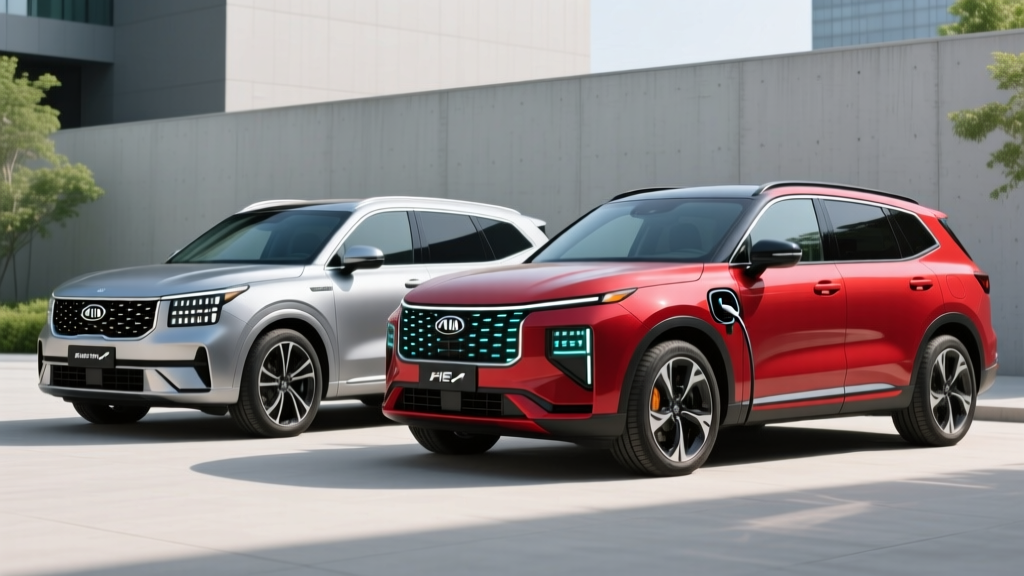
The 2026 Kia Sorento Hybrid occupies a narrow but valuable lane: a three-row, seven-seat SUV that returns up to 37 MPG combined without ever needing a plug. For buyers who want to dip a toe into electrification without committing to a full battery-electric vehicle—or who lack reliable home charging access—the Sorento HEV makes a compelling case. The plug-in hybrid (PHEV) variant extends that case further, offering roughly 32 miles of electric-only driving before the gasoline engine kicks in, making it viable as a weekday commuter with zero tailpipe emissions on short trips.
Both powertrains share the Sorento's practical interior, available all-wheel drive, and Kia's generous warranty coverage. But they differ meaningfully in cost, complexity, and who they serve best. This guide breaks down every spec that matters.
HEV vs PHEV: Which Sorento Hybrid Is Which?
| Attribute | Sorento Hybrid (HEV) | Sorento Plug-In Hybrid (PHEV) |
|---|---|---|
| Needs to be plugged in? | No — self-charging via regenerative braking and engine | Yes — plug in to access electric-only range |
| Electric-only driving | Not possible (motor assists engine only) | ~32 miles EPA electric-only |
| Battery capacity | ~1.49 kWh (small, buffer-style) | 13.8 kWh usable (lithium-ion polymer) |
| Combined horsepower | 227 hp | 261 hp |
| EPA combined MPG / MPGe | 37 MPG combined (FWD) | 79 MPGe (electric+gas) / 35 MPG (gas-only) |
| Drivetrain | FWD or AWD | AWD standard |
| Starting MSRP (2026) | ~$38,390 | ~$50,990 |
The distinction matters because conventional hybrids (HEVs) never plug in. They use a small battery and electric motor to assist the gasoline engine, capturing energy from braking that would otherwise be wasted. Plug-in hybrids (PHEVs) carry a much larger battery that can be charged from a wall outlet or public charger, enabling genuine electric-only driving for a limited distance. If you never plug in a PHEV, it still functions as a conventional hybrid—but you're carrying dead weight and paying for capacity you never use.
Fuel Economy: Real EPA Numbers and What to Expect
| Powertrain | City MPG | Highway MPG | Combined MPG |
|---|---|---|---|
| HEV FWD | 39 | 35 | 37 |
| HEV AWD | 36 | 33 | 34 |
| PHEV AWD (gas-only after battery depletes) | 35 | 34 | 35 |
| PHEV AWD (combined electric+gas) | 79 MPGe | ||
Source: EPA Fuel Economy.
Real-world expectations: Hybrids typically beat their EPA city estimates in stop-and-go traffic, where regenerative braking recaptures the most energy. In our experience with Kia's turbo-hybrid powertrain, expect 38–41 MPG in urban driving on the FWD HEV, but closer to 30–32 MPG on sustained highway trips at 75+ mph, where the engine does most of the work. Cold weather (below 35°F) knocks fuel economy down roughly 10–15% due to cabin heating demands and reduced battery efficiency.
For the PHEV, the 32-mile electric-only range is EPA-rated. Real-world results vary: expect 28–34 miles depending on temperature, terrain, and whether you use climate control. Once the battery depletes, the PHEV operates as a conventional hybrid at roughly 35 MPG combined—respectable for a 4,600-pound AWD SUV, though slightly lower than the lighter HEV.
Powertrain Specs: What's Under the Hood
| Specification | HEV | PHEV |
|---|---|---|
| Engine | 1.6L turbocharged 4-cylinder | 1.6L turbocharged 4-cylinder |
| Engine output | 178 hp / 195 lb-ft | 178 hp / 195 lb-ft |
| Electric motor output | 48 kW (~64 hp) | 72 kW (~97 hp) |
| Combined system output | 227 hp / 258 lb-ft | 261 hp / 271 lb-ft |
| Transmission | 6-speed automatic | 6-speed automatic |
| 0–60 mph (est.) | ~7.8 seconds | ~7.0 seconds |
| Towing capacity | 2,000 lbs (FWD) / 2,000 lbs (AWD) | 2,000 lbs |
| Battery chemistry | Lithium-ion polymer | Lithium-ion polymer |
| Battery capacity | ~1.49 kWh | 13.8 kWh usable |
The PHEV's larger motor and higher combined output give it noticeably stronger acceleration, especially from a stop where electric torque fills in before the turbo spools. Both variants use Kia's 6-speed automatic rather than a CVT, which delivers more natural shift feel at the cost of a fraction of an MPG versus competitors like the Toyota Highlander Hybrid.
PHEV Charging: How Long, What Connector, and Can It DC Fast Charge?
| Charging Method | Power | Time (0–100%) | Connector |
|---|---|---|---|
| Level 1 (120V household outlet) | ~1.4 kW | ~11 hours | J1772 |
| Level 2 (240V home or public) | ~3.3 kW (onboard charger limit) | ~4.5 hours | J1772 |
| DC Fast Charging | Not supported | ||
The Sorento PHEV's onboard charger caps at 3.3 kW, meaning even a 48-amp Level 2 home charger won't fill it faster. This is typical for PHEVs—the battery is small enough that overnight Level 2 charging is more than adequate. However, the lack of DC fast charging means road-trip top-ups at Electrify America or Tesla Supercharger stations are not an option. For daily commuting, plug in at home overnight and start every morning with a full 32-mile electric buffer.
Home charging cost: At the US average electricity rate of ~$0.17/kWh, fully charging the 13.8 kWh PHEV battery costs roughly $2.35—equivalent to about $0.07 per electric mile. Compare that to gasoline at $3.30/gallon and 35 MPG, which works out to ~$0.09 per mile. The savings are modest per mile but compound over a year of short commutes.
Pricing, Trims, and Tax Credit Eligibility
| Trim | Powertrain | MSRP (approx.) |
|---|---|---|
| S | HEV FWD | $38,390 |
| EX | HEV FWD/AWD | $41,090 |
| SX Prestige | HEV AWD | $46,290 |
| EX | PHEV AWD | $50,990 |
| SX Prestige | PHEV AWD | $54,990 |
Federal tax credit — PHEV only: The Sorento PHEV may qualify for up to $7,500 under IRS §30D, but eligibility is not guaranteed for every buyer. Key requirements for 2026 include:
- Buyer income caps: Modified AGI must not exceed $150,000 (single), $225,000 (head of household), or $300,000 (joint filers).
- MSRP cap: The vehicle's MSRP must not exceed $80,000 for SUVs (Sorento PHEV clears this easily).
- Battery sourcing: A percentage of critical minerals and battery components must be sourced from the US or free-trade-agreement countries. This requirement tightens annually; verify current-year compliance on the IRS clean vehicle credits page.
- Point-of-sale transfer: As of 2024, buyers can transfer the credit to the dealer at purchase, reducing the upfront price rather than waiting to claim it at tax filing.
The conventional HEV does not qualify for the federal §30D tax credit. Federal credits apply only to plug-in vehicles with sufficient battery capacity. Some states and utilities offer separate rebates for conventional hybrids, but these vary by jurisdiction—check your state energy office or local utility for specifics.
If the full $7,500 credit applies, the PHEV EX effectively drops from ~$50,990 to ~$43,490—narrowing the gap with the HEV SX Prestige considerably and making the PHEV the better value for buyers with home charging access and short commutes.
Battery Longevity, Warranty, and Replacement Costs
• 10 years / 100,000 miles (whichever comes first) on the hybrid battery and hybrid-specific components
• 10 years / 100,000 miles powertrain warranty
• Coverage transfers to second owners on certified pre-owned models (verify with dealer)
This is one of the strongest hybrid battery warranties in the segment. Toyota covers its hybrid batteries for 10 years/150,000 miles, giving it a slight mileage edge, but Kia's decade of coverage should outlast most first-owner tenures.
Will you need a replacement? Hybrid battery failure before 150,000 miles is uncommon in modern lithium-ion systems. Kia's hybrid batteries are designed with thermal management and conservative state-of-charge buffers to minimize degradation. If a replacement is needed out of warranty, expect:
- HEV battery replacement: $2,000–$3,500 (small 1.49 kWh pack)
- PHEV battery replacement: $5,000–$8,000 (larger 13.8 kWh pack)
These figures include parts and labor at a dealership. Independent hybrid specialists may offer refurbished packs at 30–50% lower cost. For context, most hybrid owners never face this expense—the battery typically outlasts the vehicle's economic life.
Who Should Buy the Sorento Hybrid, PHEV, or Skip to a Full EV?
- You don't have access to home or workplace charging
- You want better fuel economy without changing any habits
- Your budget is under $45,000
- You frequently take long road trips and want maximum range simplicity
- You have Level 2 charging at home or work
- Your daily commute is under 30 miles round-trip (you'll rarely burn gas on weekdays)
- You qualify for the $7,500 federal tax credit, narrowing the price gap
- You want electric commuting but need gas flexibility for weekend trips
- You have reliable home Level 2 charging
- You want zero tailpipe emissions and minimal maintenance (no oil changes, no engine)
- Your daily driving is under 250 miles and you're comfortable planning DC fast-charge stops on road trips
- You want the lowest per-mile fuel cost and qualify for full incentives
Pros and Cons
- Three-row seating in a hybrid package (rare in this segment)
- HEV achieves 37 MPG combined — excellent for a 7-seat SUV
- PHEV's 32-mile electric range covers most daily commutes
- 10-year/100,000-mile hybrid battery warranty
- 6-speed automatic (no CVT drone)
- PHEV eligible for up to $7,500 federal tax credit
- Strong standard safety suite (forward collision avoidance, lane keeping, blind-spot monitoring)
- AWD reduces HEV fuel economy by ~3 MPG combined
- PHEV onboard charger limited to 3.3 kW — no DC fast charging
- PHEV price premium of ~$12,000 over base HEV (before credits)
- Third row is tight for adults on long trips
- Towing limited to 2,000 lbs (competitors like the Highlander Hybrid tow 3,500+)
- HEV does not qualify for federal tax credit
Frequently Asked Questions
How many MPG does the 2026 Kia Sorento Hybrid get?
The FWD Sorento Hybrid achieves an EPA-rated 39 city / 35 highway / 37 combined MPG. Adding AWD drops those figures to 36/33/34. In real-world city driving with frequent stops, many owners report exceeding the EPA city estimate thanks to aggressive regenerative braking. Highway cruising at 75+ mph tends to return 30–32 MPG.
How far can the Sorento PHEV go on electric only?
The EPA rates the 2026 Sorento PHEV at 32 miles of electric-only range. Real-world results typically fall between 28 and 34 miles depending on temperature, terrain, speed, and climate-control use. Preconditioning the cabin while still plugged in can help preserve range in cold weather.
Does the Kia Sorento Hybrid qualify for a tax credit?
The conventional HEV does not qualify for the federal §30D clean vehicle credit. The PHEV may qualify for up to $7,500, subject to buyer income limits ($300,000 joint / $150,000 single), MSRP caps ($80,000 for SUVs), and battery component/critical-mineral sourcing requirements that tighten each year. Verify eligibility on IRS.gov and consult a tax professional before relying on the credit.
Is the Sorento Hybrid reliable? What about battery replacement cost?
Kia's turbo-hybrid powertrain has proven reliable since its introduction in the 2021 model year, with no widespread battery failure reports. The hybrid battery is covered for 10 years/100,000 miles. Out-of-warranty replacement runs $2,000–$3,500 for the HEV and $5,000–$8,000 for the PHEV, though most owners never need one. Check NHTSA for any open recalls before purchasing.
Do I need to plug in the Sorento Hybrid?
No. The conventional HEV charges its small battery entirely through regenerative braking and the gasoline engine. You fuel it like any other car. Only the PHEV variant benefits from being plugged in—and if you never plug it in, it simply operates as a (heavier, less efficient) conventional hybrid.
How does the Sorento Hybrid compare to the Toyota Highlander Hybrid?
The Highlander Hybrid returns a slightly better 36 MPG combined with AWD (vs. the Sorento's 34 AWD) and tows 3,500 lbs (vs. 2,000). However, the Sorento is priced roughly $3,000–$5,000 lower at equivalent trims, offers a PHEV option the Highlander lacks, and carries Kia's longer 10-year powertrain warranty. If towing capacity is a priority, the Highlander wins. If value and PHEV availability matter more, the Sorento edges ahead.