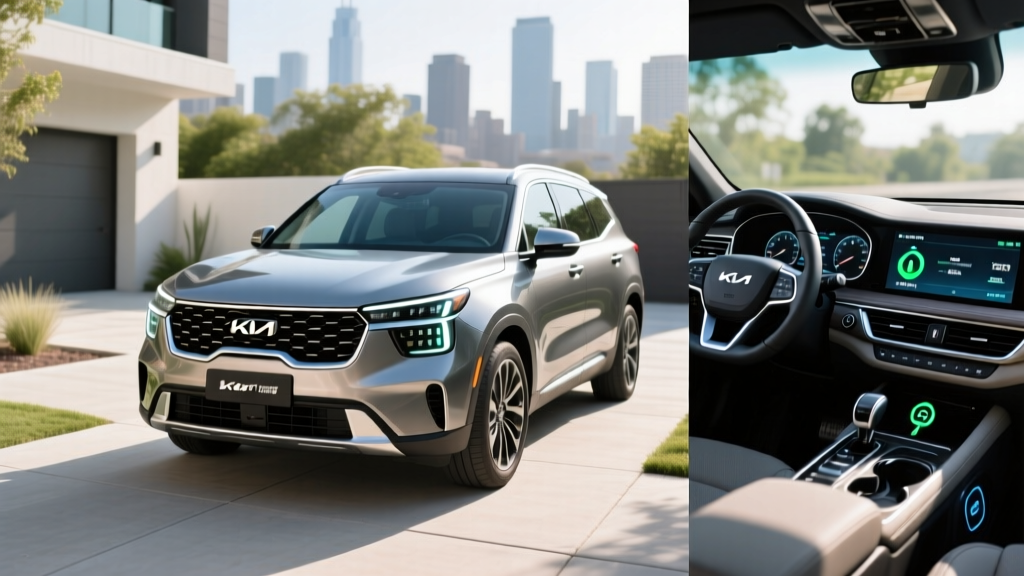
2023 Kia Sorento Hybrid: The Family SUV That Skips the Plug
The 2023 Kia Sorento Hybrid occupies a practical middle ground for families who want electrified efficiency without committing to a full battery-electric vehicle or worrying about charging infrastructure. Available in two distinct flavors — a conventional hybrid (HEV) that never needs plugging in, and a plug-in hybrid (PHEV) with meaningful electric-only range — the Sorento Hybrid covers buyers across the electrification spectrum.
As a three-row midsize SUV, it competes directly with the Toyota Highlander Hybrid and Honda CR-V Hybrid (though the CR-V lacks a third row). What sets the Sorento apart is offering both HEV and PHEV powertrains under one nameplate, plus standard all-wheel drive on most trims. Here's the complete breakdown of specs, real-world efficiency, ownership costs, and whether the 2023 model year still makes sense for buyers shopping in 2026.
| Spec | HEV (Sorento Hybrid) | PHEV (Sorento Plug-In Hybrid) |
|---|---|---|
| Powertrain | 1.6L turbo I-4 + electric motor | 1.6L turbo I-4 + electric motor |
| Combined Horsepower | 227 hp / 258 lb-ft torque | 261 hp / 258 lb-ft torque |
| Transmission | 6-speed automatic | 6-speed automatic |
| Drivetrain | AWD (standard) | AWD (standard) |
| Battery (traction) | 1.49 kWh lithium-ion | 13.8 kWh lithium-ion |
| EPA MPG (city / hwy / combined) | 39 / 35 / 37 MPG | 33 / 33 / 34 MPG (gas); 79 MPGe (combined) |
| Electric-Only Range (PHEV) | N/A | 32 miles (EPA) |
| Total Range (PHEV) | ~580 miles (estimated) | ~430 miles (gas + electric) |
| 0–60 mph | ~7.8 seconds | ~7.5 seconds |
| Seating | 6 passengers (3 rows) | 6 passengers (3 rows) |
| Cargo (behind 3rd / 2nd row) | 12.6 / 45.0 cu ft | 12.6 / 45.0 cu ft |
| Base MSRP (2023 launch) | $36,090 (S) | $50,290 (SX) |
HEV vs PHEV: Which Sorento Hybrid Is Which?
This distinction is critical because the two powertrains serve entirely different use cases, and confusing them leads to disappointed buyers.
Conventional Hybrid (HEV) — Sorento Hybrid
The HEV uses a small 1.49 kWh battery that charges exclusively through regenerative braking and the gasoline engine. You never plug it in. You fuel it like any other car, and the hybrid system automatically manages when to use the electric motor versus the gas engine. The result is 37 MPG combined — a substantial improvement over the gas-only Sorento's ~26 MPG combined.
Plug-In Hybrid (PHEV) — Sorento Plug-In Hybrid
The PHEV pairs the same 1.6L turbocharged engine with a larger 13.8 kWh battery pack and a more powerful electric motor. This gives it 32 miles of EPA-rated electric-only range, enough to cover most daily commutes without burning a drop of gasoline. Once the battery depletes, it operates as a conventional hybrid at 34 MPG combined. You can plug it into a Level 1 (120V) or Level 2 (240V) charger to replenish the battery.
The HEV starts around $14,000 less than the PHEV, making it the value play. The PHEV targets buyers with short commutes, home charging access, and a desire to minimize gasoline use without range anxiety on road trips.
Real-World MPG: How the Sorento Hybrid Actually Performs
Hybrid efficiency varies significantly with driving conditions, and the Sorento Hybrid follows the typical pattern where city driving often exceeds the EPA estimate while highway driving falls short.
| Driving Scenario | EPA Estimate | Real-World Expectation |
|---|---|---|
| City (stop-and-go, low speed) | 39 MPG | 38–42 MPG (regenerative braking excels here) |
| Highway (70–75 mph sustained) | 35 MPG | 30–33 MPG (aerodynamic drag, less regen benefit) |
| Combined (mixed driving) | 37 MPG | 34–38 MPG depending on route mix |
| Cold Weather (below 32°F) | N/A | 30–34 MPG (engine runs more for cabin heat, battery less efficient) |
The Sorento HEV's 1.6L turbocharged engine paired with its 44 kW electric motor means the hybrid system can handle low-speed city driving almost entirely on electric power, which is why city MPG is strong. On sustained highway runs above 70 mph, the gasoline engine does most of the work, and this three-row SUV's weight (~4,400 lbs) and boxy profile hurt efficiency.
For the PHEV, real-world electric-only range typically lands between 27 and 34 miles depending on temperature, terrain, and driving style. In mild weather at moderate speeds, owners regularly report hitting or slightly exceeding the 32-mile EPA figure. In winter or at highway speeds, expect closer to 25–28 miles before the gas engine kicks in.
PHEV Charging: What You Need to Know
The Sorento PHEV's 13.8 kWh battery charges through three methods:
- Level 1 (120V household outlet): Approximately 11–12 hours for a full charge using the included portable cord. Fine for overnight charging if you drive less than 32 miles daily.
- Level 2 (240V home charger): Approximately 3 hours 25 minutes from empty to full at 3.3 kW. This is the practical daily charging solution for most PHEV owners.
- DC Fast Charging: Not supported. The Sorento PHEV does not have a DC fast-charge port. This is typical for PHEVs in this class — the battery is small enough that Level 2 covers overnight needs.
The PHEV uses a standard J1772 connector for Level 1 and Level 2 AC charging. If you plan to charge at home, a Level 2 charger installation typically costs $500–$1,500 depending on your electrical panel's proximity to the parking spot and whether a panel upgrade is needed.
The onboard charger is rated at 3.3 kW, which means even if you plug into a 7.2 kW or 11.5 kW Level 2 station, the Sorento PHEV will only draw 3.3 kW. This is a deliberate engineering choice — the small battery doesn't need faster charging, but it does mean you can't take advantage of faster public Level 2 chargers.
Powertrain Deep Dive: 227 hp vs 261 hp
Both Sorento Hybrid variants use Kia's 1.6-liter turbocharged four-cylinder engine, but the electric motor output differs:
- HEV: The gasoline engine produces 178 hp, supplemented by a 44 kW (59 hp) electric motor integrated into the transmission. Combined system output is 227 hp and 258 lb-ft of torque. This is adequate for daily driving but feels strained during highway merging with a full load of passengers and cargo.
- PHEV: The same engine pairs with a more powerful 66.9 kW (90 hp) electric motor, yielding 261 hp combined. The additional electric torque makes the PHEV noticeably quicker off the line and more confident during passing maneuvers.
Both use a conventional 6-speed automatic transmission rather than a CVT, which gives a more natural driving feel compared to the drone-heavy CVTs in the Toyota Highlander Hybrid. The trade-off is slightly less seamless power delivery during electric-to-gas transitions, though most drivers won't notice it in normal driving.
Acceleration from 0–60 mph takes approximately 7.8 seconds for the HEV and 7.5 seconds for the PHEV — respectable for a three-row family hauler but not sporty. The AWD system uses a conventional mechanical rear differential driven by the engine (not an electric rear motor), so there's no torque-vectoring or electric-on-demand rear axle like you'd find in some competitors.
Pricing, Trims, and Tax Credit Eligibility
The 2023 Sorento Hybrid launched with the following MSRP structure (destination charge included):
- HEV S (base): $36,090
- HEV EX: $39,990
- PHEV SX: $50,290
- PHEV SX Prestige: $53,590
As of 2026 used-market pricing, expect 2023 HEV models between $27,000–$33,000 and PHEV models between $36,000–$44,000 depending on mileage and condition.
Federal Tax Credit Status
HEV (conventional hybrid): Does NOT qualify for the federal §30D clean vehicle tax credit. The IRS §30D credit applies only to plug-in electric vehicles with a battery capacity of at least 7 kWh. The Sorento HEV's 1.49 kWh battery falls far short of this threshold.
PHEV (plug-in hybrid): The 2023 Sorento PHEV may have qualified for a partial federal tax credit when purchased new, but eligibility depended on the buyer's income, the vehicle's MSRP, and critical-mineral/battery-component sourcing requirements under the Inflation Reduction Act. As of 2026, the §30D credit for new PHEVs remains up to $7,500, but the 2023 model year is no longer available new. For used PHEV purchases, the §25E used clean vehicle credit offers up to $4,000 (30% of sale price, capped) if the vehicle sells for $25,000 or less and the buyer meets income limits ($75,000 single / $150,000 joint). Always verify current eligibility at IRS.gov and consult a tax professional.
Battery Warranty, Reliability, and Replacement Costs
Battery longevity is the top concern for hybrid buyers, and Kia addresses this with one of the industry's strongest warranty packages:
Kia Hybrid/PHEV Battery Warranty
- Hybrid battery: 10 years / 100,000 miles (whichever comes first)
- Hybrid system components: 10 years / 100,000 miles (including electric motor, inverter, and related electronics)
- Basic vehicle warranty: 5 years / 60,000 miles
- Powertrain warranty: 10 years / 100,000 miles
The hybrid battery warranty covers capacity degradation below a manufacturer-specified threshold (typically around 70% state of health), not just total failure.
In practice, Kia's hybrid battery packs have proven reliable. The HEV's small 1.49 kWh battery undergoes shallow charge/discharge cycles (it never fully depletes or fully charges), which minimizes degradation stress. Most hybrid batteries outlast their warranty period by a significant margin. According to data from Consumer Reports, Kia's hybrid powertrains have shown average to above-average reliability in recent model years.
If a battery replacement is needed out of warranty, expect the following approximate costs:
- HEV battery replacement: $2,000–$3,500 (small battery, lower cost)
- PHEV battery replacement: $5,000–$8,000 (larger 13.8 kWh pack)
These figures include parts and labor at a dealership. Independent hybrid specialists may offer lower prices. Given the 10-year warranty and typical ownership cycles, most buyers will never face this cost.
Who Should Buy the Sorento Hybrid — And Who Shouldn't
Pros
- 37 MPG combined (HEV) is excellent for a three-row AWD SUV
- No plug-in required for HEV — zero lifestyle change from gas cars
- PHEV's 32-mile electric range covers most daily commutes
- Industry-leading 10-year / 100,000-mile hybrid warranty
- Third-row seating in a hybrid package (rare in this class)
- 6-speed automatic avoids CVT drone
- Well-equipped at every trim level with standard safety tech
Cons
- Third row is tight — best for children only
- HEV highway MPG drops to low 30s at sustained 70+ mph speeds
- PHEV does not support DC fast charging
- PHEV's 3.3 kW onboard charger is slow for public Level 2 stations
- ~4,400 lb curb weight limits efficiency gains on the highway
- PHEV pricing pushes above $50,000 MSRP (new)
- No electric-only AWD mode (rear wheels are mechanically driven)
Decision Framework: HEV, PHEV, or Full EV?
Choose the Sorento HEV if: You want better fuel economy without changing your refueling habits, you lack home charging access, your daily driving is a mix of city and highway, and budget is a priority.
Choose the Sorento PHEV if: Your daily commute is under 30 miles round-trip, you can install a Level 2 charger at home, you want to drive electric most days but need gas flexibility for road trips, and you're willing to pay a ~$14,000 premium (new pricing) for that capability.
Choose a full EV (like the Kia EV6 or Hyundai Ioniq 5) if: You have reliable home charging, your daily driving is under 250 miles, you want zero gasoline expenses, you're eligible for the full $7,500 §30D tax credit, and you're ready to commit to an electric-only lifestyle.
Frequently Asked Questions
How many MPG does the 2023 Kia Sorento Hybrid get?
The HEV achieves an EPA-estimated 39 city / 35 highway / 37 combined MPG. Real-world results vary: city driving often yields 38–42 MPG thanks to regenerative braking, while sustained highway driving at 70+ mph typically returns 30–33 MPG. The PHEV rates at 34 MPG combined once the battery is depleted, plus 79 MPGe when factoring in electric-only operation.
How far can the Sorento PHEV go on electric only?
The EPA rates the 2023 Sorento PHEV at 32 miles of electric-only range. In real-world conditions, expect 27–34 miles depending on temperature, speed, and terrain. Highway-speed driving and cold weather reduce this figure, while moderate-speed city driving in mild weather can match or slightly exceed it.
Does the 2023 Sorento Hybrid qualify for a tax credit?
The conventional HEV does not qualify for any federal clean vehicle tax credit — it lacks a large enough battery. The PHEV may have qualified for a partial §30D credit when purchased new, subject to income caps, MSRP caps, and battery-sourcing requirements. On the used market, the §25E credit may apply if the sale price is $25,000 or less. Check IRS.gov for current rules.
Is the Sorento Hybrid reliable, and what does battery replacement cost?
Kia's hybrid powertrain has shown average to above-average reliability. The 10-year / 100,000-mile hybrid battery warranty is among the best in the industry. Out-of-warranty battery replacement runs approximately $2,000–$3,500 for the HEV and $5,000–$8,000 for the PHEV. Most hybrid batteries last well beyond their warranty period.
Do I need to plug in the Sorento Hybrid (HEV)?
No. The conventional HEV charges its small battery entirely through regenerative braking and the gasoline engine. You refuel it at a gas station like any other vehicle. Only the PHEV variant requires plugging in to take advantage of its electric-only range.
How does the Sorento Hybrid compare to the Toyota Highlander Hybrid?
The Highlander Hybrid achieves a slightly better 36 MPG combined (EPA) and offers a larger third row and more cargo space, but it uses a CVT and starts at a higher base price. The Sorento HEV's 37 MPG combined is competitive, and its 6-speed automatic provides a more natural driving feel. The Sorento also offers a PHEV option, which the Highlander does not.
What is the total driving range of the Sorento Hybrid?
With a 14.8-gallon fuel tank and 37 MPG combined, the HEV can travel approximately 540–580 miles on a full tank. The PHEV, with a 12.4-gallon tank, offers roughly 430 miles of combined range (32 electric + ~400 gas). Both figures are estimates and vary with driving conditions.
Sources: EPA fuel economy data via fueleconomy.gov, Kia Motors America specifications, IRS clean vehicle credits at irs.gov.