Quick Verdict: The 2023 Honda CR-V Hybrid at a Glance
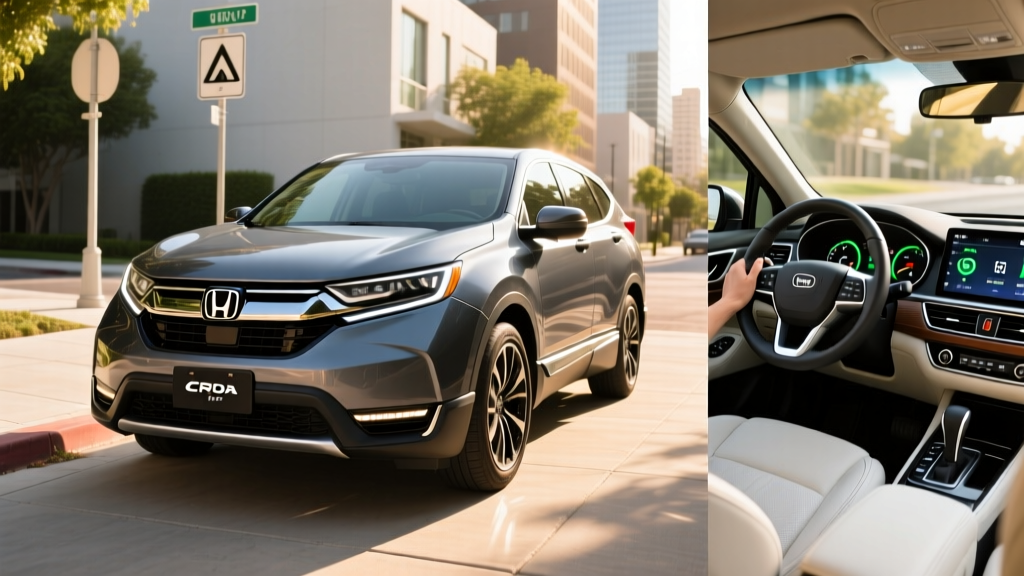
The 2023 Honda CR-V Hybrid is a conventional hybrid electric vehicle (HEV) — not a plug-in — that pairs a 2.0-liter Atkinson-cycle four-cylinder engine with a two-motor hybrid system to deliver 204 combined horsepower and standard all-wheel drive across all trims. EPA-rated at 40 MPG combined (43 city / 36 highway), it targets buyers who want electrified efficiency without plugging in, charging infrastructure concerns, or range anxiety.
For 2023, Honda expanded the CR-V Hybrid from a single trim into three: Sport, Sport-L, and Sport Touring. This was a deliberate move to make the hybrid powertrain accessible at a lower price point while positioning it as the performance-oriented variant in the CR-V lineup. The result is a compact SUV that outperforms its gas-only sibling in both power and fuel economy, with minimal compromise.
| Specification | 2023 Honda CR-V Hybrid |
|---|---|
| Powertrain Type | Conventional Hybrid (HEV) — no plug-in required |
| Engine | 2.0L Atkinson-cycle DOHC i-VTEC 4-cylinder |
| Electric Motors | Dual-motor hybrid system |
| Combined Horsepower | 204 hp |
| Combined Torque | 247 lb-ft (electric motor) |
| Drivetrain | Standard Real Time AWD™ |
| Transmission | Electronic Continuously Variable (e-CVT) |
| EPA Fuel Economy (Combined) | 40 MPG |
| EPA City / Highway | 43 city / 36 highway |
| Fuel Tank Capacity | 14.0 gallons |
| Total Driving Range | ~560 miles (EPA est.) |
| 0-60 mph (est.) | ~7.8 seconds |
| Cargo Volume (behind rear seats) | 36.3 cu ft |
| Cargo Volume (rear seats folded) | 76.5 cu ft |
| Towing Capacity | 1,000 lbs |
| Hybrid Battery Warranty | 8 years / 100,000 miles (10 yr/150k in CARB states) |
| Base MSRP (Sport AWD) | $32,950 |
| Top Trim MSRP (Sport Touring AWD) | $38,600 |
HEV vs PHEV: What the 2023 CR-V Hybrid Is (and Isn't)
A common source of confusion for compact SUV shoppers is the difference between a conventional hybrid and a plug-in hybrid. The 2023 Honda CR-V Hybrid is strictly a conventional hybrid (HEV). Honda does not offer a plug-in hybrid (PHEV) version of the CR-V in the U.S. market.
| Feature | Conventional Hybrid (HEV) | Plug-in Hybrid (PHEV) |
|---|---|---|
| Plug-in charging required? | No — refuels at any gas station | Yes — Level 1 or Level 2 AC charging |
| Electric-only driving range | Less than 1 mile (low-speed assist only) | Typically 20-45 miles on battery alone |
| Battery size | ~1.0-1.3 kWh (small, self-charging) | 13-20+ kWh (larger, grid-chargeable) |
| Federal tax credit (§30D) | Not eligible | Up to $7,500 if criteria met |
| Best for | Drivers who can't charge at home | Drivers with home/work charging access |
| 2023 Honda CR-V availability | ✅ Yes — Sport, Sport-L, Sport Touring | ❌ Not offered in the U.S. |
This distinction matters for two reasons. First, the CR-V Hybrid never needs to be plugged in — it regenerates energy during braking and deceleration to recharge its small lithium-ion battery pack. You simply fill it at a gas station like any other vehicle. Second, because it is not a PHEV or a battery-electric vehicle (BEV), the CR-V Hybrid does not qualify for the federal §30D clean vehicle tax credit (which requires plug-in capability and a minimum battery capacity of 7 kWh). More on tax implications below.
Fuel Economy: EPA Ratings vs Real-World MPG
According to fueleconomy.gov, the 2023 Honda CR-V Hybrid AWD is rated at:
| Driving Condition | EPA Rating |
|---|---|
| City | 43 MPG |
| Highway | 36 MPG |
| Combined | 40 MPG |
The city-highway split tells an important story about how this hybrid system works. Like most conventional hybrids, the CR-V Hybrid excels in city driving where frequent stops allow the regenerative braking system to recapture energy and the electric motors to handle low-speed propulsion. At highway speeds, the gasoline engine does most of the work, which is why highway MPG drops to 36.
Real-World MPG Expectations
In real-world driving, many CR-V Hybrid owners report achieving or slightly exceeding the EPA combined figure during mixed city and suburban commuting — often seeing 41-44 MPG in stop-and-go traffic. This is a common pattern with Honda's hybrid system: the EPA city rating is conservative relative to actual urban efficiency.
However, several conditions will reduce fuel economy below the EPA sticker:
- Sustained highway driving above 70 mph: Expect 33-35 MPG. Aerodynamic drag increases exponentially at higher speeds, and the hybrid system provides minimal electric assist at cruise.
- Cold weather (below 32°F): Engine runs more frequently to maintain cabin heat and battery temperature. Expect a 10-15% reduction, bringing combined MPG to roughly 34-36.
- Mountainous terrain: Uphill segments consume significantly more fuel, though downhill regenerative braking partially offsets this.
- Heavy cargo or towing: The 1,000-lb towing capacity is modest, but any loaded condition will reduce efficiency.
Compared to the gas-only 2023 CR-V (AWD, 1.5L turbo), which is EPA-rated at 30 MPG combined (29 city / 32 highway), the hybrid delivers a 33% improvement in combined fuel economy — a meaningful gap that compounds over years of ownership.
Powertrain and Performance: 204 HP with Standard AWD
The 2023 CR-V Hybrid's two-motor hybrid system represents Honda's fourth-generation hybrid architecture. The setup pairs the 2.0-liter Atkinson-cycle engine (which produces 145 hp on its own) with two electric motors integrated into the e-CVT transaxle. Combined system output is 204 horsepower, with the primary drive motor generating 247 lb-ft of torque.
What makes this system effective is how it manages power delivery. Under light acceleration and at low speeds, the CR-V Hybrid operates primarily on electric power, drawing from the battery pack that was charged during prior braking events. During moderate acceleration, the engine and motor work in concert. Under hard acceleration, the engine directly drives the wheels while the electric motor supplements torque — this is where the 204 hp combined figure comes into play.
The standard Real Time AWD™ system uses a mechanical rear driveshaft (not an independent rear electric motor, as some competitors use). This means AWD engagement is managed through a conventional coupling, which is effective for traction but doesn't offer the torque-vectoring precision of an electric rear axle. For most buyers, this is a non-issue — the system provides confident grip in rain and light snow.
The estimated 0-60 mph time of approximately 7.8 seconds positions the CR-V Hybrid as adequately quick for daily driving — noticeably faster than the gas-only 1.5T CR-V AWD (roughly 8.5 seconds) thanks to the electric motor's instant torque delivery off the line.
Pricing, Trims, and Tax Credit Eligibility
Honda offers the 2023 CR-V Hybrid in three trims, all with standard AWD:
| Trim | MSRP (incl. destination) | Key Features |
|---|---|---|
| Sport | $32,950 | 18" alloy wheels, 7" touchscreen, wireless Apple CarPlay/Android Auto, Honda Sensing suite, heated front seats |
| Sport-L | $35,295 | Leather-trimmed seats, 9" touchscreen, wireless phone charger, power liftgate, heated side mirrors |
| Sport Touring | $38,600 | BOSE 12-speaker audio, heated steering wheel, heated rear seats, panoramic moonroof, hands-free liftgate, navigation |
Federal Tax Credit Status
The 2023 Honda CR-V Hybrid does not qualify for the federal §30D Clean Vehicle Credit. Under current IRS rules, the §30D credit applies only to plug-in electric vehicles (BEVs and PHEVs) with a battery capacity of at least 7 kWh. As a conventional hybrid with a battery pack well under 2 kWh, the CR-V Hybrid is ineligible regardless of buyer income or MSRP.
Some states and localities offer separate incentives for hybrid vehicles, though these are less common than EV-specific rebates. Check your state energy office or the AFDC state incentive database for any applicable local programs. These vary by jurisdiction and change frequently, so consult official state sources for current availability.
Cost-of-Ownership Comparison: Hybrid vs Gas CR-V
The hybrid carries a price premium over the gas-only CR-V. The 2023 CR-V EX AWD (gas, comparable equipment to the Sport-L Hybrid) starts around $35,295 — close to the Sport-L Hybrid's $35,295 MSRP. However, the entry-level Sport Hybrid at $32,950 undercuts many gas trims while offering more power and better fuel economy, making the hybrid the stronger value proposition for most buyers.
At 15,000 miles per year and $3.50/gallon regular unleaded, the CR-V Hybrid (40 MPG) would cost approximately $1,313 per year in fuel, compared to roughly $1,750 per year for the gas-only CR-V AWD (30 MPG). That's a savings of about $437 per year, or $2,185 over five years — a modest but real advantage that grows as fuel prices rise.
Battery Warranty, Reliability, and Replacement Costs
2023 Honda CR-V Hybrid Battery Warranty:
- Standard coverage: 8 years / 100,000 miles (whichever comes first)
- CARB-state coverage: 10 years / 150,000 miles (California, Colorado, Connecticut, Delaware, Maine, Maryland, Massachusetts, New Jersey, New York, Oregon, Pennsylvania, Rhode Island, Vermont, Virginia, Washington, and Washington D.C.)
- Coverage threshold: Honda covers battery capacity loss that results in a measurable performance failure — typically defined as the battery no longer holding sufficient charge to operate the hybrid system effectively
Long-Term Reliability Outlook
Honda's hybrid systems have demonstrated strong long-term reliability. The fourth-generation two-motor architecture used in the 2023 CR-V Hybrid is a mature design with roots tracing back to the Accord Hybrid and Insight. Unlike early-generation hybrid systems from the 2000s, modern Honda hybrid batteries use lithium-ion chemistry with sophisticated thermal management, which significantly extends cell lifespan.
Based on historical data from Honda's hybrid fleet, the lithium-ion battery pack in the CR-V Hybrid is expected to last well beyond 150,000 miles under normal driving conditions before experiencing meaningful degradation. The hybrid battery is not a wear item in the same way a 12V auxiliary battery is — it is designed to last the life of the vehicle for most owners.
Battery Replacement Cost
If the hybrid battery does require replacement outside of warranty, expect a cost in the range of $2,000 to $4,000 for a replacement pack plus labor at a Honda dealership. Third-party and refurbished battery options may reduce this cost. For context, this is comparable to a major transmission repair on a conventional vehicle — a significant but not catastrophic expense, and one that the vast majority of owners will never face.
The conventional powertrain warranty covers 5 years / 60,000 miles, and the limited vehicle warranty covers 3 years / 36,000 miles. Honda Sensing safety systems and electronics carry their own coverage terms detailed in the new-vehicle warranty booklet.
Who Should Choose the 2023 CR-V Hybrid vs an EV or Gas Car?
Pros
- 40 MPG combined with standard AWD — no plug-in required
- 204 hp outperforms the gas-only CR-V in acceleration and passing power
- Sport trim starts at $32,950 — competitive with gas trims
- Strong real-world city MPG (often exceeds EPA 43 city rating)
- 8-year / 100k-mile hybrid battery warranty (10/150k in CARB states)
- No charging infrastructure dependency — works anywhere with a gas station
- Spacious cargo area (36.3 cu ft) with no battery-pack intrusion
- Honda Sensing ADAS suite standard on all trims
Cons
- No federal tax credit eligibility (not a plug-in vehicle)
- Highway MPG (36) trails city MPG — less efficient on long road trips
- Only 1,000-lb towing capacity (lower than some competitors)
- No PHEV option for drivers who want electric-only commuting
- Cold-weather fuel economy drops 10-15%
- Base Sport trim uses a 7" screen (upgrading requires Sport-L or above)
Decision Framework: Is the CR-V Hybrid Right for You?
Choose the 2023 CR-V Hybrid if:
- You cannot charge a vehicle at home or work (no garage, apartment living, no workplace chargers)
- Your driving is primarily city and suburban, where the hybrid system delivers peak efficiency
- You want AWD capability for rain, snow, or light trails without the fuel penalty of a gas-only AWD SUV
- You plan to keep the vehicle 5+ years and want proven Honda reliability with hybrid fuel savings
- You want lower running costs than a gas car but aren't ready for a full EV or PHEV
Consider a PHEV (like the Toyota RAV4 Prime) instead if:
- You have reliable Level 2 charging at home and a commute under 40 miles
- You want electric-only daily driving with a gas engine for road trips
- You want to potentially qualify for the federal §30D tax credit (up to $7,500, subject to income, MSRP, and battery-sourcing rules)
Consider a full BEV (like the Hyundai Ioniq 5 or Tesla Model Y) instead if:
- You have home charging and your daily driving is under 250 miles
- You want zero tailpipe emissions and the lowest per-mile energy cost
- You want access to the full federal tax credit and HOV lane access (where applicable)
Stick with the gas CR-V (1.5T) if:
- Your budget is strictly under $30,000 (the gas CR-V LX AWD starts lower)
- You primarily drive long highway miles where the hybrid's city efficiency advantage is minimized
- You need maximum towing capacity (the gas CR-V is rated at 1,500 lbs vs 1,000 lbs for the hybrid)
Frequently Asked Questions
How many MPG does the 2023 Honda CR-V Hybrid get?
The EPA rates the 2023 CR-V Hybrid AWD at 43 MPG city, 36 MPG highway, and 40 MPG combined. In real-world city and suburban driving, many owners report 41-44 MPG. Highway-heavy driving at speeds above 70 mph typically yields 33-35 MPG.
Does the 2023 CR-V Hybrid need to be plugged in?
No. The CR-V Hybrid is a conventional hybrid (HEV). It charges its own battery through regenerative braking and the gasoline engine. You refuel it exclusively at a gas station — no plug, no charger, no charging station visits required.
How far can the CR-V Hybrid drive on electric power alone?
Less than one mile at very low speeds (under 25 mph) in ideal conditions. The hybrid system uses electric propulsion for initial acceleration and low-speed crawling, but the battery is too small (~1.3 kWh) to provide meaningful electric-only range. This is by design — the system optimizes the blend of gas and electric for maximum overall efficiency, not electric-only distance.
Is the 2023 CR-V Hybrid reliable?
Honda's hybrid powertrains have a strong reliability track record, and the fourth-generation two-motor system in the 2023 CR-V is a proven design. The hybrid battery is covered by an 8-year/100,000-mile warranty (10 years/150,000 miles in CARB states), and real-world data from Honda's hybrid fleet suggests the battery typically lasts well beyond 150,000 miles. According to IIHS, the 2023 CR-V earned top safety ratings, which supports the overall build quality of the platform.
What does a CR-V Hybrid battery replacement cost?
Outside of warranty, expect $2,000-$4,000 for a replacement hybrid battery pack including labor at a Honda dealer. However, most owners will never need to replace the hybrid battery — it is designed to last the life of the vehicle under normal conditions.
Does the 2023 Honda CR-V Hybrid qualify for any tax credit?
No. The federal §30D Clean Vehicle Credit requires plug-in capability and a minimum battery capacity of 7 kWh. The CR-V Hybrid is a conventional hybrid with a battery well under 2 kWh, so it does not qualify. Some states may offer minor hybrid incentives — check your state's energy office for current programs.
How does the CR-V Hybrid compare to the Toyota RAV4 Hybrid?
The 2023 Toyota RAV4 Hybrid (AWD) is EPA-rated at 41 MPG combined (41 city / 38 highway) with 219 hp. The CR-V Hybrid trails by 1 MPG combined but offers a more car-like driving experience, a newer interior design for 2023, and a lower entry price ($32,950 vs the RAV4 Hybrid's ~$33,500+ starting point). The RAV4 Hybrid has a slight edge in highway MPG and towing capacity (1,750 lbs). Both are strong choices — the decision often comes down to brand preference, dealer availability, and specific trim pricing in your area.
What is the total driving range of the 2023 CR-V Hybrid?
With a 14.0-gallon fuel tank and a 40 MPG combined rating, the CR-V Hybrid delivers approximately 560 miles of total range. In real-world mixed driving, expect 500-540 miles between fill-ups. This exceeds the range of most battery-electric vehicles and eliminates any range-anxiety concern for road trips.