Quick Verdict: The Family SUV That Bridges Gas and Electric
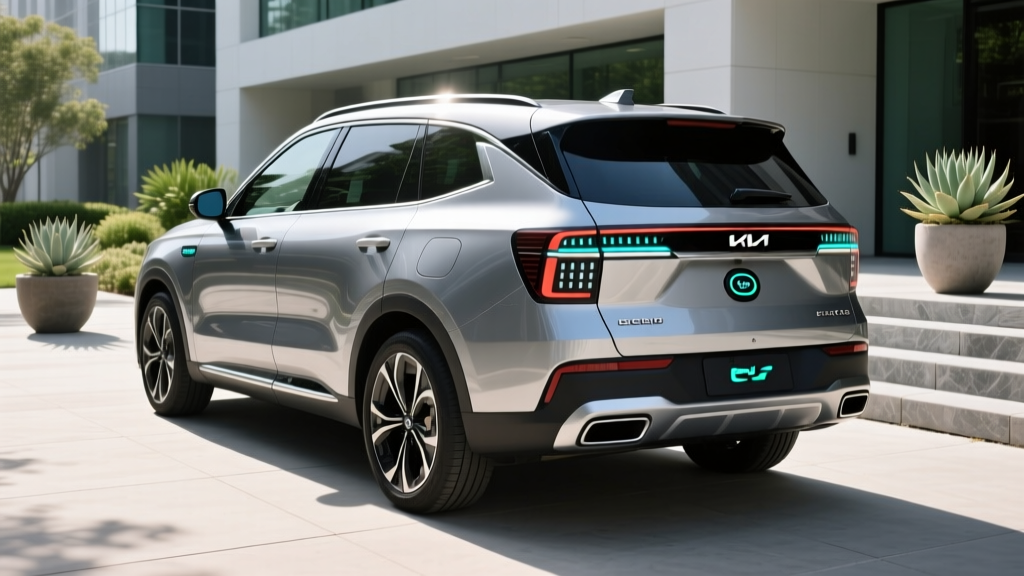
The 2025 Kia Sorento Hybrid occupies a practical middle ground for families who want electric-like city efficiency without committing to a full battery-electric vehicle. Available as both a conventional hybrid (HEV) and a plug-in hybrid (PHEV), the three-row Sorento delivers up to 36 MPG combined in HEV form or 32 miles of electric-only driving in PHEV guise — all while offering seating for six or seven and standard all-wheel drive.
For buyers cross-shopping the Toyota Highlander Hybrid, Honda CR-V Hybrid, or Ford Escape PHEV, the Sorento stands out with its dual powertrain strategy and Kia's class-leading warranty. But the real question is which version — HEV or PHEV — matches your driving pattern, charging access, and budget.
HEV vs PHEV: Which 2025 Sorento Hybrid Is Right for You?
Kia offers the Sorento with two distinct electrified powertrains. Confusing them is easy at the dealership, but the ownership experience differs significantly.
| Attribute | Sorento Hybrid (HEV) | Sorento Plug-In Hybrid (PHEV) |
|---|---|---|
| Powertrain | 1.6L turbo + electric motor | 1.6L turbo + larger electric motor |
| Combined Horsepower | 227 hp | 261 hp |
| Battery Capacity | 1.49 kWh (self-charging) | 13.8 kWh (plug-in capable) |
| EPA Combined MPG / MPGe | 36 MPG combined | 79 MPGe (electric) / 34 MPG (gas-only) |
| Electric-Only Range | N/A — motor assists engine only | 32 miles EPA |
| Requires Plug-In Charging? | No — regenerative braking charges battery | No, but plugging in unlocks EV range |
| DC Fast Charging | N/A | Not available (Level 2 AC only) |
| Level 2 Charge Time (0–100%) | N/A | ~3 hours 25 minutes (at 7.2 kW) |
| Drivetrain | AWD standard | AWD standard |
| Starting MSRP | ~$38,690 (S trim) | ~$50,290 (SX Prestige) |
The HEV is the simpler proposition: you never plug it in, the 1.6-liter turbocharged engine and electric motor work together seamlessly, and you get consistently strong fuel economy in city and highway driving. Think of it as a more efficient gas SUV — no behavior change required.
The PHEV is for drivers who can charge at home or work and whose daily commute falls under ~30 miles. Plug in overnight, drive on electricity alone most weekdays, and the gas engine handles longer road trips. Without plugging in, the PHEV reverts to a heavier, less efficient hybrid — you're carrying 13.8 kWh of battery you never use.
Fuel Economy: EPA Ratings and Real-World MPG
According to fueleconomy.gov, the 2025 Sorento Hybrid (HEV) earns the following EPA estimates:
| Driving Cycle | MPG |
|---|---|
| City | 36 MPG |
| Highway | 36 MPG |
| Combined | 36 MPG |
For the PHEV, the EPA rates it at 79 MPGe when operating on electricity (accounting for the energy content of grid electricity vs gasoline) and 34 MPG combined once the battery is depleted and the gas engine takes over.
Real-World MPG: What Owners Actually See
Hybrid powertrains typically overperform their EPA city ratings in stop-and-go traffic, where regenerative braking recaptures energy constantly. The Sorento HEV's equal city/highway rating reflects the turbocharged engine's efficiency profile — unlike some hybrids that lean heavily on electric assist at low speeds, the Sorento's 1.6T is efficient across the board.
In mixed real-world driving, owners report 34–38 MPG in the HEV depending on terrain, climate, and driving style. Highway-heavy commutes at 75+ mph tend to pull figures toward the lower end, while suburban driving with frequent stops pushes toward the upper range. Cold weather reduces efficiency by roughly 5–10% due to cabin heating demands and reduced battery performance — a pattern consistent across all hybrids.
The PHEV's real-world electric range hovers around 28–34 miles depending on temperature and driving speed. In warm weather with moderate speeds, some owners exceed the 32-mile EPA estimate. In winter, expect closer to 25–27 miles before the engine engages.
Powertrain Deep Dive: What Moves the Sorento Hybrid
Both the HEV and PHEV share Kia's 1.6-liter turbocharged inline-four as the combustion component, but the electric motor output and battery capacity differ substantially.
| Specification | HEV | PHEV |
|---|---|---|
| Engine | 1.6L turbocharged I-4 | 1.6L turbocharged I-4 |
| Engine Output | 178 hp / 195 lb-ft | 178 hp / 195 lb-ft |
| Electric Motor Output | 47.7 kW (~64 hp) | 72 kW (~97 hp) |
| Combined System Output | 227 hp / 258 lb-ft | 261 hp / 258 lb-ft |
| Transmission | 6-speed automatic | 6-speed automatic |
| Battery Chemistry | Lithium-ion polymer | Lithium-ion polymer |
| Battery Capacity | 1.49 kWh | 13.8 kWh |
| 0–60 mph (est.) | ~7.5 seconds | ~6.5 seconds |
| Towing Capacity | 2,000 lbs | 2,000 lbs |
| Seating | 6 or 7 passengers | 6 passengers (captain's chairs) |
The PHEV's larger motor gives it noticeably stronger acceleration, particularly from a stop where electric torque fills in before the turbo spools. On highway merges and passing maneuvers, the 261-hp combined output feels confident for a vehicle of this size. The HEV's 227 hp is adequate for daily driving but can feel strained when fully loaded with passengers and cargo on steep grades.
Neither version offers DC fast charging. The PHEV charges via its J1772/Level 2 port at up to 7.2 kW, meaning a full charge from empty takes roughly 3.5 hours on a home Level 2 charger. On a standard 120V household outlet (Level 1), expect 10–12 hours — sufficient for overnight replenishment if your daily electric use is moderate.
Pricing, Trims, and Tax Credit Eligibility
The 2025 Sorento Hybrid lineup is structured across several trims, with the HEV spanning a wider range and the PHEV limited to higher-end configurations:
- Sorento HEV S: ~$38,690 MSRP
- Sorento HEV EX: ~$41,690 MSRP
- Sorento HEV SX Prestige: ~$45,090 MSRP
- Sorento PHEV SX Prestige: ~$50,290 MSRP (PHEV-exclusive trim)
Destination charges add approximately $1,390 to all trims.
Does the 2025 Sorento PHEV Qualify for a Federal Tax Credit?
Under current IRS §30D Clean Vehicle Credit rules, the Sorento PHEV's eligibility is complex. The federal credit of up to $7,500 requires the vehicle to meet battery component and critical minerals sourcing thresholds, MSRP caps ($80,000 for SUVs), and buyer income limits ($150,000 single / $300,000 joint modified AGI).
As of the 2025 model year, the Sorento PHEV's Korean-assembled battery sourcing has made full credit eligibility uncertain — Kia's official guidance and the IRS's periodically updated qualifying vehicle list should be consulted before purchase. Point-of-sale transfer of the credit is available for qualifying vehicles, effectively reducing your dealer price at purchase.
§30D Eligibility Checklist (verify before purchase):
- Vehicle MSRP under $80,000 (SUV cap) — Sorento PHEV qualifies ✓
- Buyer MAGI under $150K single / $300K joint — varies by buyer
- Battery critical minerals and component sourcing thresholds — verify current-year status with dealer or IRS
- Final assembly in North America — Sorento is assembled in West Point, Georgia ✓
- Purchased new from a licensed dealer (not a private sale)
The conventional HEV does not qualify for the §30D federal credit — that incentive is reserved for plug-in vehicles with battery capacity of at least 7 kWh. Some states and utilities offer separate rebates for conventional hybrids; check your local programs.
Battery Longevity, Warranty, and Replacement Costs
Hybrid battery anxiety remains a top concern for buyers transitioning from conventional gas vehicles. Here's what the data shows for the Sorento:
Kia Hybrid/PHEV Battery Warranty:
- Coverage: 10 years / 100,000 miles (whichever comes first)
- Capacity threshold: Warranty covers defects and significant capacity loss — typically below 70% of original capacity
- Transferability: Powertrain warranty is transferable to second owners (reduced to 5yr/60,000mi for subsequent owners on some components)
- Additional coverage: Hybrid system components (inverter, electric motor, control units) also covered under the 10yr/100,000mi powertrain warranty
Kia's 10-year/100,000-mile hybrid battery warranty is among the strongest in the segment, matching Hyundai's coverage and exceeding Toyota's 10-year/150,000-mile hybrid battery warranty for the HEV battery specifically. In practice, modern lithium-ion hybrid batteries rarely require replacement within the warranty period. The Sorento HEV's small 1.49 kWh battery undergoes shallow charge-discharge cycles (it never fully depletes or fully charges), which dramatically extends cell life.
The PHEV's larger 13.8 kWh battery sees deeper cycling but benefits from active thermal management. Real-world data from earlier-generation Kia PHEVs (Niro, Optima) suggests 5–8% degradation over 100,000 miles under normal use — meaning your 32-mile electric range might become ~29–30 miles after a decade of driving.
Out-of-Warranty Replacement Cost
If battery replacement is needed beyond the warranty window, expect:
- HEV battery: $2,000–$3,500 (smaller pack, lower cost)
- PHEV battery: $6,000–$9,000 (larger pack, higher cost)
These figures include parts and labor at a Kia dealership. Independent hybrid specialists may offer refurbished packs at 30–40% less. Given Kia's warranty terms and the proven longevity of modern lithium-ion cells, most original owners will never face this expense.
Who Should Choose the Sorento Hybrid vs a Full EV or Gas SUV?
The Sorento Hybrid and PHEV serve specific buyer profiles. Here's a decision framework:
Choose the Sorento HEV if:
- You cannot charge at home or work (no garage, apartment living, street parking)
- You want maximum simplicity — no plugs, no apps, no charging networks
- Your annual mileage is moderate (10,000–15,000 miles) and you want to reduce fuel costs 25–35% vs a gas-only midsize SUV
- You need three rows and AWD in a sub-$45,000 package
Choose the Sorento PHEV if:
- You can install a Level 2 charger at home and your daily commute is under 30 miles
- You want electric-only weekday driving but need gas-engine range for weekend road trips
- You want to reduce gasoline consumption by 60–80% without range anxiety
- The price premium over the HEV (~$5,000–$8,000 depending on trim) is acceptable given your fuel savings timeline
Choose a full EV (e.g., Kia EV9, Hyundai Ioniq 5) if:
- You have reliable home charging and your trips rarely exceed 250 miles
- You want zero tailpipe emissions and minimal maintenance (no oil changes, no transmission)
- You're eligible for the full $7,500 federal tax credit on a qualifying BEV
- You're comfortable with public DC fast charging for road trips
The Sorento HEV's closest competitor is the Toyota Highlander Hybrid (35 MPG combined, larger interior, higher starting price). The PHEV competes in a thinner segment — the Toyota RAV4 Prime offers 42 miles of EV range but only two rows, while the Mitsubishi Outlander PHEV provides three rows but with lower overall refinement.
Pros
- 36 MPG combined (HEV) with no plug-in requirement
- Standard AWD across all hybrid trims
- Three-row seating in a midsize footprint
- 10-year/100,000-mile hybrid battery warranty
- PHEV version offers genuine 32-mile electric commute capability
- Strong safety ratings from NHTSA and IIHS
Cons
- PHEV limited to top SX Prestige trim — high entry price
- No DC fast charging on PHEV (Level 2 only)
- Third row is tight for adults on longer trips
- 2,000-lb towing capacity trails some V6 competitors
- PHEV cargo space slightly reduced by larger battery pack
- Federal tax credit eligibility for PHEV uncertain — verify before purchase
Frequently Asked Questions
How many MPG does the 2025 Kia Sorento Hybrid get?
The Sorento HEV is EPA-rated at 36 MPG city, 36 MPG highway, and 36 MPG combined. Real-world owners typically report 34–38 MPG depending on driving conditions. The PHEV achieves 79 MPGe on electricity and 34 MPG combined once the battery depletes.
How far can the Sorento PHEV go on electric only?
The EPA rates the Sorento PHEV at 32 miles of electric-only range. Real-world results vary from about 25 miles in cold weather to 34 miles in mild conditions with moderate speeds. This covers most daily commutes when charged overnight.
Do I need to plug in the Sorento Hybrid (HEV)?
No. The conventional HEV charges its small battery entirely through regenerative braking and the gas engine. You fuel it like any other gas vehicle. Only the PHEV version benefits from plug-in charging — and even the PHEV will operate as a regular hybrid if you don't plug it in.
Is the 2025 Sorento Hybrid reliable?
Kia's hybrid powertrain has demonstrated strong reliability in the Niro and earlier Sorento Hybrid generations. The 10-year/100,000-mile hybrid battery and powertrain warranty provides substantial protection. IIHS has rated recent Sorento models highly for crashworthiness, and the hybrid variant shares the same platform.
Does the 2025 Sorento Hybrid qualify for a tax credit?
The conventional HEV does not qualify for the federal §30D clean vehicle credit (it's reserved for plug-in vehicles). The PHEV may qualify for up to $7,500 depending on current battery sourcing rules, your income, and MSRP caps. Check the IRS Clean Vehicle Credit page and confirm with your dealer before purchasing.
What's the total range of the Sorento PHEV?
With a full battery and a full 15.8-gallon tank, the PHEV delivers approximately 32 miles of electric driving plus roughly 450+ miles on gasoline, for a combined total range exceeding 480 miles. This eliminates range anxiety entirely for road trips.
How long does it take to charge the Sorento PHEV?
On a Level 2 home charger (240V, 7.2 kW), a full charge takes about 3 hours and 25 minutes. On a standard 120V outlet (Level 1), expect 10–12 hours. The PHEV does not support DC fast charging — this is typical for plug-in hybrids in this class.