Quick Verdict: The 2026 Highlander Hybrid Platinum at a Glance
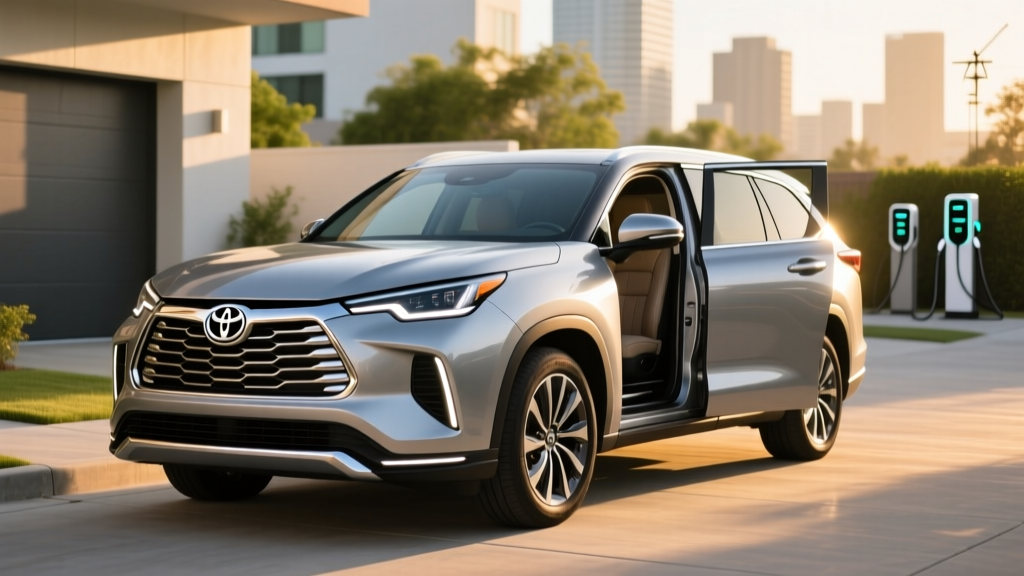
The 2026 Toyota Highlander Hybrid Platinum sits at the top of a three-row SUV lineup that has built its reputation on fuel-sipping efficiency rather than plug-in electrification. With an EPA-rated 35 MPG combined, seating for up to seven, and a premium feature set that rivals luxury competitors at a mainstream price, the Platinum trim is Toyota's play for buyers who want hybrid efficiency without the complexity — or cost — of a plug-in hybrid or full EV.
But does the range-topping Platinum justify its $54,000+ sticker? And how does real-world fuel economy stack up against the EPA label? This guide breaks down every number that matters.
Fuel Economy: EPA Ratings and Real-World MPG
Fuel economy is the Highlander Hybrid's headline act. The 2.5-liter four-cylinder engine paired with Toyota's fourth-generation hybrid system delivers numbers that would impress in a compact sedan, let alone a 4,600-pound three-row SUV.
| Metric | FWD | AWD (Platinum) |
|---|---|---|
| City MPG | 36 | 35 |
| Highway MPG | 35 | 34 |
| Combined MPG | 36 | 35 |
| Fuel Tank Capacity | 17.9 gal | 17.9 gal |
| Total Range (est.) | ~644 mi | ~626 mi |
Source: EPA Fuel Economy
Powertrain Specs: Engine, Motors, and Performance
The 2026 Highlander Hybrid Platinum uses Toyota's proven hybrid synergy drive with an electronically controlled continuously variable transmission (eCVT). The Platinum trim comes exclusively with electronic on-demand AWD, which adds a rear-mounted electric motor for all-wheel traction without a mechanical driveshaft.
| Specification | Detail |
|---|---|
| Gasoline Engine | 2.5L inline-4, DOHC, 186 hp / 173 lb-ft |
| Front Electric Motor | 134 hp / 199 lb-ft |
| Rear Electric Motor (AWD) | 54 hp / 89 lb-ft |
| Net Combined System Output | 243 hp |
| Transmission | eCVT (planetary gearset) |
| Drivetrain | Electronic On-Demand AWD |
| 0–60 mph | ~7.8 seconds |
| Towing Capacity | 3,500 lbs |
| Hybrid Battery | 1.6 kWh (NiMH), sealed, self-charging |
The 243 combined horsepower is adequate for daily driving and highway merging, though it won't win any drag races. The eCVT delivers seamless, shift-free acceleration — there's no traditional gear hunting. Where this powertrain shines is in low-speed responsiveness: the electric motors provide instant torque from a stoplight, making the Platinum feel quicker around town than its 7.8-second 0–60 time suggests.
Platinum Trim Features and Pricing
The Platinum is the top-of-the-line Highlander Hybrid trim for 2026, sitting above the Limited. It bundles nearly every available feature into a single package, eliminating the need for costly add-on packages.
| Trim | Drivetrain | MSRP |
|---|---|---|
| LE | FWD / AWD | ~$42,320 / ~$43,920 |
| XLE | FWD / AWD | ~$46,370 / ~$47,970 |
| Limited | FWD / AWD | ~$50,420 / ~$52,020 |
| Platinum | AWD | ~$54,070 |
Pricing reflects estimated 2026 MSRP including destination charge. Verify with your local Toyota dealer for exact pricing.
Platinum-exclusive features include a panoramic glass roof, a 12.3-inch touchscreen with wireless Apple CarPlay and Android Auto, a 1,200-watt JBL premium audio system with 11 speakers, heated and ventilated second-row captain's chairs, a head-up display, a 360-degree camera with curb-view, and Toyota's Advanced Park automated parking assist. You also get a panoramic-view monitor, digital rearview mirror, and a heated steering wheel.
Tax Credit and Incentive Eligibility
This is where hybrid buyers need to manage expectations. The 2026 Highlander Hybrid Platinum, as a conventional HEV, does not qualify for the federal §30D Clean Vehicle Credit. That credit — up to $7,500 — is reserved for plug-in electric vehicles (BEVs) and plug-in hybrids (PHEVs) that meet battery sourcing, MSRP, and buyer income requirements set by the IRS.
- ❌ Vehicle must be a BEV or PHEV (plug-in capable) — Highlander Hybrid is HEV only
- ❌ Battery capacity ≥ 7 kWh — Highlander's 1.6 kWh NiMH does not qualify
- ✅ MSRP under $80,000 (SUVs) — Platinum clears this bar
- ✅ Buyer income within limits ($150K single / $300K joint)
- ❌ Battery components and critical minerals must meet US-sourcing thresholds
Bottom line: No federal purchase credit applies. However, check your state — some states offer rebates for conventional hybrids. Consult a tax professional for your specific situation.
Battery Warranty, Reliability, and Replacement Cost
Hybrid battery longevity is consistently the top concern for first-time hybrid buyers. Toyota addresses this with one of the most comprehensive hybrid battery warranties in the industry.
- Coverage: 10 years / 150,000 miles (whichever comes first)
- What's covered: Hybrid battery pack, hybrid control module, inverter, and related hybrid system components
- Applies in: All 50 states (previously 10yr/150K was CARB states only; Toyota extended it nationwide starting with 2020 models)
- Transferable: Yes — warranty follows the vehicle, not the original owner
Toyota's hybrid batteries have demonstrated exceptional longevity in the field. The NiMH pack in the Highlander Hybrid is a mature, well-proven design — the same chemistry Toyota has refined over two decades of Prius and Camry Hybrid production. Real-world data from fleet operators and high-mileage owners shows most Toyota hybrid batteries last well beyond 150,000 miles without significant degradation.
If replacement is needed outside warranty, a new OEM hybrid battery for the Highlander Hybrid typically costs between $3,000 and $5,000 installed at a dealership. Independent hybrid specialists often offer refurbished or reconditioned packs for $1,500–$3,000. Given the 10-year/150,000-mile warranty and Toyota's reliability track record — the brand consistently tops Consumer Reports reliability rankings — this is a low-probability expense for most owners.
Highlander Hybrid vs PHEV vs EV: Which Fits Your Life?
The three-row family SUV market now offers conventional hybrids, plug-in hybrids, and full battery-electric options. Here's how to decide which powertrain matches your driving patterns and home setup.
| Factor | HEV (Highlander Hybrid) | PHEV (e.g., Grand Cherokee 4xe) | BEV (e.g., Kia EV9) |
|---|---|---|---|
| Plug in Required? | No | Yes (for EV mode) | Yes (always) |
| Electric-Only Range | None (EV assist only) | 25–40 mi typical | 230–300+ mi |
| Combined MPG / MPGe | 35 MPG | 56 MPGe / 24 MPG gas | 85–95 MPGe |
| Home Charging Needed? | No | Recommended (Level 2) | Essential (Level 2) |
| Federal Tax Credit | None | Up to $7,500* | Up to $7,500* |
| Fuel Cost (15K mi/yr) | ~$1,500 | ~$900–$1,400 | ~$500–$800 |
| Road Trip Ease | Excellent (gas stations) | Good (gas backup) | Planning required |
*Federal §30D credit subject to MSRP caps, income limits, and battery sourcing rules. Verify current eligibility at IRS.gov.
Choose the Highlander Hybrid (HEV) if: You can't charge at home (apartment, street parking), you take frequent long road trips, you want a proven powertrain with minimal lifestyle adjustment, and you prioritize low running costs without plug-in dependency.
Choose a PHEV three-row SUV if: You have home Level 2 charging, your daily commute is under 35 miles (covering most trips on electricity), and you want occasional gas-free driving with road-trip flexibility.
Choose a BEV three-row SUV if: You have reliable home charging, your daily driving is under 250 miles, you want the lowest per-mile fuel cost, and you're comfortable planning DC fast-charge stops on road trips.
Pros and Cons: The Honest Assessment
- 35 MPG combined in a 4,600-lb three-row SUV is outstanding
- No plug-in charging required — works with any lifestyle
- 10-year / 150,000-mile hybrid battery warranty nationwide
- Platinum trim is fully loaded — no expensive add-on packages
- Smooth, quiet hybrid powertrain with instant electric torque
- Strong Toyota resale value and reliability reputation
- 3,500-lb towing capacity covers most light trailers
- No federal tax credit — HEVs are excluded from §30D
- AWD Platinum pushes past $54K before options or dealer markups
- Third row is tight for adults — best for children
- No PHEV variant available — no electric-only driving mode
- eCVT drone under hard acceleration (common to Toyota hybrids)
- Highway MPG drops noticeably above 75 mph
- Infotainment system still lags some competitors in responsiveness
Ownership Costs: 5-Year Estimate
To put the Highlander Hybrid Platinum's value in context, here's a five-year ownership cost estimate compared to a gas-only three-row SUV competitor averaging 22 MPG combined.
| Cost Category | Highlander Hybrid Platinum | Gas SUV (22 MPG avg) |
|---|---|---|
| Fuel (at $3.50/gal avg) | ~$7,500 | ~$11,930 |
| Maintenance (est.) | ~$2,800 | ~$3,400 |
| Insurance (est.) | ~$9,000 | ~$8,500 |
| Total Fuel + Maint. Savings | ~$5,030 saved over 5 years |
The fuel savings alone — roughly $4,430 over five years at 15,000 miles per year — partially offset the Platinum's premium over a base LE trim. Hybrids also tend to have slightly lower maintenance costs thanks to regenerative braking reducing brake wear and the engine operating under less stress.
Frequently Asked Questions
How many MPG does the 2026 Highlander Hybrid Platinum actually get?
The EPA rates the AWD Highlander Hybrid at 35 city / 34 highway / 35 combined. In real-world mixed driving, most owners see 33–37 MPG. City-heavy routes with frequent stops tend to push the number higher (the hybrid system's sweet spot), while sustained highway driving above 75 mph can drop it to the high 20s.
Does the Highlander Hybrid have a plug-in (PHEV) version?
No. As of the 2026 model year, Toyota does not offer a plug-in hybrid Highlander in the United States. The Highlander Hybrid is a conventional HEV — it charges its small 1.6 kWh battery through regenerative braking and the gasoline engine. You never plug it in. If you need a Toyota PHEV, the RAV4 Prime offers 42 miles of electric-only range, but it's a two-row compact SUV.
Is the Highlander Hybrid reliable? What does battery replacement cost?
Toyota's hybrid system is among the most proven in the industry, with over 25 years of production history. The hybrid battery is covered by a 10-year / 150,000-mile warranty in all 50 states. Out-of-warranty replacement runs $3,000–$5,000 at a dealer, or $1,500–$3,000 through independent hybrid specialists. Most Toyota hybrid batteries last well beyond 150,000 miles in real-world use.
Does the 2026 Highlander Hybrid qualify for any tax credits?
The Highlander Hybrid does not qualify for the federal §30D Clean Vehicle Credit, which is reserved for plug-in vehicles (BEVs and PHEVs). Some states may offer hybrid-specific rebates or HOV lane access — check your state's energy or DMV website. Always consult a tax professional for your specific eligibility.
How does the Highlander Hybrid compare to the Kia Sorento Hybrid?
The Sorento Hybrid offers comparable fuel economy (EPA 34–37 MPG combined depending on trim) and a lower starting price, but it has less cargo space and a smaller third row. The Highlander Hybrid has a stronger reliability track record and better resale value. The Sorento PHEV variant does offer 32 miles of electric-only range if plug-in driving is a priority — something the Highlander lineup doesn't provide.
Is the Platinum trim worth the premium over the Limited?
The Platinum adds roughly $2,000–$2,500 over the Limited AWD and includes the panoramic roof, JBL audio, ventilated second-row seats, head-up display, and 360-degree camera as standard. If you were planning to add these features through packages on the Limited, the Platinum is the better value. If you're content without the panoramic roof and premium audio, the Limited delivers nearly identical mechanical performance at a lower price.