Quick Verdict: The Efficiency Bargain of the Compact Crossover Segment
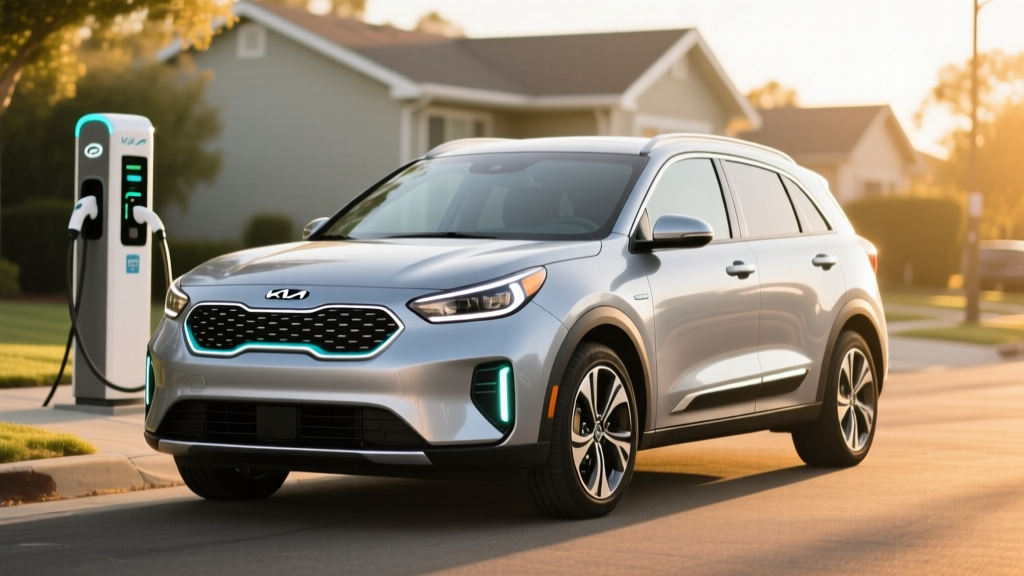
The 2024 Kia Niro Hybrid occupies a rare sweet spot: a compact crossover that returns sedan-level fuel economy without requiring a plug, a lifestyle change, or a premium price tag. With an EPA-estimated 53 MPG city and a starting MSRP under $28,000, it undercuts most competitors on cost-per-mile while offering more cargo space than a Prius. For buyers who want electrified efficiency but lack home charging access, the Niro HEV is one of the most practical vehicles on the market. For those who can plug in, the Niro PHEV variant adds 33 miles of electric-only range — a meaningful upgrade we'll dissect below.
Fuel Economy: EPA Numbers and Real-World MPG
| Metric | Niro HEV (LX/EX) | Niro HEV (SX Touring) | Niro PHEV |
|---|---|---|---|
| City MPG | 53 | 46 | 105 MPGe (electric+gas) |
| Highway MPG | 48 | 40 | 84 MPGe (electric+gas) |
| Combined MPG | 50 | 43 | 48 (gas only, after battery depletes) |
| PHEV Electric-Only Range | — | — | 33 miles |
| Total Range | ~560 miles | ~480 miles | ~430 miles (EV + gas) |
Source: fueleconomy.gov
HEV vs PHEV vs Full EV: Which Niro Fits Your Life?
Choosing between the Niro HEV, Niro PHEV, and a full battery-electric vehicle comes down to three variables: charging access, daily mileage, and budget.
| Factor | Niro HEV | Niro PHEV | Full EV (e.g., Niro EV) |
|---|---|---|---|
| Plug-in Required? | No | Yes (for EV range) | Yes (always) |
| Best For | No home charging, long trips | Home charging + short commutes | Home charging, low running cost |
| Daily Commute <30 mi | Good | Best (all-electric) | Best |
| Road-Trip Friendly? | Excellent | Excellent | Requires planning |
| Federal Tax Credit (§30D) | Not eligible | Not eligible (MSRP + sourcing) | Not eligible (Korea-built) |
| Base MSRP (2024) | $26,940 | $34,390 | $39,600 |
The decision framework:
- Choose the Niro HEV if you don't have reliable access to a plug at home or work, you take regular road trips beyond 300 miles, or you want maximum efficiency per dollar with zero behavioral change.
- Choose the Niro PHEV if you can install a Level 2 charger at home, your daily commute is under 33 miles round-trip (meaning you'll almost never burn gas on weekdays), and you still want the gas engine for weekend road trips.
- Choose a full EV if you have home charging, your daily driving rarely exceeds 150 miles, and you want the lowest per-mile energy cost and zero tailpipe emissions.
Powertrain Specs: What's Under the Hood
| Spec | Niro HEV | Niro PHEV |
|---|---|---|
| Engine | 1.6L GDI 4-cyl | 1.6L GDI 4-cyl |
| Engine HP | 104 hp | 104 hp |
| Electric Motor HP | 43 hp (32 kW) | 83 hp (62 kW) |
| Combined System HP | 139 hp | 180 hp |
| Combined Torque | 195 lb-ft | 195 lb-ft |
| Transmission | 6-speed DCT | 6-speed DCT |
| Battery Capacity | 1.56 kWh (lithium-ion) | 11.1 kWh (lithium-ion) |
| 0-60 mph (est.) | ~9.5 sec | ~7.2 sec |
| Drivetrain | FWD | FWD |
The HEV's 139 combined horsepower is adequate for commuting and highway merging but won't win any stoplight races. The PHEV's larger 83-hp motor and 11.1 kWh battery pack make a noticeable difference — the extra 41 horsepower cuts the 0-60 time by over two seconds and provides genuinely brisk electric-only acceleration around town. Both use Kia's 6-speed dual-clutch transmission rather than the CVT found in the Toyota Prius, which gives a more natural, stepped acceleration feel that many drivers prefer.
PHEV Charging Details
The Niro PHEV's 11.1 kWh battery charges via a standard J1772 connector:
- Level 1 (120V household outlet): Approximately 9 hours for a full charge — adequate if you plug in overnight.
- Level 2 (240V, 3.3 kW onboard charger): Approximately 2 hours 45 minutes from empty to full.
- DC Fast Charging: Not supported. The Niro PHEV cannot use CCS or CHAdeMO DC fast chargers. This is typical for PHEVs in this class — the battery is too small to benefit from high-power DC charging.
Pricing, Trims, and Tax Credit Eligibility
| 2024 Niro Trim | Type | MSRP | §30D Federal Credit |
|---|---|---|---|
| LX | HEV | $26,940 | Not eligible |
| EX | HEV | $29,640 | Not eligible |
| SX Touring | HEV | $32,640 | Not eligible |
| EX PHEV | PHEV | $34,390 | Not eligible |
| SX PHEV | PHEV | $37,490 | Not eligible |
Federal tax credit explanation: The 2024 Kia Niro — in both HEV and PHEV form — does not qualify for the IRS §30D Clean Vehicle Credit (up to $7,500). The reasons are twofold. First, the conventional HEV is not a plug-in vehicle and is categorically ineligible. Second, the PHEV variant is assembled in South Korea, and §30D requires final assembly in North America. Additionally, current IRS rules impose critical-mineral and battery-component sourcing requirements that further restrict eligible models. Always verify current eligibility on fueleconomy.gov before purchasing.
State and local incentives may still apply. Several states offer their own rebates or HOV-lane access for PHEVs and hybrids. Check your state's energy or environmental agency for current programs — these vary widely by jurisdiction and change frequently.
Battery Warranty, Reliability, and Replacement Costs
• Hybrid/PHEV battery: 10 years / 100,000 miles (whichever comes first)
• Powertrain (engine, transmission, motor): 10 years / 100,000 miles
• Basic bumper-to-bumper: 5 years / 60,000 miles
• Emissions components: 8 years / 80,000 miles (federal requirement)
Kia's 10-year/100,000-mile hybrid battery warranty is among the best in the industry and matches Hyundai's coverage. The battery is warranted to retain a minimum threshold of capacity — typically 70% of original — during the warranty period. If degradation falls below that threshold, Kia will repair or replace the battery at no cost.
How Long Will the Niro Hybrid Battery Last?
Based on data from Hyundai-Kia's hybrid platforms (shared with the Ioniq and Kona Hybrid), the lithium-ion battery packs in the Niro HEV and PHEV have demonstrated strong longevity. The 1.56 kWh HEV battery operates within a narrow state-of-charge window (roughly 40–80%), which dramatically reduces degradation stress. Real-world reports from high-mileage Niro and Ioniq hybrid owners suggest less than 10% capacity loss after 150,000 miles — well within normal parameters.
The PHEV's 11.1 kWh battery sees deeper cycling but benefits from active thermal management. Expect 8–12% degradation over 100,000 miles under normal use, which still leaves roughly 29 miles of electric range from the original 33.
Battery Replacement Cost
If the battery fails outside of warranty — uncommon but possible at very high mileage — replacement costs break down as follows:
- Niro HEV battery: $2,000–$3,500 (parts + labor). The small 1.56 kWh pack is relatively inexpensive.
- Niro PHEV battery: $5,000–$8,000 (parts + labor). The larger 11.1 kWh pack carries a higher parts cost.
For context, most owners will never face this expense. The battery is covered for a full decade, and by the time it might need replacement out of warranty, the vehicle's residual value will likely be lower than the repair cost — at which point a trade-in is the typical path.
Interior, Cargo, and Daily Practicality
The 2024 Niro rides on Kia's K3 platform and offers a surprisingly roomy interior for its compact footprint:
- Cargo volume: 22.8 cu ft behind rear seats (HEV) / 19.4 cu ft (PHEV, due to larger battery) / 63.7 cu ft with seats folded (HEV)
- Rear legroom: 39.8 inches — genuinely comfortable for adults on longer trips
- Infotainment: Standard 10.25-inch touchscreen with wireless Apple CarPlay and Android Auto on LX; dual 10.25-inch displays (instrument cluster + infotainment) on EX and above
- Driver assistance: Standard forward collision-avoidance assist, lane-keeping assist, blind-spot monitoring, and rear cross-traffic alert across all trims
Pros
- 53 MPG city (LX/EX) — among the best of any crossover
- 10-year/100,000-mile battery warranty
- No plug required (HEV) — zero lifestyle change
- Strong standard safety suite
- Spacious rear seat for the segment
- Under $27,000 starting MSRP
Cons
- No all-wheel-drive option
- SX Touring loses ~7 MPG combined
- No federal tax credit (HEV or PHEV)
- PHEV has no DC fast charging
- Modest 139 hp (HEV) — slow highway passing
- 1.56 kWh HEV battery can't drive electric-only at highway speeds
Ownership Cost Snapshot: Niro HEV vs Gas Competitor
To put the Niro's efficiency into financial context, here's a 5-year fuel cost comparison against a popular gas-only compact crossover (assuming 15,000 miles/year, $3.40/gallon regular, and 45% city / 55% highway driving):
| Vehicle | Combined MPG | Annual Fuel Cost | 5-Year Fuel Cost |
|---|---|---|---|
| 2024 Kia Niro HEV (EX) | 50 | $1,020 | $5,100 |
| 2024 Toyota RAV4 (gas, FWD) | 30 | $1,700 | $8,500 |
| 2024 Honda CR-V (gas, FWD) | 29 | $1,759 | $8,795 |
The Niro HEV saves roughly $3,400–$3,700 in fuel costs over five years compared to a typical gas-only compact SUV. Combined with its lower starting price, the total-cost-of-ownership advantage is significant — even without any tax credit.
Frequently Asked Questions
How many MPG does the 2024 Kia Niro Hybrid get?
The 2024 Kia Niro HEV in LX and EX trims is EPA-rated at 53 city / 48 highway / 50 combined MPG. The heavier SX Touring trim drops to 46/40/43 MPG. In real-world driving, many owners report exceeding the city estimate in stop-and-go traffic while highway mileage tracks close to the EPA number.
How far can the Niro PHEV go on electric only?
The 2024 Niro PHEV has an EPA-rated 33 miles of electric-only range on a full charge. At highway speeds or in cold weather, expect roughly 27–30 miles. For commutes under 33 miles round-trip with nightly charging, you may go weeks without the gas engine engaging.
Is the Kia Niro Hybrid reliable?
Kia's hybrid powertrain has proven reliable since its introduction in the 2017 Niro. The 6-speed dual-clutch transmission avoids the CVT-related complaints some competitors face, and the hybrid battery's 10-year/100,000-mile warranty provides long-term security. IIHS gave the 2024 Niro strong crash-test scores, adding to the ownership-confidence picture.
Does the 2024 Niro Hybrid qualify for any tax credit?
No. The Niro HEV is not a plug-in vehicle and is categorically ineligible for the federal §30D credit. The Niro PHEV, while a plug-in, is assembled in South Korea and does not meet the North American final-assembly requirement under current IRS rules. Some state-level incentives or utility rebates may apply — check your local programs.
What does it cost to replace the Niro hybrid battery?
Out-of-warranty replacement runs approximately $2,000–$3,500 for the HEV's small 1.56 kWh pack and $5,000–$8,000 for the PHEV's 11.1 kWh pack. However, the 10-year/100,000-mile warranty covers battery degradation below a minimum threshold, and real-world data suggests these batteries routinely outlast the warranty period with minimal capacity loss.
Should I get the Niro HEV, PHEV, or a full EV?
If you can't charge at home, the HEV is the clear choice — no plug needed, 50 MPG combined. If you can charge at home and commute under 33 miles, the PHEV lets you drive electric on weekdays while keeping the gas engine for road trips. If you have reliable home charging and rarely drive over 150 miles in a day, a full EV like the Niro EV or Hyundai Ioniq 5 will deliver the lowest operating cost. The Niro HEV remains the best option for buyers who want maximum simplicity and efficiency without changing any habits.