Quick Verdict: The Midsize Sedan That Sips Fuel Like a Compact
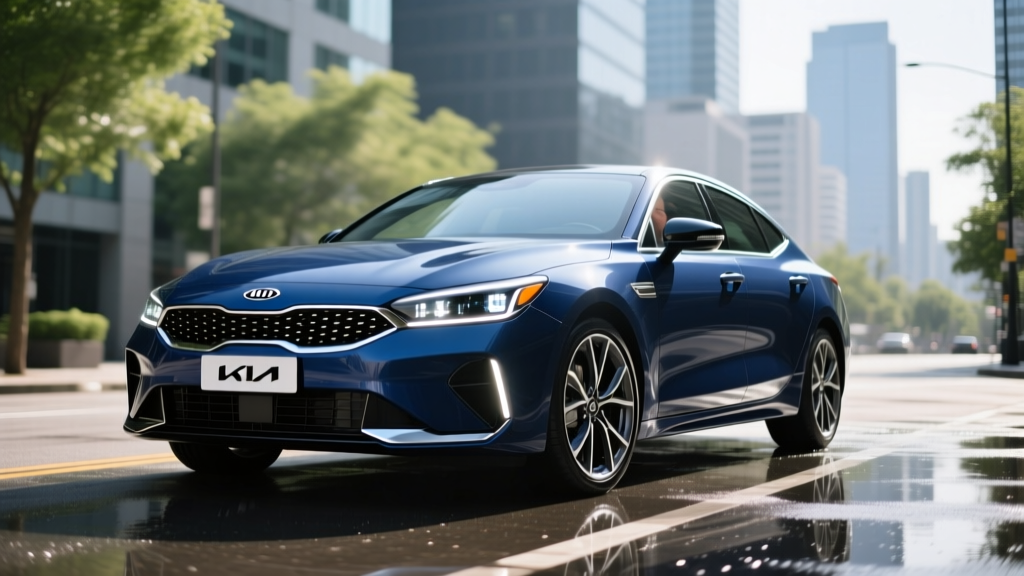
The 2026 Kia K5 Hybrid occupies a narrow but valuable lane: a midsize sedan with genuine rear-seat room and trunk space that returns compact-car fuel economy. With an EPA-estimated 47 MPG combined, the K5 Hybrid undercuts rivals like the Toyota Camry Hybrid and Honda Accord Hybrid on sticker price while delivering competitive efficiency. It doesn't plug in — this is a conventional hybrid (HEV), not a plug-in hybrid (PHEV) — meaning zero charging infrastructure anxiety and a powertrain that works exactly like a gas car at the pump.
For buyers who want sedan practicality without committing to a full battery-electric vehicle, the K5 Hybrid makes a compelling case. But it's not without trade-offs: the hybrid system prioritizes efficiency over performance, and highway MPG falls noticeably short of the city figure. Here's everything you need to know before signing the paperwork.
K5 Hybrid Powertrain: What's Under the Hood
The 2026 K5 Hybrid pairs a 1.6-liter turbocharged four-cylinder engine with an electric motor integrated into the transmission housing. This is Kia's proven TMED (Transmission-Mounted Electric Device) architecture, which has been refined over multiple generations of the Optima/K5 Hybrid lineage.
| Specification | Value |
|---|---|
| Engine | 1.6L turbocharged GDI 4-cylinder |
| Engine Output | 178 hp / 195 lb-ft torque |
| Electric Motor Output | 44 kW (59 hp) / 151 lb-ft torque |
| Combined System Output | 226 hp / 258 lb-ft torque |
| Transmission | 6-speed automatic (conventional torque converter) |
| Drivetrain | Front-wheel drive |
| Hybrid Battery | ~1.5 kWh lithium-ion (self-charging, no plug) |
| 0–60 mph (est.) | ~7.5 seconds |
The 6-speed automatic is a deliberate choice over a CVT. Kia's hybrid transmissions use a real gearset, which means more predictable acceleration feel and none of the "rubber-band" drone common in CVT-equipped hybrids. The trade-off is slightly less seamless low-speed electric assist compared to Toyota's e-CVT planetary gearset, but in practice the shifts are smooth enough that most drivers won't notice.
The 226 combined horsepower is meaningful context: this isn't a slow car. It's quicker than the Camry Hybrid (208 hp) and comparable to the Accord Hybrid (204 hp). You get real passing power on two-lane highways, not just adequate merging.
EPA Fuel Economy vs. Real-World MPG
| Cycle | MPG |
|---|---|
| City | 49 MPG |
| Highway | 44 MPG |
| Combined | 47 MPG |
Source: fueleconomy.gov
The K5 Hybrid's city-biased EPA split (49 city / 44 highway) reflects how hybrids work: regenerative braking recaptures energy in stop-and-go driving, and the electric motor handles low-speed loads where gas engines are least efficient. In real-world driving, expect:
- City / suburban commuting: 46–52 MPG (many owners exceed the EPA city figure in warm weather)
- Highway cruising at 70–75 mph: 39–43 MPG (aerodynamic drag and sustained engine load reduce hybrid advantage)
- Cold weather (below 35°F): Expect a 5–10% MPG drop due to cabin heating demands and reduced battery efficiency
- Mixed driving (typical owner): 43–48 MPG
Hybrids frequently beat their EPA city estimates because the test cycle's moderate speeds and frequent stops play directly to regenerative braking strengths. Highway is where the K5 Hybrid loses ground — at sustained 75+ mph, the turbo engine is doing most of the work with minimal electric assist. If your commute is 90% interstate, the advantage over a efficient gas sedan narrows considerably.
For comparison, the 2026 Toyota Camry Hybrid posts 51/49/50 MPG (LE trim) and the Honda Accord Hybrid delivers 51/44/48 MPG. The K5 trails the Camry slightly but matches or beats the Accord on highway, and it typically starts at a lower MSRP than both.
HEV vs. PHEV vs. Full EV: Which Powertrain Fits You?
The K5 is offered only as a conventional hybrid (HEV). Kia does not currently sell a K5 plug-in hybrid (PHEV) in the U.S. market. Understanding the distinction matters because it determines your fueling routine, upfront cost, and eligibility for incentives.
| Factor | K5 Hybrid (HEV) | Typical PHEV Sedan | Full EV (BEV) |
|---|---|---|---|
| Plug in to charge? | No — self-charging via regen and engine | Yes — Level 1 or Level 2 | Yes — Level 2 or DC fast charge |
| Electric-only range | 0 miles (electric assists only) | 25–45 miles typical | 250–350+ miles typical |
| Fuel/energy source | Gasoline only | Gasoline + electricity | Electricity only |
| Home charging install needed? | No | Recommended (Level 2) | Essential (Level 2) |
| Federal tax credit (§30D) | Not eligible | Up to $7,500 (if eligible) | Up to $7,500 (if eligible) |
| Maintenance complexity | Low — standard gas + hybrid system | Moderate — two full powertrains | Lowest — no engine, no oil changes |
| Best for | No home charging access; long highway miles | Short commutes + road trip flexibility | Home charging + mostly under 250 mi/day |
Choose the K5 Hybrid if: You can't install a home charger (apartment, street parking), you regularly drive 300+ miles between fill-ups, or you want hybrid efficiency without behavioral change.
Consider a PHEV if: Your daily commute is under 35 miles round-trip, you have Level 2 charging at home, and you want electric daily driving with gas-engine backup for road trips.
Go full EV if: You have reliable home charging, your daily driving is predictable, and you want to eliminate gas purchases and engine maintenance entirely.
Pricing, Trims, and Tax Credit Eligibility
| Trim | MSRP (incl. destination) |
|---|---|
| LXS | $30,490 |
| EX | $33,290 |
| SX Prestige | $37,090 |
The K5 Hybrid's pricing advantage is real. The LXS trim starts under $31,000 — roughly $1,500–$2,500 less than a comparably equipped Camry Hybrid LE or Accord Hybrid Sport. The EX adds features like a 12.3-inch digital cluster, wireless phone charging, and Highway Driving Assist. The SX Prestige tops the range with Nappa leather, a panoramic sunroof, and a premium Harman Kardon audio system.
Federal Tax Credit: Not Eligible
Because the K5 Hybrid is a conventional HEV (not a plug-in), it does not qualify for the IRS §30D Clean Vehicle Credit. That credit — up to $7,500 for new vehicles — applies only to plug-in hybrids (PHEVs) and battery-electric vehicles (BEVs) that meet battery sourcing, MSRP cap, and buyer income requirements per current IRS rules.
The K5 Hybrid also does not qualify for the up-to-$4,000 used clean vehicle credit (which similarly requires plug-in capability). However, some states and local utilities offer rebates for any high-efficiency vehicle — check your state energy office or utility provider for hybrid-specific incentives that may apply.
Total Cost of Ownership Context
At 47 MPG combined and $3.25/gallon gas (2026 national average estimate), the K5 Hybrid costs roughly $830/year in fuel for a 12,000-mile driver. A comparable gas-only midsize sedan at 30 MPG combined would cost approximately $1,300/year — a ~$470 annual savings. Over a typical 6-year ownership period, that's roughly $2,800 in fuel savings, which partially offsets the hybrid's higher upfront cost versus the gas K5 (if still offered in your market).
Battery Warranty, Reliability, and Replacement Cost
Kia covers the K5 Hybrid's battery pack with a 10-year / 100,000-mile limited warranty (whichever comes first). This matches Hyundai's coverage and exceeds Toyota's 10-year/150,000-mile hybrid battery warranty only on mileage — Toyota offers 50,000 additional miles. The warranty covers battery capacity loss below a defined threshold and defects in the hybrid system components including the inverter, motor, and control electronics.
Hybrid battery longevity is one of the most researched topics in the segment, and the data is reassuring. Kia's TMED hybrid system has been in production since the Optima Hybrid debuted in 2011. The small ~1.5 kWh battery pack experiences shallow charge/discharge cycles — it never fully depletes or fully charges, which dramatically reduces stress on the cells compared to a full EV battery.
Real-world failure data from fleet operators and high-mileage owners suggests these packs routinely last 150,000–200,000+ miles before significant degradation. When replacement is eventually needed outside warranty, expect a cost of $2,500–$4,000 for a refurbished or new OEM pack, plus labor. Third-party hybrid battery rebuild services can reduce this to $1,500–$2,500 in some markets.
The conventional 12V lead-acill battery (separate from the hybrid pack) will need replacement every 3–5 years at typical cost of $150–$250, same as any vehicle.
Overall Reliability
Kia's hybrid powertrain has earned solid reliability marks. The 1.6L turbo engine is shared across multiple Kia/Hyundai models with a long production history. The 6-speed automatic transmission avoids the complexity concerns sometimes associated with CVTs. According to NHTSA recall databases, K5 Hybrid models have had minimal powertrain-related recalls. Check IIHS for the latest crash-test ratings, as the K5 has historically performed well in moderate overlap and side-impact tests.
Pros and Cons: The Honest Assessment
Pros
- 47 MPG combined — genuine midsize sedan efficiency
- 226 hp provides confident highway passing power
- 6-speed automatic avoids CVT drone
- Lower starting MSRP than Camry/Accord hybrids
- No charging infrastructure required
- 10-year/100,000-mile hybrid battery warranty
- Comfortable ride quality and spacious rear seat
Cons
- Highway MPG (44) trails city (49) noticeably
- No PHEV variant available — no electric-only driving
- Not eligible for federal tax credits
- Turbo engine requires premium fuel for best performance
- Hybrid battery replacement cost ($2,500–$4,000) post-warranty
- Regenerative braking feel takes adjustment from gas cars
- FWD only — no AWD option unlike Camry Hybrid
Frequently Asked Questions
How many MPG does the 2026 K5 Hybrid get in real driving?
The EPA rates it at 49 city / 44 highway / 47 combined. In real-world mixed driving, most owners report 43–48 MPG. City-heavy commuters in warm climates often exceed 50 MPG, while sustained 75+ mph highway driving can drop to 39–42 MPG. Cold weather reduces efficiency by 5–10%.
Does the K5 Hybrid need to be plugged in?
No. The K5 Hybrid is a conventional self-charging hybrid (HEV). The small battery recharges through regenerative braking and the gas engine. You fuel it exactly like a regular car — just fill up with gasoline. There is no plug, no charging cable, and no home charging setup required.
Does the K5 Hybrid qualify for a federal tax credit?
No. The IRS §30D Clean Vehicle Credit applies only to plug-in hybrids (PHEVs) and battery-electric vehicles (BEVs). Since the K5 Hybrid cannot be plugged in, it is ineligible for the federal credit. Some state or utility rebates for high-efficiency vehicles may apply — check your local programs.
How long will the K5 Hybrid battery last?
Kia warranties the hybrid battery for 10 years or 100,000 miles. In practice, Kia's TMED hybrid battery packs commonly last 150,000–200,000+ miles because the system uses shallow charge cycles that minimize cell stress. If replacement is needed post-warranty, expect $2,500–$4,000 for an OEM pack or $1,500–$2,500 through a third-party rebuild service.
Is the K5 Hybrid better than the Camry Hybrid or Accord Hybrid?
It depends on priorities. The Camry Hybrid LE posts slightly better EPA numbers (50 combined) and offers AWD, but starts at a higher price. The Accord Hybrid is competitive on efficiency (48 combined) and has a more refined interior, but also costs more. The K5 Hybrid wins on value — similar efficiency and more power (226 hp vs. 208/204 hp) at a lower starting MSRP. If all-wheel drive is essential, the Camry Hybrid is the only option in this trio.
Should I buy the K5 Hybrid instead of a full EV?
If you lack reliable home charging access (apartment living, street parking, no garage), frequently drive 300+ miles between stops, or simply don't want to change your fueling habits, the K5 Hybrid is the pragmatic choice. If you have Level 2 home charging, a predictable daily commute under 250 miles, and want to eliminate gas costs entirely, a full EV like the Tesla Model 3 or Hyundai Ioniq 6 will deliver lower operating costs — but at a significantly higher purchase price even after the $7,500 federal credit.