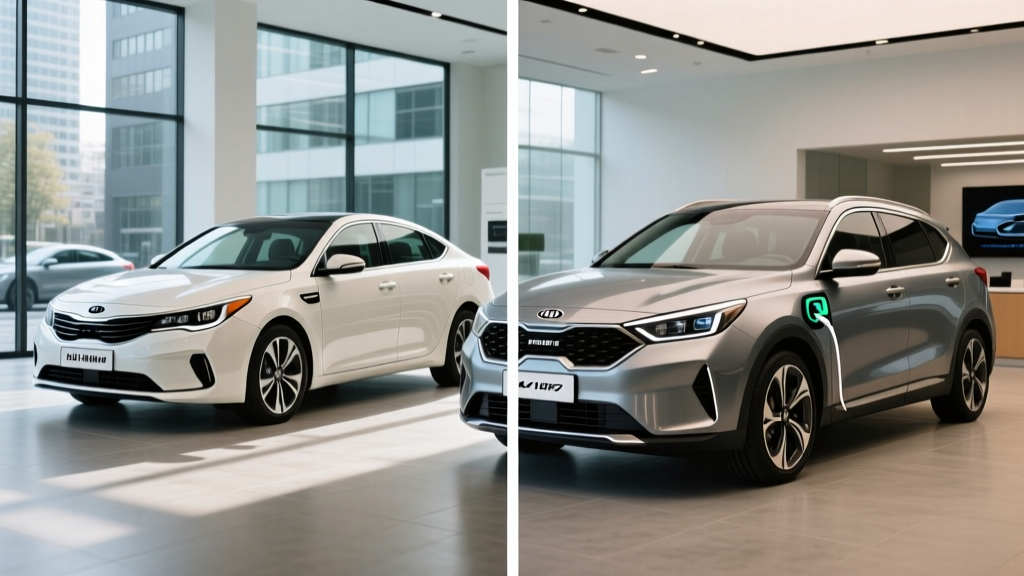
If you've been searching for kia hybrid cars 2012 era models—perhaps eyeing a used first-generation Optima Hybrid or an early Sportage HEV—you're likely weighing whether an older Kia hybrid still makes sense in 2026, or whether today's lineup justifies an upgrade. The short answer: Kia's hybrid technology has advanced dramatically in fuel economy, battery chemistry, electric-only range (for PHEVs), and charging capability. This guide breaks down what the 2012-era Kia hybrids delivered, how the 2026 lineup compares, and which powertrain—HEV, PHEV, or full EV—fits your driving life.
What Kia Offered in the 2012 Hybrid Era
In 2012, Kia's hybrid presence was narrow but notable. The flagship was the 2012 Kia Optima Hybrid, which paired a 2.4-liter four-cylinder engine with a 30 kW electric motor and a 1.4 kWh lithium-polymer battery. It was a conventional hybrid (HEV)—no plug, no electric-only driving beyond brief low-speed assists.
| Spec | Value |
|---|---|
| Powertrain | 2.4L I4 + 30 kW electric motor |
| Combined HP | 206 hp |
| Battery | 1.4 kWh lithium-polymer |
| EPA MPG (City/Hwy/Combined) | 35 / 39 / 37 |
| Electric-Only Range | None (HEV) |
| Plug-In Charging | No |
| Original MSRP | ~$26,500 |
| Battery Warranty | 10 yr / 100,000 mi |
The 2012 Optima Hybrid's EPA-rated 37 MPG combined was competitive for the time, though real-world owners frequently reported 32–35 MPG in mixed driving, with highway-heavy commutes sometimes dipping lower due to the system's reliance on the gasoline engine at sustained speeds. City driving, where regenerative braking recovers energy, often pushed figures toward the upper 30s.
HEV vs PHEV: Understanding Kia's 2026 Hybrid Lineup
Before comparing old to new, it's essential to distinguish between the two hybrid types Kia sells today. This distinction was absent in 2012—Kia only offered HEVs back then.
| Feature | Conventional Hybrid (HEV) | Plug-In Hybrid (PHEV) |
|---|---|---|
| Plug Required? | No — refuels with gas only | Yes — plugs in for electric range |
| Electric-Only Range | None (motor assists engine) | 30–40+ miles (model dependent) |
| Battery Size | 1–2 kWh | 13–23 kWh |
| Charging | Regen braking + engine | Level 1/2 AC; no DC fast charge |
| Gas Engine | Yes | Yes (extends total range) |
| Federal Tax Credit | No | Up to $7,500 (§30D, see rules) |
| Best For | No home charging access | Home chargers with short commutes |
A conventional hybrid (HEV) like the 2026 Kia Niro HEV never plugs in. It uses regenerative braking and the gasoline engine to keep a small battery charged, and the electric motor assists during acceleration and low-speed driving. You fuel it exactly like a gas car.
A plug-in hybrid (PHEV) like the 2026 Kia Sportage PHEV has a much larger battery that you charge via a wall outlet or Level 2 charger. It delivers genuine electric-only driving for daily commutes, then seamlessly switches to hybrid mode when the battery depletes—giving you the combined range of a full gas tank plus electric miles.
2026 Kia Hybrid Lineup: MPG, Range, and Specs
Kia's 2026 hybrid portfolio spans four core models, available as HEV, PHEV, or both. Here's how they stack up with exact EPA figures.
| Model | Type | City MPG | Hwy MPG | Combined MPG | EV Range (mi) | Total Range (mi) |
|---|---|---|---|---|---|---|
| Niro HEV | HEV | 53 | 54 | 53 | — | ~590 |
| Niro PHEV | PHEV | 49 (hybrid) | 52 (hybrid) | 50 (hybrid) | 33 | ~430+ |
| Sportage HEV | HEV | 42 | 44 | 43 | — | ~520 |
| Sportage PHEV | PHEV | 38 (hybrid) | 38 (hybrid) | 38 (hybrid) | 34 | ~430+ |
| Sorento HEV | HEV | 36 | 36 | 36 | — | ~480 |
| Sorento PHEV | PHEV | 33 (hybrid) | 34 (hybrid) | 33 (hybrid) | 32 | ~420+ |
Source: fueleconomy.gov — EPA estimates. Your mileage will vary.
Real-World MPG vs EPA Sticker
Hybrids consistently outperform their EPA city ratings in stop-and-go traffic because regenerative braking converts deceleration into battery charge. In real-world testing, the Niro HEV regularly achieves 55–58 MPG in urban driving. However, sustained highway speeds above 70 mph reduce efficiency—expect 46–50 MPG on the highway in the Niro HEV, slightly below its sticker. The Sportage PHEV, being heavier and less aerodynamic, tends to deliver 30–34 MPG in hybrid mode on highway road trips once the battery is depleted.
Cold weather (below 35°F) reduces hybrid efficiency by roughly 10–15% due to increased engine operation for cabin heat and reduced battery performance. This is less severe than the 20–30% range loss full EVs experience, but it's measurable.
PHEV Battery, Charging, and Electric-Only Range Deep Dive
For buyers considering a Kia PHEV, the battery and charging experience is the defining ownership factor. Here's the technical breakdown for 2026 models:
| Model | Battery (kWh) | Chemistry | EV Range | Level 1 (120V) | Level 2 (240V) | DC Fast Charge |
|---|---|---|---|---|---|---|
| Niro PHEV | 11.1 kWh | NMC lithium-ion | 33 mi | ~9 hours | ~2.5 hours (3.3 kW) | No |
| Sportage PHEV | 13.8 kWh | NMC lithium-ion | 34 mi | ~11 hours | ~3.5 hours (3.3 kW onboard) | No |
| Sorento PHEV | 13.8 kWh | NMC lithium-ion | 32 mi | ~11 hours | ~3.5 hours (3.3 kW onboard) | No |
Critical detail: No Kia PHEV supports DC fast charging. The onboard charger is limited to 3.3 kW (some trims up to 7.2 kW for 2026—confirm at purchase), meaning Level 2 charging at home or public stations is the practical standard. A standard 120V household outlet works overnight for most commutes under 30 miles, but a Level 2 home charger (240V, ~$500–$1,200 installed) is strongly recommended for daily PHEV use.
The kW vs kWh distinction matters here: the battery stores 13.8 kWh of energy (like a fuel tank size), while the onboard charger accepts up to 3.3 kW of power (like a hose diameter). A 3.3 kW charger filling a 13.8 kWh battery from empty takes roughly 4+ hours accounting for charging losses.
Powertrain Specs: What's Under the Hood
Kia's 2026 hybrid powertrains are far more sophisticated than the 2012 Optima's single-motor setup. Most models use a turbocharged engine paired with a more powerful electric motor integrated into the transmission.
| Model | Engine | Motor | Combined HP | Combined Torque | 0-60 mph | Drivetrain |
|---|---|---|---|---|---|---|
| Niro HEV | 1.6L I4 | 32 kW | 139 hp | 195 lb-ft | ~9.5 sec | FWD |
| Niro PHEV | 1.6L I4 | 62 kW | 180 hp | 195 lb-ft | ~7.5 sec | FWD |
| Sportage HEV | 1.6L Turbo I4 | 44 kW | 227 hp | 258 lb-ft | ~7.3 sec | AWD |
| Sportage PHEV | 1.6L Turbo I4 | 72 kW | 261 hp | 258 lb-ft | ~6.8 sec | AWD |
| Sorento HEV | 1.6L Turbo I4 | 44 kW | 227 hp | 258 lb-ft | ~7.8 sec | AWD |
| Sorento PHEV | 1.6L Turbo I4 | 72 kW | 261 hp | 258 lb-ft | ~7.2 sec | AWD |
Compared to the 2012 Optima Hybrid's 206 hp, today's Sportage and Sorento PHEVs deliver 261 hp with substantially more torque, better AWD capability, and the ability to drive 30+ miles without using a drop of gasoline. The performance gap is enormous.
Pricing, Tax Credits, and Total Ownership Cost
2026 MSRP by Model
| Model | Base MSRP | Federal Tax Credit | Effective Price (if eligible) |
|---|---|---|---|
| Niro HEV (LX) | $28,490 | $0 | $28,490 |
| Niro PHEV (LX) | $34,590 | Up to $7,500* | ~$27,090 |
| Sportage HEV (LX) | $30,490 | $0 | $30,490 |
| Sportage PHEV (X-Line) | $39,990 | Up to $7,500* | ~$32,490 |
| Sorento HEV (S) | $38,490 | $0 | $38,490 |
| Sorento PHEV (SX) | $51,490 | Up to $7,500* | ~$43,990 |
*Federal tax credit eligibility under IRS §30D is not automatic. Requirements include:
- MSRP cap: SUVs/vans/pickups ≤ $80,000; sedans/other ≤ $55,000
- Buyer income cap: AGI ≤ $150,000 (single) / $300,000 (joint)
- Battery sourcing: Critical minerals and battery components must meet escalating North American/free-trade-partner thresholds (rules tighten annually)
- Point-of-sale transfer: As of 2024+, you can transfer the credit to the dealer for an immediate price reduction at purchase
Key takeaway: Conventional hybrids (HEVs) do not qualify for the federal §30D tax credit—only PHEVs and full EVs do. This makes the PHEV pricing more attractive than the MSRP gap suggests. However, battery sourcing rules have disqualified some PHEVs in recent years; always verify current eligibility on the IRS clean vehicle credit page before purchasing.
Reasons to Choose a Kia PHEV
- 30–34 miles electric covers most daily commutes gas-free
- Eligible for up to $7,500 federal tax credit
- No range anxiety—gas engine for road trips
- AWD available on Sportage/Sorento PHEV
- Lower fuel cost if you charge at home overnight
Reasons to Choose a Kia HEV Instead
- No charging infrastructure needed
- Lower purchase price (no battery premium)
- 53 MPG combined in the Niro HEV is exceptional
- Simpler ownership—no plug, no charging habits
- Good option for apartment dwellers without charging
Battery Reliability, Warranty, and Replacement Costs
Battery longevity is the number-one concern for hybrid buyers, especially those considering used 2012-era models. Here's the reality:
Kia Hybrid Battery Warranty (2026 Models)
Coverage: 10 years / 100,000 miles (whichever comes first)
What's covered: Battery capacity loss below 70% of original capacity, defects, and premature failure
Transferable: Yes, to subsequent owners for the remainder of the coverage period (original 10yr/100k terms; some states may differ for second owners)
For 2012-era Kia hybrids still on the road: The original 10-year/100,000-mile battery warranty has expired for all 2012 models (10 years elapsed by 2022). If the hybrid battery fails on a 2012 Optima Hybrid, you're paying out of pocket. Replacement costs for the 1.4 kWh pack in the 2012 Optima Hybrid typically range from $2,500 to $4,500 including labor at a dealership, or $1,500–$2,500 through independent hybrid specialists using refurbished cells.
For 2026 models, Kia's hybrid batteries use NMC (nickel-manganese-cobalt) lithium-ion chemistry with improved thermal management. Based on industry data from IIHS and long-term fleet studies, modern hybrid batteries typically retain 85–92% capacity after 10 years / 150,000 miles. The smaller battery in an HEV (1–2 kWh) cycles less deeply than a PHEV or EV battery, which contributes to longevity. Full PHEV battery replacement in a 2026 Sportage PHEV would cost approximately $6,000–$9,000 out of warranty—a significant sum, but one you're unlikely to face within the warranty period.
Hybrid vs PHEV vs Full EV: Which Kia Fits Your Life?
This is the decision that matters most. Here's a practical framework based on your driving situation:
Choose a Kia HEV (Niro, Sportage, Sorento HEV) if:
- You rent or live in an apartment with no charging access
- Your daily driving exceeds 50 miles with no predictable charging stop
- You want maximum simplicity—just add gas
- Your budget is under $32,000 and you don't qualify for tax credits
- You drive mostly city miles and want 50+ MPG
Choose a Kia PHEV (Niro, Sportage, Sorento PHEV) if:
- You have a garage or driveway where you can install a Level 2 charger
- Your daily commute is under 35 miles round-trip (electric covers it)
- You want to drive electric daily but take gas-powered road trips
- You qualify for the §30D tax credit (income + sourcing requirements met)
- You want AWD and 261 hp in the Sportage/Sorento
Choose a Full Kia EV (EV6, EV9) if:
- You can charge at home and your daily driving is under 250 miles
- You want zero tailpipe emissions and the lowest per-mile fuel cost
- You want DC fast charging for road trips (EV6: 239 kW, 10–80% in ~18 min)
- You're ready to commit fully to electric and leave gas behind
2012 vs 2026: Is Upgrading Worth It?
If you currently own a 2012 Kia Optima Hybrid and it's running well, the economic case for upgrading depends on your priorities. The 2012 model delivers roughly 35 MPG real-world. A 2026 Niro HEV delivers 53 MPG combined—a 51% improvement that saves approximately $450–$600/year in fuel at 15,000 miles driven and $3.40/gallon gas. Over five years, that's $2,250–$3,000 in fuel savings, which doesn't fully offset the purchase price of a new vehicle.
However, if you're shopping for a used Kia hybrid from the 2012 era, proceed with caution:
- The hybrid battery warranty has expired—budget $2,500–$4,500 for potential replacement
- Check the battery's state of health (SoH) via a dealer diagnostic scan before purchasing
- Verify that the hybrid system's inverter and electric motor show no fault codes
- A well-maintained 2012 Optima Hybrid with 80,000–100,000 miles can still be a solid budget commuter at $6,000–$9,000 used, but you're assuming battery risk
Frequently Asked Questions
How many MPG does a 2012 Kia Optima Hybrid get?
The EPA rated the 2012 Kia Optima Hybrid at 35 city / 39 highway / 37 combined MPG. Real-world owners typically report 32–36 MPG in mixed driving, with city-heavy routes occasionally reaching the upper 30s thanks to regenerative braking.
How far can a 2026 Kia PHEV go on electric only?
The 2026 Kia Niro PHEV delivers 33 miles of electric-only range, the Sportage PHEV provides 34 miles, and the Sorento PHEV offers 32 miles. These are EPA estimates; real-world EV range varies with temperature, terrain, and driving style. Expect 25–30 miles in cold weather or at highway speeds.
Do Kia conventional hybrids need to be plugged in?
No. Kia HEVs (like the Niro HEV, Sportage HEV, and Sorento HEV) never plug in. They recharge their small battery through regenerative braking and the gasoline engine. You refuel them at a gas station like any conventional car.
Does the Kia PHEV qualify for a federal tax credit?
Kia PHEVs may qualify for up to $7,500 under the IRS §30D clean vehicle credit, but eligibility depends on your income (≤$150K single / ≤$300K joint), the vehicle's MSRP (≤$80K for SUVs), and battery component/critical mineral sourcing requirements. Rules change annually. Verify current eligibility at irs.gov before purchasing. Conventional Kia HEVs do not qualify for this credit.
Is the Kia hybrid battery reliable and what does replacement cost?
Kia hybrid batteries are generally reliable, with most retaining 85%+ capacity after 100,000 miles. New 2026 models carry a 10-year/100,000-mile hybrid battery warranty. Out-of-warranty replacement costs approximately $2,500–$4,500 for older HEV packs (like the 2012 Optima) and $6,000–$9,000 for current PHEV packs. Independent hybrid shops often offer refurbished replacements at lower cost.
Can I DC fast charge a Kia PHEV?
No. No Kia PHEV supports DC fast charging. They charge via Level 1 (120V household outlet) or Level 2 (240V home/public charger) only. The onboard charger is limited to 3.3 kW (some trims 7.2 kW for 2026), meaning a full charge takes 2–4 hours on Level 2.
Should I buy a used 2012 Kia hybrid or a new 2026 model?
A used 2012 Kia Optima Hybrid can be a budget-friendly commuter ($6,000–$9,000) if the hybrid battery tests healthy, but you're assuming all repair costs. A new 2026 Niro HEV starts at $28,490 with a full warranty, 53 MPG, modern safety tech, and dramatically better efficiency. If you can charge at home, a 2026 PHEV with the tax credit may cost less than you expect while delivering 30+ miles of daily electric driving.