Quick Verdict: The Minivan That Finally Sips Fuel
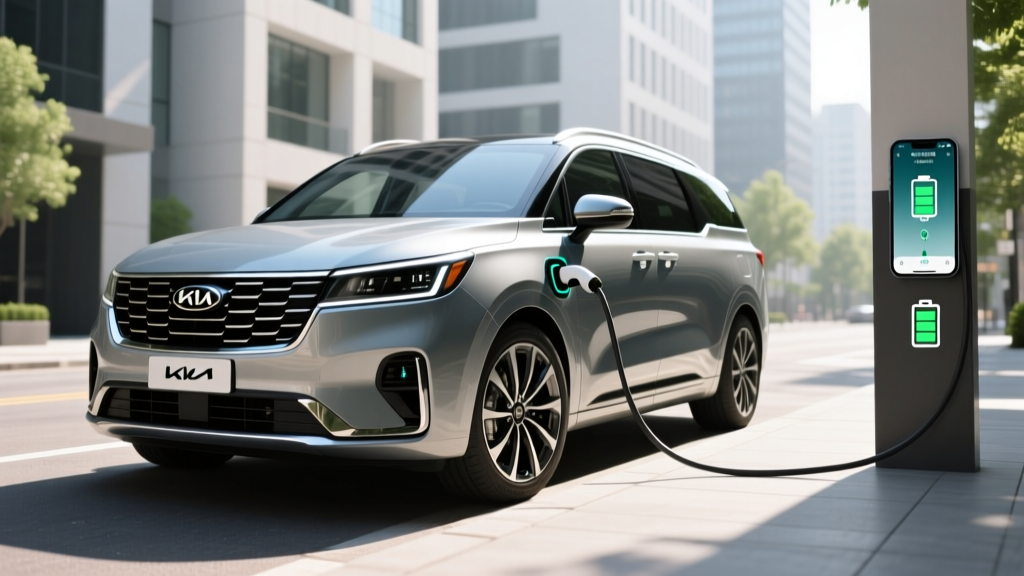
The 2026 Kia Carnival Hybrid takes the brand's spacious, SUV-styled minivan and bolts on a 1.6-liter turbocharged hybrid powertrain that returns an EPA-estimated 33 MPG combined — a massive improvement over the gas-only Carnival's 22 MPG combined. With 242 combined horsepower, three rows of seating for up to eight, and no plug-in requirement, this is a conventional hybrid (HEV) designed for families who want minivan practicality without the fuel pump sting. It does not offer a plug-in hybrid (PHEV) variant, and Kia has not announced one for the US market.
| Spec | Value |
|---|---|
| Powertrain | 1.6L turbo-4 + electric motor (HEV) |
| Combined Horsepower | 242 hp |
| Combined Torque | 271 lb-ft |
| Transmission | 6-speed automatic |
| EPA MPG (City / Hwy / Combined) | 34 / 31 / 33 |
| Fuel Tank Capacity | 15.9 gallons |
| Estimated Total Range | ~525 miles |
| Drivetrain | FWD (standard), AWD available |
| Seating | 7 or 8 passengers |
| Cargo (behind 3rd row) | 41.1 cu ft |
| Max Cargo (all seats folded) | 145.1 cu ft |
| Towing Capacity | 3,500 lbs |
| Base MSRP (LXS Hybrid) | $41,300 |
| Hybrid Battery Warranty | 10 years / 100,000 miles |
HEV vs PHEV: What the Carnival Hybrid Actually Is
Before we get into the numbers, it's critical to understand what the Carnival Hybrid is — and what it isn't.
| Feature | HEV (Carnival Hybrid) | PHEV (e.g., Chrysler Pacifica Hybrid) |
|---|---|---|
| Plug-in charging required? | No — charges via engine & regen braking | Yes — plug in for electric-only driving |
| Electric-only range | None (motor assists engine) | Typically 30-35 miles |
| Battery size | ~1.5 kWh (small, self-charging) | ~16 kWh (large, grid-chargeable) |
| Federal tax credit (§30D) | Not eligible | Eligible (up to $7,500 if requirements met) |
| Best for | No home charging access; simple ownership | Home chargers; short daily commutes |
The Carnival Hybrid is a conventional HEV. You never plug it in. The 1.5 kWh traction battery charges through regenerative braking and the gasoline engine. This means zero change to your fueling routine — you still fill up at gas stations — but you'll visit them roughly 50% less often than with the gas-only Carnival.
If you're looking for a plug-in hybrid minivan with electric-only commuting range, the closest competitor is the Chrysler Pacifica Hybrid (PHEV), which offers about 32 miles of electric-only range and a total combined range of roughly 430 miles. The Toyota Sienna, like the Carnival Hybrid, is a conventional HEV only.
Fuel Economy: EPA Numbers and Real-World MPG
| Driving Condition | EPA Estimate | Real-World Expectation |
|---|---|---|
| City | 34 MPG | 33-37 MPG (hybrids excel in stop-and-go) |
| Highway | 31 MPG | 28-31 MPG (aerodynamic drag at 70+ mph hurts) |
| Combined | 33 MPG | 30-34 MPG depending on driving mix |
Hybrid powertrains shine in city driving, where frequent braking feeds energy back into the battery and the electric motor handles low-speed propulsion. Expect to exceed the 34 MPG city estimate in suburban stop-and-go traffic. Conversely, sustained highway speeds above 70 MPH push the turbocharged engine harder, and the minivan's boxy aerodynamics work against efficiency.
For comparison, the gas-only 2026 Carnival with its 3.5L V6 returns just 19 city / 26 highway / 22 combined MPG, according to fueleconomy.gov. The hybrid powertrain's 50% improvement in combined fuel economy translates to roughly $600-$800 in annual fuel savings for a driver covering 15,000 miles per year at $3.40/gallon.
The AWD hybrid variant carries a slight fuel economy penalty — expect roughly 1 MPG lower across the board due to drivetrain friction and added weight.
Powertrain Deep Dive: 242 HP Turbo Hybrid
The Carnival Hybrid pairs a 1.6-liter turbocharged inline-four gasoline engine with an electric motor integrated into the transmission housing. Here's how the output breaks down:
- Gasoline engine: ~178 hp, 195 lb-ft torque
- Electric motor: ~64 kW (~86 hp)
- Combined system output: 242 hp, 271 lb-ft torque
- Transmission: 6-speed automatic (not a CVT)
The use of a traditional 6-speed automatic rather than a continuously variable transmission (CVT) is a deliberate choice by Kia. CVTs, while efficient, tend to produce the "rubber-band" drone that minivan and SUV buyers dislike. The 6-speed delivers more natural shift feel while still achieving strong efficiency through the hybrid system's electric torque fill at low RPM.
The 0-60 MPH time lands around 7.8 seconds — respectable for a three-row minivan and notably quicker off the line than you might expect, thanks to the electric motor's instant torque. The turbo engine provides strong passing power at highway speeds, and the combined 271 lb-ft of torque means merging and overtaking are confident maneuvers even when fully loaded.
Pricing, Trims, and Tax Credit Eligibility
The 2026 Carnival Hybrid is offered across multiple trims. Pricing starts in the low $40,000s:
| Trim | MSRP (est.) | Key Features |
|---|---|---|
| LXS Hybrid | $41,300 | Dual power sliding doors, 12.3" touchscreen, wireless CarPlay/Android Auto |
| EX Hybrid | $44,500 | Power liftgate, leatherette seats, Highway Driving Assist |
| SX Hybrid | $47,800 | Navigation, Bose audio, Surround View Monitor |
| SX Prestige Hybrid | $52,200 | Nappa leather, dual sunroofs, VIP rear lounge seats, head-up display |
Federal tax credit status: The Carnival Hybrid is a conventional HEV, not a plug-in hybrid or battery electric vehicle. It does not qualify for the IRS §30D Clean Vehicle Credit (which applies only to plug-in vehicles with sufficient battery capacity and meeting sourcing/income requirements). For current §30D rules and eligible vehicles, refer to IRS.gov Clean Vehicle Credit.
Some states and utilities offer modest rebates for conventional hybrids — check your state energy office or local utility. However, these are typically $250-$500, not the thousands available for PHEVs and BEVs.
Battery Warranty, Reliability, and Replacement Cost
Kia Hybrid Battery Warranty
Coverage: 10 years / 100,000 miles (whichever comes first)
What's covered: Hybrid battery pack, hybrid control unit, electric motor, and related powertrain components
Capacity threshold: Kia warrants the hybrid battery against defects and abnormal capacity loss. If the battery degrades to a point where hybrid system performance is materially affected within the warranty period, Kia will repair or replace it at no cost.
Transferability: The 10-year/100,000-mile powertrain and hybrid warranty is transferable to a second owner, which supports resale value.
The Carnival Hybrid's ~1.5 kWh battery pack is small and operates within a narrow state-of-charge window — typically between 40% and 80% SoC. This shallow cycling is the key reason conventional hybrid batteries last so long. Unlike a full EV battery that cycles through deeper ranges, the HEV battery is managed conservatively by the hybrid control unit to maximize lifespan.
Real-world longevity data: Kia's hybrid systems, shared with Hyundai across models like the Tucson Hybrid and Sorento Hybrid, have proven reliable since their introduction. Toyota's hybrid systems (the benchmark) routinely exceed 200,000 miles with original battery packs. Kia's track record is shorter but encouraging, with few widespread battery failure reports across the hybrid lineup.
Out-of-warranty replacement cost: If the hybrid battery fails after the 10-year/100,000-mile warranty, replacement is estimated at $2,000-$4,000 including labor — significantly less than a full EV battery replacement ($8,000-$20,000+) because the pack is small. Individual modules can sometimes be replaced rather than the entire assembly, further reducing cost.
Who Should Choose the Carnival Hybrid vs a Full EV or Gas Minivan
Choose the Carnival Hybrid If:
- You want dramatically better fuel economy without changing your fueling habits
- You don't have access to home or workplace charging for a PHEV or EV
- You need three rows and cargo space but want lower operating costs
- You regularly take long road trips where EV charging infrastructure is sparse
- You want a 500+ mile total range between fill-ups
Choose a PHEV (e.g., Chrysler Pacifica Hybrid) If:
- You can install a Level 2 home charger
- Your daily commute is under 30 miles and you want to drive mostly on electricity
- You want to qualify for the $7,500 federal tax credit (subject to IRS §30D eligibility)
- You want the option of zero-emission school runs and errands
Choose a Full EV (e.g., upcoming electric minivans) If:
- You have reliable home Level 2 charging and access to DC fast chargers on your routes
- You want the lowest per-mile fuel cost (~$0.04-$0.06/mile vs ~$0.10/mile for the hybrid)
- You're willing to plan charging stops on road trips
- You want to eliminate oil changes and minimize drivetrain maintenance
For most minivan buyers who lack home charging or frequently drive long distances in rural areas, the Carnival Hybrid represents the pragmatic middle ground: massive fuel savings over the gas model, no behavioral changes required, and a proven warranty backing the hybrid system.
Real-World Ownership: What to Expect
Beyond the spec sheet, here's what living with the Carnival Hybrid actually looks like:
At the pump: With a 15.9-gallon tank and real-world combined MPG around 31-33, expect roughly 490-525 miles per fill-up. Families doing school runs, grocery trips, and weekend activities will typically fill up every 10-14 days.
Maintenance: The hybrid system adds virtually no maintenance burden. Oil changes remain on the standard schedule (every 7,500-10,000 miles with synthetic). The regenerative braking system actually extends brake pad life — many hybrid owners report original brake pads past 80,000 miles because the electric motor handles much of the deceleration.
Cold weather: Unlike EVs, which can lose 20-30% of range in freezing temperatures, the Carnival Hybrid's fuel economy dips only modestly in winter — roughly 1-3 MPG — because the gasoline engine provides cabin heat and the small battery is less temperature-sensitive. This is a significant advantage for buyers in northern climates.
Driving feel: The transition between electric and gasoline power is seamless and largely imperceptible. The electric motor provides smooth, quiet propulsion at low speeds, and the turbo engine kicks in smoothly when you need acceleration. The 6-speed automatic shifts naturally — no CVT drone.
Pros
- 33 MPG combined — 50% improvement over gas Carnival
- 242 hp provides confident acceleration for a minivan
- No plug-in required; zero change to fueling routine
- 10-year/100,000-mile hybrid battery warranty
- 500+ mile total range per tank
- Same interior space and cargo capacity as gas model
- 6-speed automatic (no CVT drone)
Cons
- ~$2,500 price premium over equivalent gas-only trim
- No PHEV option for electric-only commuting
- No federal tax credit eligibility (HEV)
- Highway MPG drops at sustained 75+ MPH speeds
- AWD hybrid carries slight fuel economy penalty
- Less electric-only driving benefit vs PHEV competitors
Frequently Asked Questions
How many MPG does the 2026 Kia Carnival Hybrid get?
The EPA rates the 2026 Carnival Hybrid at 34 MPG city, 31 MPG highway, and 33 MPG combined. In real-world city driving, many owners report exceeding the city estimate, reaching 35-37 MPG in stop-and-go traffic. Highway fuel economy at sustained speeds above 70 MPH tends to land around 28-31 MPG.
Does the Carnival Hybrid need to be plugged in?
No. The Carnival Hybrid is a conventional hybrid (HEV), not a plug-in hybrid. Its small battery charges through regenerative braking and the gasoline engine. You fuel it exclusively at gas stations, just like a regular car.
Is there a plug-in hybrid (PHEV) version of the Kia Carnival?
As of 2026, Kia does not offer a PHEV version of the Carnival in the United States. A Carnival PHEV is sold in South Korea, but it has not been announced for the US market. If you need a plug-in hybrid minivan, the Chrysler Pacifica Hybrid is currently the primary option.
How reliable is the Carnival Hybrid's battery, and what does replacement cost?
Kia covers the hybrid battery with a 10-year/100,000-mile warranty. The small ~1.5 kWh battery operates in a shallow charge cycle (roughly 40-80% SoC), which greatly extends its lifespan. Based on data from Kia and Hyundai hybrid models, these batteries routinely last well beyond the warranty period. If replacement is needed out of warranty, expect to pay approximately $2,000-$4,000 — far less than a full EV battery replacement.
Does the Carnival Hybrid qualify for any federal tax credit?
No. The federal §30D Clean Vehicle Credit applies only to plug-in electric vehicles (PHEVs and BEVs) with qualifying battery capacity and meeting critical mineral and battery component sourcing requirements. The Carnival Hybrid is a conventional HEV and is not eligible. Some state or utility programs may offer small hybrid rebates — check your local programs.
How does the Carnival Hybrid compare to the Toyota Sienna hybrid?
The Toyota Sienna is also a conventional hybrid and is rated at 36 MPG combined (FWD) or 35 MPG combined (AWD) — slightly better than the Carnival Hybrid's 33 MPG. However, the Sienna uses a CVT and produces 245 hp from a naturally aspirated 2.5L hybrid system, which some drivers find less refined than the Carnival's turbo + 6-speed automatic setup. The Carnival also offers more maximum cargo volume (145.1 vs 101.0 cu ft) and a higher towing capacity (3,500 vs 3,500 lbs). The choice often comes down to whether you prioritize maximum MPG (Sienna) or cargo space and driving feel (Carnival).
How far can the Carnival Hybrid drive on a full tank?
With a 15.9-gallon fuel tank and real-world combined fuel economy of approximately 31-33 MPG, the Carnival Hybrid delivers roughly 490-525 miles of total range per fill-up. On highway-heavy road trips, expect closer to 450-490 miles. In city-heavy driving, you may approach or exceed 540 miles.
Sources: EPA fuel economy data via fueleconomy.gov; Kia Motors America specifications; IRS Clean Vehicle Credit guidelines at irs.gov.