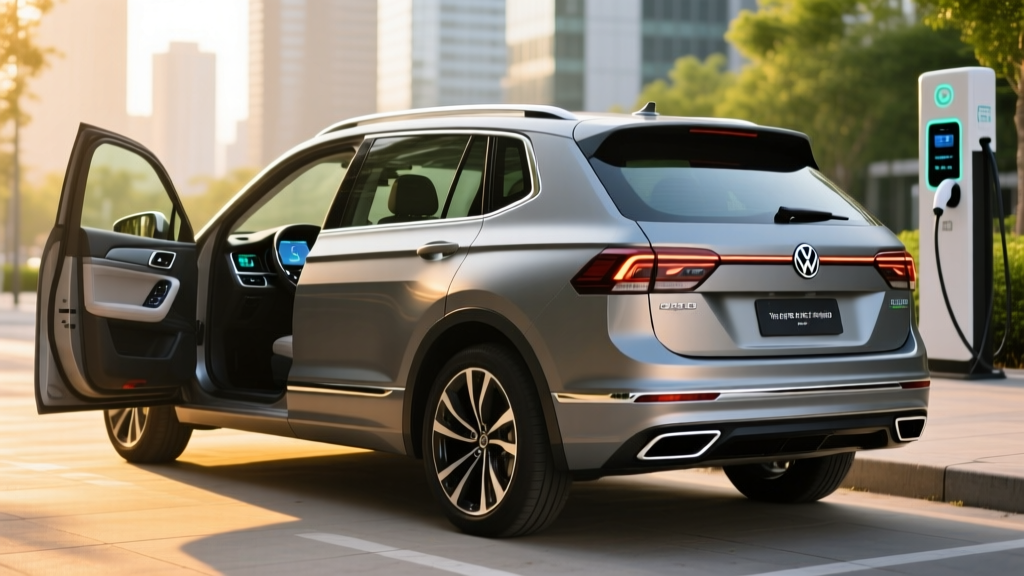
Volkswagen's path to electrification in the U.S. hasn't been straightforward. While the ID.4 grabbed headlines as VW's mainstream battery-electric offering, buyers searching for a Volkswagen SUV hybrid have often found slim pickings compared to Toyota, Hyundai, or Ford. For 2026, that picture is changing — primarily through the redesigned Tiguan, which now offers a plug-in hybrid (PHEV) variant alongside its conventional turbocharged gas trims.
This guide cuts through the confusion between conventional hybrids (HEVs) and plug-in hybrids (PHEVs), gives you exact EPA numbers, real-world expectations, battery warranty details, and tax-credit eligibility so you can decide if a VW hybrid SUV actually fits your garage and your commute.
HEV vs. PHEV: Which Volkswagen Hybrid SUV Are We Talking About?
Before diving into specs, it's critical to understand the two types of hybrid systems — because VW's strategy treats them very differently.
Conventional Hybrid (HEV)
- How it works: A small battery (typically 1–2 kWh) and electric motor assist a gas engine. The battery recharges through regenerative braking and the engine — you never plug it in.
- Electric-only driving: None, or trivial (under 1 mile at low speeds).
- Benefit: Better MPG than a gas car with zero behavior change required.
- VW availability (2026): VW does not currently sell a conventional HEV SUV in the U.S. market. The Tiguan, Atlas, and Atlas Cross Sport are offered with turbocharged gas powertrains or, in the Tiguan's case, a PHEV variant.
Plug-In Hybrid (PHEV)
- How it works: A larger battery (typically 12–25 kWh) paired with an electric motor and gas engine. You plug it in to charge, giving meaningful electric-only range for daily commuting.
- Electric-only driving: Typically 20–40 miles on a full charge before the gas engine kicks in.
- Benefit: EV-like commuting with gas-engine flexibility for road trips — no range anxiety.
- VW availability (2026): The 2026 Volkswagen Tiguan PHEV is VW's primary hybrid SUV offering in the U.S.
The takeaway: if you're looking for a Volkswagen SUV hybrid, you're really looking at a plug-in hybrid. VW has not offered a conventional self-charging hybrid SUV in the U.S. since the discontinuation of older mild-hybrid experiments. Everything below focuses on the PHEV variant.
2026 VW Tiguan PHEV: Powertrain, Battery, and Performance Specs
| Specification | 2026 VW Tiguan PHEV |
|---|---|
| Powertrain | 1.5L turbocharged 4-cylinder + electric motor (PHEV) |
| Combined System Output | ~245 hp (estimated, based on VW's MQB evo PHEV platform) |
| Engine Output | ~150 hp (gas) + ~115 hp (electric motor) |
| Transmission | 6-speed DSG automatic |
| Drivetrain | Front-wheel drive (AWD availability TBD for U.S.) |
| Battery Capacity (usable) | ~19.7 kWh (NMC lithium-ion) |
| EPA Electric-Only Range | ~32–37 miles (estimated, pending final EPA certification) |
| Total Combined Range (EV + Gas) | ~420–460 miles |
| Level 2 Charging (AC) | ~3.6 kW onboard charger; ~5 hours 0–100% |
| DC Fast Charging | Not available (no CCS/CHAdeMO port) |
| 0–60 mph | ~7.5 seconds (estimated) |
| Cargo Volume | ~33 cu ft (rear seats up), slightly reduced vs. gas Tiguan due to battery placement |
| Base MSRP | ~$39,500–$42,000 (estimated, SE PHEV trim) |
Note: The 2026 Tiguan PHEV is based on VW's updated MQB evo platform, which also underpins the European-market Tiguan eHybrid. U.S.-spec EPA figures may differ slightly from WLTP ratings published in Europe. Final EPA certification numbers should be confirmed on fueleconomy.gov before purchase.
MPG and MPGe: What You'll Actually See
PHEV fuel economy is measured two ways: MPGe (miles per gallon equivalent) when running on electricity, and MPG when the gas engine is doing the work after the battery is depleted.
| Driving Mode | City | Highway | Combined |
|---|---|---|---|
| Charge-Depleting (EV mode, MPGe) | ~95 MPGe | ~85 MPGe | ~90 MPGe (estimated) |
| Charge-Sustaining (gas only, after battery depleted) | ~35 MPG | ~33 MPG | ~34 MPG (estimated) |
Real-World MPG vs. EPA
Here's where PHEVs get interesting — and where buyer expectations often misalign with reality:
- If you charge daily and commute under 35 miles: You'll use almost zero gasoline on weekdays. Your "effective MPG" over a month could be 100+ because the engine barely runs.
- If you never plug in: You're driving a ~34 MPG compact SUV — which is solid, but not class-leading. The Toyota RAV4 Hybrid (conventional HEV) achieves 39 MPG combined without ever needing a plug.
- Highway road trips: Once the battery is depleted, expect ~33–34 MPG at 70 mph. Cold weather and mountain driving will reduce this to ~28–30 MPG.
- City driving in hybrid mode: Hybrids and PHEVs often exceed their EPA city rating in stop-and-go traffic because regenerative braking recaptures energy. Expect ~36–38 MPG city in charge-sustaining mode during warm weather.
The PHEV value proposition is entirely dependent on your charging habits. Charge nightly, commute short, and it's transformative. Ignore the plug, and you've paid a premium for a battery you're not using.
Charging the Tiguan PHEV: Home, Public, and What to Expect
The 2026 Tiguan PHEV charges via a standard J1772 connector (the universal AC plug for non-Tesla electrified vehicles in North America). Here's the practical charging picture:
| Charging Method | Power | Time (0–100%) | Practical Notes |
|---|---|---|---|
| Level 1 (120V household outlet) | ~1.4 kW | ~14 hours | Works for overnight if you drive <20 miles/day |
| Level 2 (240V home charger) | ~3.6 kW (vehicle-limited) | ~5 hours | Full charge overnight; install cost $500–$2,000 |
| DC Fast Charging | N/A | N/A | Not supported — no DC port on this vehicle |
Key reality check: The Tiguan PHEV's 3.6 kW onboard charger is relatively slow compared to some competitors. The Ford Escape PHEV, for instance, accepts similar AC rates, while the Toyota RAV4 Prime accepts up to 6.6 kW. This means you won't fully charge at a public Level 2 station during a 90-minute errand — plan on overnight home charging as your primary strategy.
For home Level 2 installation, budget $500–$800 for a quality 240V EVSE (like the ChargePoint Home Flex or Emporia Vue) plus $500–$1,500 for electrician labor, depending on whether your electrical panel needs an upgrade. Always get a licensed electrician to assess your panel capacity before purchasing equipment.
Battery Warranty, Lifespan, and Replacement Cost
2026 VW Tiguan PHEV Battery Warranty
- High-voltage battery warranty: 8 years / 100,000 miles (whichever comes first), covering defects and capacity loss below ~70% of original capacity
- Powertrain warranty: 4 years / 50,000 miles (VW's standard new-vehicle coverage)
- Battery chemistry: NMC (nickel manganese cobalt) — higher energy density than LFP, but slightly more degradation-sensitive over time
How Long Will the Battery Last?
VW's PHEV battery packs are engineered for the life of the vehicle. Real-world data from earlier VW PHEV models (like the European Golf GTE and Passat GTE) suggests 10–15% capacity loss over 8–10 years of typical use. Because the battery is relatively small (~19.7 kWh), even 15% degradation only costs you about 5 miles of electric range — noticeable but not debilitating.
Battery Replacement Cost
Out-of-warranty high-voltage battery replacement for a VW PHEV currently runs $6,000–$10,000 including labor, depending on the pack and dealer. This is a real but low-probability expense — the vast majority of PHEV batteries outlast their warranty period without needing replacement. Still, it's a figure to factor into long-term ownership math, especially if you plan to keep the vehicle past 150,000 miles.
Maximizing Battery Life
- Avoid routinely charging to 100% and letting it sit — charge to 80–90% on days you don't need full range
- Use the vehicle's built-in departure timer to finish charging right before you leave (reduces time at full SoC)
- In extreme heat, park in shade or a garage when possible — thermal stress accelerates NMC degradation
Pricing, Tax Credits, and Total Cost of Ownership
2026 Tiguan PHEV MSRP (Estimated)
- SE PHEV: ~$39,500
- SEL PHEV (if offered): ~$43,000–$45,000
- Destination charge: ~$1,350
Federal Tax Credit Eligibility (§30D)
This is where PHEV buyers need to pay close attention. Under current IRS rules for the New Clean Vehicle Credit (§30D), the Tiguan PHEV may qualify for a partial or full credit — but eligibility hinges on several factors that change frequently:
- Battery capacity: Must be ≥7 kWh — the Tiguan PHEV's ~19.7 kWh pack clears this easily
- MSRP cap: SUVs must be ≤$80,000 MSRP — the Tiguan PHEV qualifies
- Buyer income cap: AGI ≤$150,000 (single) / ≤$300,000 (joint) — check your tax situation
- Critical minerals & battery component sourcing: Must meet phased-in percentages of U.S./FTA-sourced materials — this is the requirement most likely to reduce or eliminate the credit for VW, as battery supply chains are still shifting
- Point-of-sale transfer: If eligible, you can transfer the credit to the dealer for an upfront price reduction at purchase
- FEOC restriction: Vehicles with battery components from a "foreign entity of concern" (certain Chinese suppliers) may be disqualified
Bottom line: Check the official IRS clean vehicle credit page and fueleconomy.gov's tax credit lookup tool for the specific VIN before purchasing. Do not assume the full $7,500 credit applies — many PHEVs in 2026 qualify for $3,750 (partial sourcing compliance) or $0 depending on the month's supply-chain certifications.
Consult a tax professional before relying on the credit for your purchase budget.
Who Should Buy the VW Tiguan PHEV — and Who Shouldn't?
Choose the Tiguan PHEV if:
- You have a garage or driveway where you can install a Level 2 charger
- Your daily round-trip commute is under 35 miles (you'll run almost entirely on electricity)
- You take 3+ road trips per year where EV charging infrastructure is sparse or unreliable
- You want VW's driving dynamics, interior quality, and dealer network without going full EV
- You're not ready to commit to a BEV but want to reduce fuel consumption and emissions
Choose a full EV (like the VW ID.4) instead if:
- You can charge at home and your longest regular drive is under 250 miles
- You want zero oil changes, zero engine maintenance, and fewer moving parts
- You want access to DC fast charging for road trips (the Tiguan PHEV lacks this entirely)
- You want the full $7,500 federal credit (EVs currently have broader sourcing compliance than many PHEVs)
Choose a conventional gas Tiguan or a Toyota RAV4 Hybrid (HEV) if:
- You cannot install a home charger (apartment, street parking, no garage)
- You want hybrid efficiency without any plug-in behavior change
- Upfront price is a primary concern — the RAV4 Hybrid starts ~$8,000–$10,000 lower
- You want proven long-term reliability data (Toyota's hybrid system has 20+ years of track record)
Pros
- 32–37 miles of electric-only range covers most daily commutes
- No range anxiety — gas engine provides 420+ total miles
- VW's refined interior and driving feel in a compact SUV package
- Can operate as a ~34 MPG hybrid even without charging
- Eligible for partial or full §30D federal tax credit (verify by VIN)
Cons
- No DC fast charging — road-trip charging is Level 2 only (slow)
- 3.6 kW onboard charger is slower than some PHEV competitors
- Premium over gas Tiguan (~$6,000–$8,000 more) takes years to recoup in fuel savings
- Cargo space slightly reduced vs. gas Tiguan due to battery
- VW's PHEV track record in the U.S. is limited — less long-term data than Toyota or Hyundai
Frequently Asked Questions
How many MPG does the 2026 VW Tiguan PHEV get?
When the battery is depleted and the gas engine takes over, expect approximately 34 MPG combined (35 city / 33 highway). In electric mode, it achieves roughly 90 MPGe combined. Your real-world fuel consumption depends heavily on how often you charge — daily chargers with short commutes may use almost no gasoline at all.
How far can the Tiguan PHEV go on electric power alone?
The estimated EPA electric-only range is 32–37 miles on a full charge. In real-world conditions — especially highway speeds above 65 mph, cold weather below 40°F, or hilly terrain — expect that to drop to roughly 25–30 miles. This is sufficient for most daily commutes but not enough for longer errands without the engine engaging.
Does the VW Tiguan PHEV qualify for a federal tax credit?
It may qualify for a partial ($3,750) or full ($7,500) credit under §30D, depending on battery-component and critical-mineral sourcing requirements that are updated periodically. The vehicle meets the MSRP cap ($80,000 for SUVs) and battery-capacity threshold (≥7 kWh). Buyer income limits apply. Always verify eligibility for the specific VIN on fueleconomy.gov and consult a tax professional before purchase.
Is the VW Tiguan PHEV reliable? What about battery replacement?
VW's PHEV powertrain is based on its well-established MQB evo platform used across European models for several years. The high-voltage battery is warranted for 8 years / 100,000 miles. Out-of-warranty battery replacement runs $6,000–$10,000, though most PHEV batteries last well beyond the warranty period with 10–15% capacity loss. VW's overall brand reliability has improved but still trails Toyota and Hyundai in long-term surveys from Consumer Reports and J.D. Power.
Can the Tiguan PHEV DC fast charge?
No. The 2026 Tiguan PHEV only supports AC charging (Level 1 at 120V or Level 2 at 240V) via a J1772 connector. There is no CCS or CHAdeMO DC fast-charging port. A full Level 2 charge takes approximately 5 hours at the vehicle's 3.6 kW onboard charger limit. This is standard for most compact PHEV SUVs — DC fast charging is typically reserved for full battery-electric vehicles.
Hybrid vs. PHEV vs. EV — which is right for me?
It comes down to three questions: (1) Can you charge at home? If no, skip the PHEV and EV — get a conventional hybrid like the RAV4 HEV. (2) Is your daily driving under 35 miles and do you road-trip regularly? A PHEV like the Tiguan gives you electric commuting with gas flexibility. (3) Can you charge at home and rarely drive more than 250 miles in a day? A full EV like the ID.4 will have lower running costs, less maintenance, and better tax-credit availability. The PHEV is the bridge option — ideal for households not yet ready to go fully electric but wanting meaningful daily electrification.
Sources: EPA fuel economy data at fueleconomy.gov; IRS §30D clean vehicle credit rules at irs.gov; Volkswagen of America specifications at vw.com. All specs are based on the latest available 2026 model-year information and may be subject to change upon final EPA certification. Always confirm exact figures with your dealer and the official sources before purchasing.