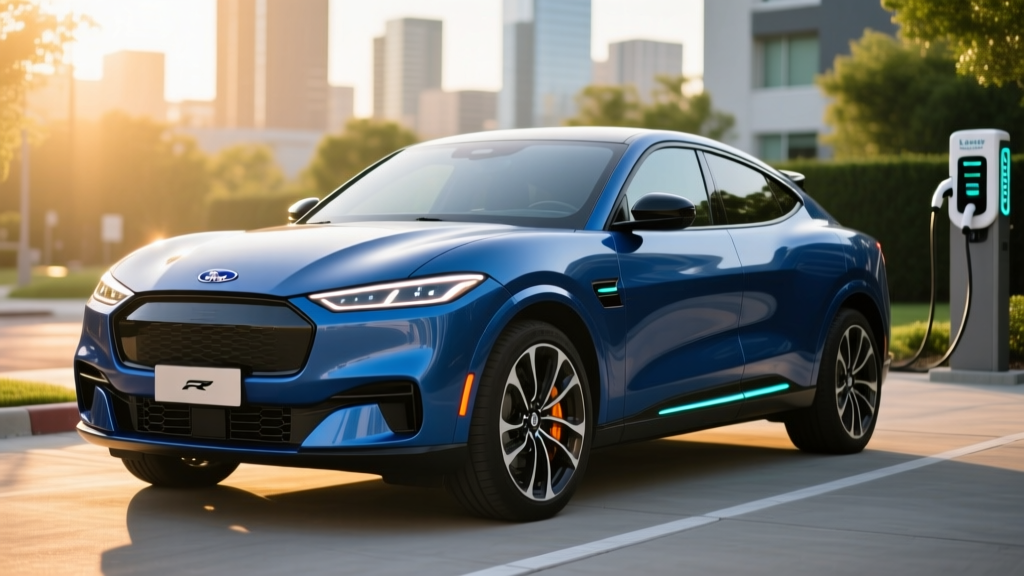
If you've been searching whether the Mustang Mach-E is a hybrid, the short answer is no. The Ford Mustang Mach-E is a battery-electric vehicle (BEV) — it has no gasoline engine, no fuel tank, and cannot run on a drop of gas. It runs entirely on electricity stored in a large lithium-ion battery pack and must be plugged in to recharge.
But the confusion is understandable. Ford's lineup in 2026 includes hybrids, plug-in hybrids, and full electrics, and the Mustang nameplate itself now spans both a gas-powered coupe and an electric SUV. If you landed here trying to figure out whether the Mach-E fits a hybrid lifestyle — or whether a Ford hybrid might be a better choice — this guide will give you exact numbers, clear distinctions, and a practical decision framework.
Why People Think the Mustang Mach-E Is a Hybrid
Several factors fuel the misconception. First, the "Mustang" badge has been associated with gas-powered V8 engines for six decades. When Ford applied it to an electric SUV, many buyers assumed it must retain some gasoline capability — perhaps as a range-extender or plug-in hybrid. Second, the Mach-E's body style and crossover proportions look similar to hybrid SUVs like the Ford Escape PHEV, adding to the visual confusion.
Third, Ford's own marketing has evolved. The automaker sells the Escape Hybrid, the Escape PHEV, the F-150 PowerBoost Hybrid, and the F-150 Lightning (a full EV) — all within overlapping segments. Shoppers cross-referencing these models on Ford's website can easily blur the powertrain lines.
Let's set the record straight with a definitive breakdown.
The Mach-E Is a Full EV: 2026 Specs at a Glance
For the 2026 model year, the Mustang Mach-E is offered exclusively as a battery-electric vehicle. Here are the core specifications across its available configurations:
| Spec | Select (Standard Range) | Premium (Extended Range, RWD) | GT (Extended Range, AWD) |
|---|---|---|---|
| Powertrain Type | BEV (Battery Electric) | BEV (Battery Electric) | BEV (Battery Electric) |
| Battery (usable) | ~72 kWh (LFP) | ~91 kWh (NMC) | ~91 kWh (NMC) |
| EPA Range | ~250 mi | ~320 mi | ~280 mi |
| Horsepower | 266 hp | 290 hp | 480 hp |
| 0–60 mph | ~6.3 sec | ~5.7 sec | ~3.5 sec |
| Max DC Fast Charge | ~150 kW | ~150 kW | ~150 kW |
| 10–80% DC Fast Charge | ~33 min | ~41 min | ~41 min |
| Level 2 Charge Rate | ~10.5 kW | ~10.5 kW | ~10.5 kW |
| Starting MSRP | ~$39,995 | ~$44,995 | ~$54,995 |
| Battery Warranty | 8 yr / 100,000 mi | 8 yr / 100,000 mi | 8 yr / 100,000 mi |
Hybrid vs. Plug-In Hybrid vs. Full EV: What's the Difference?
Since the Mach-E isn't a hybrid, it's worth clarifying exactly what each powertrain type offers — and which Ford models actually fill those roles in 2026.
| Feature | HEV (Hybrid) | PHEV (Plug-In Hybrid) | BEV (Full Electric) |
|---|---|---|---|
| Gas Engine? | Yes | Yes | No |
| Plug In to Charge? | No | Yes | Yes |
| Electric-Only Driving? | Brief, low-speed only | Yes (20–40 mi typical) | Yes (200–350+ mi) |
| Gasoline Required? | Yes | Yes (for trips beyond EV range) | No |
| Tailpipe Emissions | Yes | Yes (when engine runs) | None |
| Ford Example (2026) | Escape Hybrid | Escape PHEV | Mustang Mach-E |
Conventional hybrid (HEV): A small battery is charged solely by regenerative braking and the gas engine. You never plug it in. The electric motor assists the engine for better fuel economy, but the car cannot drive meaningful distances on electricity alone. The Ford Escape Hybrid is a prime example, returning an EPA-estimated 42 MPG combined.
Plug-in hybrid (PHEV): A larger battery (typically 12–20 kWh) can be plugged in to provide 20–40 miles of pure electric driving before the gas engine takes over. Once the battery is depleted, it operates like a conventional hybrid. The Ford Escape PHEV offers about 37 miles of electric-only range and then delivers roughly 40 MPG combined as a hybrid.
Battery-electric vehicle (BEV): No gas engine at all. A large battery (70–100+ kWh) powers one or more electric motors. The Mustang Mach-E falls squarely here. You charge it by plugging in — at home on Level 2 or on the road via DC fast charging.
Ford Hybrids That Actually Exist in 2026
If you specifically want a Ford hybrid — something the Mach-E cannot be — here are the current options with real numbers:
| Model | Type | EPA City | EPA Highway | EPA Combined | EV-Only Range (PHEV) |
|---|---|---|---|---|---|
| Escape Hybrid | HEV | 42 MPG | 36 MPG | 39 MPG | N/A |
| Escape PHEV | PHEV | 40 MPG (hybrid mode) | 37 MPG (hybrid mode) | 39 MPG | ~37 mi |
| F-150 PowerBoost Hybrid | HEV | 25 MPG | 26 MPG | 25 MPG | N/A |
| Maverick Hybrid | HEV | 42 MPG | 33 MPG | 37 MPG | N/A |
Source: fueleconomy.gov (EPA estimates). Real-world city MPG for hybrids often exceeds EPA figures because regenerative braking recovers more energy in stop-and-go traffic. Highway MPG may fall slightly below the sticker, especially at sustained speeds above 70 mph or in windy conditions.
Tax Credit Eligibility: Mach-E vs. Ford Hybrids
One of the sharpest distinctions between the Mach-E and Ford's hybrid lineup is federal tax credit eligibility under IRS §30D Clean Vehicle Credit.
- Mustang Mach-E (BEV): May qualify for up to $7,500 in federal tax credits, subject to strict requirements including buyer income caps ($150,000 single / $300,000 joint AGI), MSRP caps ($80,000 for SUVs), critical mineral sourcing, and battery component manufacturing rules. As of 2026, the Mach-E's eligibility depends on Ford's evolving battery supply chain — verify current status on the IRS qualified vehicles list before purchase. The credit can now be transferred to the dealer at point of sale, effectively reducing the purchase price.
- Ford Hybrids (HEV): The Escape Hybrid, Maverick Hybrid, and F-150 PowerBoost do not qualify for the §30D federal EV tax credit. Conventional hybrids have no plug-in capability and do not meet the statute's battery capacity or plug-in requirements.
- Ford Escape PHEV: May qualify for a partial or full §30D credit (up to $7,500) depending on the same sourcing and income rules. Check the IRS qualified list for the specific model year and trim.
Who Should Buy the Mach-E — and Who Should Look at a Hybrid?
Choose the Mach-E (Full EV) If:
- You have reliable home charging (Level 2 garage or driveway setup)
- Your daily commute is under 200 miles round-trip
- You want zero tailpipe emissions and minimal maintenance (no oil changes, no spark plugs)
- You're drawn to instant torque, a quiet cabin, and one-pedal driving
- You can absorb a higher upfront cost in exchange for lower per-mile energy costs
Choose a Ford Hybrid If:
- You lack home charging access (apartment, street parking)
- You regularly take long road trips through areas with sparse DC fast-charging infrastructure
- You want a lower purchase price (Escape Hybrid starts ~$32,000)
- You want the flexibility of gas stations anywhere without route-planning for chargers
- You want strong city fuel economy without changing your fueling habits at all (HEV)
Frequently Asked Questions
Is there a hybrid version of the Mustang Mach-E coming?
As of 2026, Ford has not announced any plans for a hybrid or plug-in hybrid variant of the Mustang Mach-E. The vehicle's skateboard-style EV platform was designed exclusively for battery-electric propulsion and cannot accommodate a gasoline engine. If Ford introduces a hybrid crossover, it will likely be a separate nameplate rather than a Mach-E variant.
Does the Mustang Mach-E use any gas?
No. The Mach-E is a pure battery-electric vehicle. It has no internal combustion engine, no fuel filler door, and no gasoline tank. It is powered entirely by its lithium-ion battery pack and electric motor(s).
How much does it cost to charge the Mach-E vs. fueling a hybrid?
At the U.S. average residential electricity rate of ~$0.16/kWh (2026), fully charging the Extended Range Mach-E's ~91 kWh battery costs roughly $14.50, yielding about $0.045–$0.05 per mile. The Escape Hybrid at 39 MPG combined with gas at $3.30/gallon costs about $0.085 per mile. Home-charging the Mach-E is approximately half the per-mile fuel cost of the hybrid. Public DC fast charging at $0.35–$0.50/kWh narrows or reverses that advantage.
Can the Mach-E's battery be replaced if it degrades?
Yes, but full pack replacement is expensive ($12,000–$18,000+ out of warranty). However, data from high-mileage EV fleets shows that modern NMC and LFP packs typically retain 85–90% capacity after 100,000 miles. Ford's 8-year/100,000-mile warranty covers premature degradation below 70% State of Health. Most owners will never need a full replacement.
Which is more reliable: the Mach-E or a Ford hybrid?
Ford's hybrid powertrains (especially the 2.5L Atkinson-cycle system in the Escape and Maverick) have matured over two decades and generally earn strong reliability ratings from sources like Consumer Reports. The Mach-E, as a newer EV platform, has had some early-model-year software and build-quality issues that Ford has addressed through over-the-air updates and running changes. Both carry 8-year/100,000-mile high-voltage battery warranties. The Mach-E has fewer moving parts (no transmission, no exhaust, no timing belt), which reduces mechanical failure points long-term.