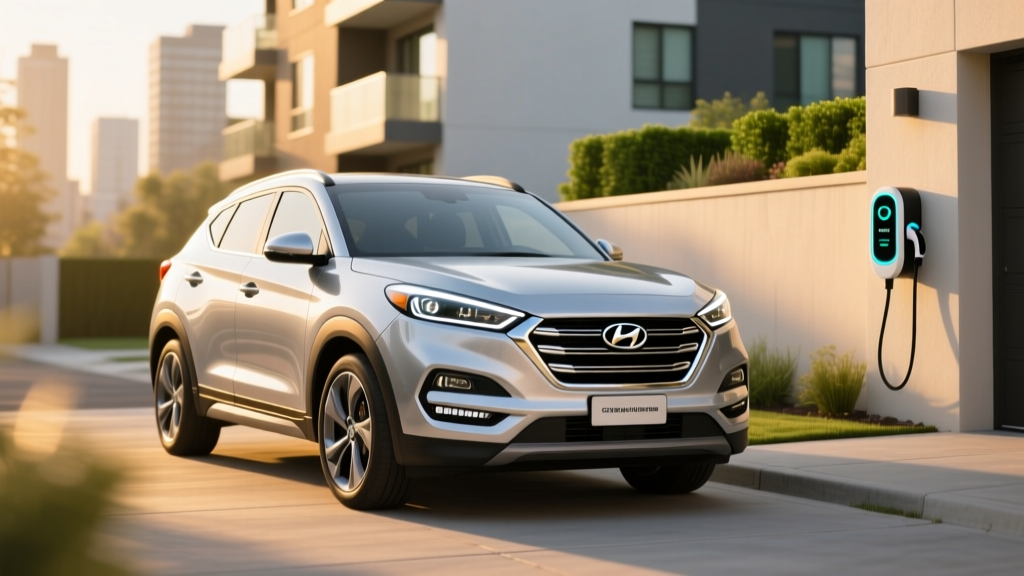
The 2026 Hyundai Tucson Hybrid Limited sits at the top of Hyundai's compact SUV hybrid lineup, offering a compelling blend of premium features, standard all-wheel drive, and impressive fuel efficiency — all without ever needing a charging cable. For buyers who want electrified efficiency without changing their fueling habits, this is one of the most complete packages in the segment.
In this guide, we break down the Tucson Hybrid's real-world MPG, powertrain specs, how it stacks up against its plug-in sibling, warranty coverage, and whether it's the right electrified SUV for your daily driving.
HEV vs PHEV: Which Tucson Hybrid Is Which?
Hyundai sells the Tucson in three powertrain flavors for 2026: a conventional gas model, a conventional hybrid (HEV), and a plug-in hybrid (PHEV). This article focuses on the HEV — the one you simply fill with gas and drive. But understanding the difference is critical before you visit the dealer.
| Feature | Tucson Hybrid (HEV) | Tucson Plug-In Hybrid (PHEV) |
|---|---|---|
| Needs to be plugged in? | No | Yes (for electric range) |
| Electric-only range | N/A | ~33 miles (EPA est.) |
| Battery capacity | ~1.49 kWh | 13.8 kWh |
| Total range | ~430+ miles | ~420 miles (gas + electric) |
| EPA combined fuel economy | 38 MPG | 80 MPGe (combined) |
| DC fast charging | No | No (Level 2 AC only, ~2 hrs) |
| Federal tax credit (§30D) | Not eligible | Eligible — up to $7,500* |
| Starting MSRP (Limited) | ~$42,750 | ~$47,990 |
*PHEV tax credit eligibility depends on MSRP caps, buyer income limits, and battery-sourcing requirements under current IRS §30D rules. Consult a tax professional before relying on credit amounts.
2026 Hyundai Tucson Hybrid Limited: Key Specifications
| Specification | Value |
|---|---|
| Powertrain | 1.6L turbocharged 4-cylinder + electric motor |
| Combined horsepower | 231 hp |
| Combined torque | 271 lb-ft |
| Transmission | 6-speed automatic |
| Drivetrain | HTRAC All-Wheel Drive (standard) |
| EPA city MPG | 37 MPG |
| EPA highway MPG | 38 MPG |
| EPA combined MPG | 38 MPG |
| Fuel tank capacity | 13.7 gallons |
| Total range (est.) | ~520 miles |
| 0-60 mph | ~7.1 seconds |
| Cargo volume (behind 2nd row) | 38.7 cu ft |
| Towing capacity | 2,000 lbs |
| Limited trim MSRP (2026) | ~$42,750 |
| Hybrid battery warranty | 10 years / 100,000 miles |
Source: fueleconomy.gov and Hyundai Motor America. MSRP excludes destination charges (~$1,395). Specs reflect 2026 model year as published.
Fuel Economy: EPA Numbers vs. Real-World MPG
| Driving Scenario | EPA Sticker | Real-World Expectation |
|---|---|---|
| City | 37 MPG | 38–42 MPG (hybrids excel in stop-and-go) |
| Highway (70-75 mph) | 38 MPG | 33–36 MPG (sustained speed reduces regen benefit) |
| Combined | 38 MPG | 35–39 MPG (varies with driving mix) |
| Cold weather (below 32°F) | — | 30–34 MPG (engine runs more for cabin heat) |
The Tucson Hybrid's near-identical city and highway EPA ratings are a hallmark of Toyota/Hyundai hybrid systems that use the electric motor to supplement highway cruising. In practice, most owners report exceeding EPA city estimates because regenerative braking and low-speed electric assist shine in urban traffic. Highway driving at 75+ mph, however, will drop you below sticker — a pattern consistent across all hybrid SUVs in this class.
How the Tucson Hybrid Powertrain Works
The Tucson Hybrid pairs a 1.6-liter turbocharged gasoline engine (producing roughly 178 hp on its own) with a 47.7 kW electric motor integrated into the transmission housing. Combined system output is 231 hp and 271 lb-ft of torque, routed to all four wheels via Hyundai's HTRAC AWD system and a traditional 6-speed automatic — not the CVT found in the Toyota RAV4 Hybrid.
This matters for driving feel. The 6-speed delivers familiar, predictable shifts without the rubber-band sensation some drivers dislike in CVTs. The electric motor fills in torque at low RPMs, so acceleration from a stop feels immediate and confident. The 0-60 mph time of roughly 7.1 seconds is brisk for the compact hybrid SUV class.
The small ~1.49 kWh battery pack charges entirely through regenerative braking and engine operation. You never plug it in. It stores enough energy for brief electric-only assists at low speeds and smooths out the start-stop cycle, but this is not a vehicle designed for electric-only driving.
What You Get in the Limited Trim
The Limited is the top-of-the-line Tucson Hybrid trim for 2026. Key equipment over the SEL Convenience trim includes:
- Panoramic sunroof with sunshade
- Leather-trimmed seats with ventilated front and heated rear
- 10.25-inch digital instrument cluster + 10.25-inch navigation touchscreen
- Bose premium audio system (8 speakers)
- Highway Driving Assist 2 (HDA2) — Hyundai's Level 2 ADAS with lane-centering and adaptive cruise
- Surround-view monitor and blind-spot view cameras
- Remote smart parking assist
- 19-inch alloy wheels
- Hands-free smart liftgate
Highway Driving Assist 2 is worth noting: it is a SAE Level 2 driver-assistance system. You must keep your hands on the wheel and eyes on the road at all times. It is not autonomous driving.
Reliability, Battery Warranty, and Replacement Cost
Hyundai's hybrid battery warranty is among the best in the industry, matching the coverage offered for their full EVs. The lithium-ion polymer pack in the Tucson Hybrid is small (~1.49 kWh) and operates in a narrow state-of-charge window, which significantly reduces stress and degradation compared to a full EV battery.
Real-world reliability: Hyundai's 1.6L turbo hybrid powertrain has been in service across multiple models (Sonata Hybrid, Santa Fe Hybrid, Tucson Hybrid) since 2022. Owner-reported issues have been relatively minor — typically related to software glitches in the infotainment system rather than powertrain failures. The conventional 6-speed automatic avoids the complexity of a CVT or e-CVT.
Battery replacement cost: If a hybrid battery replacement is ever needed outside of warranty, expect a range of $2,000–$4,000 for the Tucson Hybrid's small pack — significantly less than a full EV battery replacement ($5,000–$20,000+). The small capacity and simpler construction keep costs manageable. Third-party refurbishment options may be available for less as the platform ages.
Tucson Hybrid vs. Tucson PHEV vs. Full EV: Which Fits You?
Choose the Tucson Hybrid (HEV) if:
- You cannot install a home charger (apartment, street parking, HOA restrictions)
- You want better fuel economy with zero change to your refueling routine
- You take frequent long road trips and don't want to plan charging stops
- Your budget is under $45,000
Choose the Tucson Plug-In Hybrid (PHEV) if:
- You can charge at home (Level 2) and your daily commute is under 30 miles
- You want electric-only driving for errands but gas flexibility for road trips
- You qualify for the federal §30D tax credit (up to $7,500), which can narrow the price gap
Choose a full EV (e.g., Hyundai Ioniq 5) if:
- You have reliable home charging and your daily driving is under 250 miles
- You want to eliminate gas entirely and minimize maintenance (no oil changes, fewer moving parts)
- You're eligible for the full federal EV tax credit and your total cost of ownership favors electric
Tax Credits and Ownership Economics
The Tucson Hybrid (HEV) does not qualify for the federal §30D new clean vehicle tax credit. That credit applies only to plug-in vehicles (PHEVs and BEVs) meeting specific battery-sourcing, MSRP, and buyer income requirements.
However, the Tucson Hybrid still delivers meaningful fuel savings. At 38 MPG combined versus the gas-only Tucson AWD at ~26 MPG combined, and with gas at $3.50/gallon:
| Scenario | Gas Tucson AWD | Tucson Hybrid | Annual Savings |
|---|---|---|---|
| 15,000 miles/year | 577 gallons ($2,020) | 395 gallons ($1,382) | ~$638/year |
| Over 5 years | $10,100 | $6,910 | ~$3,190 |
Over a typical ownership period, the hybrid's fuel savings can offset much of its price premium over the gas model — and you'll visit the gas station far less often.
Some states and utilities offer their own incentives for hybrid purchases. Check your state's energy office or AFDC incentive database for local programs.
- 38 MPG combined with AWD — no plug required
- 231 hp provides confident acceleration
- 10-year/100,000-mile hybrid battery warranty
- Limited trim is well-equipped with premium features
- 6-speed automatic avoids CVT feel
- Strong cargo space (38.7 cu ft)
- No federal tax credit eligibility (HEV)
- Highway MPG drops below EPA at sustained 75+ mph
- Limited trim at ~$42,750 is a significant investment
- No DC fast charging (not applicable to HEV, but no PHEV DC option either)
- Towing limited to 2,000 lbs
Frequently Asked Questions
How many MPG does the 2026 Hyundai Tucson Hybrid Limited get?
The EPA rates the Tucson Hybrid at 37 city / 38 highway / 38 combined MPG. In real-world city driving with frequent stops, many owners report 39-42 MPG. Highway cruising at 75+ mph typically yields 33-36 MPG.
Does the Tucson Hybrid need to be plugged in?
No. The Tucson Hybrid (HEV) charges its small battery through regenerative braking and the gasoline engine. You fuel it exactly like a conventional car. If you want plug-in capability, look at the Tucson Plug-In Hybrid (PHEV) variant.
How far can the Tucson Plug-In Hybrid go on electric only?
The Tucson PHEV has an EPA-estimated electric-only range of approximately 33 miles. That covers most daily commutes and errands on electricity alone before the gas engine kicks in.
Is the Tucson Hybrid reliable, and what does battery replacement cost?
Hyundai's hybrid powertrain has shown strong reliability since its 2022 introduction across multiple models. The hybrid battery is covered by a 10-year/100,000-mile warranty. Out-of-pocket replacement, if ever needed, typically costs $2,000–$4,000 — far less than a full EV battery.
Does the Tucson Hybrid qualify for any tax credit?
The conventional Tucson Hybrid (HEV) does not qualify for the federal §30D tax credit. Only the Tucson Plug-In Hybrid (PHEV) may be eligible, subject to current IRS rules on MSRP caps, buyer income, and battery sourcing. Some state-level incentives may apply to hybrids — check your local programs.
How does the Tucson Hybrid compare to the Toyota RAV4 Hybrid?
The RAV4 Hybrid (219 hp, 39-41 MPG combined depending on trim) is the segment benchmark. The Tucson Hybrid offers slightly more horsepower (231 hp), a more premium Limited trim, and a traditional 6-speed automatic versus Toyota's e-CVT. Fuel economy is comparable within 1-3 MPG.
What's the difference between Hyundai Highway Driving Assist and self-driving?
Highway Driving Assist 2 (HDA2) is an SAE Level 2 system. It can center the vehicle in its lane and maintain a set following distance, but the driver must remain fully engaged — hands on the wheel, eyes on the road. It is not autonomous or self-driving.
For official fuel economy data, visit fueleconomy.gov. For current federal tax credit rules, see the IRS clean vehicle credits page. Pricing and specifications are based on 2026 model year data from Hyundai Motor America and are subject to change.