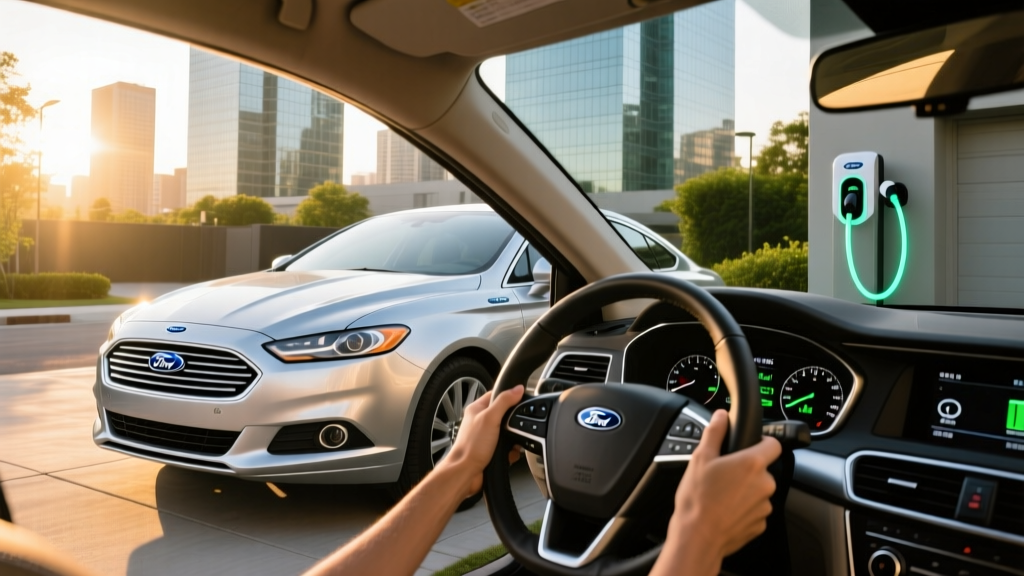
The 2013 Ford Fusion Hybrid was Ford's first ground-up redesign of its midsize sedan hybrid, and over a decade later, it remains one of the more compelling used hybrid options on the market. With an EPA-rated 47 MPG combined, this second-generation Fusion Hybrid delivers fuel economy that still competes with many 2026 hybrids — at a fraction of the cost. If you're shopping for a budget-friendly hybrid and the 2013 Ford Fusion Hybrid is on your radar, here's everything you need to know about its real-world efficiency, battery reliability, and whether it still makes sense in 2026.
2013 Ford Fusion Hybrid: Quick Spec Overview
| Specification | 2013 Ford Fusion Hybrid |
|---|---|
| Powertrain | 2.0L Atkinson-cycle I4 + electric motor (HEV) |
| Combined Horsepower | 188 hp |
| Engine Output | 141 hp @ 6,000 rpm / 129 lb-ft torque |
| Electric Motor Output | 118 hp / 117 lb-ft torque |
| Transmission | eCVT (planetary gearset) |
| Hybrid Battery | 1.4 kWh (usable), Lithium-ion |
| EPA MPG (City / Hwy / Combined) | 47 / 47 / 47 |
| Drivetrain | Front-wheel drive |
| 0-60 mph | ~8.2 seconds |
| Cargo Volume | 12.0 cu ft (trunk) |
| Original MSRP (S / SE / Titanium) | $27,200 / $29,700 / $32,200 |
| 2026 Used Price Range (est.) | $6,500 – $11,000 |
The 2013 Fusion Hybrid uses a conventional hybrid electric vehicle (HEV) architecture — meaning it does not plug in. The small 1.4 kWh lithium-ion battery recharges entirely through regenerative braking and the gasoline engine. This is an important distinction from the Ford Fusion Energi, which is the plug-in hybrid (PHEV) variant of the same generation. We'll cover the HEV vs PHEV differences below.
HEV vs PHEV: Fusion Hybrid vs Fusion Energi
Ford sold two electrified Fusion variants in 2013, and buyers often confuse them:
- Ford Fusion Hybrid (HEV): No plug. The 1.4 kWh battery self-charges via regen and the gas engine. You never plug it in. EPA-rated 47 MPG combined. It operates as a traditional parallel hybrid, switching between electric-only (at low speeds, up to ~62 mph for short distances), gas-only, and combined power.
- Ford Fusion Energi (PHEV): Has a plug. A larger 7.6 kWh lithium-ion battery delivers approximately 21 miles of electric-only range (EPA-rated) before the gas engine kicks in. Total combined range is roughly 620 miles. When the battery is depleted, it operates as a conventional hybrid at about 43 MPG combined. The Energi originally qualified for a federal tax credit (now expired for new purchases).
This article focuses on the Fusion Hybrid (HEV). If you're considering the Energi PHEV, the key tradeoff is higher upfront cost and a smaller trunk (due to the larger battery pack) in exchange for the ability to drive short commutes on electric power alone.
Fuel Economy: EPA Ratings vs Real-World MPG
| Driving Condition | EPA Estimate | Real-World Expectation |
|---|---|---|
| City | 47 MPG | 42–50 MPG |
| Highway | 47 MPG | 38–44 MPG |
| Combined | 47 MPG | 40–46 MPG |
The 2013 Fusion Hybrid's EPA-rated 47 MPG across all three categories was class-leading at launch, beating the Toyota Camry Hybrid and Honda Accord Hybrid of the same era. The identical city and highway ratings reflect Ford's eCVT design, which prioritizes smooth, efficient operation in both conditions.
In real-world ownership, expect some variance. City driving tends to yield the best results — sometimes exceeding the EPA estimate — because the hybrid system leverages frequent stops to recapture energy through regenerative braking and spends more time in electric-only mode. Highway driving at 70-80 mph typically drops to the 38-44 MPG range, as aerodynamic drag dominates and the gasoline engine carries more of the load.
Cold weather reduces fuel economy by roughly 5-10%, as the engine runs more frequently to generate cabin heat and the battery operates less efficiently at low temperatures. Owners in northern climates commonly report winter combined MPG in the 38-42 range.
Hybrid Battery Warranty
The 2013 Ford Fusion Hybrid's high-voltage battery was covered by Ford's original hybrid component warranty: 8 years or 100,000 miles (whichever came first). In states that adopted California emissions standards (California, New York, Massachusetts, and others), the warranty extended to 10 years or 150,000 miles. Since the vehicle is now over a decade old, most examples will be outside of factory warranty coverage. However, the lithium-ion pack has proven durable in practice — see the reliability section below for replacement cost data.
Powertrain and Driving Impressions
The 2013 Fusion Hybrid pairs a 2.0-liter Atkinson-cycle four-cylinder engine (141 hp, 129 lb-ft) with a permanent-magnet electric motor (118 hp, 117 lb-ft). Combined system output is 188 horsepower, routed through an electronically controlled continuously variable transmission (eCVT). This is a planetary gearset design — similar in concept to Toyota's Hybrid Synergy Drive — rather than a belt-driven CVT, which gives it better durability and smoother power delivery.
The result is adequate but not exciting acceleration. The 0-60 mph time of roughly 8.2 seconds places it in the middle of the midsize hybrid sedan pack. The eCVT eliminates gear-shift shock, and the transition between electric and gas power is notably smooth for a 2013-era system. Regenerative braking feels more natural than many early hybrids, though it doesn't offer true one-pedal driving — you'll still use the friction brake pedal regularly.
At low speeds (typically below 35 mph under light throttle), the Fusion Hybrid can operate in electric-only mode, pulling silently away from stoplights. This EV mode is limited by the small 1.4 kWh battery; expect roughly 0.5 to 1 mile of electric-only range before the gasoline engine fires up. This is normal for conventional hybrids — the electric motor is there to assist efficiency, not to replace the engine.
Reliability and Battery Replacement Cost
The 2013 Fusion Hybrid has proven to be one of Ford's more reliable vehicles of its generation. The eCVT transmission, which has no conventional clutch packs or bands, is inherently robust. The hybrid battery pack — a 1.4 kWh lithium-ion unit — has demonstrated strong longevity in fleet and owner data.
Most high-voltage battery failures in the 2013 Fusion Hybrid are isolated to individual cell modules rather than the entire pack. When a cell degrades, the system flags a hybrid system warning. Replacement options in 2026 include:
- New OEM battery pack: $2,500–$3,500 (parts) plus $500–$800 labor at a Ford dealer
- Remanufactured/refurbished pack: $1,200–$2,000 installed through independent hybrid specialists
- Individual cell module replacement: $300–$600 if only one or two modules have failed, performed by a hybrid repair shop
For context, many 2013 Fusion Hybrids with 150,000+ miles are still running on their original battery packs with minimal capacity loss. The small battery size means thermal stress is relatively low compared to full EV packs. NHTSA records show no major safety recalls specific to the hybrid battery system for this model year.
Common non-hybrid reliability concerns for the 2013 Fusion include:
- Electric power steering (EPS) module issues (some vehicles were subject to a recall — verify completion via VIN at nhtsa.gov)
- Transmission shudder at low speeds (usually resolved with a software update or fluid service)
- Infotainment system (MyFord Touch) lag and freezing — widely criticized and partially addressed by software updates
Does the 2013 Fusion Hybrid Qualify for a Tax Credit?
No. The 2013 Ford Fusion Hybrid (HEV) has never qualified for the federal §30D plug-in electric vehicle tax credit. Conventional hybrids that do not plug in are not eligible under IRS rules — only plug-in electric vehicles (BEVs and PHEVs) with sufficient battery capacity qualify. The Fusion Energi (PHEV) originally qualified for a partial federal credit when new, but that credit has long since expired for new purchases.
For used buyers in 2026, the Used Clean Vehicle Credit (§25E) offers up to $4,000 for qualifying used EVs and PHEVs — but again, this applies only to plug-in vehicles, not conventional hybrids. A used Fusion Hybrid purchase does not trigger any federal tax incentive.
Some states offer rebates or HOV lane access for hybrids, but these programs have largely shifted focus to plug-in vehicles. Check your state's energy office or IRS clean vehicle credit page for current rules.
Who Should Buy the 2013 Fusion Hybrid in 2026?
Choose the 2013 Fusion Hybrid if:
- You want a budget hybrid sedan under $10,000 with proven fuel economy
- Your commute is city-heavy, where hybrid efficiency shines (40-50 MPG real-world)
- You don't have access to home or workplace charging (no plug required)
- You want a comfortable, well-equipped midsize sedan with a smooth ride
- You're replacing a gas-only midsize sedan and want to cut fuel costs by 30-40%
Look at a full EV or newer PHEV instead if:
- You have home charging and want zero tailpipe emissions on daily commutes
- You want the latest safety tech (the 2013 Fusion lacks automatic emergency braking, lane-keeping assist, and adaptive cruise on most trims)
- You need a warranty — at 13 years old, you're buying as-is or with limited aftermarket coverage
- Your highway commute dominates — a modern EV like the Hyundai Ioniq 6 or Tesla Model 3 offers lower per-mile energy costs on long drives
Pros and Cons
Pros
- 47 MPG EPA combined — still competitive with 2026 hybrids
- No plug-in required; no charging infrastructure needed
- Smooth eCVT with refined gas/electric transitions
- Spacious cabin with comfortable ride quality
- Affordable used pricing ($6,500–$11,000 in 2026)
- Proven hybrid battery longevity at high mileage
Cons
- MyFord Touch infotainment is dated and sluggish
- No plug means no federal tax credit eligibility
- Trunk space reduced to 12.0 cu ft due to battery placement
- Highway MPG drops below EPA estimate at sustained high speeds
- Lacks modern ADAS features (AEB, lane-keeping, blind-spot monitoring on base trims)
- Original 8-year battery warranty has expired on all examples
Frequently Asked Questions
How many MPG does the 2013 Ford Fusion Hybrid actually get?
The EPA rates it at 47 MPG city, 47 MPG highway, and 47 MPG combined. In real-world driving, expect 42-50 MPG in city conditions and 38-44 MPG on the highway. Cold weather can reduce combined economy to 38-42 MPG.
Does the 2013 Ford Fusion Hybrid need to be plugged in?
No. The Fusion Hybrid is a conventional hybrid (HEV). Its 1.4 kWh battery recharges through regenerative braking and the gasoline engine. You never plug it in. If you want a plug-in Fusion, you're looking for the Fusion Energi (PHEV), which is a separate model.
How far can the 2013 Fusion Hybrid drive on electric power alone?
Only about 0.5 to 1 mile at low speeds (under 35 mph) on a full battery charge. This is typical for conventional hybrids — the electric motor assists the gasoline engine rather than replacing it. For meaningful electric-only range, you'd need the Fusion Energi PHEV (21 miles EPA-rated) or a full battery-electric vehicle.
Is the 2013 Fusion Hybrid reliable, and what does a battery replacement cost?
Yes, the 2013 Fusion Hybrid has a strong reliability record, particularly for its powertrain and eCVT. The hybrid battery has proven durable, with many examples surpassing 150,000 miles on the original pack. If replacement is needed, expect $1,200–$3,500 depending on whether you use a refurbished pack, a new OEM pack, or individual module replacement.
Does the 2013 Ford Fusion Hybrid qualify for any tax credit?
No. As a conventional hybrid (HEV), it does not qualify for the federal §30D new clean vehicle credit or the §25E used clean vehicle credit. Those credits are reserved for plug-in electric vehicles (BEVs and PHEVs). No state-level hybrid incentives specifically target this model in 2026.
Hybrid vs PHEV vs EV — which is right for me?
Choose a conventional hybrid (HEV) like the Fusion Hybrid if you lack charging access and want maximum simplicity — just fuel up and drive. Choose a plug-in hybrid (PHEV) if you have home charging and a short commute (under 30 miles) but still want a gas engine for road trips. Choose a full EV (BEV) if you have reliable charging, want the lowest per-mile fuel cost, and are ready to plan around range on longer trips.
What is the difference between the 2013 Fusion Hybrid and the Fusion Energi?
The Fusion Hybrid is a conventional HEV with a 1.4 kWh battery — no plug, 47 MPG combined. The Fusion Energi is a PHEV with a 7.6 kWh battery — it plugs in, offers 21 miles of electric-only range, and gets 43 MPG combined once the battery is depleted. The Energi has a smaller trunk due to the larger battery pack.
For buyers seeking a low-cost entry into hybrid ownership, the 2013 Ford Fusion Hybrid remains a practical, fuel-efficient choice in 2026. Its real-world fuel economy still holds up against newer competitors, and the powertrain's durability record is reassuring for high-mileage used examples. Just be aware of the aged infotainment, absent modern safety features, and expired battery warranty when evaluating any specific vehicle.