Quick Verdict: The Sonata Hybrid Still Makes Sense in 2026
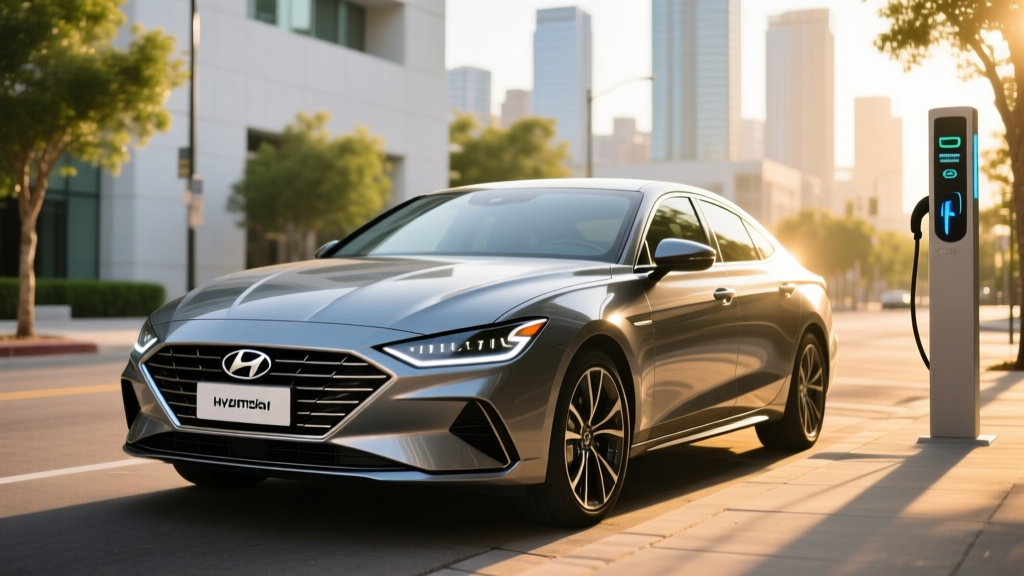
If you want a midsize sedan that sips fuel without demanding a lifestyle change, the 2026 Hyundai Sonata Hybrid remains one of the strongest picks in the segment. It delivers an EPA-estimated 47 MPG combined, a spacious cabin loaded with tech, and a starting price well under $30,000 — all without requiring you to plug in, install a home charger, or plan road trips around charging stations.
This is a conventional hybrid (HEV), not a plug-in hybrid (PHEV). That distinction matters. The Sonata Hybrid charges its own small battery through regenerative braking and the gasoline engine. You fuel it like any other car and simply drive. For buyers who can't charge at home or who regularly take long highway trips, that simplicity is a feature, not a limitation.
HEV vs. PHEV: What the Sonata Hybrid Actually Is
Hyundai currently sells the Sonata in the U.S. as a conventional hybrid only. There is no plug-in hybrid (PHEV) variant in the current lineup — Hyundai discontinued the Sonata PHEV after earlier generations and has focused its plug-in efforts on SUVs like the Tucson PHEV and Ioniq 5 EV.
Conventional Hybrid (HEV) — 2026 Sonata Hybrid
- No plug required. The battery charges via the engine and regenerative braking.
- Small battery (~1.6 kWh usable). Provides electric assist, not standalone driving range.
- Fueling: Gas station only, same as any car.
- Best for: Drivers without home charging access, high-mileage commuters, road-trip-heavy lifestyles.
Plug-In Hybrid (PHEV) — Not Available for Sonata
- Requires plugging in to access electric-only range (typically 25–40 miles on other models).
- Larger battery (10–20+ kWh). Can drive on electricity alone for short trips.
- May qualify for federal tax credit (up to $7,500 under §30D, subject to sourcing and income rules).
- Best for: Drivers with home charging who want EV-like daily commutes with gas backup.
If plug-in capability is a priority, you'll need to look at competitors like the Toyota Prius Prime (PHEV) or Hyundai's own Tucson PHEV. But if you want a straightforward, no-plug hybrid sedan, the Sonata Hybrid is squarely in its element.
Fuel Economy: EPA Ratings and Real-World MPG
Fuel efficiency is the headline reason buyers choose the Sonata Hybrid. Here's the EPA breakdown for the 2026 model, sourced from fueleconomy.gov:
| Driving Cycle | EPA Estimate | Real-World Expectation |
|---|---|---|
| City | 44 MPG | 46–50 MPG (hybrids excel in stop-and-go) |
| Highway | 51 MPG | 44–48 MPG (sustained 70+ mph reduces regen benefit) |
| Combined | 47 MPG | 45–49 MPG depending on driving mix |
Real-world note: Conventional hybrids like the Sonata tend to beat their EPA city estimates because regenerative braking recaptures energy in stop-and-go traffic. Highway driving is the opposite — at sustained high speeds, the gasoline engine does most of the work and aerodynamic drag dominates. On a 300-mile highway trip at 75 mph, expect closer to 44–46 MPG. In mixed suburban commuting with frequent stops, 48–50 MPG is achievable.
Compared to the gasoline-only Sonata (which returns roughly 28 MPG combined), the hybrid cuts fuel consumption by about 40%. Over 15,000 miles per year at $3.50/gallon, that translates to roughly $650–$750 in annual fuel savings.
Powertrain, Performance, and Driving Impressions
| Specification | 2026 Hyundai Sonata Hybrid |
|---|---|
| Engine | 2.0L inline-4 GDI |
| Electric Motor | Permanent-magnet synchronous, integrated in transmission |
| Combined System Output | 192 horsepower |
| Transmission | 6-speed automatic (no CVT) |
| Drivetrain | Front-wheel drive |
| 0–60 mph | ~7.5 seconds (estimated) |
| Battery (traction) | ~1.6 kWh lithium-ion (HEV, not plug-in) |
| Fuel Tank | 13.2 gallons |
| Total Range | ~620 miles |
| Towing Capacity | Not rated for towing |
Hyundai pairs the 2.0-liter four-cylinder with an electric motor sandwiched into a conventional 6-speed automatic — not a CVT. That choice gives the Sonata Hybrid a more natural acceleration feel than rivals like the Toyota Camry Hybrid or Honda Accord Hybrid, which use continuously variable or e-CVT transmissions. The trade-off is marginal: you give up a fraction of an MPG for a more engaging drive.
The 192 combined horsepower is adequate for daily driving and highway merging. The electric motor fills in torque at low RPMs, so the car feels responsive off the line even though the gas engine alone wouldn't be particularly quick. Hyundai's Active Shift Control software smooths gear transitions by syncing motor speed to engine speed — it works well, and most drivers won't notice the hybrid system working at all.
One-pedal driving isn't available (that's an EV/PHEV feature), but the regenerative braking has multiple levels adjustable via steering-wheel paddles. At the highest setting, lifting off the accelerator provides noticeable deceleration, though the car won't come to a full stop without the brake pedal.
Pricing, Trims, and Tax Credit Eligibility
The 2026 Hyundai Sonata Hybrid is available in three trims. Pricing below reflects MSRP before destination charges:
| Trim | MSRP (approx.) | Key Features |
|---|---|---|
| SEL | $29,750 | 12.3" dual displays, wireless CarPlay/Android Auto, SmartSense safety suite, heated front seats |
| SEL Premium | $33,250 | Panoramic sunroof, leather seats, Bose audio, Highway Driving Assist |
| Limited | $37,500 | Head-up display, surround-view camera, ventilated front seats, Digital Key 2, parking collision avoidance |
Federal Tax Credit: Does the Sonata Hybrid Qualify?
No. The 2026 Hyundai Sonata Hybrid does not qualify for the federal §30D Clean Vehicle Credit (up to $7,500). That credit applies only to plug-in electric vehicles — battery-electric vehicles (BEVs) and plug-in hybrids (PHEVs) with a minimum battery capacity of 7 kWh. Because the Sonata Hybrid is a conventional HEV with a ~1.6 kWh battery and no plug-in capability, it is ineligible.
§30D Credit Quick Reference:
- Eligible vehicles: BEVs and PHEVs with ≥7 kWh battery
- Credit amount: Up to $7,500 (split between critical minerals and battery component requirements)
- MSRP caps: $55,000 for sedans, $80,000 for SUVs/trucks/vans
- Buyer income caps: $150K single / $300K joint (modified AGI)
- Point-of-sale transfer available for eligible vehicles
- Conventional hybrids (HEVs) like the Sonata Hybrid: Not eligible
Source: IRS.gov — Clean Vehicle Credits
Some states and utilities offer rebates for conventional hybrids, though these are less common than EV/PHEV incentives. Check your state energy office or local utility for current programs.
Battery Warranty, Reliability, and Long-Term Costs
Hyundai Hybrid Battery Warranty
- Hybrid battery: 10 years / 100,000 miles (whichever comes first)
- Hybrid system components: 10 years / 100,000 miles (motor, inverter, control unit)
- Limited vehicle warranty: 5 years / 60,000 miles
- Powertrain warranty: 10 years / 100,000 miles
Hyundai's hybrid battery warranty is among the longest in the industry, matched only by Kia and Genesis (all under the Hyundai Motor Group umbrella). The warranty covers capacity loss below a defined threshold — typically around 70% of original capacity — and defects in the battery pack.
How Long Will the Hybrid Battery Last?
Modern hybrid batteries are engineered to last the life of the vehicle. The Sonata Hybrid's lithium-ion pack is relatively small (~1.6 kWh) and operates within a conservative state-of-charge window — it never fully charges or fully discharges. This shallow-cycling approach dramatically reduces degradation compared to a full EV battery.
Based on data from Hyundai/Kia hybrid platforms now in their second decade of production, most hybrid batteries show minimal capacity loss even at 150,000+ miles. Premature failures are rare. If a replacement is needed outside of warranty, expect a cost between $2,000 and $3,500 for the battery pack, plus labor. However, this is an uncommon scenario — most Sonata Hybrid owners will trade or sell the vehicle long before the battery needs attention.
Reliability Track Record
Hyundai's hybrid powertrain has proven durable across multiple model lines. The Sonata Hybrid shares its core architecture with the Kia Optima/K5 Hybrid and has benefited from iterative improvements since its introduction. Common maintenance items remain conventional: brake pads (which last longer than gas-only models due to regenerative braking), oil changes, cabin air filters, and tires. There's no additional maintenance required for the hybrid system itself.
For safety ratings, the Sonata family has earned strong marks from both NHTSA and IIHS. The full suite of Hyundai SmartSense driver-assistance features — including forward collision-avoidance, lane-keeping assist, blind-spot monitoring, and rear cross-traffic alert — comes standard on all trims.
Interior, Technology, and Daily Usability
The Sonata Hybrid uses the same interior as the gasoline Sonata, which means you get one of the more spacious cabins in the midsize sedan segment. Rear-seat legroom is generous (38.2 inches), and the trunk holds 16.0 cubic feet — only slightly less than the gas model due to the hybrid battery placement under the rear seats.
The 12.3-inch digital instrument cluster and 12.3-inch touchscreen infotainment display (standard from the SEL trim up) run Hyundai's latest software with over-the-air update capability. Wireless Apple CarPlay and Android Auto are standard. Navigation, Bluelink connected services, and the Hyundai Digital Key 2 (on Limited) round out the tech stack.
Hyundai's Highway Driving Assist (HDA) is standard on SEL Premium and Limited trims. This is an SAE Level 2 driver-assistance system — it combines adaptive cruise control with lane-centering to reduce fatigue on long highway drives. The driver must keep hands on the wheel and remain fully engaged at all times. It is not autonomous driving.
Who Should Buy the Sonata Hybrid vs. a PHEV or Full EV?
Choose the Sonata Hybrid (HEV) if:
- You don't have access to home or workplace charging
- You regularly drive 300+ miles in a single trip and don't want to plan charging stops
- Your budget is under $35,000 and you want maximum fuel savings without a premium
- You want a sedan with strong rear-seat space and a large trunk
- You prefer a no-plug, no-behavior-change ownership experience
Choose a PHEV (like the Toyota Prius Prime) if:
- You can charge at home and want 30–40 miles of electric-only daily commuting
- You want to qualify for the federal §30D tax credit (up to $7,500)
- You want to drive mostly on electricity for short trips while keeping gas backup for long trips
Choose a Full EV (like the Hyundai Ioniq 6 or Tesla Model 3) if:
- You have reliable home Level 2 charging
- You want zero tailpipe emissions and the lowest per-mile fuel cost
- You qualify for the full $7,500 federal tax credit
- You're comfortable with DC fast-charging on road trips
Pros
- 47 MPG combined EPA — excellent for a midsize sedan
- No plug-in required; zero behavior change from a gas car
- 10-year/100,000-mile hybrid battery warranty
- Conventional 6-speed automatic (no CVT drone)
- Spacious cabin, large trunk, generous rear legroom
- Standard Hyundai SmartSense safety suite on all trims
- Starting price under $30,000
Cons
- No PHEV option — can't drive on electric-only power
- No federal tax credit eligibility
- FWD only — no all-wheel-drive option
- Modest 192 HP; adequate but not sporty
- Highway MPG drops to mid-40s at sustained 75+ mph
- Base SEL trim uses cloth seats; leather requires SEL Premium or above
Frequently Asked Questions
How many MPG does the 2026 Hyundai Sonata Hybrid get?
The EPA rates the 2026 Sonata Hybrid at 44 MPG city, 51 MPG highway, and 47 MPG combined. In real-world driving, city MPG often exceeds the EPA estimate (48–50 MPG) thanks to regenerative braking, while sustained highway driving at 75+ mph typically returns 44–46 MPG.
Does the Hyundai Sonata Hybrid need to be plugged in?
No. The Sonata Hybrid is a conventional hybrid (HEV). Its small lithium-ion battery charges automatically through regenerative braking and the gasoline engine. You never plug it in — you simply refuel at a gas station like any other car.
Is there a plug-in hybrid (PHEV) version of the Sonata?
Not for the 2026 model year. Hyundai discontinued the Sonata PHEV in the U.S. market. If you want a Hyundai plug-in hybrid, the Tucson PHEV and Santa Fe PHEV are current options. For a plug-in sedan, consider the Toyota Prius Prime.
How much does it cost to replace the Sonata Hybrid battery?
Out-of-warranty hybrid battery replacement typically costs $2,000–$3,500 including labor. However, this is rarely needed. Hyundai covers the hybrid battery for 10 years or 100,000 miles, and modern hybrid batteries are designed to last the life of the vehicle with minimal degradation due to conservative charge cycling.
Does the Sonata Hybrid qualify for any tax credit?
The Sonata Hybrid does not qualify for the federal §30D Clean Vehicle Credit, which requires a plug-in vehicle with at least 7 kWh of battery capacity. Some state or utility-level incentives may apply to conventional hybrids — check your local programs. For the $7,500 federal credit, you'd need to look at PHEVs or BEVs.
How does the Sonata Hybrid compare to the Toyota Camry Hybrid?
Both are strong midsize hybrid sedans. The Camry Hybrid offers available all-wheel drive and slightly higher combined MPG (up to 52 MPG with FWD). The Sonata Hybrid counters with a more conventional transmission feel (6-speed automatic vs. e-CVT), a longer warranty (10yr/100k vs. Toyota's 10yr/150k hybrid battery but 3yr/36k base), and a slightly lower starting price. Test-drive both to compare ride comfort and tech preferences.
Is the Sonata Hybrid good for long road trips?
Yes. With a 13.2-gallon fuel tank and 47 MPG combined, the Sonata Hybrid delivers approximately 620 miles of total range — more than most EVs and comparable to other hybrids. You refuel in 5 minutes at any gas station, with no charging-station planning required. The comfortable ride, supportive seats, and Highway Driving Assist (on higher trims) make it a solid long-distance cruiser.
What maintenance does the Sonata Hybrid require?
Standard maintenance: oil changes (typically every 7,500–10,000 miles), cabin air filter, tire rotation, and brake fluid checks. Brake pads last significantly longer than on gas-only models because regenerative braking handles much of the deceleration. There is no hybrid-specific maintenance — no additional fluid changes or service items for the electric motor or battery system.
Sources: fueleconomy.gov (EPA fuel economy data), IRS.gov (§30D Clean Vehicle Credit rules), Hyundai USA manufacturer specifications.