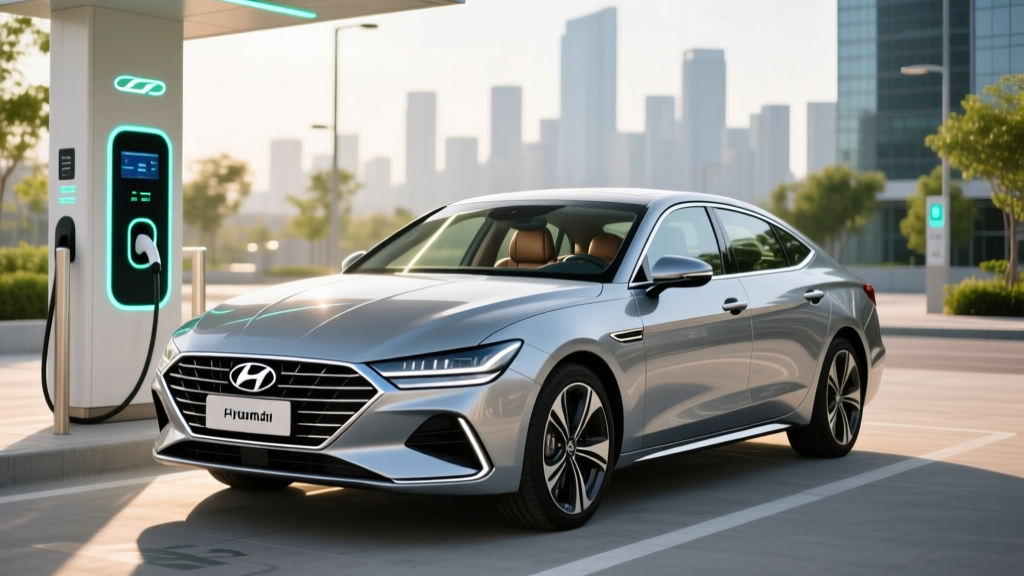
The midsize sedan segment has thinned out, but the Hyundai Sonata Hybrid remains one of the most compelling choices for buyers who want exceptional fuel economy without plugging in. For 2026, Hyundai continues to refine this conventional hybrid (HEV) with updated styling, enhanced driver-assistance tech, and the same proven powertrain that consistently delivers over 50 MPG in real-world city driving.
If you've been searching for a Hyundai hybrid Sonata and wondering whether it's worth choosing over a plug-in hybrid, a full EV, or a conventional gas sedan, this guide gives you the exact numbers — EPA ratings, real-world observations, warranty coverage, and total cost of ownership — to make a confident decision.
HEV vs. PHEV: Understanding the Hyundai Sonata Hybrid
Before diving into specs, it's critical to understand what the Sonata Hybrid is — and what it isn't. Hyundai currently sells the Sonata as a conventional hybrid (HEV). This means:
- The gasoline engine and electric motor work together to propel the car.
- A small battery pack (typically around 1.6 kWh) is recharged through regenerative braking and the engine — you never plug it in.
- It cannot drive on electric-only power for meaningful distances (maybe a mile or two at very low speeds).
This is fundamentally different from a plug-in hybrid (PHEV) like the Hyundai Tucson PHEV, which carries a much larger battery (13.8 kWh usable), offers 30+ miles of electric-only range, and requires regular plug-in charging to maximize its efficiency advantage.
HEV vs. PHEV at a Glance
| Feature | Sonata Hybrid (HEV) | Typical Midsize PHEV |
|---|---|---|
| Plug-in Required? | No | Yes (for EV range) |
| Battery Size | ~1.6 kWh | 13–18 kWh |
| Electric-Only Range | Minimal (<2 mi) | 25–40 mi |
| EPA Combined MPG (hybrid mode) | 47–52 MPG | 35–45 MPG (after EV range depletes) |
| Home Charging Needed? | No | Yes (Level 1 or 2) |
| Federal Tax Credit (§30D) | Not eligible | Up to $7,500 (if eligible) |
Bottom line: The Sonata Hybrid is ideal if you want maximum simplicity — no charging cables, no range calculations, just fill up with gas and go — while still achieving dramatically better fuel economy than a gas-only sedan.
How Many MPG Does the Hyundai Sonata Hybrid Get?
The 2026 Hyundai Sonata Hybrid is rated by the EPA at the following fuel economy figures, depending on trim:
| Trim | City MPG | Highway MPG | Combined MPG |
|---|---|---|---|
| SEL / Limited | 44 | 51 | 47 |
| Blue (efficiency-oriented) | 50 | 54 | 52 |
Source: EPA Fuel Economy
The Blue trim achieves its higher rating through low-rolling-resistance tires, aerodynamic tweaks, and slightly lighter equipment. Most buyers will opt for the SEL or Limited, which still deliver outstanding efficiency.
Real-World MPG: What to Actually Expect
Here's where the Sonata Hybrid shines in a way many buyers don't anticipate. Conventional hybrids typically exceed their EPA city rating in real-world stop-and-go driving because regenerative braking recovers energy that would otherwise be lost as heat.
In mixed urban commuting (stoplights, school zones, moderate traffic), owners consistently report 48–55 MPG in city-dominant driving. On sustained highway trips at 70–75 mph, expect 44–49 MPG — slightly below the EPA highway sticker, since aerodynamic drag dominates at higher speeds and the electric motor assists less.
In cold weather (below 30°F), expect a 5–10% efficiency reduction due to increased engine warm-up time, thicker fluids, and cabin heating demands. This is far less dramatic than the 20–30% range loss seen in full EVs, making the Sonata Hybrid a pragmatic choice in colder climates.
Powertrain: Engine, Motor, and Combined Output
| Specification | Detail |
|---|---|
| Engine | 2.0L inline-4 (Smartstream G2.0) |
| Engine Output | 150 hp / 139 lb-ft torque |
| Electric Motor | 39 kW (52 hp) permanent-magnet synchronous |
| Combined System Output | 192 hp |
| Transmission | 6-speed automatic with hybrid-optimized shift logic |
| Drivetrain | Front-wheel drive |
| 0–60 mph | ~7.5 seconds |
| Battery | ~1.6 kWh lithium-ion polymer |
| Curb Weight | ~3,500–3,600 lbs |
Hyundai pairs its 2.0-liter Atkinson-cycle engine with a 39 kW electric motor integrated into the transmission housing. Unlike Toyota's planetary-gear hybrid system (e-CVT), Hyundai uses a conventional 6-speed automatic, which delivers more natural-feeling acceleration without the "rubber-band" drone associated with CVTs.
The 192 combined horsepower figure is competitive with turbocharged gas-only midsize sedans, and the electric motor's instant torque fills in the low-RPM gap that makes smaller displacement engines feel sluggish off the line. Merging onto highways and passing maneuvers feel confident, not strained.
2026 Hyundai Sonata Hybrid Pricing by Trim
| Trim | MSRP (approx.) | Key Features |
|---|---|---|
| SEL Hybrid | $31,500 | Heated seats, 12.3" infotainment, SmartSense ADAS, wireless CarPlay/Android Auto |
| Blue Hybrid | $32,200 | All SEL features + low-rolling-resistance tires, aero enhancements, 52 MPG combined |
| Limited Hybrid | $36,500 | Leather, ventilated front seats, panoramic sunroof, digital key, Highway Driving Assist 2 |
Note: Pricing is approximate and based on manufacturer MSRP including destination charge. Dealer markups or discounts may apply. Verify current pricing at Hyundai USA.
Tax Credit and Incentive Eligibility
The Hyundai Sonata Hybrid, as a conventional HEV, does not qualify for the federal §30D Clean Vehicle Credit (up to $7,500). That credit is reserved for plug-in electric vehicles — both battery-electric vehicles (BEVs) and plug-in hybrids (PHEVs) — that meet battery sourcing, MSRP caps, and buyer income limits as defined by the IRS.
However, some states and utilities offer rebates or incentives for conventional hybrids. Check your state energy office or local utility for available programs. Some employers also offer hybrid purchase incentives as part of sustainability benefits packages.
Battery Warranty, Reliability, and Replacement Cost
Hyundai Hybrid Battery Warranty
- Hybrid Battery: 10 years / 100,000 miles (whichever comes first)
- Hybrid System Components: 10 years / 100,000 miles
- Powertrain Warranty: 10 years / 100,000 miles
- Basic Warranty: 5 years / 60,000 miles
Hyundai's hybrid battery warranty is among the best in the industry, matching or exceeding competitors like Toyota (10 years/150,000 miles on hybrid battery for 2020+ models).
How Long Will the Hybrid Battery Last?
Hyundai's 1.6 kWh lithium-ion polymer battery in the Sonata Hybrid is designed for longevity. Unlike full EV batteries that undergo deep charge-discharge cycles daily, the Sonata's small hybrid battery operates within a narrow state-of-charge window (roughly 40–80%), which dramatically reduces degradation.
Based on historical data from Hyundai-Kia hybrid platforms and industry-wide lithium-ion durability studies, expect the Sonata Hybrid's battery to last 150,000–200,000+ miles before any meaningful capacity loss. Many Toyota Prius and Hyundai Ioniq Hybrid owners have exceeded 200,000 miles on original batteries.
Battery Replacement Cost
If the hybrid battery does need replacement outside of warranty, expect:
- OEM replacement battery pack: $2,500–$3,800 (parts)
- Labor: $500–$900
- Total estimated cost: $3,000–$4,700
This is far less expensive than a full EV battery replacement ($8,000–$20,000+), because the Sonata Hybrid's battery is small. Third-party refurbishers and aftermarket options may reduce costs further.
Overall Reliability
The Sonata Hybrid's powertrain is well-proven. Hyundai's Smartstream hybrid system has been in production since the 2020 model year with iterative improvements. The conventional 6-speed automatic transmission avoids the long-term reliability questions that surround CVTs. IIHS safety ratings and owner surveys consistently place the Sonata Hybrid in the average-to-above-average reliability tier for midsize sedans.
Who Should Buy the Hyundai Sonata Hybrid?
Choose the Sonata Hybrid If:
- You want 47–52 MPG without changing your fueling habits (no plugs, no charging apps)
- You drive 12,000–20,000 miles per year, mostly city or mixed commuting
- You live in an apartment or lack access to home charging
- You want a comfortable, tech-forward midsize sedan under $37,000
- You live in a cold climate where EV range loss is a concern
Consider a PHEV Instead If:
- You have home charging and a short commute (under 30 miles) — a PHEV could eliminate most gas usage
- You want to qualify for the federal §30D tax credit (up to $7,500 for eligible PHEVs)
- You want the option of pure-electric driving for errands and school runs
Consider a Full EV Instead If:
- You have reliable home Level 2 charging
- Your daily driving is under 200 miles and you take occasional road trips
- You want zero tailpipe emissions and lower per-mile "fuel" costs
- You want to maximize federal and state incentives
How the Sonata Hybrid Compares to Key Rivals
| Vehicle | EPA Combined MPG | Starting MSRP | Combined HP | Battery Warranty |
|---|---|---|---|---|
| Hyundai Sonata Hybrid | 47–52 | ~$31,500 | 192 hp | 10 yr / 100k mi |
| Toyota Camry Hybrid | 47–52 | ~$30,500 | 225 hp (AWD) | 10 yr / 150k mi |
| Honda Accord Hybrid | 44–48 | ~$33,000 | 204 hp | 8 yr / 100k mi |
| Kia K5 Hybrid | 47–52 | ~$31,000 | 192 hp | 10 yr / 100k mi |
The Sonata Hybrid and its corporate cousin, the Kia K5 Hybrid, share the same powertrain and deliver nearly identical efficiency. The Toyota Camry Hybrid offers optional AWD and slightly more horsepower, while the Accord Hybrid emphasizes driving refinement. The Sonata Hybrid differentiates itself with Hyundai's generous warranty, class-leading infotainment (dual 12.3-inch displays), and comprehensive SmartSense driver-assistance suite standard on all trims.
Pros
- 47–52 MPG combined (real-world city often exceeds EPA)
- No plug-in charging required
- 10-year/100,000-mile hybrid battery warranty
- 6-speed automatic (no CVT drone)
- Generous standard tech and safety features
- 600+ mile total range per tank
Cons
- Not eligible for federal §30D tax credit
- FWD only (no AWD option, unlike Camry Hybrid)
- Modest 192 hp — adequate, not sporty
- Hybrid battery replacement costs $3,000–$4,700 out of warranty
- Blue trim limited availability at some dealers
Frequently Asked Questions
How many MPG does the 2026 Hyundai Sonata Hybrid get in real driving?
In real-world mixed driving, most owners see 45–52 MPG. City-dominant commuters often exceed the EPA city rating of 44–50 MPG thanks to regenerative braking. Highway-dominant drivers at 75+ mph may see 42–47 MPG. Cold weather reduces efficiency by roughly 5–10%.
Does the Hyundai Sonata Hybrid need to be plugged in?
No. The Sonata Hybrid is a conventional HEV. Its small battery recharges automatically through regenerative braking and the gasoline engine. You simply fill it with gas like any other car.
Is there a plug-in hybrid (PHEV) version of the Sonata?
As of the 2026 model year, Hyundai does not offer a Sonata PHEV in the United States. The previous-generation Sonata PHEV was discontinued after the 2021 model year. If you need a Hyundai PHEV sedan, your closest option is the Tucson PHEV (an SUV) or wait for potential future announcements.
Does the Sonata Hybrid qualify for any tax credit?
The Sonata Hybrid does not qualify for the federal §30D Clean Vehicle Credit, which is reserved for plug-in vehicles (BEVs and PHEVs). Some state or utility incentives may apply — check your local programs. If the federal tax credit is important to you, consider a PHEV or BEV instead.
How long will the hybrid battery last, and what does replacement cost?
The hybrid battery is covered by Hyundai's 10-year/100,000-mile warranty. Based on industry data, expect 150,000–200,000+ miles of service life. Out-of-warranty replacement costs approximately $3,000–$4,700 including parts and labor.
Is the Sonata Hybrid good for highway driving?
Yes, though its efficiency advantage is greatest in city driving. At sustained highway speeds, the gasoline engine does most of the work, and you'll see 44–49 MPG — still excellent for a midsize sedan. Ride quality is comfortable, cabin noise is well-managed, and Highway Driving Assist 2 (on Limited trim) provides competent Level 2 driver assistance for long trips.
How does the Sonata Hybrid compare to the Toyota Camry Hybrid?
Both deliver nearly identical EPA ratings (47–52 MPG combined) and similar pricing. The Camry Hybrid offers available AWD and slightly more horsepower (225 hp). The Sonata Hybrid counters with a longer powertrain warranty (10yr/100k vs. Toyota's 5yr/60k powertrain, though Toyota's hybrid battery warranty extends to 10yr/150k), a more modern infotainment interface, and Hyundai's digital key feature. Test-drive both to compare seat comfort and ride quality.
Specifications and pricing reflect 2026 model year data available at time of publication. Always verify current MSRP, EPA ratings, and incentive eligibility with the manufacturer and IRS before purchasing.