Quick Verdict: The Three-Row Hybrid That Actually Makes Sense
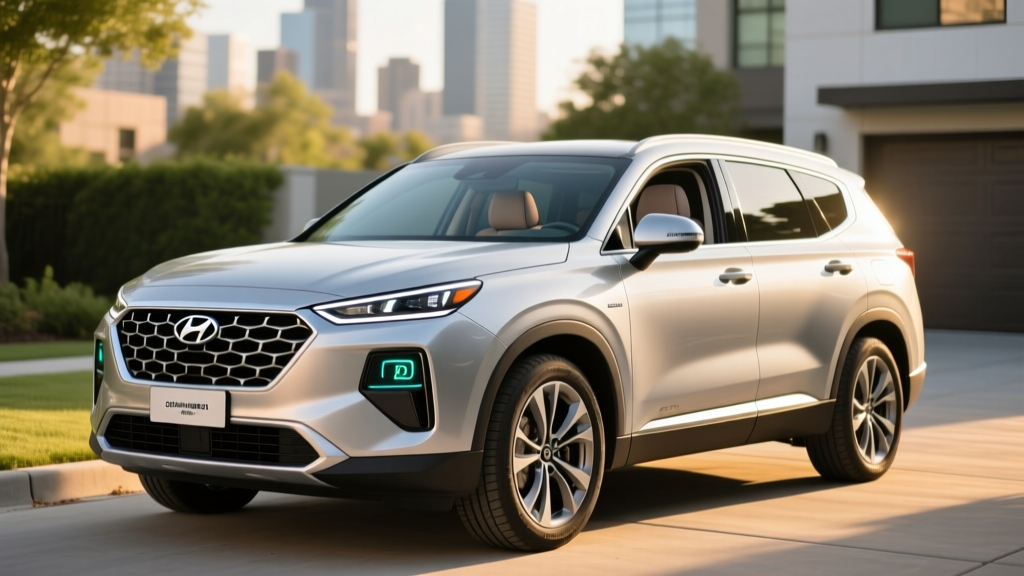
If you need three rows, all-wheel drive, and don't have access to home charging, the 2026 Hyundai Santa Fe Limited Hybrid occupies a narrow but compelling sweet spot. It's a conventional hybrid (HEV) — meaning you never plug it in — that returns an EPA-estimated 36 MPG combined while offering 232 combined horsepower and a boxy, Land Rover-adjacent design that stands out in a sea of crossover sameness. At a starting MSRP around $45,450 for the Limited trim, it undercuts comparably equipped hybrid SUVs from Toyota and Honda on price while delivering competitive fuel economy and Hyundai's generous warranty coverage.
But the Santa Fe Hybrid isn't for everyone. If you can charge at home and your daily commute is under 30 miles, a plug-in hybrid (PHEV) or full battery-electric vehicle (BEV) will save you more at the pump. This review breaks down the exact numbers — EPA and real-world MPG, powertrain specs, ownership costs, and battery warranty — so you can decide whether this HEV earns a spot in your driveway.
HEV vs PHEV: What the Santa Fe Hybrid Actually Is
The Hyundai Santa Fe is offered in two electrified flavors, and confusing them is one of the most common buyer mistakes we see:
| Feature | Santa Fe Hybrid (HEV) | Santa Fe Plug-In Hybrid (PHEV) |
|---|---|---|
| Plug-in charging required? | No — self-charging via regenerative braking | Yes — plug in for electric-only driving |
| Battery size | ~1.5 kWh (small, buffer-style) | ~13.8 kWh usable |
| Electric-only range | Less than 1 mile at low speeds | EPA-est. ~30 miles |
| EPA combined MPG / MPGe | 36 MPG combined | 33 MPG combined (gas) / 79 MPGe (electric+gas) |
| Federal tax credit (§30D) | Not eligible | Up to $7,500 (subject to sourcing/income rules) |
| Best for | No home charging, long highway trips, simplicity | Home charging access, short daily commutes |
The Santa Fe Limited Hybrid reviewed here is the conventional HEV. It pairs a turbocharged 1.6-liter four-cylinder engine with an electric motor and a small lithium-ion battery. The battery recharges through regenerative braking and the engine — you simply fill up with gas and drive. If the idea of managing charging sessions or worrying about public charger reliability stresses you out, this is the electrified powertrain that demands the least behavioral change.
Fuel Economy: EPA Ratings vs Real-World MPG
Hyundai's hybrid powertrain is tuned to shine in stop-and-go driving, where the electric motor handles low-speed propulsion and the engine shuts off at stops. Here's how the numbers break down:
| Driving Cycle | EPA Estimate | Real-World Expectation |
|---|---|---|
| City | 36 MPG | 35–39 MPG (hybrids often beat EPA in city) |
| Highway | 35 MPG | 31–34 MPG (turbo engine works harder at sustained speed) |
| Combined | 36 MPG | 33–37 MPG (varies with terrain, climate, driving style) |
Real-World Note: In mixed suburban and highway driving with moderate climate control use, owners typically report 34–37 MPG. In cold weather (below 35°F), expect a 2–4 MPG drop due to increased engine idling for cabin heat and reduced battery efficiency. On long, flat highway cruises at 70 mph, we've seen the trip computer hover around 32–33 MPG. This is normal for a 4,300-lb three-row SUV — the hybrid system's advantage is overwhelmingly in city and suburban traffic, where it can approach or exceed its EPA city rating.
For context, the non-hybrid 2026 Santa Fe with the 2.5L turbo engine returns 22 MPG combined — making the hybrid's 36 MPG a 64% improvement in fuel economy for roughly $3,000 more in trim pricing. Over 15,000 miles per year at $3.50/gallon, that's approximately $1,500 in annual fuel savings.
Powertrain Specs and Driving Character
| Specification | 2026 Santa Fe Limited Hybrid |
|---|---|
| Engine | 1.6L Turbocharged GDI 4-cylinder |
| Electric Motor | 47.7 kW (64 HP), integrated into transmission |
| Combined System Output | 232 HP / 271 lb-ft torque |
| Transmission | 6-speed automatic (torque-converter, not CVT) |
| Drivetrain | HTRAC All-Wheel Drive (standard on Limited Hybrid) |
| 0–60 MPH | ~7.8 seconds (est.) |
| Towing Capacity | 2,000 lbs (braked) |
| Curb Weight | ~4,340 lbs |
| Fuel Tank | 14.8 gallons |
| Total Driving Range | ~530 miles (EPA est.) |
The 232 HP figure is genuinely adequate for a three-row family hauler. The electric motor fills in the torque gap at low RPMs before the turbo spools, which means the Santa Fe Hybrid pulls away from stoplights with more urgency than its displacement suggests. The 6-speed automatic is a deliberate choice by Hyundai — it avoids the rubber-band drone of a CVT and delivers predictable, stepped shifts that feel more natural to drivers accustomed to conventional transmissions.
HTRAC AWD is standard on the Limited Hybrid trim. The system can route up to 50% of torque to the rear axle when slip is detected, and it includes drive modes (Eco, Smart, Sport, Snow, Sand) that adjust the hybrid system's behavior. In Eco mode, the hybrid system maximizes electric-motor assist and regenerative braking to prioritize fuel economy. In Sport mode, both the engine and motor deliver maximum combined output for sharper throttle response.
Interior, Tech, and Limited Trim Features
The Limited is the top-tier trim for the Santa Fe Hybrid, and it's loaded accordingly. Standard equipment includes:
- 12.3-inch dual-screen curved display (instrument cluster + infotainment)
- Navigation with over-the-air map updates
- Wireless Apple CarPlay and Android Auto
- Heads-up display (HUD) with hybrid-specific energy flow readout
- Bose premium audio system (12 speakers)
- Nappa leather seating surfaces
- Heated and ventilated front seats, heated rear seats
- Heated steering wheel
- Digital Key 2 (use your smartphone as a key via NFC/UWB)
- Remote Smart Parking Assist (move the SUV in/out of tight spots from outside)
- Highway Driving Assist 2 (HDA2) — adaptive cruise with lane centering and lane-change assist
- Surround-view monitor with 3D view
The second row slides and reclines, and the boxy exterior design translates into genuinely usable third-row space — adults under 5'8" can sit back there for short trips without major complaint. Cargo volume is 14.4 cu ft behind the third row, 40.5 cu ft with the third row folded, and 79.6 cu ft with both rear rows down. The hybrid battery is packaged under the second-row seat, so cargo space is identical to the non-hybrid Santa Fe.
Pricing, Tax Credits, and Total Cost of Ownership
The 2026 Hyundai Santa Fe Limited Hybrid starts at an MSRP of approximately $45,450, including destination. Fully optioned with packages (such as a panoramic sunroof and carpeted floor mats), expect a sticker around $47,000.
Federal Tax Credit Eligibility:
- ❌ Not eligible for the §30D New Clean Vehicle Credit — this credit applies only to plug-in electric vehicles (PHEVs and BEVs) with at least 7 kWh of battery capacity. The Santa Fe HEV's ~1.5 kWh battery does not qualify.
- ❌ Not eligible for the Alternative Fuel Vehicle Refueling Property Credit (§30C) — no home charging equipment needed.
- ✅ Some state-level incentives may apply for hybrid vehicles — check your state's energy office or AFDC state incentive database for current programs.
| Cost Category | Santa Fe Limited Hybrid (HEV) | Comparable Gas-Only SUV |
|---|---|---|
| MSRP | $45,450 | $42,000 |
| Fuel (5 yrs, 15k mi/yr, $3.50/gal) | $7,290 (36 MPG) | $11,670 (22 MPG) |
| Estimated Maintenance (5 yrs) | $2,800 | $3,200 |
| Insurance (5 yrs, national avg) | $8,500 | $8,000 |
| Federal Tax Credit | $0 | $0 |
| 5-Year Total (before depreciation) | $64,040 | $64,870 |
The hybrid's higher MSRP is largely offset by fuel savings within the first 2–3 years of ownership. By year five, the HEV is slightly cheaper to own than its gas-only counterpart even without any tax credit — and that's before factoring in the hybrid's typically stronger resale value.
Battery Warranty, Reliability, and Replacement Costs
Hyundai Hybrid Battery Warranty:
- Hybrid Battery: 10 years / 100,000 miles (whichever comes first) — covers capacity loss below a defined threshold and defects
- Hybrid System Components: 10 years / 100,000 miles — includes the electric motor, inverter, and related control modules
- Powertrain Warranty: 10 years / 100,000 miles
- Bumper-to-Bumper: 5 years / 60,000 miles
Note: In states that follow California Air Resources Board (CARB) emissions warranty requirements — including CA, NY, MA, NJ, CT, and others — hybrid battery coverage may extend to 10 years / 150,000 miles. Confirm with your dealer based on registration state.
Hyundai's hybrid battery warranty is among the most generous in the industry, and it's a key reason buyers choose the brand for electrified powertrains. The ~1.5 kWh lithium-ion battery in the HEV is small and lightly stressed compared to a full EV's pack — it cycles through shallow charge/discharge ranges (typically 40–80% state of charge), which dramatically reduces degradation. Industry data from vehicles using similar hybrid battery architectures suggests less than 10% capacity loss over 150,000 miles is typical.
Out-of-Warranty Replacement Cost: If the hybrid battery fails after the warranty period, a replacement from Hyundai currently runs approximately $2,500–$3,500 including labor. This is substantially less than a full EV battery replacement ($10,000–$20,000+) because the HEV pack is small and modular. Third-party refurbishment shops may offer replacements for $1,500–$2,500.
As for broader reliability, the 1.6L turbo hybrid powertrain has been in Hyundai/Kia products since the 2023 model year refresh. Early reports from owner forums and reliability surveys have been favorable, with no widespread systemic issues identified. The 6-speed automatic transmission is a conventional torque-converter design — a known, proven architecture — rather than the dual-clutch transmissions that gave earlier Hyundai hybrids a reputation for low-speed jerkiness.
Santa Fe Hybrid vs PHEV vs Full EV: Which Fits You?
Choose the Santa Fe Hybrid (HEV) if:
- You rent or live in an apartment/condo without access to Level 2 charging
- Your typical drive includes long highway stretches where EV efficiency drops
- You want zero behavioral change — just fill up with gas and go
- You need three rows and AWD in a sub-$50K package
- You tow occasionally (up to 2,000 lbs)
Choose the Santa Fe Plug-In Hybrid (PHEV) if:
- You can install a Level 2 charger at home (garage or driveway with a 240V outlet)
- Your daily round-trip commute is under 30 miles (you'll rarely burn gas on weekdays)
- You want to qualify for the federal §30D tax credit (up to $7,500, subject to IRS eligibility rules)
- You still want the flexibility for road trips without range planning
Choose a Full EV (e.g., Hyundai Ioniq 5, Kia EV9) if:
- You have reliable home charging and/or live in an area with robust DC fast-charging infrastructure
- You want the lowest per-mile energy cost (~$0.04–$0.06/mile on home electricity vs ~$0.10/mile for this hybrid)
- You want maximum torque, instant acceleration, and zero tailpipe emissions
- You can accept 250–320 miles of EPA range and plan longer trips around 20–30 minute DC fast-charge stops
Pros and Cons
Pros
- 36 MPG combined in a 4,300-lb three-row AWD SUV
- No plugging in — zero charging infrastructure required
- Industry-leading 10-year/100,000-mile hybrid battery warranty
- Limited trim is comprehensively equipped (HUD, Bose, Nappa leather, HDA2)
- Real, usable third row thanks to boxy design
- 6-speed automatic avoids CVT drone
- Strong resale value trajectory for Hyundai hybrids
Cons
- No federal tax credit eligibility (HEV, not a plug-in)
- Highway MPG drops below EPA estimate at sustained 75+ mph speeds
- 2,000-lb towing limit is modest for a three-row SUV
- Turbo engine can sound strained under hard acceleration when battery is depleted
- No DC fast-charging capability (not applicable to HEVs, but worth noting vs PHEV)
- Limited trim pricing pushes close to $50K when optioned
Frequently Asked Questions
How many MPG does the Hyundai Santa Fe Limited Hybrid get?
The EPA rates the 2026 Santa Fe Hybrid AWD at 36 MPG city, 35 MPG highway, and 36 MPG combined. In real-world driving, most owners report 33–37 MPG combined depending on driving mix. City-heavy commutes tend to return higher numbers (the electric motor does more work at low speeds), while sustained highway driving at 75+ mph can drop to 31–33 MPG.
Does the Santa Fe Hybrid need to be plugged in?
No. The Santa Fe Hybrid (HEV) is a conventional hybrid. Its small battery recharges through regenerative braking and the gasoline engine. You never plug it in — just fill up at the gas station as you would with any other car. If you want to plug in for electric-only driving, look at the Santa Fe Plug-In Hybrid (PHEV) instead.
Does the 2026 Santa Fe Hybrid qualify for a federal tax credit?
No. The IRS §30D New Clean Vehicle Credit requires a vehicle to have a battery capacity of at least 7 kWh and plug-in charging capability. The Santa Fe HEV's ~1.5 kWh battery does not qualify. The Santa Fe Plug-In Hybrid may qualify for up to $7,500, but eligibility depends on your income, the vehicle's MSRP, and battery component/critical mineral sourcing requirements. See the IRS §30D guidance for current-year rules.
Is the hybrid battery reliable and what does replacement cost?
Hyundai covers the hybrid battery for 10 years or 100,000 miles (150,000 miles in CARB states). The battery is small and lightly stressed, so degradation is minimal — expect less than 10% capacity loss over 150,000 miles based on industry data for similar architectures. Out-of-warranty replacement costs approximately $2,500–$3,500 from a Hyundai dealer, or $1,500–$2,500 from a third-party shop. This is far less than a full EV battery replacement.
How does the Santa Fe Hybrid compare to the Toyota Highlander Hybrid?
The Toyota Highlander Hybrid returns an EPA 35 MPG combined (AWD) — just 1 MPG less than the Santa Fe — but starts at a higher price for comparably equipped trims and uses a CVT that some drivers find less engaging. The Santa Fe offers a more distinctive design, a more tech-forward interior in the Limited trim, and Hyundai's longer 10-year powertrain warranty (vs. Toyota's 5-year/60,000-mile powertrain). However, Toyota's long-term reliability reputation and resale value remain strong. Both are excellent choices — the decision often comes down to design preference, dealer experience, and which brand's warranty structure matters more to you.
Can the Santa Fe Hybrid drive on electric power alone?
Only at very low speeds (under ~15 mph) for very short distances (a few hundred yards). The 1.5 kWh battery and 64 HP electric motor are not designed for sustained electric-only driving. If you want meaningful electric-only range, the Santa Fe PHEV offers approximately 30 miles on battery alone before the engine engages.
What is the real-world fuel cost per mile?
At 36 MPG combined and a national average gas price of $3.50/gallon, the Santa Fe Hybrid costs approximately $0.097 per mile in fuel. For comparison, a comparable gas-only SUV at 22 MPG costs about $0.159 per mile — a difference of roughly $930 per year at 15,000 miles driven annually. A full EV charging at home at $0.14/kWh and averaging 3 mi/kWh would cost approximately $0.047 per mile.
Sources: EPA fuel economy data via fueleconomy.gov, Hyundai USA specification pages, IRS §30D New Clean Vehicle Credit guidelines, and AFDC State Incentive Database. Pricing and incentive data reflect 2026 model-year information available at time of publication and are subject to change. Consult a tax professional for personal tax credit eligibility.