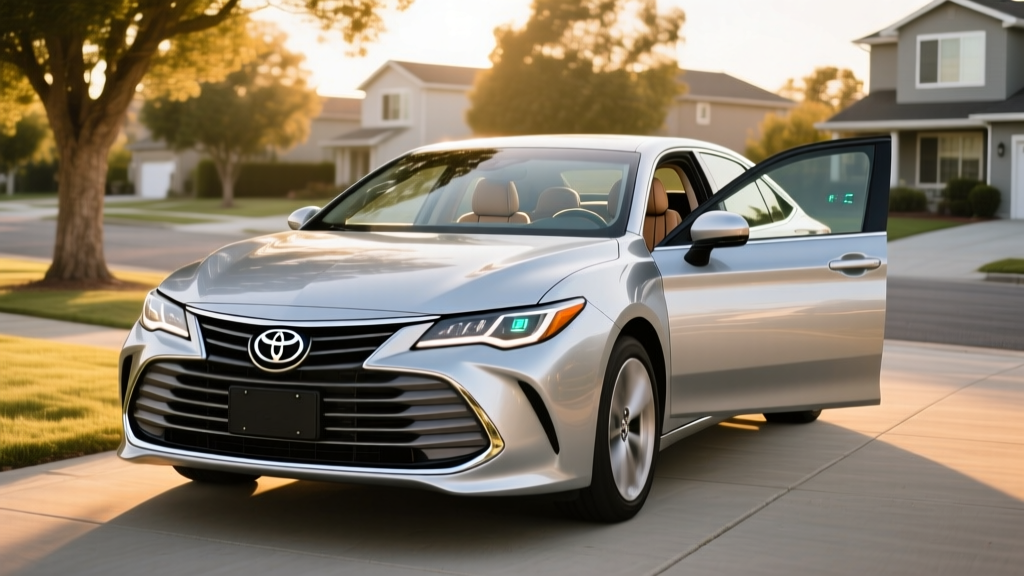
The 2017 Toyota Avalon Hybrid at a Glance
The 2017 Toyota Avalon Hybrid is a conventional hybrid electric vehicle (HEV) — not a plug-in. It pairs a 2.5-liter four-cylinder engine with an electric motor and a compact nickel-metal hydride (NiMH) battery pack that recharges through regenerative braking and engine power. You never plug it in. For buyers in 2026 searching the used market, this full-size sedan remains one of the most fuel-efficient options in its class, with an EPA-estimated 40 MPG combined and a reputation for long-term powertrain durability that few competitors can match.
Toyota discontinued the Avalon after the 2022 model year, replacing it indirectly with the Crown sedan. That means every 2017 Avalon Hybrid on the market today is a used vehicle, typically priced between $14,000 and $22,000 depending on mileage, condition, and trim. This guide breaks down exactly what you're getting — fuel economy, battery health expectations, ownership costs, and how it stacks up against modern hybrids, PHEVs, and full EVs.
| Specification | Value |
|---|---|
| Powertrain Type | Conventional Hybrid (HEV) — no plug-in |
| Engine | 2.5L inline-4 Atkinson-cycle |
| Combined Horsepower | 200 hp (net system) |
| Transmission | eCVT (planetary gearset) |
| Hybrid Battery | NiMH, ~1.6 kWh (not plug-in) |
| EPA MPG (City / Hwy / Combined) | 40 / 39 / 40 |
| Fuel Tank Capacity | 13.2 gallons |
| Total Driving Range | ~528 miles |
| 0–60 mph | ~7.7 seconds |
| Drivetrain | Front-wheel drive |
| Cargo Volume | 14.0 cu ft (trunk) |
| Original MSRP (2017) | $37,350 – $43,700 |
| Typical Used Price (2026) | $14,000 – $22,000 |
| Hybrid Battery Warranty (Original) | 8 years / 100,000 miles (10 yr / 150,000 mi in CARB states) |
How Many MPG Does the 2017 Avalon Hybrid Actually Get?
The EPA rates the 2017 Toyota Avalon Hybrid at 40 MPG city, 39 MPG highway, and 40 MPG combined. These numbers apply across all trims — XLE Premium, XLE Plus, Limited, and the sport-tuned Touring (which drops slightly to 38/39/38 due to wider tires and suspension tuning). According to fueleconomy.gov, the Avalon Hybrid's combined rating places it among the most efficient full-size sedans ever sold in the U.S.
| Trim Level | City MPG | Highway MPG | Combined MPG |
|---|---|---|---|
| XLE Premium / XLE Plus / Limited | 40 | 39 | 40 |
| Touring | 38 | 39 | 38 |
Real-World MPG vs. EPA Estimates
Toyota's Hybrid Synergy Drive system excels in stop-and-go city driving, where regenerative braking recovers energy and the electric motor handles low-speed propulsion. In real-world use, many owners report matching or slightly exceeding the 40 MPG city figure in moderate climates. Highway fuel economy tends to track closely with the EPA's 39 MPG estimate at speeds up to 70 mph, but drops to roughly 35–37 MPG at sustained 80+ mph speeds — a characteristic of the Atkinson-cycle engine, which prioritizes efficiency over peak power.
Cold weather reduces efficiency by approximately 5–10%, primarily because the engine runs more frequently to maintain cabin heat. Owners in northern climates typically see 36–38 MPG combined during winter months. With a 13.2-gallon fuel tank, real-world range falls between 475 and 530 miles per fill-up depending on driving conditions.
HEV vs. PHEV vs. EV: Where Does the Avalon Hybrid Fit?
Understanding the distinction between hybrid types is essential before buying:
| Feature | HEV (Avalon Hybrid) | PHEV (e.g., Toyota RAV4 Prime) | BEV (e.g., Tesla Model 3) |
|---|---|---|---|
| Plug-in Required? | No | Yes | Yes |
| Electric-Only Range | None (motor assists engine) | 25–42 miles typical | 250–360+ miles |
| Battery Size | ~1.6 kWh (NiMH) | 13–18 kWh (lithium-ion) | 50–82 kWh (lithium-ion) |
| Home Charging | Not needed | 120V or 240V outlet | 240V Level 2 recommended |
| Fuel / Energy Cost per Mile | ~$0.09 (gas at $3.50/gal) | ~$0.04 (electric) / $0.09 (gas) | ~$0.04 (electric) |
| Federal Tax Credit | None | Up to $7,500 (§30D, new only) | Up to $7,500 (§30D, new only) |
| Used EV Credit (§25E) | Not eligible | Up to $4,000 (if qualified) | Up to $4,000 (if qualified) |
The 2017 Avalon Hybrid is a conventional HEV. Its small NiMH battery captures energy from braking and deceleration, then uses it to assist the gasoline engine and enable brief electric-only movement at very low speeds (typically under 25 mph for less than a mile). It does not have a plug, a charging port, or meaningful electric-only range. If you want electric-only commuting, you need a PHEV or a full battery electric vehicle (BEV).
However, the HEV's advantage is simplicity: no charging infrastructure needed, no range planning, and a purchase price on the used market that undercuts nearly every PHEV or BEV alternative. For drivers who lack access to home or workplace charging, the Avalon Hybrid delivers significant fuel savings over a conventional gas sedan without any lifestyle adjustment.
Powertrain and Driving Performance
The 2017 Avalon Hybrid uses Toyota's well-proven Hybrid Synergy Drive system. The 2.5-liter Atkinson-cycle four-cylinder engine produces 156 hp and 156 lb-ft of torque on its own, while the electric motor adds additional power for a net system output of 200 horsepower. An electronically controlled continuously variable transmission (eCVT) — which is actually a planetary gearset, not a belt-driven CVT — manages power delivery seamlessly between the engine and motor.
The 0–60 mph time of approximately 7.7 seconds is adequate for highway merging and passing, though it won't feel quick compared to modern turbocharged sedans or EVs. The eCVT eliminates shift shock entirely, and the transition between electric and gasoline power is nearly imperceptible — a hallmark of Toyota's hybrid refinement.
Ride quality is tuned for comfort. The Avalon Hybrid absorbs road imperfections well and maintains a quiet cabin at cruising speeds. The Touring trim adds sport-tuned dampers and 18-inch wheels for slightly firmer handling, but this remains a grand-touring sedan, not a sports sedan. Steering is light and predictable, and braking feel — often a weak point in hybrids due to regenerative blending — is linear and confidence-inspiring in this generation.
Battery Lifespan, Warranty, and Replacement Cost
Hybrid battery longevity is the single most common concern for used hybrid buyers. The 2017 Avalon Hybrid uses a nickel-metal hydride (NiMH) battery pack — a chemistry Toyota has deployed in millions of hybrids since the original 1997 Prius. NiMH batteries degrade more slowly than early lithium-ion packs and are less sensitive to extreme temperatures, though they are heavier and store less energy per kilogram.
Hybrid Battery Warranty Coverage
Original warranty: 8 years / 100,000 miles nationwide; 10 years / 150,000 miles in CARB states (California, New York, Massachusetts, and others adopting California emissions standards).
For a 2017 model in 2026: The 8-year/100,000-mile warranty has expired for most vehicles. However, if you purchased in a CARB state and the vehicle has under 150,000 miles, the 10-year coverage may still apply through the end of 2027. Check with a Toyota dealer using the VIN to confirm.
Real-World Battery Lifespan
Toyota NiMH hybrid batteries routinely last 150,000 to 200,000+ miles before significant capacity loss. Many first-generation Prius taxis exceeded 300,000 miles on the original battery. Degradation in the Avalon Hybrid manifests as a gradual reduction in electric-assist frequency and a slight MPG decline — typically 1–3 MPG over 150,000 miles — rather than a sudden failure.
According to data aggregated from hybrid repair shops and owner forums, approximately 10–15% of Toyota hybrid batteries require replacement before 200,000 miles. The most common failure mode is individual cell imbalance rather than total pack failure.
Battery Replacement Cost
If the hybrid battery does fail outside warranty, here's what to budget:
- New OEM battery from Toyota: $2,500 – $3,500 (parts) + $500 – $800 labor = $3,000 – $4,300 total
- Refurbished/remanufactured battery: $1,200 – $2,000 installed
- Individual cell/module replacement: $500 – $1,200 at a hybrid specialist (not all shops offer this)
Given the vehicle's used value of $14,000–$22,000, a battery replacement represents a significant but manageable cost — especially compared to a transmission or engine replacement in a conventional vehicle. Many owners opt for refurbished packs, which typically carry a 1–3 year warranty.
Does the 2017 Avalon Hybrid Qualify for Any Tax Credit?
No. The 2017 Toyota Avalon Hybrid does not qualify for the federal §30D Clean Vehicle Credit, which applies only to new plug-in vehicles (PHEVs and BEVs) with sufficient battery capacity. Conventional hybrids like the Avalon have never qualified for §30D.
It is also not eligible for the §25E Used Clean Vehicle Credit (up to $4,000), which requires the vehicle to be a qualified plug-in electric vehicle with at least 7 kWh of battery capacity. The Avalon Hybrid's ~1.6 kWh NiMH pack falls far below this threshold.
According to IRS guidelines on clean vehicle credits, only plug-in electric vehicles meeting specific battery sourcing, MSRP, and buyer income requirements are eligible. The Avalon Hybrid's fuel savings come entirely from its efficient powertrain, not from tax incentives.
Some states and local utilities previously offered rebates for conventional hybrids, but most of these programs have shifted to PHEVs and BEVs. Check your state's current incentive database — but as of 2026, no state-level incentive specifically targets used conventional hybrid purchases.
Ownership Costs and Who Should Buy This Hybrid
Five-Year Cost of Ownership Estimate
| Category | 2017 Avalon Hybrid | Gas Sedan (30 MPG avg) |
|---|---|---|
| Purchase Price (avg used) | $18,000 | $16,000 |
| Fuel (gas at $3.50/gal) | $6,563 | $8,750 |
| Insurance (avg) | $7,500 | $7,200 |
| Maintenance | $2,800 | $3,500 |
| Estimated Repairs | $1,500 | $2,000 |
| Total (5 years) | $36,363 | $37,450 |
The Avalon Hybrid saves approximately $2,187 in fuel over five years compared to a 30 MPG gas sedan, plus modestly lower maintenance costs (no conventional transmission fluid changes, less brake wear due to regenerative braking). The total cost advantage is modest but grows if gas prices rise above $3.50/gallon.
Who Should Choose the 2017 Avalon Hybrid
Choose the 2017 Avalon Hybrid if:
- You drive 12,000+ miles per year and want to reduce fuel costs without plug-in charging
- You lack access to home or workplace Level 2 charging
- You prioritize reliability, low cost of ownership, and a comfortable ride over performance
- You want a full-size sedan with a spacious rear seat and large trunk
- You're buying used and want Toyota's proven hybrid longevity
Consider a PHEV or full EV instead if:
- You have home charging and want electric-only commuting (look at a used Toyota Prius Prime, RAV4 Prime, or Chevrolet Volt)
- You want to access the §25E used EV tax credit (up to $4,000 for qualifying plug-in vehicles under $25,000)
- You want modern infotainment, Apple CarPlay/Android Auto (the 2017 Avalon lacks both — Toyota added CarPlay starting in the 2019 model year)
- You want the latest ADAS features (the 2017 Avalon includes Toyota Safety Sense P with pre-collision braking and lane departure alert, but lacks the more advanced lane-centering and full-speed adaptive cruise of newer models)
Pros and Cons
Pros
- 40 MPG combined — exceptional for a full-size sedan
- Proven Toyota Hybrid Synergy Drive with 200,000+ mile battery lifespan
- Spacious interior with 14.0 cu ft trunk and generous rear legroom
- Quiet, comfortable ride quality suited for long highway trips
- Low maintenance costs (no conventional transmission, reduced brake wear)
- Toyota Safety Sense P standard (pre-collision, lane departure alert, auto high beams)
- No plug-in charging needed — works for apartment dwellers and street parkers
Cons
- No Apple CarPlay or Android Auto (2017 Entune system is dated)
- No plug-in capability — cannot access EV tax credits or drive electric-only
- Average 0–60 time of 7.7 seconds; not a performance sedan
- Hybrid battery replacement ($3,000–$4,300 OEM) is a looming cost at high mileage
- Discontinued model — parts availability may narrow over the long term
- Touring trim sacrifices 2 MPG for sport suspension and larger wheels
- Rear seats do not fold flat (limits cargo flexibility vs. crossover alternatives)
Frequently Asked Questions
How far can the 2017 Toyota Avalon Hybrid go on electric only?
The 2017 Avalon Hybrid is a conventional HEV, not a plug-in. It can creep at very low speeds (under ~25 mph) on electric power alone for roughly half a mile under ideal conditions, but it has no meaningful electric-only driving range. The electric motor's primary role is to assist the gasoline engine, not replace it. If you want 25+ miles of electric-only range, you need a PHEV like the Toyota Prius Prime (25 miles electric) or RAV4 Prime (42 miles electric).
Is the 2017 Avalon Hybrid reliable?
Yes. The 2017 Avalon Hybrid earns top reliability scores from owner surveys and repair databases. The Hybrid Synergy Drive system has been in production since 1997 with incremental improvements, and the 2.5L Atkinson-cycle engine is under-stressed by design. The eCVT planetary gearset has no belts or clutches to wear out. The most common maintenance items are standard: brake pads (lasting 60,000–80,000 miles thanks to regen braking), coolant flushes, and inverter coolant pump inspection. NHTSA records show no major pattern failures for the hybrid system in this model year.
What does a hybrid battery replacement cost for the Avalon?
A new OEM NiMH battery from Toyota costs approximately $2,500–$3,500 for the part plus $500–$800 in labor, totaling $3,000–$4,300. Refurbished or remanufactured packs are available for $1,200–$2,000 installed. Individual cell replacement at a hybrid specialist can cost $500–$1,200. Most 2017 Avalon Hybrid batteries last 150,000–200,000+ miles before requiring service.
Does the 2017 Avalon Hybrid qualify for any federal tax credit?
No. The federal §30D Clean Vehicle Credit applies only to new plug-in electric vehicles (PHEVs and BEVs). The §25E Used Clean Vehicle Credit (up to $4,000) also requires a plug-in vehicle with at least 7 kWh of battery capacity. The Avalon Hybrid's ~1.6 kWh NiMH battery and conventional hybrid design make it ineligible for both. Consult IRS guidance on the used clean vehicle credit for current eligibility rules.
How does the Avalon Hybrid compare to a modern hybrid like the 2025 Camry Hybrid?
The current-generation Toyota Camry Hybrid (standard hybrid, all trims) achieves up to 51 MPG combined — an 11 MPG improvement over the Avalon Hybrid. It also includes Apple CarPlay, Android Auto, and Toyota Safety Sense 3.0 with lane-centering assist. However, a new 2025 Camry Hybrid starts around $29,500, while a used 2017 Avalon Hybrid averages $18,000. If you prioritize value and don't need the latest tech, the Avalon Hybrid delivers 80% of the efficiency at 60% of the price. The Avalon also offers a larger trunk and more rear-seat room than the Camry.
Should I buy the 2017 Avalon Hybrid or a full EV?
If you can install a Level 2 home charger and your daily driving is under 250 miles, a used EV like the Chevrolet Bolt EV or Nissan Leaf offers lower per-mile energy costs (~$0.04/mile vs. $0.09/mile for the Avalon Hybrid), less maintenance, and potential eligibility for the $4,000 used EV tax credit. However, if you frequently drive 400+ mile trips, live in extreme cold, or lack charging access, the Avalon Hybrid eliminates range planning entirely and delivers consistent 40 MPG in all conditions. It's the pragmatic choice for drivers who want efficiency without infrastructure dependency.