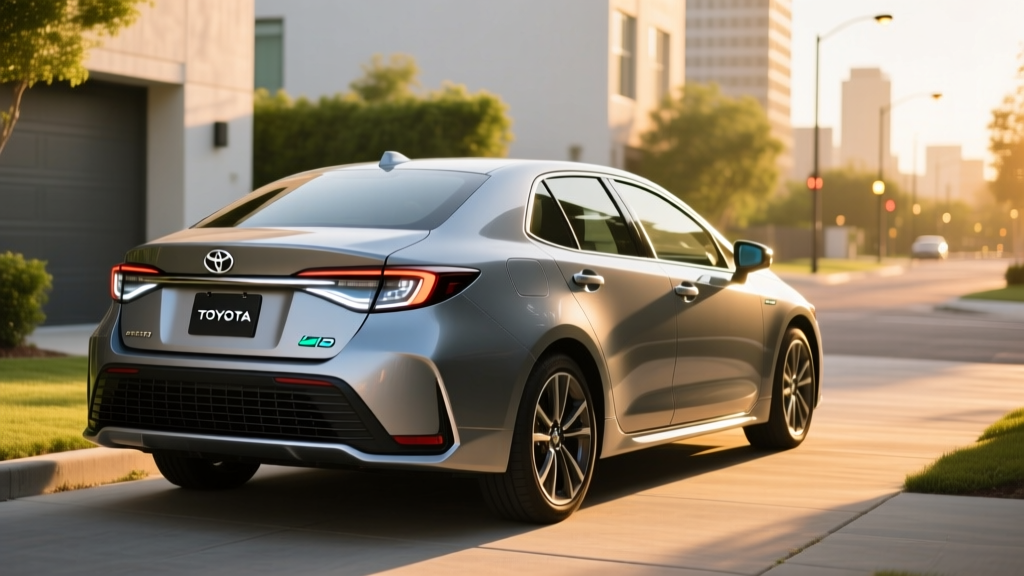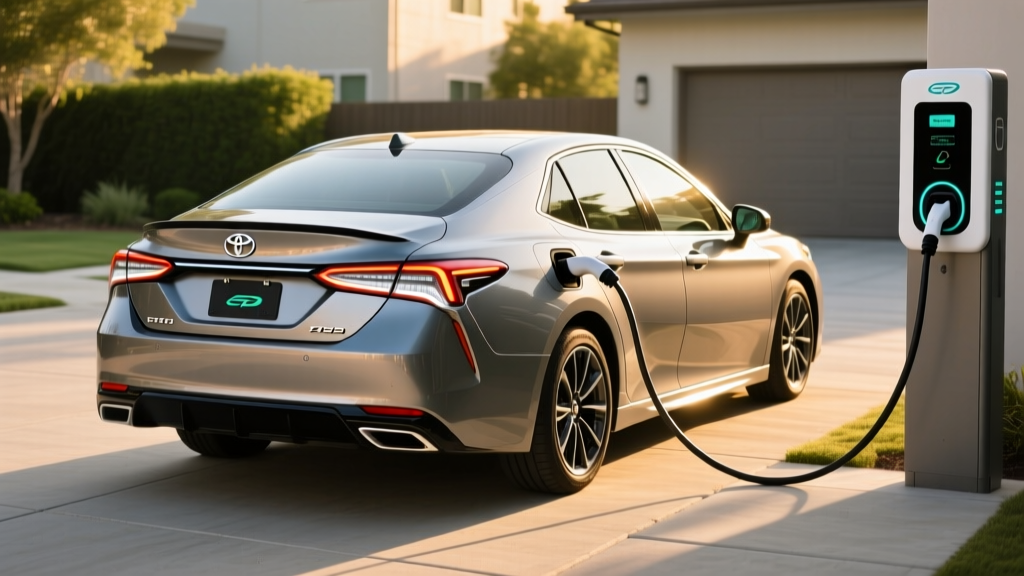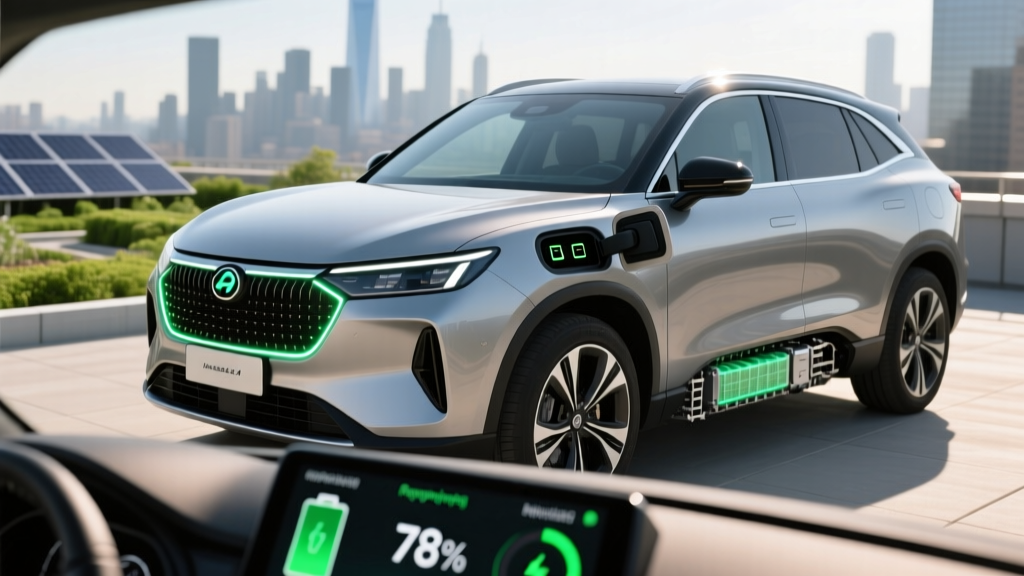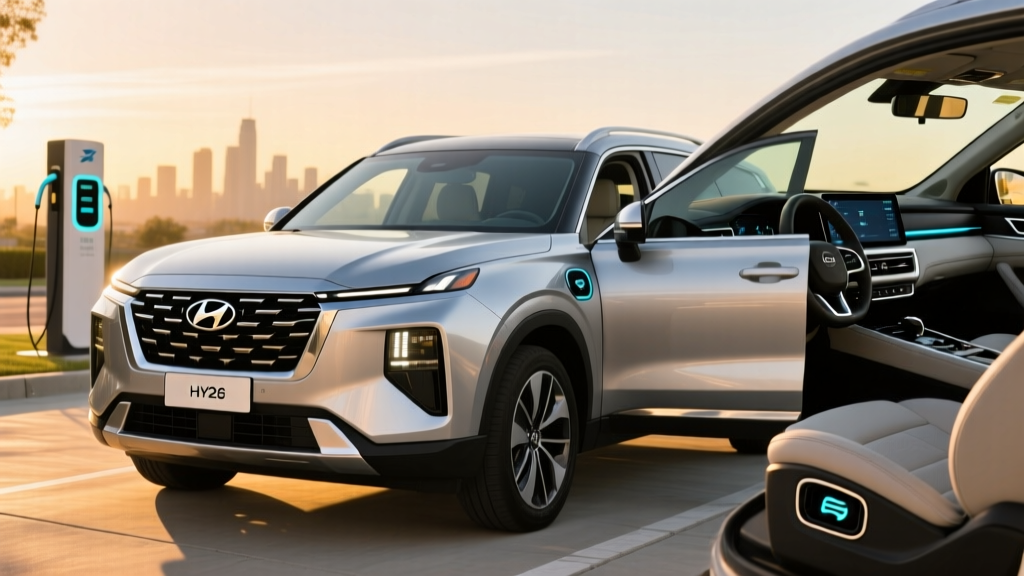
If you are searching for a Hyundai Palisade hybrid lease in 2026, you have likely noticed a confusing reality: the Palisade nameplate has historically been sold exclusively with a gasoline V6 engine. Unlike its corporate cousin, the Kia Sorento—which offers both a conventional hybrid (HEV) and a plug-in hybrid (PHEV)—the Palisade has remained a gas-only three-row SUV for most of its lifecycle. However, with the industry shifting rapidly toward electrification, the 2026 model year represents a potential turning point for Hyundai's flagship family hauler.
This guide breaks down everything you need to know about leasing a Palisade with hybrid technology in 2026. We cover the critical distinction between conventional hybrids and plug-in hybrids, projected fuel economy, battery warranties, tax credit eligibility, and whether a hybrid Palisade—or a competing electrified SUV—makes more financial sense for your family.
The Current State of the Palisade Powertrain: Gas vs. Hybrid Expectations
As of the 2026 model year, buyers evaluating a Hyundai Palisade lease must understand what is actually available on dealer lots versus what is anticipated. The standard Palisade continues to use a 3.8-liter V6 engine producing approximately 291 horsepower, paired with an 8-speed automatic transmission. This powertrain delivers an EPA-estimated 19 MPG city / 24 MPG highway / 21 MPG combined for front-wheel-drive models, according to fueleconomy.gov.
Hyundai has signaled its intent to electrify its larger SUV lineup, but as of early 2026, a factory-produced Palisade Hybrid (HEV) or Palisade Plug-in Hybrid (PHEV) has not been officially confirmed for the U.S. market with published EPA figures. If you encounter a listing for a "Palisade Hybrid," verify whether it refers to a mild-hybrid system (48V assist, no electric-only driving) or a full parallel hybrid capable of meaningful fuel savings.
HEV vs. PHEV: What's the Difference for a 3-Row SUV?
| Feature | Conventional Hybrid (HEV) | Plug-in Hybrid (PHEV) |
|---|---|---|
| Needs to plug in? | No — charges via regenerative braking and engine | Yes — for maximum benefit |
| Electric-only range | Less than 1 mile at low speeds | Typically 25–40 miles |
| Battery size | ~1.5–2.0 kWh | ~13–18 kWh |
| Fuel economy (gas mode) | ~30–35 MPG combined | ~28–33 MPG combined (after battery depleted) |
| Federal tax credit | No | Up to $7,500 (subject to §30D rules) |
Fuel Economy Projections: What MPG Would a Palisade Hybrid Deliver?
Because the 2026 Palisade Hybrid has not received official EPA certification at the time of this writing, we can project its efficiency based on Hyundai's existing hybrid architecture used in the Santa Fe Hybrid and Kia Sorento Hybrid, which share platform DNA.
| Powertrain | City MPG | Highway MPG | Combined MPG | Status |
|---|---|---|---|---|
| 3.8L V6 Gas (FWD) | 19 | 24 | 21 | EPA Certified |
| 3.8L V6 Gas (AWD) | 19 | 23 | 20 | EPA Certified |
| 1.6L Turbo HEV (Projected) | 33 | 30 | 31 | Estimated |
| 1.6L Turbo PHEV (Projected) | 30 (gas) | 28 (gas) | 29 (gas) / 79 MPGe | Estimated |
Real-world MPG note: Conventional hybrids (HEVs) typically exceed their EPA city estimates in real-world stop-and-go driving because regenerative braking recaptures energy that gas cars waste as heat. Highway driving is where hybrids lose their advantage, as the electric motor provides less benefit at sustained high speeds. If a Palisade HEV arrives rated at 31 MPG combined, expect 33–35 MPG in suburban errand-running and 28–29 MPG on a 75-mph interstate cruise.
Projected Powertrain and Battery Specifications
Should Hyundai introduce a full hybrid Palisade, the most likely powertrain is the company's 1.6-liter turbocharged inline-4 paired with an electric motor and a 6-speed automatic transmission—the same system found in the Santa Fe Hybrid. Combined output would likely be in the range of 230–250 horsepower, adequate for a family SUV though noticeably less punchy than the current V6's 291 hp.
| Specification | HEV (Projected) | PHEV (Projected) |
|---|---|---|
| Engine | 1.6L Turbo I4 | 1.6L Turbo I4 |
| Combined Horsepower | ~232 hp | ~261 hp |
| Combined Torque | ~271 lb-ft | ~271 lb-ft |
| Battery Chemistry | Lithium-ion (NMC) | Lithium-ion (NMC) |
| Battery Capacity | ~1.5 kWh | ~13.8 kWh |
| Electric-Only Range | N/A | ~30 miles (est.) |
| Level 2 Charge Time (10–100%) | N/A | ~3.5 hours at 7.2 kW |
| DC Fast Charging | No | Unlikely (most PHEVs lack DCFC) |
| Transmission | 6-speed auto | 6-speed auto |
| Drivetrain | AWD standard | AWD standard |
PHEV electric-only range: If a Palisade PHEV arrives, expect roughly 28–33 miles of electric-only driving on a full charge. This covers most daily school runs, grocery trips, and commutes without using a drop of gasoline. However, PHEVs in this class rarely support DC fast charging—you will charge at home on a Level 2 (240V) outlet or a standard 120V wall plug (which would take roughly 11–13 hours for a full charge).
Lease Pricing and Tax Credit Eligibility
Leasing an electrified vehicle involves unique financial considerations, particularly around the federal §30D tax credit and Hyundai's lease structure.
The Lease Loophole and §30D Credit
Under current IRS rules, the §30D clean vehicle credit (up to $7,500 for new PHEVs/BEVs meeting battery-sourcing and critical-mineral requirements) applies only to purchases, not traditional leases. However, there is a well-known "lease loophole": the commercial clean vehicle credit (§45W) allows the leasing company (the legal owner of the vehicle) to claim a $7,500 credit on eligible EVs and PHEVs, and many automakers pass this savings to the lessee in the form of reduced monthly payments or capitalized-cost reductions.
Key caveat: Conventional hybrids (HEVs) do not qualify for any federal tax credit—neither §30D nor §45W. Only plug-in hybrids with a battery capacity of at least 7 kWh and sufficient electric-only range are eligible. This means a Palisade HEV lease would carry no federal incentive advantage, while a Palisade PHEV lease could potentially benefit from the $7,500 pass-through if Hyundai elects to apply it.
- PHEV battery capacity: Must be at least 7 kWh (projected Palisade PHEV: ~13.8 kWh ✓)
- MSRP cap: Vans/SUVs must be under $80,000 MSRP
- Buyer income cap (for purchase only): $150K single / $300K joint (does not apply to lease loophole)
- Battery sourcing & critical minerals: Must meet phased-in percentages per IRS §30D guidelines
- Final assembly: Must occur in North America (for §30D purchase; §45W lease rules may differ)
Estimated Lease Cost
Based on the 2026 Palisade gas model's lease structure (typically $450–$550/month for a well-equipped SEL with $3,500 due at signing on a 36-month term), a hybrid variant would likely command a premium. Expect a Palisade HEV lease to land in the $500–$600/month range, while a PHEV—after any $7,500 lease credit pass-through—could be surprisingly competitive at $475–$575/month, depending on trim and money factor.
Battery Warranty, Reliability, and Replacement Costs
Hybrid battery longevity is the single most common concern among first-time hybrid buyers. Here is what the data shows.
Hyundai Hybrid Battery Warranty
Hyundai covers its hybrid and PHEV battery packs with a 10-year / 100,000-mile warranty (whichever comes first) for the original owner. In states that follow California Air Resources Board (CARB) standards—including CA, NY, MA, WA, and several others—the hybrid battery warranty extends to 10 years / 150,000 miles. This warranty covers battery capacity degradation below a specified threshold (typically 70% of original capacity) as well as defects.
Real-world reliability: Hyundai's hybrid systems have proven robust in models like the Sonata Hybrid and Ioniq Hybrid, with many examples surpassing 150,000 miles with minimal battery degradation. The lithium-ion packs used in Hyundai HEVs and PHEVs are liquid-cooled, which significantly extends cell life compared to passively cooled systems.
Battery replacement cost: If the battery does require replacement outside of warranty, expect a cost in the range of $2,500–$4,500 for the HEV pack and $5,000–$8,000 for the larger PHEV pack, including labor. However, hybrid battery failures within the first 10 years are statistically uncommon based on industry-wide data.
Who Should Lease a Palisade Hybrid vs. a Full EV or Gas SUV?
Choosing between a hybrid Palisade, a fully electric SUV, or the standard gas model depends on your driving patterns, charging access, and budget. Use this decision framework:
Choose the Palisade HEV (Conventional Hybrid) If:
- You want better fuel economy without changing any habits—no plugging in required
- You drive 15,000+ miles per year and want to reduce fuel costs by ~35%
- You frequently take long road trips where charging infrastructure is uncertain
- You want a lower monthly lease payment than a PHEV or BEV
Choose the Palisade PHEV (Plug-in Hybrid) If:
- You can charge at home (Level 2 or even 120V overnight)
- Your daily driving is under 30 miles—most trips would be electric-only
- You want EV-like commuting with gas-engine flexibility for weekend road trips
- The $7,500 lease credit pass-through is available, making monthly costs competitive
Choose a Full EV (e.g., Kia EV9, Hyundai Ioniq 9) If:
- You have reliable home charging and access to DC fast chargers for road trips
- You want the lowest per-mile "fuel" cost and minimal maintenance
- You qualify for the full §30D purchase credit or lease credit
- You are ready to commit to an all-electric lifestyle with 270–310+ miles of EPA range
Stick with the Gas Palisade If:
- Your annual mileage is low (under 10,000 miles) and fuel savings wouldn't offset a hybrid premium
- You prioritize maximum towing capacity (the gas V6 typically tows up to 5,000 lbs; hybrids may be rated lower)
- You plan to keep the vehicle beyond the lease term and want proven long-term V6 simplicity
Competing Hybrid and PHEV SUVs to Cross-Shop
If a Palisade Hybrid lease is not yet available or doesn't meet your needs in 2026, several proven three-row electrified alternatives exist:
| Model | Type | Combined MPG / MPGe | EV Range | Starting MSRP |
|---|---|---|---|---|
| Kia Sorento Hybrid | HEV | 34 MPG | N/A | ~$39,000 |
| Kia Sorento PHEV | PHEV | 30 MPG / 79 MPGe | 32 mi | ~$51,000 |
| Toyota Grand Highlander Hybrid | HEV | 36 MPG | N/A | ~$45,000 |
| Mazda CX-90 PHEV | PHEV | 25 MPG / 56 MPGe | 26 mi | ~$51,000 |
| Kia EV9 | BEV | 83 MPGe | 270–304 mi | ~$56,000 |
Among these, the Kia Sorento PHEV is the closest mechanical relative to a potential Palisade PHEV, sharing Hyundai Motor Group's turbo-hybrid architecture. The Toyota Grand Highlander Hybrid leads the segment in fuel economy at 36 MPG combined (per fueleconomy.gov) and offers three rows with strong reliability credentials.
Leasing Tips for Electrified SUVs in 2026
If you are pursuing any hybrid or PHEV lease this year, keep these practical pointers in mind:
- Ask about the lease credit pass-through explicitly. Not all manufacturers apply the $7,500 commercial credit to every PHEV lease. Confirm in writing before signing.
- Negotiate the capitalized cost, not just the monthly payment. A lower monthly payment can be achieved by extending the term or increasing the down payment—neither of which saves you money.
- Check residual values. Hybrids and PHEVs have shown strong residual values in recent years, which benefits lease economics. A higher residual means lower monthly payments.
- Verify state incentives. Some states offer additional rebates for PHEVs (e.g., California's CVRP, Colorado's innovative motor vehicle credit). These vary by jurisdiction and income—check your state's energy office for current programs.
- Understand mileage limits. Most leases include 10,000–12,000 miles per year. If you drive more, negotiate a higher mileage allowance upfront (typically $0.15–$0.25 per additional mile) rather than paying the penalty at lease-end.
Frequently Asked Questions
How many MPG does the Hyundai Palisade Hybrid get?
As of early 2026, the Palisade has not been officially released as a full hybrid (HEV) with EPA-certified figures. The gas-only Palisade achieves 21 MPG combined. A projected Palisade HEV based on Hyundai's 1.6T hybrid system would likely deliver approximately 31 MPG combined (33 city / 30 highway), though this is an estimate pending official EPA testing.
Is the 2026 Palisade available as a plug-in hybrid?
Hyundai has not confirmed a Palisade PHEV for the 2026 U.S. model year. If introduced, a PHEV variant would likely offer around 28–33 miles of electric-only range and qualify for up to $7,500 in federal lease incentives under the §45W commercial credit pass-through.
Does a hybrid Palisade qualify for a tax credit?
Conventional hybrids (HEVs) do not qualify for any federal tax credit. Plug-in hybrids (PHEVs) may qualify for up to $7,500 under §30D if purchased, or through the lease loophole (§45W) if leased—subject to MSRP caps, battery sourcing rules, and other IRS requirements. Always consult a tax professional and review current IRS guidance before making a purchase decision.
How long will a Hyundai hybrid battery last, and what does replacement cost?
Hyundai's hybrid batteries are covered by a 10-year/100,000-mile warranty (10 years/150,000 miles in CARB states). Real-world data from Hyundai's hybrid fleet suggests these batteries routinely last 150,000+ miles with minimal degradation. Out-of-pocket replacement costs range from $2,500–$4,500 for an HEV battery and $5,000–$8,000 for a PHEV battery, though replacements within the first decade are rare.
Should I lease or buy a hybrid SUV?
Leasing makes sense if you want lower monthly payments, plan to upgrade every 3 years, and want to stay under warranty for the entire ownership period. Buying makes sense if you drive high annual miles (15,000+), want to build equity, and plan to keep the vehicle for 7–10 years to maximize the fuel savings payback. For PHEVs, leasing may offer the additional advantage of the $7,500 commercial credit pass-through that is not available to individual purchasers who do not meet income or sourcing requirements.
Hybrid vs. PHEV vs. EV—which is right for my family?
Choose a conventional hybrid (HEV) if you want zero lifestyle change and no charging requirements. Choose a PHEV if you have home charging and a short daily commute but still need gas-engine range for road trips. Choose a full EV if you want the lowest operating costs, have reliable charging access, and are comfortable planning road trips around DC fast-charging stops. For a three-row family SUV, the Kia EV9 and upcoming Hyundai Ioniq 9 represent the strongest all-electric alternatives.
Pros of a Palisade Hybrid Lease
- 30%+ fuel economy improvement over the gas V6 (projected)
- No range anxiety—gas engine available whenever needed
- Hyundai's class-leading 10-year/100,000-mile hybrid battery warranty
- Spacious three-row cabin with family-friendly features
- Potential PHEV lease credit pass-through of up to $7,500
Cons and Limitations
- Hybrid variant not yet officially confirmed with EPA figures for 2026
- HEV models do not qualify for any federal tax credit
- Hybrid powertrain may reduce towing capacity vs. the V6
- Higher upfront lease cost than the gas-only model
- PHEV models unlikely to support DC fast charging