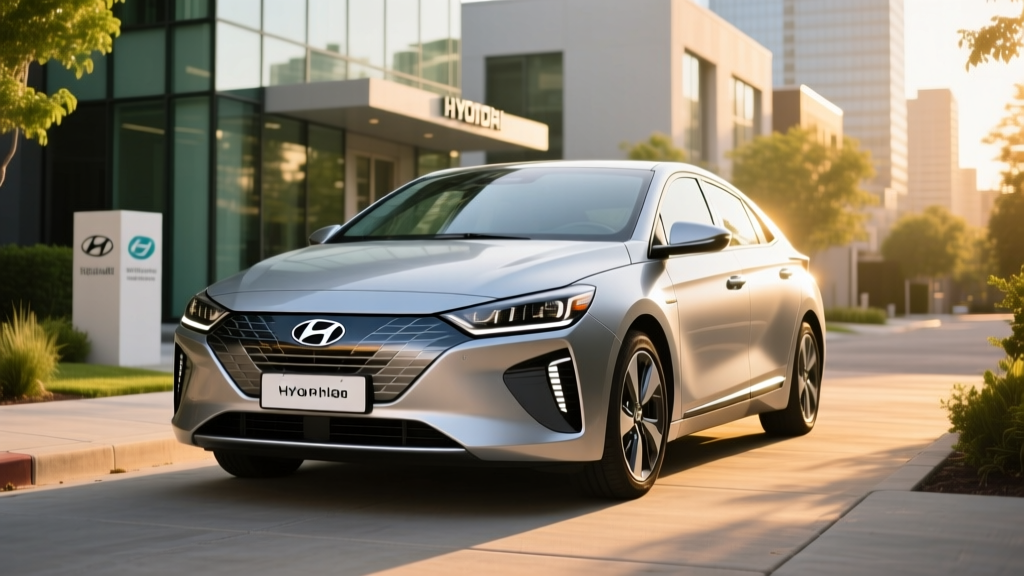
The Hyundai Ioniq nameplate has worn many hats — first as a dedicated hybrid hatchback, then a plug-in variant, and later an all-electric lineup under the Ioniq 5 and Ioniq 6 badges. For 2026, Hyundai continues to offer the Ioniq Plug-In Hybrid in select global markets as a practical bridge for drivers who want meaningful electric-only commuting without range anxiety. If you're researching the Ioniq PHEV — whether as a certified pre-owned find, a remaining new-vehicle option, or comparing it against newer PHEV rivals — this guide covers every spec, real-world number, and ownership factor you need.
HEV vs PHEV vs Full EV: Where the Ioniq Plug-In Hybrid Fits
Before diving into specs, it's critical to understand the three electrified powertrain types. Hyundai has sold the Ioniq in all three configurations, and confusing them is a common buyer mistake.
| Attribute | Ioniq Hybrid (HEV) | Ioniq Plug-In Hybrid (PHEV) | Ioniq Electric (BEV) |
|---|---|---|---|
| Plugs in? | No — charges via engine & regen | Yes — Level 1/Level 2 | Yes — Level 1/2/DC fast |
| Battery Size | ~1.56 kWh | 8.9 kWh (usable ~7.1 kWh) | 38.3 kWh |
| Electric-Only Range | ~1 mile (low-speed assist) | 29 miles (EPA) | 170 miles (EPA) |
| Gas Engine | 1.6L 4-cyl + electric motor | 1.6L 4-cyl + electric motor | None — electric only |
| Total Range | ~630 miles | ~630 miles (EV + gas) | ~170 miles |
| DC Fast Charging | N/A | No | Yes (CCS, up to ~50 kW) |
The Ioniq Plug-In Hybrid occupies the middle ground: a larger battery than the HEV allows genuine zero-emission commuting for short trips, while the 1.6-liter gasoline engine eliminates range anxiety for longer drives. Unlike the HEV, the PHEV must be plugged in to realize its efficiency advantage — driving it without charging essentially turns it into a slightly heavier conventional hybrid.
Electric-Only Range: 29 Miles EPA, Less in the Real World
The EPA rates the Ioniq PHEV at 29 miles of electric-only range on a full charge, with a combined 52 MPGe. That's enough to cover a typical round-trip commute under 25 miles without burning a drop of gasoline — but real-world results depend heavily on conditions.
EPA Electric Range: 29 miles
Expected Highway (70 mph): ~22–25 miles
Expected Cold Weather (below 32°F): ~18–22 miles
Mild Weather City Driving: 28–31 miles (regen braking helps)
Lithium-ion batteries lose efficiency in cold temperatures, and highway speeds demand more energy from the 8.9 kWh pack.
The PHEV's electric motor produces 60 hp (44.5 kW) on its own, which is adequate for city and suburban speeds but means the gasoline engine will engage during hard acceleration or sustained highway cruising even with charge remaining. Drivers who stay under 65 mph and use moderate acceleration will consistently hit or approach the 29-mile EPA figure.
Fuel Economy: EPA MPG and Real-World Numbers
Once the battery is depleted, the Ioniq PHEV operates as a conventional hybrid. Here's the full EPA fuel economy breakdown, sourced from fueleconomy.gov:
| Mode | City | Highway | Combined |
|---|---|---|---|
| Charge-Depleting (EV Mode) | — | — | 52 MPGe |
| Charge-Sustaining (Hybrid Mode) | 54 MPG | 51 MPG | 52 MPG |
Real-world MPG reality check: Hybrids typically exceed their EPA city rating in stop-and-go traffic thanks to regenerative braking recapturing energy. Expect 52–57 MPG in urban driving once the battery is depleted. Highway cruising at 75+ mph will drop fuel economy to roughly 45–48 MPG, as the Atkinson-cycle 1.6L engine operates less efficiently at sustained high loads. Cold weather and short trips (where the engine must warm up) also reduce real-world MPG.
The total combined range — electric plus gasoline from the 11.4-gallon fuel tank — approaches 630 miles, making the Ioniq PHEV one of the longest-range electrified vehicles available without any refueling or recharging stops.
Powertrain Specs: Engine, Motor, and Combined Output
| Component | Specification |
|---|---|
| Gasoline Engine | 1.6L GDI 4-cylinder Atkinson cycle, 104 hp / 109 lb-ft |
| Electric Motor | Permanent-magnet synchronous, 60 hp (44.5 kW) / 125 lb-ft |
| Combined System Output | 139 hp / 195 lb-ft torque |
| Transmission | 6-speed dual-clutch automatic (DCT) |
| Drivetrain | Front-wheel drive (FWD) |
| 0–60 mph | ~9.7 seconds |
| Battery Pack | 8.9 kWh lithium-ion polymer (usable ~7.1 kWh) |
The 6-speed DCT is a differentiator — while most hybrids use continuously variable transmissions (CVTs), Hyundai's dual-clutch unit delivers more natural shift feel and better highway passing response. The trade-off is occasional low-speed shift hesitancy, which is common to DCTs and not unique to Hyundai.
Charging the Ioniq PHEV: Level 1, Level 2, and Times
The Ioniq Plug-In Hybrid charges via a standard J1772 connector. It does not support DC fast charging — a limitation of its smaller battery and onboard charger design. Here's what to expect at each charging level:
| Level | Power | 0–100% Time | Outlet/Equipment |
|---|---|---|---|
| Level 1 (120V) | ~1.4 kW | ~6 hours | Standard household outlet |
| Level 2 (240V) | ~3.3 kW | ~2 hours 15 min | Home wallbox or public L2 |
For most PHEV owners, Level 1 charging from a standard 120V outlet is sufficient. Plug in overnight and the 8.9 kWh pack will be full by morning — no dedicated 240V circuit required. This is a major practical advantage of PHEVs over full EVs: the smaller battery means you don't need an expensive Level 2 home installation to get a meaningful daily charge.
A Level 2 station will cut charge time to roughly 2 hours and 15 minutes, which is useful if you can plug in at work or want a midday top-up. The onboard charger is limited to 3.3 kW, so even a 7.2 kW or 11.5 kW Level 2 station will only deliver 3.3 kW to the Ioniq PHEV.
Pricing, Tax Credits, and Incentive Eligibility
When sold new, the Hyundai Ioniq PHEV was offered in SE and Limited trims. Pricing for the final model years was approximately:
- SE trim: ~$27,500 MSRP (before destination)
- Limited trim: ~$33,500 MSRP (before destination)
For 2026 buyers, the Ioniq PHEV is primarily available through certified pre-owned (CPO) channels and remaining dealer inventory, as Hyundai has shifted its PHEV strategy to the Tucson PHEV and Santa Fe PHEV in the US market.
The Hyundai Ioniq PHEV qualified for a partial federal tax credit (up to $4,543) under previous IRS rules based on its battery capacity. Under current 2026 §30D rules, new PHEV eligibility has changed significantly — the credit now requires critical mineral sourcing and battery component manufacturing compliance that varies by model year and production batch.
Used EV/PHEV Credit (§25E): If purchasing a qualifying used Ioniq PHEV from a dealer for $25,000 or less, you may be eligible for a used clean vehicle credit of up to $4,000 (30% of sale price, capped at $4,000), subject to income limits ($75,000 single / $150,000 joint). Verify eligibility at IRS.gov and consult a tax professional.
Note: State and local incentives vary by jurisdiction. Check your state's energy office or DSIRE database for additional rebates.
Battery Longevity, Warranty, and Replacement Cost
Hybrid and PHEV battery longevity is a top concern for buyers — especially those considering pre-owned examples. Here's what the data shows:
Hyundai Warranty: 10 years / 100,000 miles (hybrid battery and powertrain components) for original owners; 10 years / 100,000 miles in CARB states for subsequent owners.
Capacity Retention Threshold: Hyundai replaces the battery if it falls below 70% of original capacity within the warranty period.
Expected Lifespan: Hyundai's lithium-ion polymer packs have demonstrated strong longevity. Real-world reports from high-mileage Ioniq owners show less than 10% degradation at 100,000+ miles.
Out-of-Warranty Replacement Cost: Approximately $3,500–$5,500 (parts + labor) based on dealer quotes and third-party hybrid battery suppliers.
The Ioniq PHEV's 8.9 kWh pack is smaller and less stressed than a full EV battery — it cycles through a narrower state-of-charge window, which reduces degradation. Hyundai's battery thermal management (air-cooled) is simpler than liquid-cooled systems but has proven adequate for the pack size. For reference, Hyundai's warranty terms remain among the most generous in the hybrid segment.
Reliability and Safety Ratings
The Hyundai Ioniq PHEV has earned strong reliability marks. The 1.6L Atkinson-cycle engine is a proven, low-stress design shared across Hyundai-Kia's hybrid lineup, and the 6-speed DCT, while occasionally hesitant at low speeds, has not shown systemic failure patterns in owner surveys.
Safety ratings from the NHTSA gave the Ioniq hatchback a 5-star overall rating. Standard safety equipment includes forward collision-avoidance assist, lane keeping assist, blind-spot collision warning (on Limited trim), and rear cross-traffic alert. The Ioniq PHEV was not tested by IIHS in its final model years.
Pros and Cons
✓ Pros
- 29-mile EV range covers most commutes gas-free
- 52 MPG combined in hybrid mode — excellent efficiency
- 630+ mile total range eliminates range anxiety
- Charges fully overnight on a standard 120V outlet
- 10-year / 100,000-mile hybrid battery warranty
- 6-speed DCT feels more natural than a CVT
- Strong standard safety suite
✗ Cons
- No DC fast charging capability
- Limited US new-vehicle availability (discontinued in favor of SUV PHEVs)
- Modest 139 hp — not a quick car (9.7s to 60 mph)
- Cargo space reduced vs. non-hybrid hatchbacks (22.5 cu ft)
- Onboard charger capped at 3.3 kW
- EV range drops significantly in cold weather
- Federal tax credit eligibility uncertain for newer purchases
Who Should Buy the Ioniq PHEV vs a Full EV or Gas Car?
- Choose the Ioniq PHEV if: Your daily round-trip commute is under 25 miles, you have access to a 120V outlet at home or work, you take occasional road trips over 200 miles, and you want to reduce gas consumption without range anxiety.
- Choose a full EV (Ioniq 5, Tesla Model 3, etc.) if: You have reliable Level 2 home charging, your daily driving is under 200 miles, you want zero gasoline costs, and you qualify for the full §30D tax credit on a new BEV.
- Choose a conventional hybrid (Ioniq HEV, Prius) if: You cannot plug in at home (apartment, street parking), you want maximum MPG without behavioral changes, and you don't need electric-only driving.
- Choose a gas car if: You drive very few miles annually (under 6,000), the upfront premium of electrification won't pay back, or you're in an extreme cold climate where EV range loss is severe.
Frequently Asked Questions
How many MPG does the Hyundai Ioniq Plug-In Hybrid get?
The EPA rates the Ioniq PHEV at 52 MPG combined (54 city / 51 highway) when operating in hybrid mode after the battery is depleted. Real-world city driving often exceeds this — expect 52–57 MPG in stop-and-go traffic. Highway driving at 75+ mph typically yields 45–48 MPG.
How far can the Ioniq PHEV go on electric only?
The EPA electric-only range is 29 miles. In real-world conditions, expect 22–25 miles at highway speeds, 18–22 miles in cold weather (below freezing), and up to 31 miles in mild-weather city driving with regenerative braking.
Does the Hyundai Ioniq PHEV qualify for a tax credit?
Under previous rules, the Ioniq PHEV qualified for up to $4,543 in federal tax credits. Under current 2026 §30D rules, new-vehicle PHEV credits depend on battery sourcing requirements that vary by model year. For used purchases under $25,000, the §25E used clean vehicle credit may provide up to $4,000. Always verify at IRS.gov and consult a tax professional.
Is the Ioniq PHEV reliable and what does battery replacement cost?
The Ioniq PHEV has strong reliability data. The 1.6L engine and electric motor are proven components. Hyundai's hybrid battery warranty covers 10 years / 100,000 miles. Out-of-warranty battery replacement costs approximately $3,500–$5,500. Real-world degradation has been minimal — under 10% at 100,000+ miles in most owner reports.
Can the Ioniq PHEV DC fast charge?
No. The Ioniq PHEV supports Level 1 (120V, ~1.4 kW) and Level 2 (240V, ~3.3 kW) charging only via its J1772 port. A full charge takes about 6 hours on Level 1 or roughly 2 hours 15 minutes on Level 2. For most owners, overnight Level 1 charging is sufficient.
Hybrid vs PHEV vs EV — which is right for me?
A conventional hybrid (HEV) is best if you can't plug in at home. A PHEV like the Ioniq is ideal if you have plug access and a short commute but need gas-engine range for road trips. A full EV makes sense if you have home Level 2 charging, drive under 200 miles daily, and want the lowest operating cost. The PHEV is the bridge option — but it only saves money if you actually plug it in regularly.