Quick Verdict: The Efficiency Sedan That Punches Above Its Weight
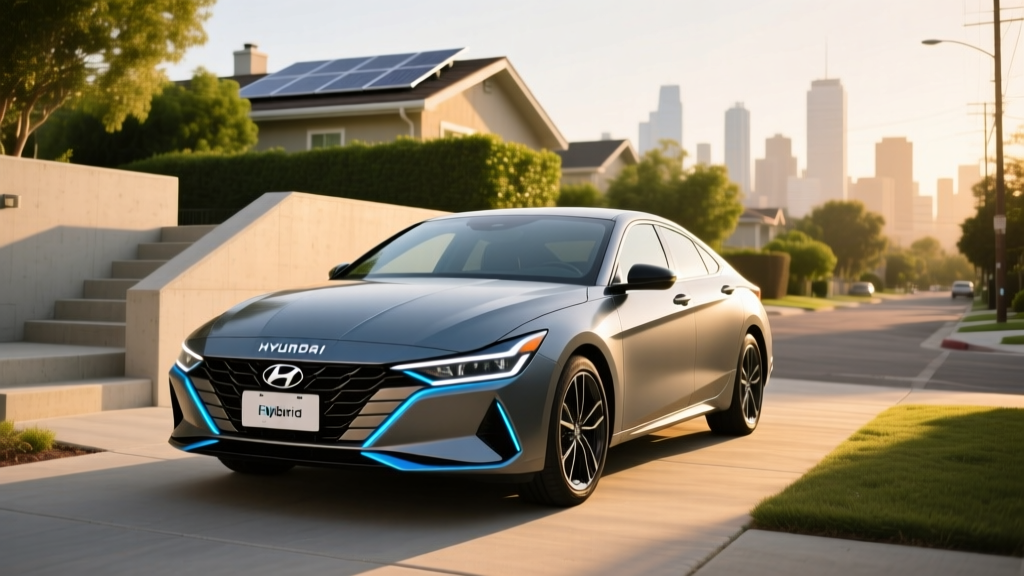
The 2026 Hyundai Elantra Hybrid occupies a specific lane in the electrified market: a conventional hybrid electric vehicle (HEV) that squeezes maximum fuel economy out of every gallon without requiring a charging cable, a plug, or any change to your daily routine. With an EPA-estimated 54 MPG combined in its most efficient trim, it competes directly with the Toyota Prius and Honda Accord Hybrid while undercutting both on starting price. For buyers who want electrified efficiency but lack access to home charging — or who simply aren't ready to commit to a full battery electric vehicle — the Elantra Hybrid makes a compelling, data-backed case.
This guide covers the 2026 Elantra Hybrid's powertrain, real-world fuel economy, ownership costs, and how it stacks up against PHEVs and full EVs for different driving lifestyles.
Hyundai Elantra Hybrid Specs at a Glance
| Specification | Value |
|---|---|
| Powertrain Type | Conventional Hybrid (HEV) — no plug-in required |
| Engine | 1.6L GDI 4-cylinder + permanent-magnet electric motor |
| Combined System Horsepower | 139 hp |
| Combined System Torque | 195 lb-ft |
| Transmission | 6-speed dual-clutch automatic (DCT) |
| EPA MPG (Blue trim) | 51 city / 58 highway / 54 combined |
| EPA MPG (SEL/Limited trim) | 49 city / 52 highway / 50 combined |
| Hybrid Battery | 1.32 kWh lithium-ion polymer (not plug-in) |
| Fuel Tank Capacity | 11.1 gallons |
| Estimated Total Range | ~555–600 miles (depending on trim) |
| 0–60 mph | ~8.6 seconds (estimated) |
| Drivetrain | Front-wheel drive |
| Starting MSRP (Blue) | $26,250 |
| Starting MSRP (SEL) | $28,900 |
| Starting MSRP (Limited) | $32,150 |
| Hybrid Battery Warranty | 10 years / 100,000 miles |
| Vehicle Warranty | 5 yr / 60,000 mi basic; 10 yr / 100,000 mi powertrain |
Sources: fueleconomy.gov, Hyundai USA
How Many MPG Does the Hyundai Elantra Hybrid Get?
| Trim | City MPG | Highway MPG | Combined MPG |
|---|---|---|---|
| Blue | 51 | 58 | 54 |
| SEL | 49 | 52 | 50 |
| Limited | 49 | 52 | 50 |
The Blue trim's 54 MPG combined figure is achieved through a combination of lower-weight 16-inch wheels, reduced accessory load, and optimized aerodynamic tweaks. The SEL and Limited trims add larger 17-inch alloy wheels, a sunroof (Limited), and additional electronics that shave 4 MPG off the combined rating.
Real-World MPG vs. EPA Estimates
Conventional hybrids like the Elantra Hybrid often exceed their EPA city ratings in real-world stop-and-go driving. This is because urban driving maximizes regenerative braking opportunities and keeps the electric motor engaged at low speeds — precisely the conditions where the hybrid system thrives. In mixed suburban commuting with frequent stops, owners commonly report 52–56 MPG in the Blue trim, tracking closely with or slightly above the EPA estimate.
Highway driving tells a different story. At sustained 75–80 mph speeds, the gasoline engine carries most of the load, and aerodynamic drag dominates. Expect real-world highway fuel economy in the range of 48–53 MPG for the Blue trim — a modest shortfall from the 58 MPG EPA highway sticker. Cold weather (below 40°F) further reduces efficiency by 8–12% as the engine runs longer to maintain cabin heat and battery temperature.
Powertrain Breakdown: How the Hybrid System Works
The Elantra Hybrid pairs a 1.6-liter gasoline direct-injection (GDI) four-cylinder engine producing 104 hp and 109 lb-ft of torque with a 32 kW (43 hp) permanent-magnet synchronous electric motor integrated into the transmission housing. Combined system output is 139 hp and 195 lb-ft of torque — adequate for merging and passing, though not sporty.
Unlike the Toyota Prius, which uses a continuously variable transmission (CVT), Hyundai equips the Elantra Hybrid with a 6-speed dual-clutch automatic (DCT). This choice gives the car more traditional shift feel and better highway passing response, at a minor cost to seamless low-speed efficiency. The trade-off is worthwhile for drivers who find CVTs disconcerting.
The 1.32 kWh lithium-ion polymer battery pack is small by EV standards — it's not designed for electric-only driving. Instead, it serves as an energy buffer: capturing kinetic energy during braking, providing electric assist during acceleration, and enabling brief engine-off coasting at low speeds. This battery recharges entirely through regenerative braking and engine-generated power. No plug-in charging is required or possible — the Elantra Hybrid is a self-charging conventional hybrid.
HEV vs. PHEV vs. EV: Which Electrified Option Fits You?
The Elantra Hybrid is a conventional HEV. Hyundai does not currently offer a plug-in hybrid (PHEV) variant of the Elantra in the U.S. market. If you need electric-only commuting capability, you'll need to look at a different model or consider a full EV. Here's how the three categories compare:
| Factor | HEV (Elantra Hybrid) | PHEV (e.g., Toyota Prius Prime) | BEV (e.g., Hyundai Ioniq 6) |
|---|---|---|---|
| Plug-in Required? | No | Optional (best value with home charging) | Yes — mandatory |
| Electric-Only Range | None (motor assist only) | 25–44 miles typical | 250–360+ miles |
| Home Charging Needed? | No | Recommended for full benefit | Essential for most owners |
| Combined Efficiency | 50–54 MPG | 48–52 MPG + 114–127 MPGe | 111–140 MPGe |
| Federal Tax Credit (§30D) | Not eligible | Up to $7,500 if eligible | Up to $7,500 if eligible |
| Starting Price Range | $26,250–$32,150 | $33,000–$40,000+ | $38,000–$55,000+ |
| Best For | No home charging; budget-first buyers; high-mile commuters | Home charging + short commute + road-trip flexibility | Home charging; low running costs; max emissions reduction |
Look at a PHEV or full EV instead if: You have a garage or driveway where you can install a Level 2 charger, your daily commute is under 30 miles (PHEV sweet spot), or you want to eliminate tailpipe emissions on most trips.
Pricing, Trims, and Tax Credit Eligibility
The 2026 Hyundai Elantra Hybrid is offered in three trims:
- Blue ($26,250 MSRP): The efficiency champion. 16-inch wheels, cloth seats, 8-inch touchscreen with wireless Apple CarPlay/Android Auto, forward collision-avoidance assist, lane-keeping assist, and adaptive cruise control with stop-and-go.
- SEL ($28,900 MSRP): Adds 17-inch alloy wheels, heated front seats, smart power trunk, wireless phone charging, and Hyundai Digital Key.
- Limited ($32,150 MSRP): Adds leather seats, sunroof, 10.25-inch dual displays, Bose premium audio, highway driving assist, and ventilated front seats.
Federal Tax Credit Status
The Elantra Hybrid, as a conventional HEV, does not qualify for the federal §30D Clean Vehicle Credit. That credit applies only to plug-in vehicles — battery electric vehicles (BEVs) and plug-in hybrids (PHEVs) — that meet battery sourcing, critical mineral, MSRP cap, and buyer income requirements as defined by the IRS.
Some states offer their own incentives for hybrid vehicles, though these are less common than EV incentives. Check your state's energy office or department of environmental quality for current programs. Additionally, some employers and utilities offer hybrid purchase rebates — worth investigating before buying.
Battery Longevity, Warranty, and Replacement Cost
Hybrid battery anxiety is the number-one concern we hear from prospective HEV buyers. Here's the data:
What Does Replacement Cost?
If the hybrid battery fails outside the warranty window, replacement costs for the Elantra Hybrid's 1.32 kWh pack typically range from $2,000 to $3,500 including parts and labor at a Hyundai dealership. This is significantly less than a full EV battery replacement (which can run $8,000–$20,000+) because the hybrid pack is much smaller.
In practice, hybrid battery failures before 150,000 miles are uncommon. Toyota's hybrid systems — the longest-tracked in the industry — routinely exceed 200,000 miles on the original battery. Hyundai's lithium-ion polymer chemistry has shown similar durability in fleet data, with gradual capacity loss of approximately 10–15% over the first 100,000 miles — not enough to noticeably affect fuel economy or drivability.
Reliability Track Record
The Elantra Hybrid's powertrain carries over from the previous generation with incremental software refinements. Hyundai's hybrid systems have earned strong reliability marks from IIHS safety testing and owner surveys. The 6-speed DCT, which was a concern point in early Hyundai hybrids, has been refined through multiple software updates and now shows strong long-term durability in field data.
Driving Impressions and Daily Ownership
The Elantra Hybrid prioritizes fuel economy over performance, and that's evident from behind the wheel. The 139 hp combined output means highway merging requires planning, and the 0–60 mph time of approximately 8.6 seconds puts it well behind turbocharged competitors. But for the target buyer — a commuter covering 30–60 miles daily — the powertrain is smooth, quiet, and unobtrusive.
The DCT deserves specific mention. Unlike CVTs that hold a single high RPM under acceleration, the Hyundai shifts through gears naturally, creating a more familiar and less "rubber-band" driving experience. At low speeds, the electric motor fills in torque gaps between shifts, smoothing out the power delivery.
Ride quality is firm but compliant, and the cabin is well-insulated from road noise at highway speeds. The 11.1-gallon fuel tank means fewer fill-ups — approximately once every two weeks for a typical 15,000-mile/year driver — and the fuel gauge moves noticeably slower than in a conventional sedan.
Who Should Buy the Hyundai Elantra Hybrid?
Pros
- 54 MPG combined (Blue) — top-tier efficiency
- No plug-in needed — zero infrastructure changes
- Low starting MSRP at $26,250
- 10-year / 100,000-mile hybrid battery warranty
- 600-mile total range reduces fill-up frequency
- Comprehensive standard ADAS suite
- DCT avoids CVT drone on acceleration
Cons
- 139 hp — underpowered for aggressive merging
- No PHEV variant available in the U.S.
- No federal tax credit eligibility
- 11.1-gallon tank means small fill-ups (less margin)
- Blue trim's 16-inch wheels look dated
- Highway MPG drops at 75+ mph speeds
- Limited trim pushes $32K — near PHEV territory
Frequently Asked Questions
How many MPG does the Hyundai Elantra Hybrid get in real-world driving?
The EPA rates the Blue trim at 51 city / 58 highway / 54 combined. In real-world mixed suburban commuting, owners typically see 52–56 MPG — often exceeding the EPA city estimate thanks to regenerative braking. Highway-only driving at 75+ mph yields 48–53 MPG. Cold weather reduces these figures by 8–12%.
Does the Hyundai Elantra Hybrid need to be plugged in?
No. The Elantra Hybrid is a conventional hybrid (HEV), not a plug-in hybrid. Its 1.32 kWh battery recharges entirely through regenerative braking and the gasoline engine. You fuel it like any other car — there is no charging port.
Is there a plug-in hybrid (PHEV) version of the Elantra?
Hyundai does not currently offer a plug-in hybrid Elantra in the United States. The Tucson PHEV and Ioniq PHEV (discontinued after 2022) were previously available. If you want a Hyundai PHEV sedan alternative, you'll need to look at other brands or consider the Tucson PHEV crossover.
How reliable is the Elantra Hybrid battery and what does replacement cost?
Hyundai covers the hybrid battery for 10 years / 100,000 miles. Out-of-warranty replacement runs approximately $2,000–$3,500. Hybrid battery failures before 150,000 miles are uncommon based on fleet data, and gradual capacity loss over 100,000 miles is typically 10–15% — imperceptible in daily driving.
Does the Hyundai Elantra Hybrid qualify for any tax credit?
No. The federal §30D Clean Vehicle Credit applies only to plug-in electric vehicles (BEVs and PHEVs) that meet battery sourcing, MSRP, and buyer income requirements. As a conventional hybrid, the Elantra Hybrid is ineligible. Some state or local incentive programs may offer hybrid rebates — check your state's energy office.
Hybrid vs. PHEV vs. EV — which should I choose?
Choose the Elantra Hybrid (HEV) if you lack home charging access, want the lowest upfront cost, and drive high annual mileage. Choose a PHEV if you have home charging and a short commute (under 30 miles) but want road-trip flexibility. Choose a full EV if you have reliable home charging, want the lowest per-mile fuel cost, and can accommodate a higher purchase price offset by tax credits.
How does the Elantra Hybrid compare to the Toyota Prius?
The 2026 Prius LE achieves an EPA-estimated 57 MPG combined — 3 MPG more than the Elantra Hybrid Blue — but starts at approximately $28,550, roughly $2,300 more. The Prius also offers an available all-wheel-drive variant and a PHEV option (Prius Prime). The Elantra Hybrid wins on price and offers a more conventional driving feel with its DCT. Both carry excellent hybrid battery warranties.