If you are shopping for an electrified car but are not ready for a full battery-electric vehicle, the choice usually narrows to a conventional hybrid (HEV) or a plug-in hybrid (PHEV). Both burn gas, both have electric motors, but they operate very differently and suit very different drivers. This guide breaks down the 2026 landscape with exact EPA figures, real-world expectations, and the math on which actually saves you more.
Hybrid (HEV) vs Plug-In Hybrid (PHEV): The Core Difference
A conventional hybrid, like the Toyota Prius or Honda Accord Hybrid, pairs a gasoline engine with a small electric motor and a battery you never plug in. The battery (typically 1.0–1.5 kWh) recharges through regenerative braking and the engine. You just drive it like a normal car and it sips fuel.
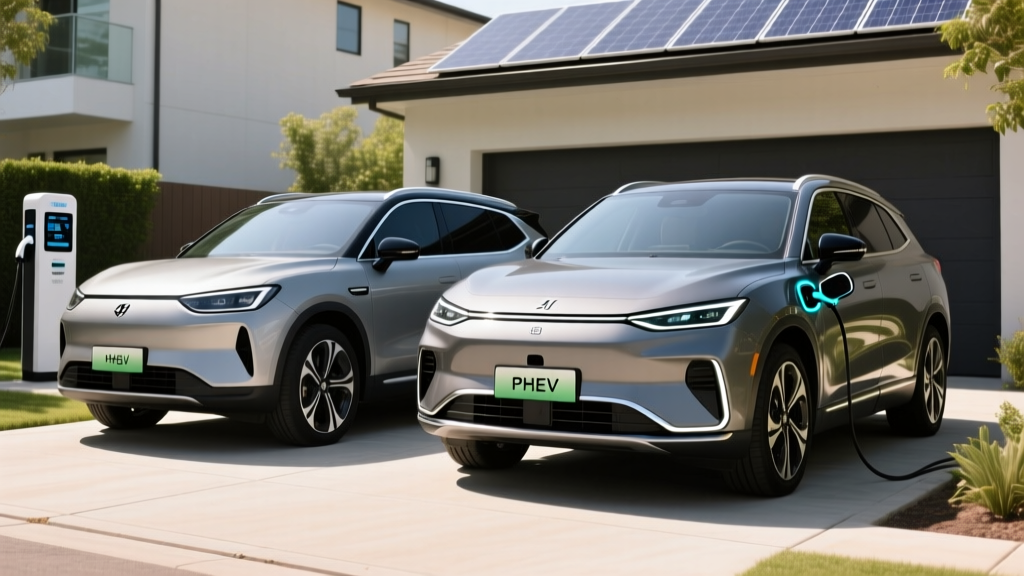
A plug-in hybrid (PHEV) like the Toyota RAV4 Prime or Chrysler Pacifica Hybrid has a much larger battery (13–20+ kWh usable) and a more powerful electric motor. You plug it in to charge, drive 25–45 miles on electricity alone, and when the battery depletes, it operates as a conventional hybrid. Think of it as a short-range EV with a gas-engine backup.
Quick Reference: HEV vs PHEV
| Feature | Conventional Hybrid (HEV) | Plug-In Hybrid (PHEV) |
|---|---|---|
| Plugs in? | No | Yes (Level 1/2) |
| Battery size | 1.0–1.5 kWh | 13–20+ kWh usable |
| Electric-only range | None (EV assist only) | 25–45 miles EPA |
| Fuel economy after battery depletion | 40–57 MPG combined | 35–44 MPG combined |
| Federal tax credit | No | Up to $7,500 (varies) |
| DC fast charging | N/A | Rare (some models only) |
Fuel Economy: EPA MPG and Real-World Numbers
Hybrids almost always beat their EPA city rating in real-world driving because regenerative braking recaptures energy at every stop. Highway MPG is often 2–4 MPG lower than the sticker because electric assist helps less at sustained high speeds. Here is how the top 2026 models stack up, per fueleconomy.gov:
| 2026 Model | Type | City MPG | Highway MPG | Combined MPG | EV-Only Range |
|---|---|---|---|---|---|
| Toyota Prius | HEV | 57 | 56 | 57 | N/A |
| Toyota Prius PHEV (Prime) | PHEV | 52 (hybrid mode) | 48 | 50 | 44 mi |
| Honda Accord Hybrid | HEV | 51 | 44 | 48 | N/A |
| Toyota RAV4 Hybrid | HEV | 41 | 38 | 40 | N/A |
| Toyota RAV4 PHEV (Prime) | PHEV | 40 (hybrid mode) | 36 | 38 | 42 mi |
| Chrysler Pacifica Hybrid | PHEV | 30 (hybrid mode) | 31 | 30 | 32 mi |
| Ford Escape PHEV | PHEV | 42 (hybrid mode) | 38 | 40 | 37 mi |
| Hyundai Tucson PHEV | PHEV | 37 (hybrid mode) | 36 | 37 | 33 mi |
Real-world caveat: PHEV electric range drops 15–25% in cold weather (below 40°F) because battery chemistry slows and cabin heating draws power. A RAV4 Prime rated at 42 miles may deliver 30–35 miles on a January commute. Hybrid MPG also falls 3–6 MPG in winter for the same reason.
Powertrain and Battery Specs
Here is what is under the hood of the most popular 2026 models. Combined horsepower reflects engine plus electric motor output.
| Model | Engine | Combined HP | Battery (kWh) | Charge Time (Level 2) | DC Fast Charge |
|---|---|---|---|---|---|
| Toyota Prius HEV | 2.0L 4-cyl + motor | 196 | 1.3 (NiMH) | N/A | N/A |
| Toyota Prius PHEV | 2.0L 4-cyl + motor | 220 | 13.6 (Li-ion) | ~4 hours | No |
| Toyota RAV4 PHEV | 2.5L 4-cyl + motors | 302 | 18.1 (Li-ion) | ~2.5 hours | No |
| Ford Escape PHEV | 2.5L 4-cyl + motor | 210 | 14.4 (Li-ion) | ~3.5 hours | No |
| Chrysler Pacifica Hybrid | 3.6L V6 + motors | 260 | 16.0 (Li-ion) | ~2 hours | No |
Most PHEVs charge only on Level 1 (120V, ~8–12 hours) or Level 2 (240V, ~2–4 hours). DC fast charging is extremely rare in PHEVs because the battery is small enough that Level 2 is adequate for overnight replenishment. If you need road-trip fast charging, a full BEV is the better tool.
Pricing, Tax Credits, and Total Cost
PHEVs carry a price premium over their HEV siblings due to the larger battery and more complex powertrain. However, some PHEVs qualify for the IRS §30D federal tax credit, which can close the gap significantly.
| Model | Base MSRP (2026) | Federal Tax Credit | Effective Price |
|---|---|---|---|
| Toyota Prius HEV | ~$29,500 | $0 | $29,500 |
| Toyota Prius PHEV | ~$34,000 | $3,750 (partial)* | ~$30,250 |
| Toyota RAV4 Hybrid | ~$33,000 | $0 | $33,000 |
| Toyota RAV4 PHEV | ~$44,500 | $3,750 (partial)* | ~$40,750 |
| Ford Escape PHEV | ~$39,500 | $0 (sourcing)** | $39,500 |
| Chrysler Pacifica Hybrid | ~$51,000 | $7,500*** | ~$43,500 |
* Credit amount depends on battery capacity and critical-mineral sourcing requirements. ** Some trims may not meet battery-component sourcing rules. *** Pacifica Hybrid has historically qualified for the full $7,500, but eligibility depends on your income, the vehicle's MSRP cap (vans: $80,000), and current-year sourcing rules. Confirm at purchase.
2026 §30D rules to know: Buyer income caps apply ($150K single / $300K joint AGI). The credit can now be transferred to the dealer at point of sale, reducing your purchase price directly. Battery sourcing and critical-mineral requirements tighten annually, so a model that qualified last year may not qualify this year. Always verify current eligibility with your dealer and the IRS clean vehicle credit page.
Battery Warranty and Reliability
Hybrid battery longevity is the top concern for buyers, and the data is reassuring. Modern hybrid batteries routinely last 150,000–200,000+ miles. Federal law mandates a minimum 8-year/100,000-mile warranty on hybrid and PHEV batteries, and many manufacturers exceed this. California-emissions states (CARB states) often require 10-year/150,000-mile coverage.
Hybrid Battery Warranty Snapshot (2026)
- Toyota (HEV and PHEV): 10 years / 150,000 miles
- Honda: 8 years / 100,000 miles (10/150K in CARB states)
- Ford: 8 years / 100,000 miles
- Hyundai/Kia: 10 years / 100,000 miles
- Chrysler: 8 years / 100,000 miles (10/150K in CARB states)
Replacement cost if out of warranty: Hybrid battery packs typically cost $2,000–$4,000 for a conventional HEV and $5,000–$9,000 for a PHEV (parts and labor). Refurbished packs are increasingly available for 40–60% less. The Prius, with 25+ years of production history, has a robust aftermarket supply.
Reliability-wise, Toyota hybrids have an exceptional track record. The Prius has been in production since 1997, and taxi fleets have logged 300,000+ miles on original batteries. Consumer Reports consistently ranks Toyota and Lexus hybrids among the most reliable vehicles across all powertrains. PHEV powertrains are slightly more complex (larger battery, more powerful motor, onboard charger), but failure rates remain low in mainstream models.
Hybrid vs PHEV vs Full EV: Which Fits You?
Choose a Conventional Hybrid (HEV) If:
- You cannot charge at home (apartment, street parking, no garage)
- You want the simplest, lowest-maintenance electrified option
- Your budget is under $35,000 and you want maximum MPG
- You drive 200+ miles regularly and don't want to plan charging stops
Choose a Plug-In Hybrid (PHEV) If:
- You can charge at home (even a standard 120V outlet works overnight)
- Your daily commute is under 40 miles round-trip (you'll rarely use gas)
- You want EV-like daily driving with gas-engine flexibility for road trips
- You qualify for the §30D tax credit to offset the price premium
Choose a Full EV (BEV) If:
- You have reliable home Level 2 charging
- You want zero tailpipe emissions and the lowest per-mile fuel cost
- You drive under 250 miles daily and are comfortable with charging infrastructure
- You want to eliminate oil changes and most powertrain maintenance
The Money Math: Annual Fuel Cost Comparison
Here is what you would actually spend on fuel per year, assuming 15,000 miles driven, $3.50/gallon gas, and $0.16/kWh electricity (national averages):
| Vehicle | Annual Fuel Cost | 5-Year Fuel Cost |
|---|---|---|
| Toyota Camry (gas, 32 MPG combined) | $1,641 | $8,203 |
| Toyota Prius HEV (57 MPG) | $921 | $4,605 |
| Toyota RAV4 PHEV (70% electric, 30% gas) | ~$550 | ~$2,750 |
| Tesla Model Y (BEV, 3.5 mi/kWh) | ~$686 | ~$3,429 |
A PHEV driven mostly on electricity (short commutes, home charging) can undercut even a full EV on fuel cost if your electricity rate is low. But if you never plug in a PHEV, you're carrying 300+ pounds of dead battery weight and getting worse MPG than a lighter HEV. The plug-in hybrid only works if you actually plug it in.
HEV Pros & Cons
Pros:
- No behavior change needed — just drive and fuel up
- Lower purchase price than PHEV or BEV
- Proven reliability over 25+ years
- Best-in-class city MPG (57 for Prius)
Cons:
- No electric-only driving, no tax credit
- Still 100% dependent on gasoline
- Higher fuel cost than PHEV (when plugged in) or BEV
PHEV Pros & Cons
Pros:
- 25–45 miles of gas-free daily driving
- Gas engine eliminates range anxiety on trips
- Federal tax credit up to $7,500
- Lower total fuel cost when charged regularly
Cons:
- $3,000–$10,000 premium over HEV equivalent
- Requires home charging access to realize benefits
- Heavier, more complex powertrain
- Most lack DC fast charging
Frequently Asked Questions
Do conventional hybrids need to be plugged in?
No. A conventional hybrid (HEV) charges its small battery through regenerative braking and the gasoline engine. You never plug it in. Only a plug-in hybrid (PHEV) requires or benefits from external charging.
What happens if I never plug in my PHEV?
It operates as a conventional hybrid once the battery depletes, but you're carrying extra battery weight, so fuel economy may be 2–5 MPG worse than a dedicated HEV. You also forfeit the fuel-cost advantage and much of the environmental benefit. A PHEV only makes financial sense if you charge it regularly.
How long do hybrid batteries actually last?
Modern hybrid batteries routinely last 150,000–200,000+ miles. Toyota Prius taxi fleets have documented 300,000+ miles on original packs. All manufacturers warranty hybrid batteries for at least 8 years/100,000 miles, with Toyota, Hyundai, and Kia offering 10 years/100,000 miles.
Does a PHEV qualify for the $7,500 federal tax credit?
Some do, but eligibility depends on multiple 2026 factors: your AGI (income caps of $150K single/$300K joint), the vehicle's MSRP (under $80,000 for SUVs/vans, $55,000 for sedans), battery capacity (at least 7 kWh), and battery-component and critical-mineral sourcing requirements. The credit can be transferred to the dealer at point of sale. Always verify current eligibility on the IRS website before purchasing.
Is a PHEV better than a full EV?
It depends on your situation. A PHEV is better if you cannot reliably charge at home or regularly drive 200+ miles where charging infrastructure is sparse. A full EV is better if you have home Level 2 charging, drive under 250 miles daily, and want the lowest per-mile cost and zero tailpipe emissions. PHEVs are the bridge; BEVs are the destination for most drivers.
Can a PHEV DC fast charge?
Very few. The Mitsubishi Outlander PHEV is one of the rare PHEVs with DC fast-charging capability (CHAdeMO). Most PHEVs, including the RAV4 Prime, Prius Prime, and Escape PHEV, charge only on Level 1 (120V) or Level 2 (240V). Because PHEV batteries are 13–20 kWh, a Level 2 home charger fills them in 2–4 hours, which is sufficient for overnight use.
What is the cheapest hybrid to buy in 2026?
The Toyota Corolla Hybrid starts around $24,000 and delivers 50 MPG combined, making it the most affordable new hybrid on the market. The Hyundai Elantra Hybrid starts around $26,000 with 54 MPG combined. Neither qualifies for a federal tax credit, as conventional HEVs are not eligible under §30D.